




























Views
Downloads

Free Cool Weather Activities Word Search | Grades 3–4 ELA

Paste this activity's link or code into your existing LMS (Google Classroom, Canvas, Teams, Schoology, Moodle, etc.).
Students can open and work on the activity right away, with no student login required.
You'll still be able to track student progress and results from your teacher account.
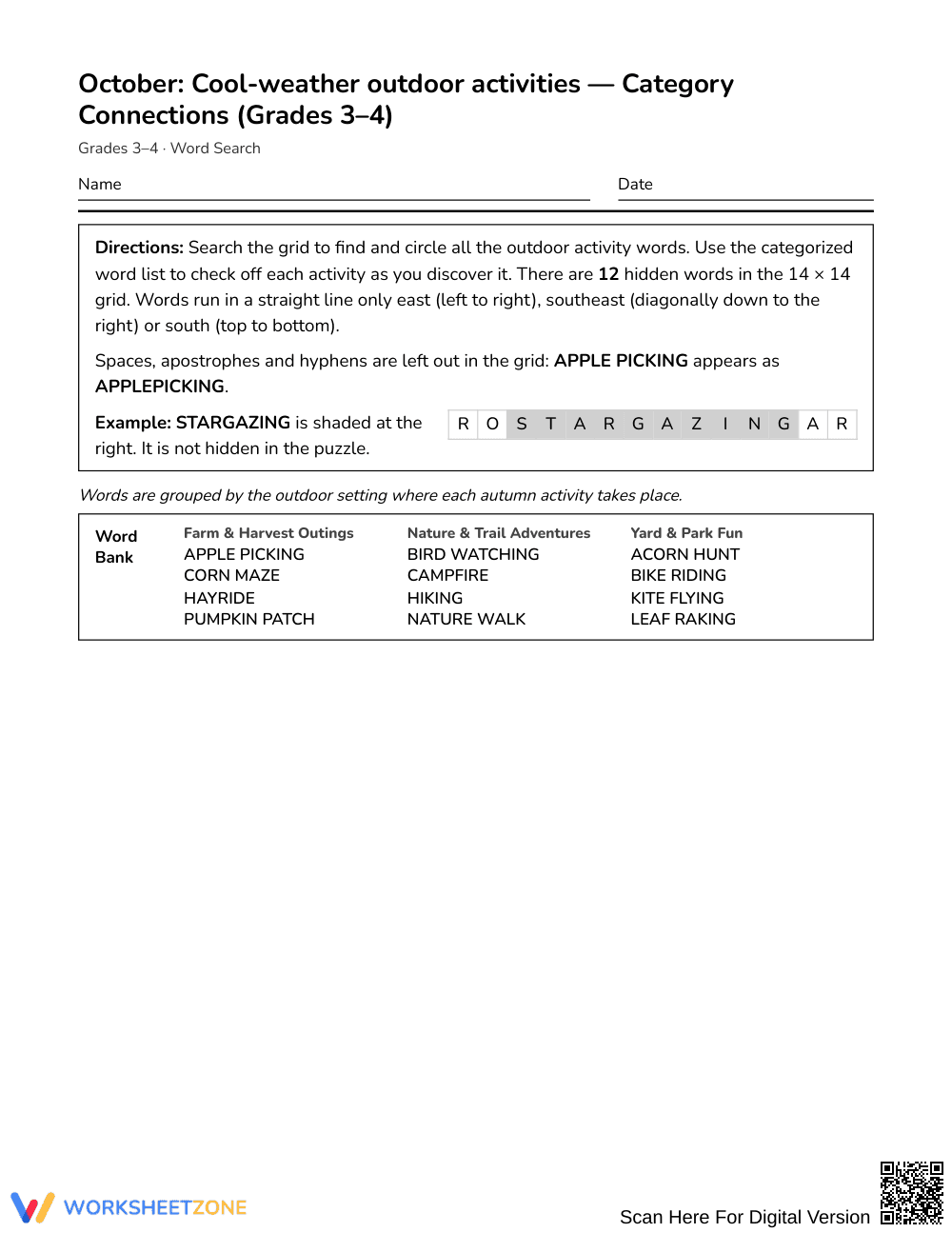
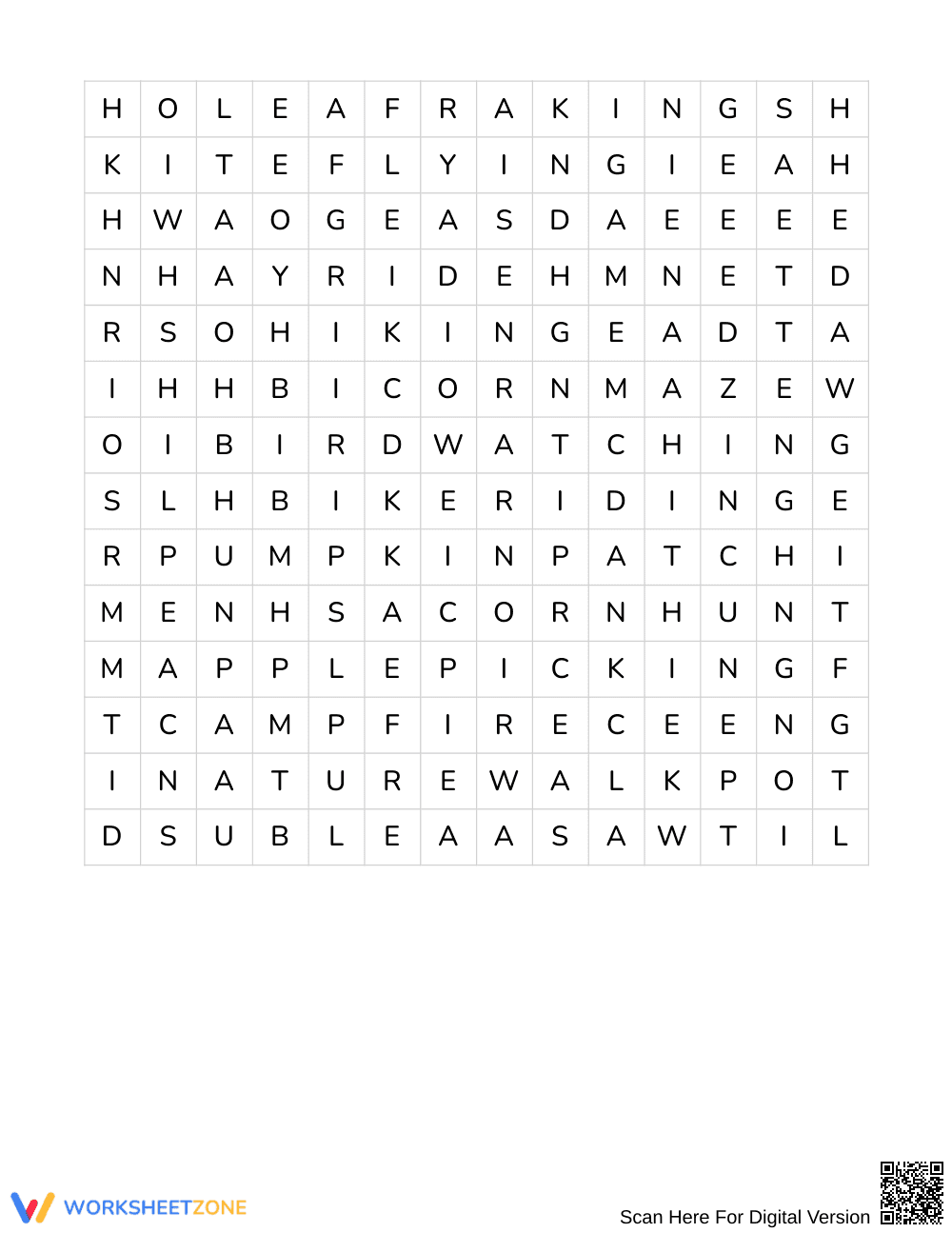
Students work through a fun, autumn‑themed word search that reinforces the vocabulary of cool‑weather outdoor activities. By locating and circling twelve hidden words, learners practice spelling, reading comprehension, and thematic connections while enjoying a quick, independent challenge that can be completed in a single class period.
At a Glance
- Grade: Grades 3–4 · Subject: English Language Arts
- Standard:
None— students enrich vocabulary through a themed autumn word search activity- Skill Focus: cool‑weather outdoor activities vocabulary
- Format: 2 printable pages · 12 hidden words to find · answer key included · PDF format
- Best For: vocabulary enrichment, autumn thematic units, independent classroom practice
- Time: approximately 10–15 minutes for completion
The packet contains two printable PDF pages: a 14 × 14 letter grid and a categorized word bank listing each activity. Twelve vocabulary words are hidden horizontally, diagonally, or vertically. An answer key on a third page shows the completed grid, making grading effortless.
- Print: Open the PDF and print both pages (under 30 seconds).
- Distribute: Hand the word search and answer key to each student (about 30 seconds).
- Review: Collect completed grids and quickly check against the answer key (under 1 minute).
Total teacher preparation time is typically under two minutes, making this activity perfect for a quick sub‑plan or spontaneous vocabulary review.
This resource is designed for vocabulary enrichment and is not tied to a specific state or district standard. It simply offers an engaging way for students to practice seasonal outdoor‑activity terminology.
Use the word search as a warm‑up before a lesson on autumn weather, allowing students to activate prior knowledge while you observe spelling accuracy. Alternatively, assign it as a closing activity after a reading passage about seasonal recreation, using the answer key to note which words were missed as a quick formative snapshot. Expect completion in 10–15 minutes.
Designed for Grades 3–4 learners in English Language Arts, this activity supports all ability levels because the puzzle is self‑contained. Pair it with an autumn‑themed informational text or an anchor chart of outdoor‑activity vocabulary for a richer interdisciplinary experience.
Word searches have been shown to boost vocabulary retention by providing repeated exposure to target terms in a low‑stakes context. Fisher & Frey (2014) report that such engaging, game‑like activities increase student motivation and improve spelling accuracy, especially for elementary learners. This Cool‑Weather Outdoor Activities Word Search aligns with those findings, offering twelve thematic words that reinforce seasonal language while encouraging independent problem‑solving. By integrating a concise, printable format with an immediate answer key, teachers can quickly assess comprehension and provide targeted feedback. The activity’s autumn focus also supports cross‑curricular connections to science and social studies, making it a versatile tool for reinforcing language arts standards without formal assessment pressure. Because the puzzle requires students to scan rows, columns, and diagonals, it simultaneously develops visual‑spatial scanning skills alongside linguistic practice. Educators report that the quick turnaround of a word‑search activity fits well within tight schedule blocks, allowing for immediate data collection on student vocabulary mastery.


