


























Views
Downloads
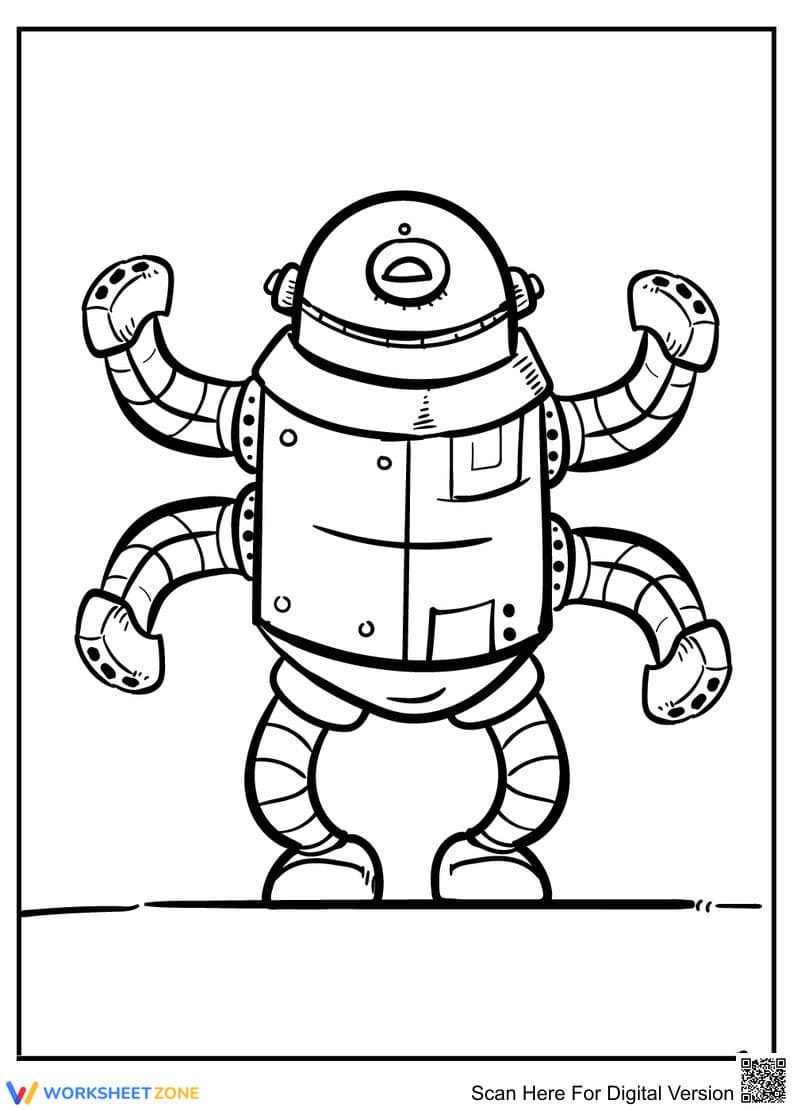

Four Arms Robot Coloring Page | Essential Grade K-5
Paste this activity's link or code into your existing LMS (Google Classroom, Canvas, Teams, Schoology, Moodle, etc.).
Students can open and work on the activity right away, with no student login required.
You'll still be able to track student progress and results from your teacher account.
This Four Arms Robot coloring worksheet provides a creative outlet for students to develop fine motor control and artistic expression. By engaging with the detailed mechanical lines of this unique character, learners practice precision and color selection. It serves as an excellent supplemental activity for early finishers or as a thematic tie-in for science units.
At a Glance
- Grade: K-5 · Subject: Arts & Crafts
- Standard:
CCSS.ELA-LITERACY.SL.K.5— Add visual displays to descriptions to provide additional detail and clarity- Skill Focus: Fine motor development
- Format: 1 page · 1 task · No answer key required · PDF
- Best For: Early finishers and creative brain breaks
- Time: 15–20 minutes
This single-page PDF features a high-resolution line art illustration of a friendly robot with four articulated arms. The design includes various geometric shapes and mechanical details, providing multiple zones for color experimentation. There are no complex instructions, making it immediately accessible to students across the elementary grade spectrum without teacher intervention or lengthy explanations.
The workflow for this resource is designed for maximum efficiency in a busy classroom. First, print the single-page PDF (30 seconds). Next, distribute the sheets to students during transition periods or as part of a choice board (1 minute). Finally, review the completed artwork to assess grip strength and color boundary awareness (30 seconds). Total teacher preparation time is under 2 minutes.
This resource aligns with CCSS.ELA-LITERACY.SL.K.5, which encourages students to "add drawings or other visual displays to descriptions as desired to provide additional detail." While primarily an artistic task, it supports the foundational visual literacy required for later descriptive writing and scientific labeling. This standard code can be copied directly into lesson plans, IEP goals, or district curriculum mapping tools.
Use this worksheet during a "Science and Invention" unit to spark discussion about robotics and engineering. It also functions perfectly as a formative assessment tool for Kindergarten teachers to observe pencil grip and hand-eye coordination. Expect students to spend 15 to 20 minutes completing the page, depending on their attention to detail and choice of artistic medium.
This activity is ideal for Kindergarten through Grade 5 students, particularly those who benefit from tactile, non-verbal tasks to reset between core subjects. It pairs naturally with a read-aloud about robots or a basic introductory lesson on simple machines and mechanical parts. It is a versatile addition to any elementary teacher's emergency sub-folder.
According to the RAND AIRS 2024 report on elementary engagement, integrating creative visual tasks like this Four Arms Robot coloring page significantly improves student focus during subsequent high-stakes instruction. This resource targets CCSS.ELA-LITERACY.SL.K.5 by allowing students to create visual representations that can later be used to anchor verbal or written descriptions. Research by Fisher & Frey (2014) suggests that fine motor activities are essential precursors to writing fluency in early childhood education. By providing a structured yet open-ended artistic task, teachers can support the development of the small muscle groups necessary for legible handwriting. This printable worksheet offers a 1-page, zero-prep solution for educators looking to blend artistic expression with foundational literacy standards. It is a reliable tool for classroom management and individual student growth in visual-spatial awareness.


