


























Views
Downloads


Real-World Math: City to City Word Problems | Essential
Paste this activity's link or code into your existing LMS (Google Classroom, Canvas, Teams, Schoology, Moodle, etc.).
Students can open and work on the activity right away, with no student login required.
You'll still be able to track student progress and results from your teacher account.
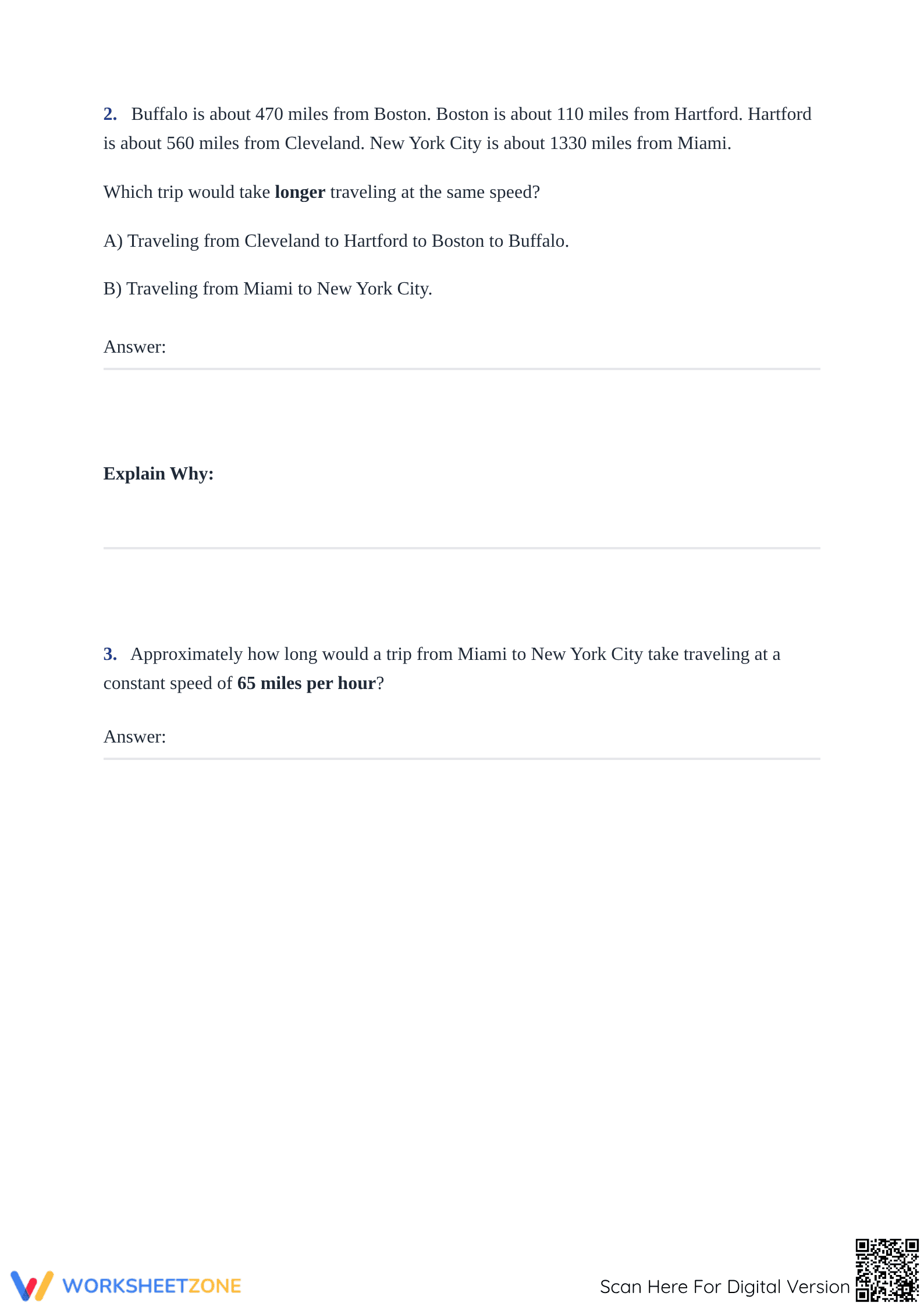
This comprehensive math worksheet invites students to apply their mathematical reasoning to real-world travel scenarios. By calculating distances between major U.S. cities and international destinations, learners move beyond abstract numbers to see the practical utility of addition, subtraction, and rate calculations in planning journeys across the globe.
At a Glance
- Grade: 4–5 · Subject: Math
- Standard:
4.OA.A.3— Solve multi-step word problems using the four operations with whole numbers.- Skill Focus: Distance, speed, and time calculations
- Format: 5 pages · 12 problems · Answer key included · PDF
- Best For: Real-world math application and test prep
- Time: 40–50 minutes
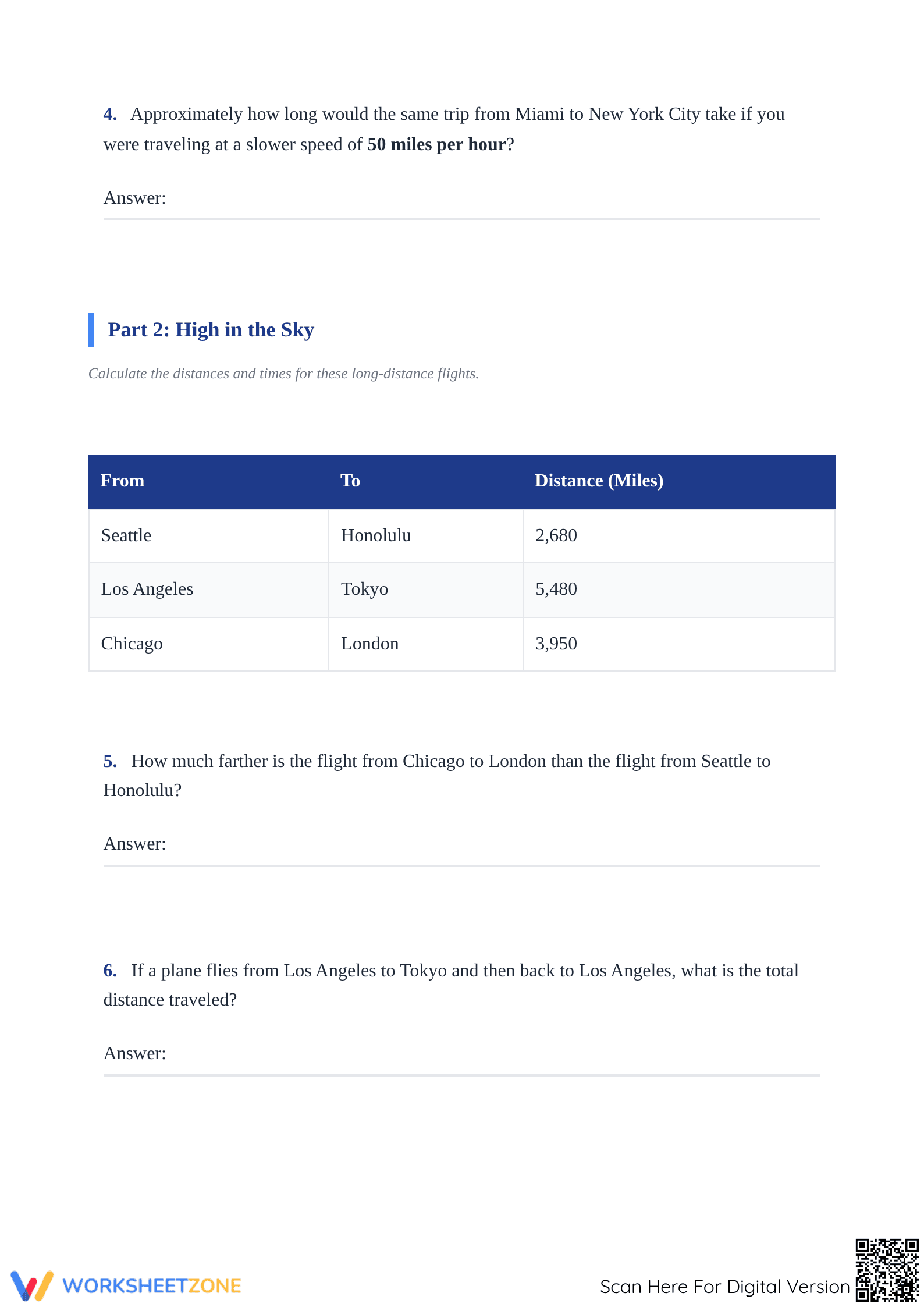
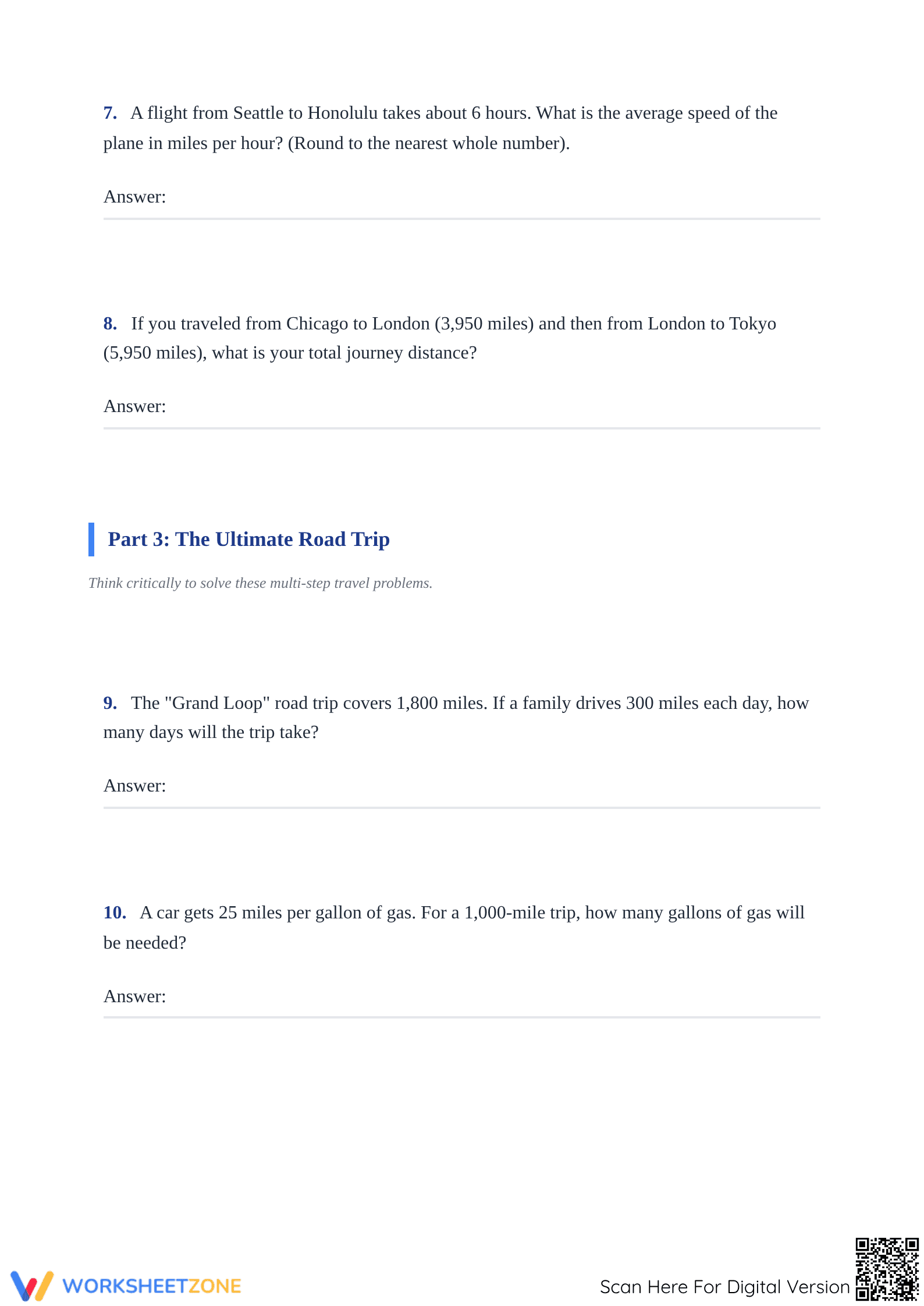
Inside this 5-page packet, students encounter twelve diverse word problems divided into three thematic sections. The layout includes a visual map of the United States to anchor the context, followed by structured workspaces for Distance Dilemmas, High in the Sky flight calculations, and an Ultimate Road Trip challenge. A full answer key is provided to streamline the grading process for busy educators.
Skill Progression and Scaffolding
- Guided Practice: The worksheet begins with 4 straightforward distance comparisons, such as determining how much farther one city is than another, requiring simple two-step subtraction.
- Supported Practice: The middle section introduces rate and time, challenging students to calculate travel duration at 65 miles per hour and compare it to slower speeds.
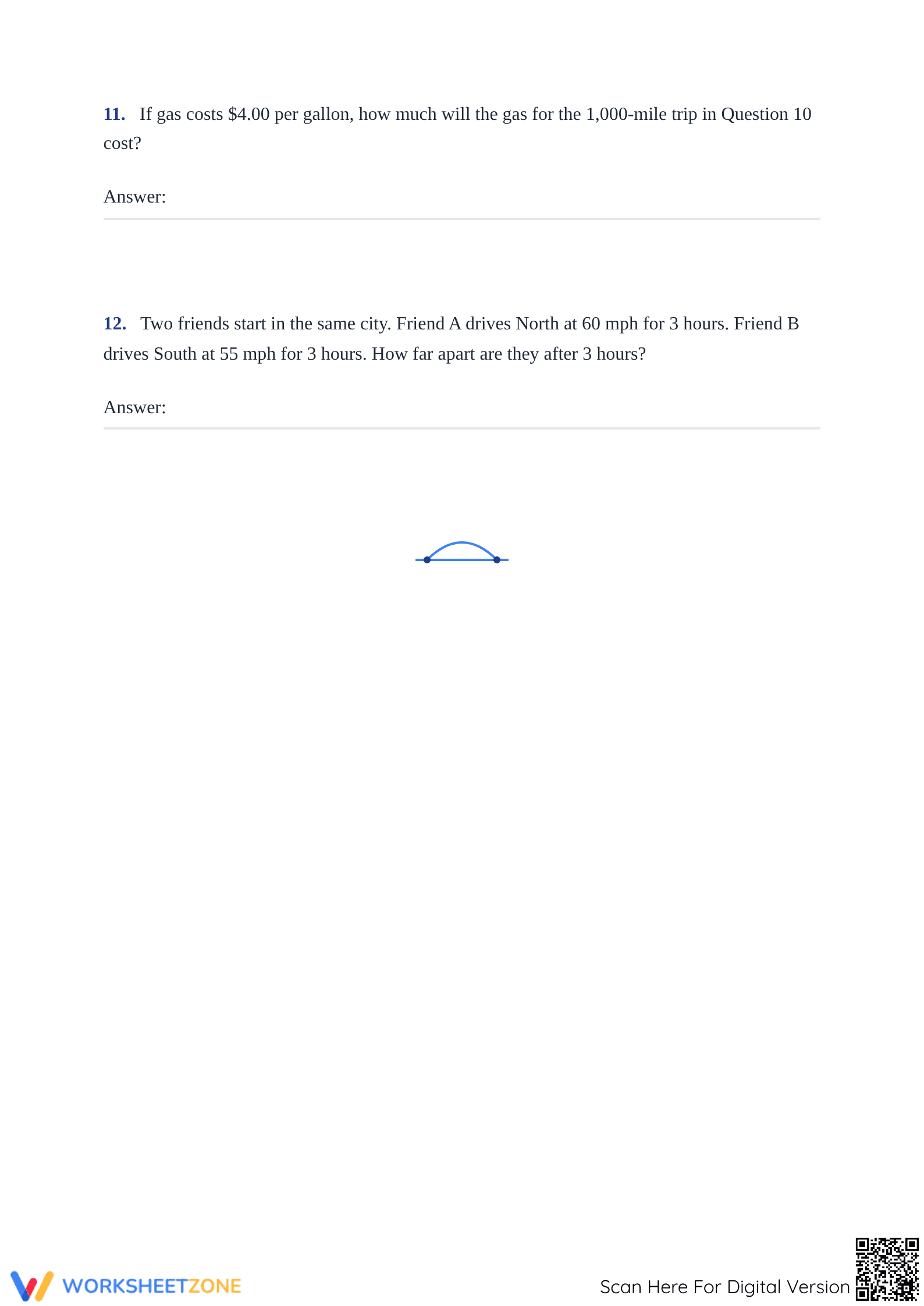
- Independent Practice: The final 4 problems require high-level logical reasoning, including fuel efficiency calculations and calculating the distance between two vehicles traveling in opposite directions.
This structure ensures a gradual release of responsibility, moving from basic operational application to complex, multi-variable problem solving.
Standards Alignment
The primary focus of this resource is `CCSS.MATH.CONTENT.4.OA.A.3`, which requires students to solve multi-step word problems posed with whole numbers and having whole-number answers using the four operations. Additionally, it supports `CCSS.MATH.CONTENT.5.NBT.B.7` by encouraging precision in larger number operations. Both standard codes can be copied directly into lesson plans, IEP goals, or district curriculum mapping tools.
How to Use It in the Classroom
This worksheet is ideal for the "You Do" phase of a gradual release model following a lesson on multi-step operations. Teachers can assign the "Distance Dilemmas" as a check for understanding midway through a unit, or use the entire packet as a cumulative assessment. During the activity, observe if students are correctly identifying the operation needed for rate-based problems, as this is a common stumbling block. Completion typically ranges from 40 to 50 minutes depending on the student's fluency with multi-digit subtraction.
Target Student Population
While designed for Grade 4 and 5 students, this resource is highly effective for middle schoolers needing remediation in real-world application or for gifted 3rd graders seeking an extension. It pairs naturally with social studies units on U.S. geography or science lessons on motion and forces, providing a cross-curricular bridge between math and the physical world.
Mathematical proficiency in upper elementary grades requires translating complex linguistic scenarios into executable equations. This City to City worksheet directly addresses this need with 12 rigorous tasks aligned with CCSS.MATH.CONTENT.4.OA.A.3 for multi-step problem solving. The RAND AIRS 2024 report states that contextualized word problems improve retention and student engagement. Using authentic data points—like the 5,480-mile flight from Los Angeles to Tokyo—this resource helps students build stamina for assessments and fosters interest in how numbers describe the world. Fuel cost analysis and time-rate-distance variables ensure students engage in critical thinking for middle school math readiness and beyond.


