




























Views
Downloads

Essential Grade 7 Food Web and Chain Worksheet

Paste this activity's link or code into your existing LMS (Google Classroom, Canvas, Teams, Schoology, Moodle, etc.).
Students can open and work on the activity right away, with no student login required.
You'll still be able to track student progress and results from your teacher account.
This comprehensive life science resource helps students master the complexities of energy transfer within ecosystems. By analyzing both linear food chains and intricate food webs, learners develop a concrete understanding of how matter and energy move through biological communities. Students will identify producers, various consumer levels, and the critical role of energy flow in maintaining environmental balance.
At a Glance
- Grade: 7 · Subject: Science
- Standard:
MS-LS2-3— Develop a model to describe the cycling of matter and flow of energy- Skill Focus: Food Web Analysis & Energy Flow
- Format: 2 pages · 15 problems · Answer key included · PDF
- Best For: Mid-unit formative assessment or independent practice
- Time: 30–45 minutes
What's Inside
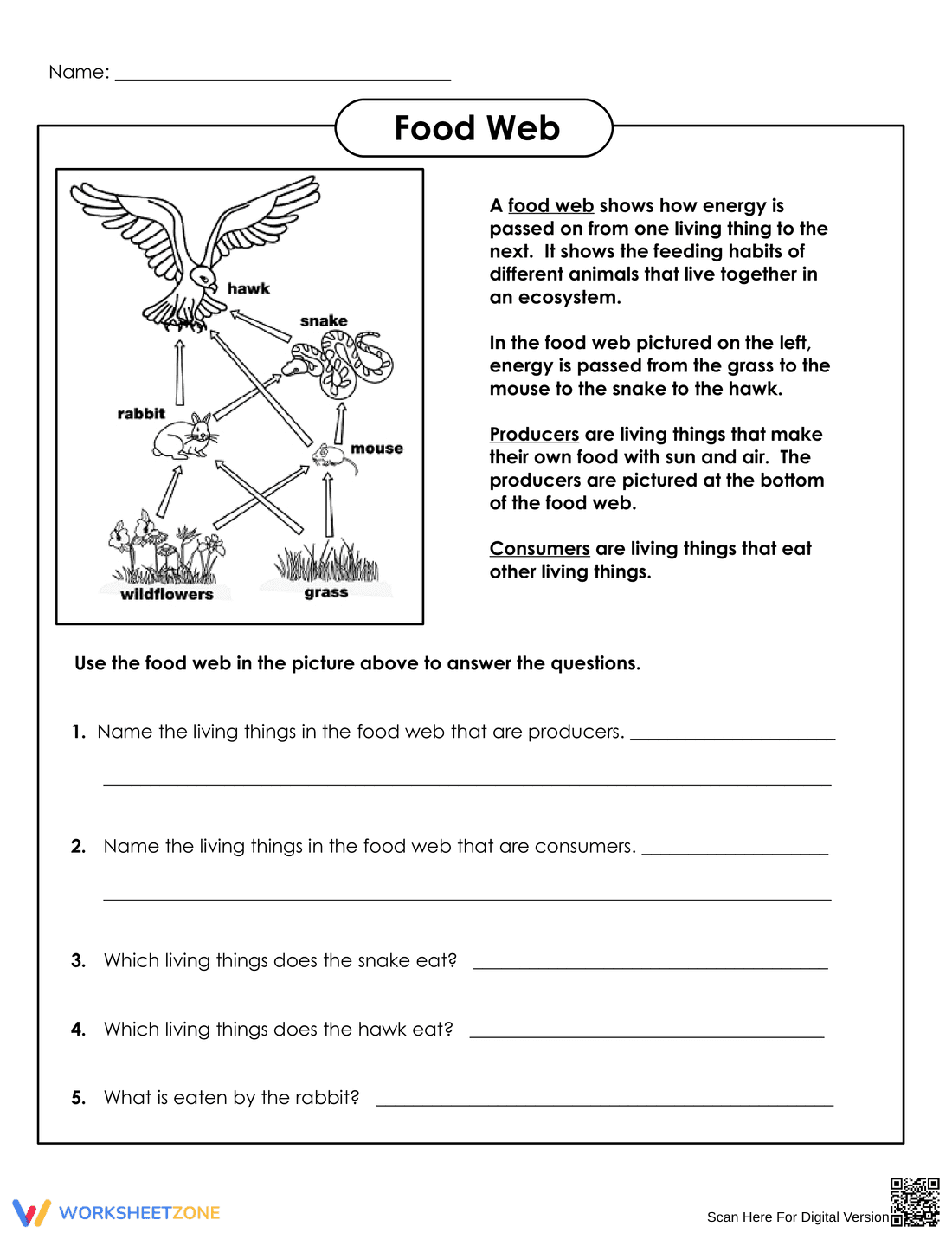
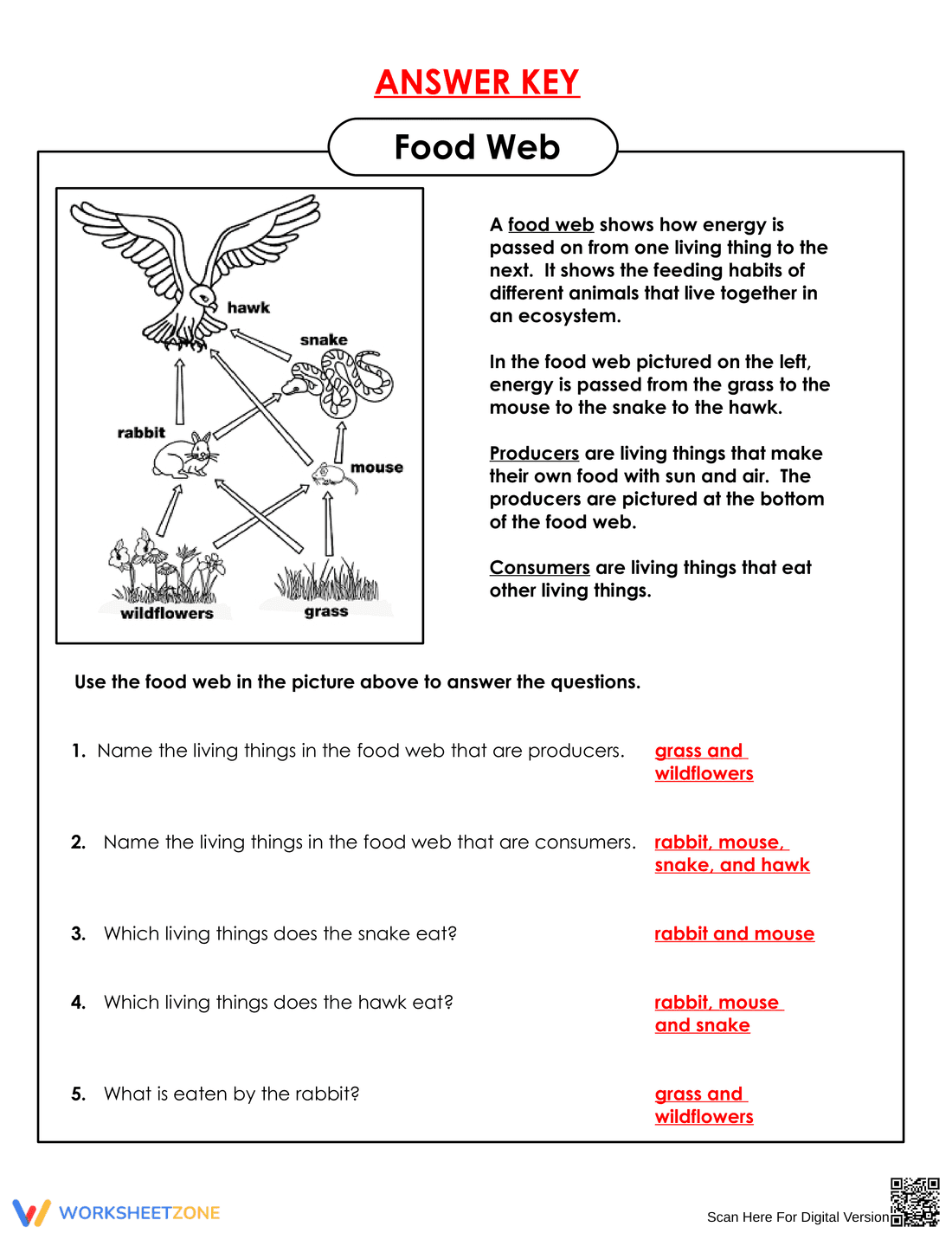
This 2-page PDF contains four distinct sections designed to build conceptual depth. Page one features a linear food chain analysis followed by a guided activity where students construct a food web from four separate chains. Page two introduces a complex aquatic and terrestrial food web, challenging students to trace energy through six trophic levels and predict the ecological consequences of species loss.
Zero-Prep Workflow
This resource is designed for immediate classroom implementation with a total teacher prep time of under 2 minutes. Simply print the double-sided worksheet and distribute it to students as a quiet-work activity or a collaborative partner task. The included answer key allows for rapid grading or student self-correction, making it an ideal choice for emergency sub plans.
Standards Alignment
This worksheet is primarily aligned with `MS-LS2-3`: "Develop a model to describe the cycling of matter and flow of energy among living and nonliving parts of an ecosystem." It also supports 5-LS2-1 by focusing on the movement of matter among plants and animals. Both standard codes can be copied directly into lesson plans, IEP goals, or district curriculum mapping tools.
How to Use It
Use this worksheet as a mid-lesson check for understanding after introducing the concept of trophic levels. Teachers should observe students during the "frog population" scenario to assess their ability to predict cascading effects in a community. Completion typically takes 35 minutes, allowing for a 10-minute whole-class review of the final comparison question to solidify the distinction between chains and webs.
Who It's For
This activity is tailored for middle school life science students, including those requiring visual scaffolds for complex systems. It pairs naturally with an introductory slide deck on ecology or a classroom anchor chart depicting local flora and fauna. The clear diagrams support English Language Learners by providing visual context for vocabulary terms like "tertiary consumer" and "producer."
ScienceDirect TpT Analysis (2023) indicates that visual modeling of energy transfer, such as the food web diagrams provided here, significantly improves retention of ecological concepts compared to text-only instruction. By requiring students to trace the flow of energy from producers like lettuce and land plants through multiple trophic levels to apex predators like foxes and cats, this worksheet reinforces the MS-LS2-3 standard. The inclusion of "what-if" scenarios—such as the sudden removal of a frog population—encourages higher-order thinking regarding ecosystem stability and interdependence. Research by Fisher & Frey (2014) supports this gradual release of responsibility, moving from simple linear chains to complex interconnected webs. This resource provides the necessary scaffolding for middle school learners to master the distinction between linear energy paths and the multi-faceted reality of biological communities.


