


























Views
Downloads


Food Vocabulary Printable Worksheet | Grade 1 ELA
Paste this activity's link or code into your existing LMS (Google Classroom, Canvas, Teams, Schoology, Moodle, etc.).
Students can open and work on the activity right away, with no student login required.
You'll still be able to track student progress and results from your teacher account.
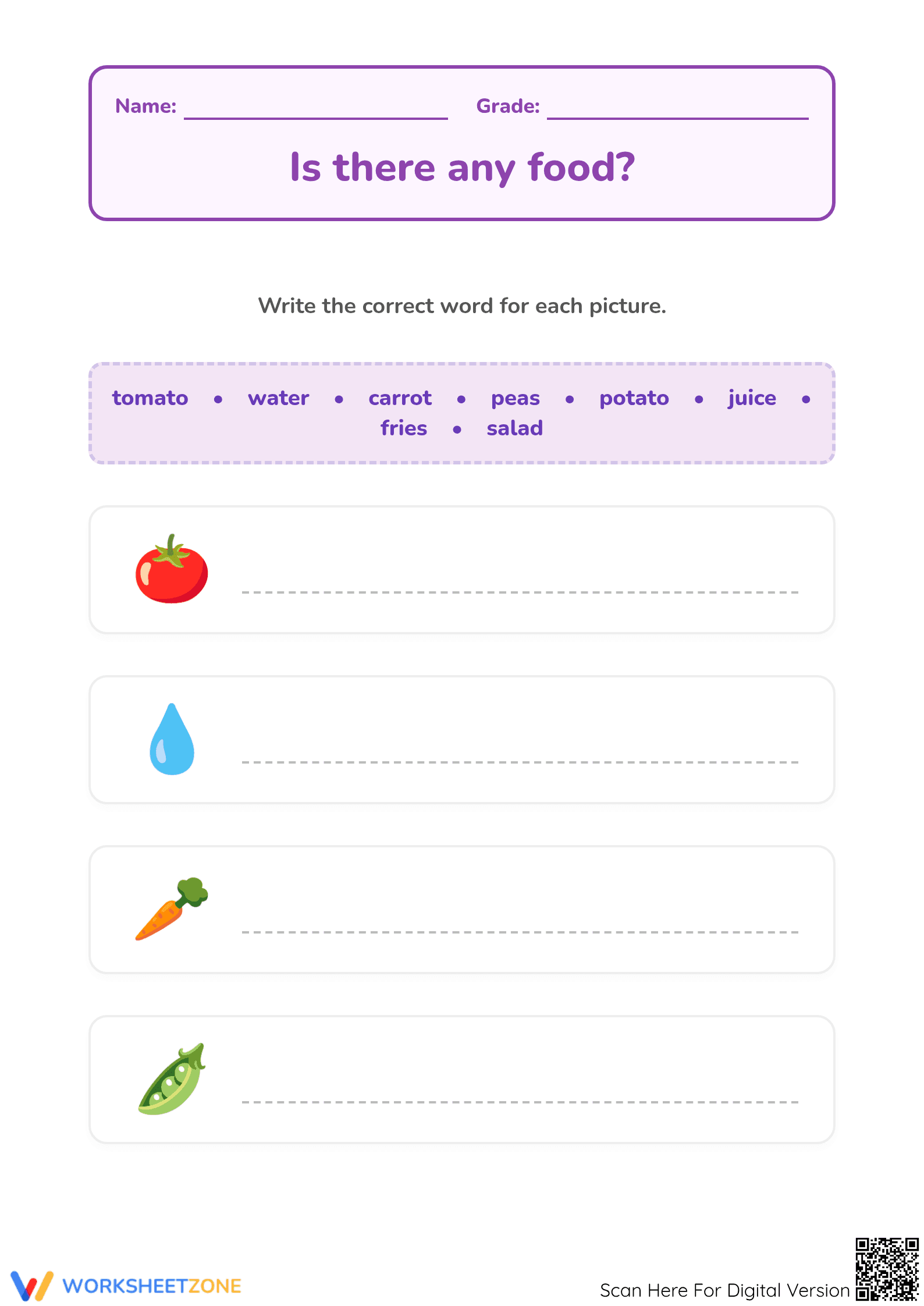
This Grade 1 English Language Arts worksheet helps students build foundational vocabulary by matching familiar food items to their written names. By using a provided word bank and clear visual cues, young learners will confidently practice spelling and word recognition to strengthen their early reading and writing skills.
At a Glance
- Grade: 1 · Subject: ELA
- Standard:
CCSS.ELA-LITERACY.L.1.6— Use acquired words and phrases to build foundational vocabulary skills and improve reading comprehension- Skill Focus: Food Vocabulary and Spelling
- Format: 2 pages · 8 problems · Answer key included · PDF
- Best For: Independent practice, morning work, early finisher activities, and small group literacy centers
- Time: 10–15 minutes
This two-page resource features eight straightforward picture-matching tasks. Students look at colorful illustrations of common foods and drinks—such as a tomato, water, carrots, and peas—and select the correct spelling from a clearly formatted word bank at the top of the first page. The generous writing lines support early handwriting development, while the included answer key ensures quick and accurate grading for educators.
Zero-Prep Workflow
This resource is designed for immediate classroom implementation:
- Print (1 minute): Simply print the two-page PDF. The clean layout requires no special formatting or cutting.
- Distribute (1 minute): Hand out the worksheets. The visual word bank makes the instructions instantly clear to first graders.
- Review (3 minutes): Use the provided answer key to quickly check student work or project it on the board for self-correction.
With a total teacher prep time of under two minutes, this activity is an excellent addition to any emergency sub plan or last-minute literacy center.
Standards Alignment
This worksheet is aligned to primary standard CCSS.ELA-LITERACY.L.1.6, which requires students to use words and phrases acquired through conversations, reading and being read to, and responding to texts. It also supports early spelling and phonics application as students write the words on the provided lines. Both standard codes can be copied directly into lesson plans, IEP goals, or district curriculum mapping tools.
How to Use It
This activity fits perfectly into morning work or literacy centers. Assign it after a whole-class read-aloud about food, nutrition, or farming to reinforce thematic vocabulary. As a formative assessment tip, observe how students use the word bank: note whether they cross out words as they use them or if they rely heavily on initial consonant sounds to make their choices. Most first graders will complete this assignment within a 10 to 15-minute time frame.
Who It's For
This worksheet is designed for first-grade students developing their sight word recognition and thematic vocabulary. The clear visual supports make it highly accessible for English Language Learners (ELLs) who are building their foundational English vocabulary. It pairs wonderfully with a classroom anchor chart categorizing healthy foods or a direct instruction lesson on sorting objects into categories.
Effective vocabulary instruction in the early grades relies heavily on connecting visual representations with written text. According to Fisher & Frey (2014), providing students with clear visual scaffolds alongside targeted word banks significantly increases their ability to acquire and retain new vocabulary. This resource directly supports CCSS.ELA-LITERACY.L.1.6 by requiring students to use acquired words and phrases in a structured context. By matching familiar images to specific terms, young learners bridge the gap between spoken language and written expression. The straightforward format reduces cognitive load, allowing students to focus on word recognition. Integrating this type of targeted, visually supported practice into daily literacy routines ensures that foundational vocabulary skills are firmly established, paving the way for more advanced reading comprehension and writing tasks as students progress through the primary grades.


