


























Views
Downloads
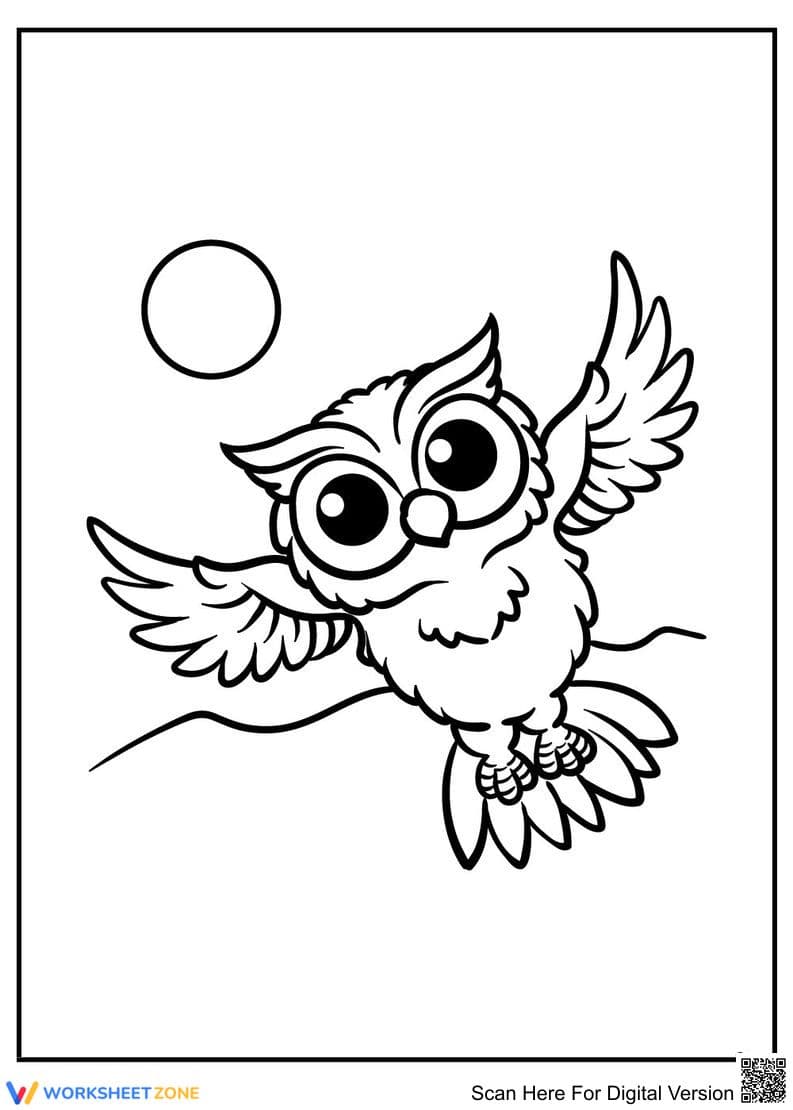

Flying Baby Owl Coloring Page | Printable Worksheet
Paste this activity's link or code into your existing LMS (Google Classroom, Canvas, Teams, Schoology, Moodle, etc.).
Students can open and work on the activity right away, with no student login required.
You'll still be able to track student progress and results from your teacher account.
This Flying Baby Owl coloring page provides a creative outlet for young learners to develop essential fine motor control while exploring nature themes. By focusing on the intricate lines of the owl's feathers and the night sky, students practice the precision required for early writing and artistic expression in a fun, low-stress environment.
At a Glance
- Grade: K-2 · Subject: Arts & English
- Standard:
CCSS.ELA-LITERACY.SL.K.5— Add visual displays to descriptions to provide additional detail- Skill Focus: Fine Motor & Creativity
- Format: 1 page · 1 task · No answer key · PDF
- Best For: Morning work or early finishers
- Time: 15–20 minutes
Inside this resource, you will find a high-quality, single-page PDF featuring a charming baby owl in mid-flight beneath a full moon. The illustration uses bold, clear outlines to help younger children stay within the lines, while offering enough detail in the wings and tail feathers to challenge older elementary students.
The zero-prep workflow for this activity is designed for maximum efficiency. First, print the single-page PDF in seconds. Next, distribute the sheets to students with a variety of coloring tools like crayons or colored pencils. Finally, review the completed work by having students describe the colors they chose, taking less than 2 minutes of total teacher preparation time. This makes it an ideal choice for emergency sub plans or quiet time.
This worksheet aligns with CCSS.ELA-LITERACY.SL.K.5, which encourages students to use visual displays to enhance their communication. By coloring this scene, students create a visual representation that can support oral storytelling or descriptive writing about nocturnal animals. Both standard codes can be copied directly into lesson plans, IEP goals, or district curriculum mapping tools.
Use this worksheet as a calming transition activity after recess or as a creative supplement to a science unit on birds of prey. For a formative assessment, observe how students handle their coloring tools to gauge grip strength and coordination. Expect students to spend 15 to 20 minutes completing their masterpiece, allowing you time to handle administrative tasks or small group rotations.
This resource is ideal for Kindergarten through 2nd-grade students, particularly those needing extra practice with hand-eye coordination. It pairs naturally with a read-aloud of "Owl Babies" or an anchor chart about nocturnal versus diurnal animals, providing a tactile connection to the lesson's core themes for visual and kinesthetic learners alike.
Research from Fisher & Frey (2014) emphasizes the importance of visual literacy and fine motor development in the early years as a precursor to formal writing proficiency. This Flying Baby Owl worksheet addresses these needs by providing a structured yet creative task aligned with CCSS.ELA-LITERACY.SL.K.5. Engaging with 1 detailed illustration allows students to practice the "stop-and-start" motor control necessary for letter formation. According to the RAND AIRS 2024 report, integrating artistic tasks into the ELA block supports cognitive engagement and helps solidify vocabulary related to the natural world. By focusing on a single, high-interest subject like an owl, educators can bridge the gap between creative play and academic standards. This printable resource serves as a foundational tool for developing the grip and stamina required for the 180 days of the school year, ensuring students are ready for more complex writing tasks.


