


























Views
Downloads

Flower Dissection Lab Worksheet | Essential Science Guide
Paste this activity's link or code into your existing LMS (Google Classroom, Canvas, Teams, Schoology, Moodle, etc.).
Students can open and work on the activity right away, with no student login required.
You'll still be able to track student progress and results from your teacher account.
This flower dissection lab guides middle school students through angiosperm anatomy. By performing a step-by-step investigation, learners identify reproductive structures and understand their roles in plant survival. This activity transforms biological concepts into a tangible experience that builds foundational botanical knowledge.
At a Glance
- Grade: 6–8 · Subject: Life Science
- Standard:
MS-LS1-4— Explain how specialized plant structures affect the probability of successful reproduction- Skill Focus: Flower Anatomy & Dissection
- Format: 4 pages · 9 tasks · Lab Procedure · PDF
- Best For: Hands-on biology lab or unit assessment
- Time: 45–60 minutes
What's Inside
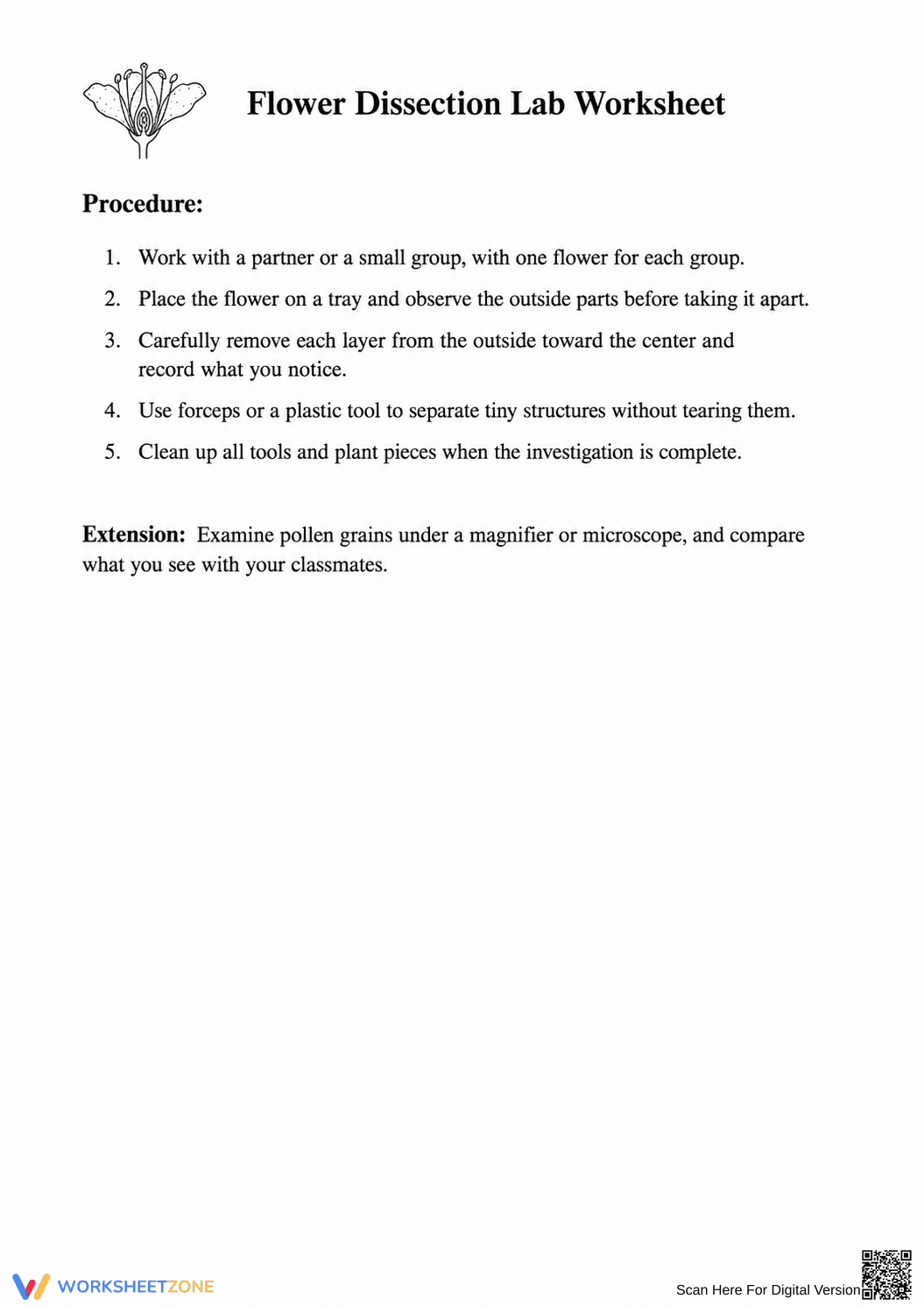
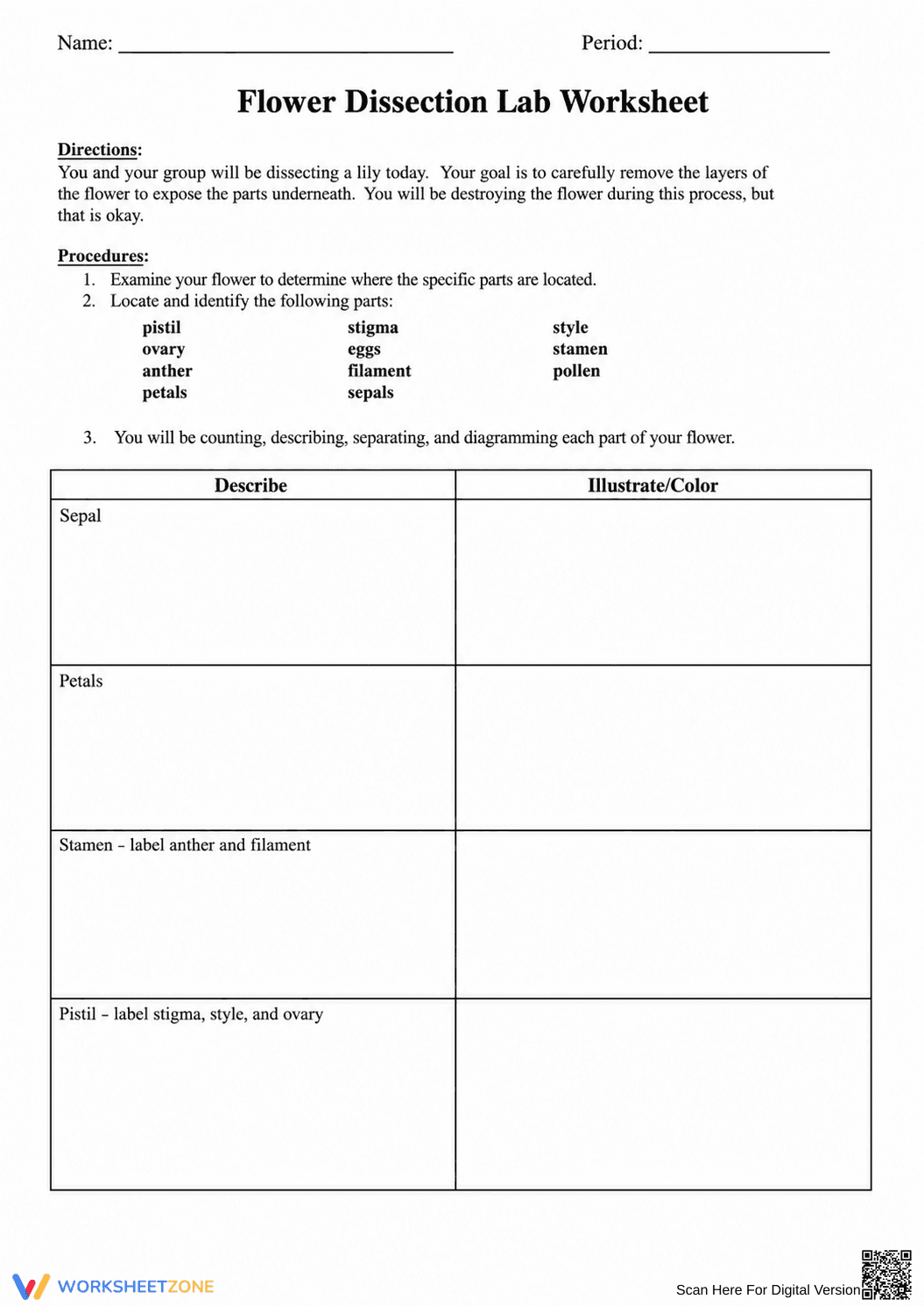
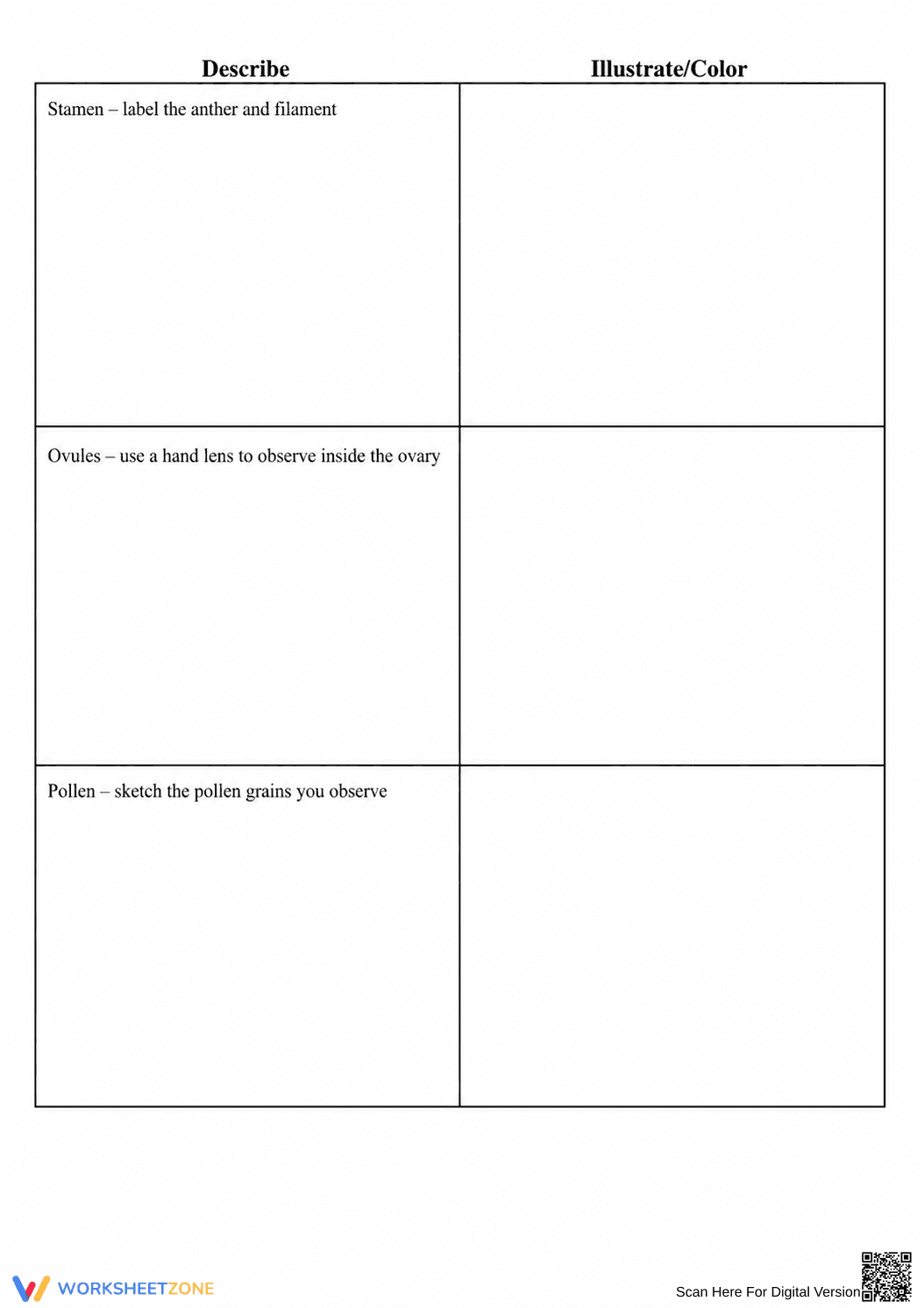
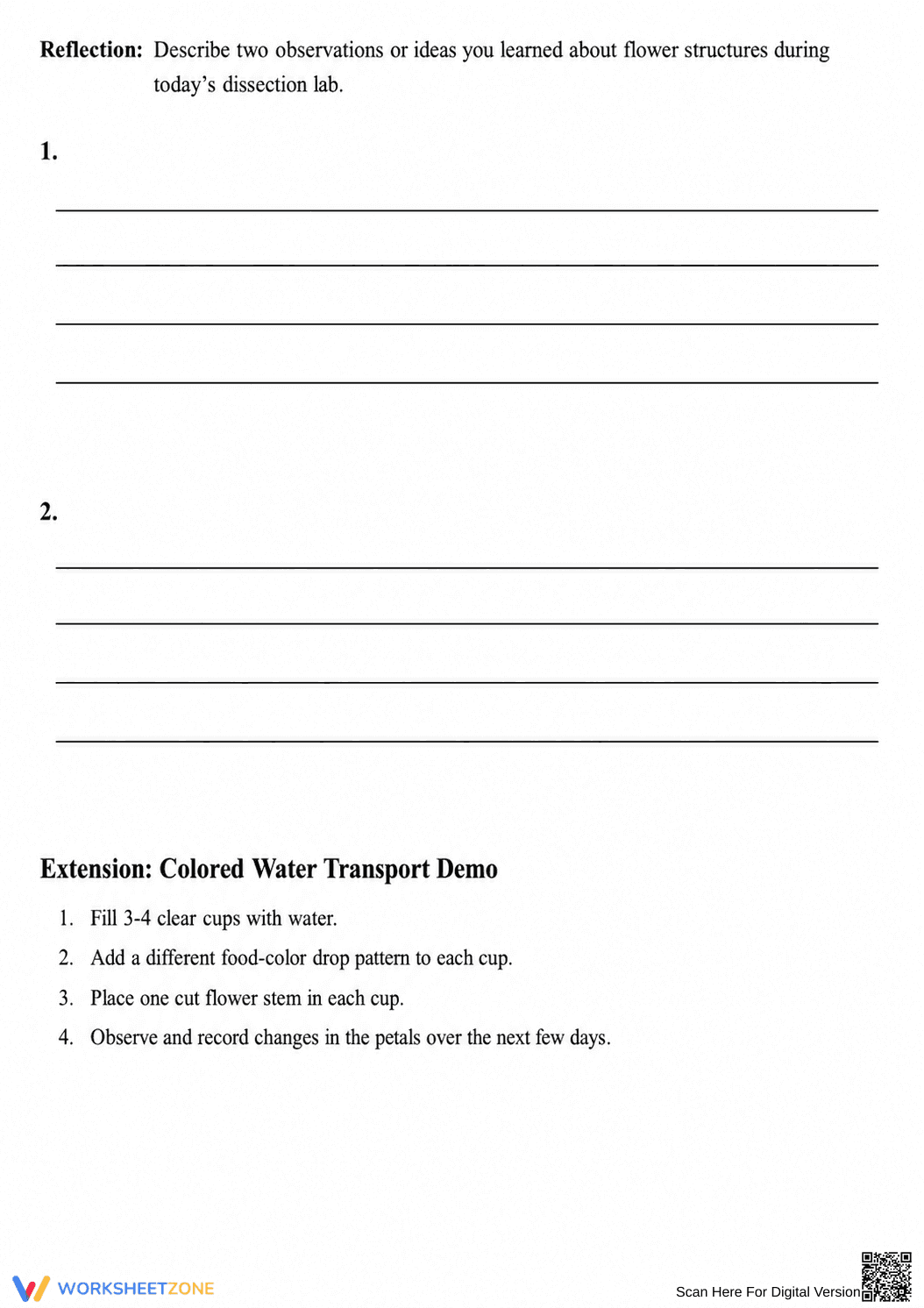
The 4-page packet includes a procedure list, an observation table for 7 flower parts, and a reflection section. It features spaces for written descriptions and scientific illustrations. Additionally, the worksheet provides extension activities for microscopic pollen examination and a water transport demonstration.
Zero-Prep Workflow
Teachers can implement this lab with minimal lead time. First, print the 4-page guide (1 minute). Second, distribute the pre-organized lab kits (1 minute). Third, facilitate the 45-minute dissection while students record data. Total teacher prep time is under 2 minutes if materials are staged. This structured layout ensures students stay on task with zero additional teacher-created scaffolding required.
Standards Alignment
This resource aligns with MS-LS1-4, focusing on how specialized plant structures affect reproduction. It specifically targets the identification of structures like the stigma and anther. Both standard codes can be copied directly into lesson plans, IEP goals, or district curriculum mapping tools.
How to Use It
Use this worksheet during the "Explore" phase of a 5E instructional cycle on plant reproduction. It serves as a primary data collection tool where students gather empirical evidence of plant structures. For a formative assessment, observe students as they attempt to locate the ovules within the ovary; their ability to distinguish these internal parts provides immediate insight into their spatial and biological understanding.
Who It's For
This lab is designed for middle school life science students and high school biology learners requiring a hands-on review of plant systems. It is particularly effective for visual and kinesthetic learners. Pair this worksheet with a diagrammatic anchor chart of a lily or a short video on the pollination process to provide a multi-modal learning environment.
According to the RAND AIRS 2024 report, hands-on laboratory experiences significantly increase student retention of complex biological terminology compared to passive reading. This worksheet facilitates that active engagement by requiring students to map the MS-LS1-4 standard to physical specimens. By identifying structures such as the filament, style, and pollen grains, students move beyond rote memorization into scientific inquiry. Research from Fisher & Frey (2014) emphasizes that structured lab guides provide the necessary scaffolding for students to develop independent observation skills. This 4-page resource ensures that the 9 specific tasks lead students toward a comprehensive understanding of how specialized plant structures facilitate reproduction. The inclusion of a reflection section allows for the synthesis of findings, a critical component of evidence-based scientific writing and long-term conceptual mastery in middle school science curricula, ensuring students meet rigorous state and national standards.


