


























Views
Downloads

Winter Vocabulary Flashcards | Printable Kindergarten Ready
Paste this activity's link or code into your existing LMS (Google Classroom, Canvas, Teams, Schoology, Moodle, etc.).
Students can open and work on the activity right away, with no student login required.
You'll still be able to track student progress and results from your teacher account.
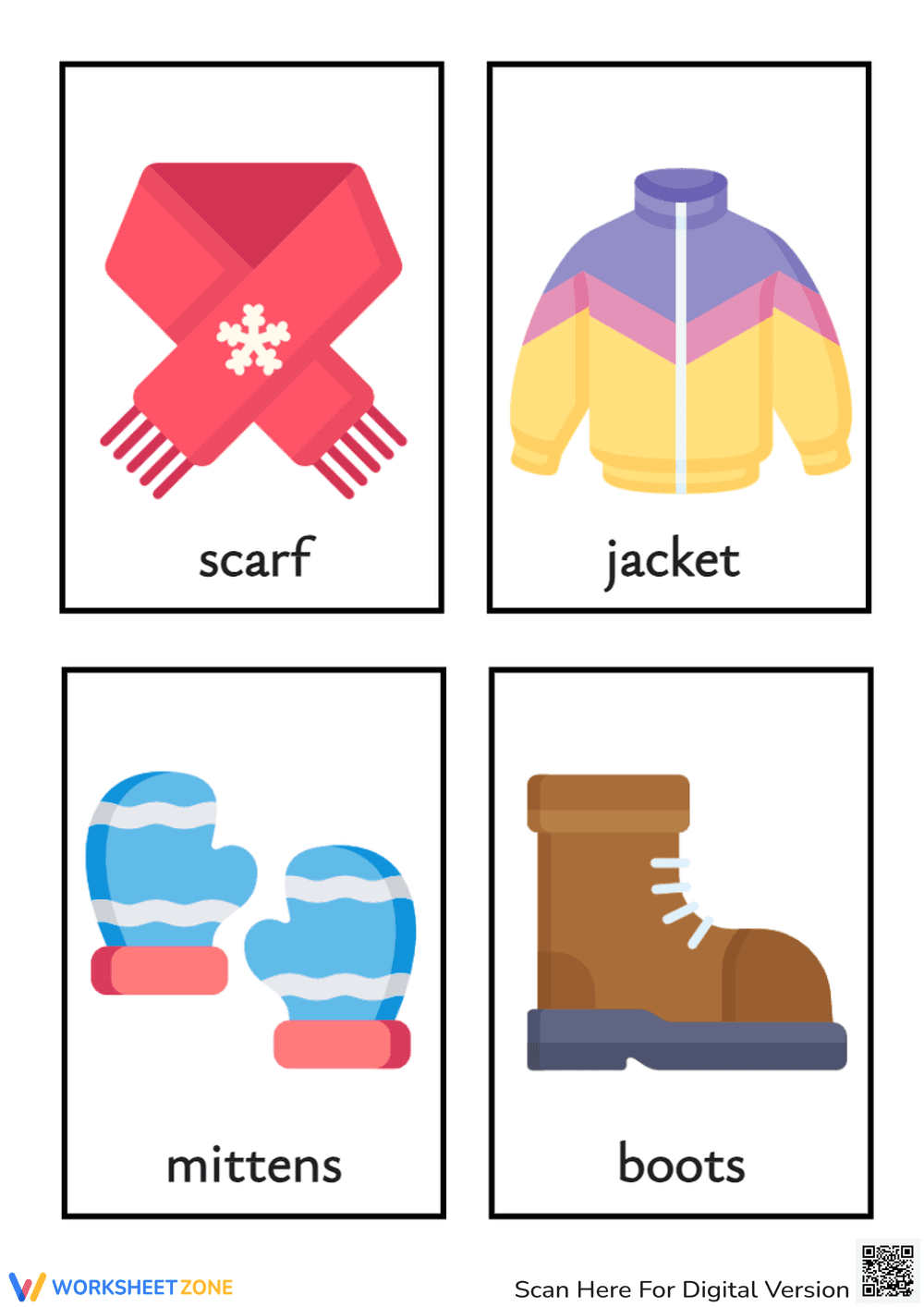
These winter vocabulary flashcards provide a visual foundation for seasonal language development. Students identify essential items like scarves, jackets, and mittens to build word recognition and oral proficiency. By connecting vibrant illustrations with printed text, early learners develop the cognitive links necessary for successful reading and thematic categorization during the colder months.
At a Glance
- Grade: Kindergarten · Subject: ELA
- Standard:
CCSS.ELA-LITERACY.L.K.6— Use words and phrases acquired through conversations and reading- Skill Focus: Winter Clothing Vocabulary
- Format: 3 pages · 12 problems · Answer key included · PDF
- Best For: Morning meeting or literacy centers
- Time: 5–10 minutes
This set features 12 high-quality flashcards distributed across 3 printable pages. Each card includes a vibrant, colorful illustration of a winter essential paired with a clear, lowercase label. The design utilizes high-contrast borders to assist teachers with quick cutting and organization, ensuring the cards are durable enough for repeated student handling in a classroom environment.
The zero-prep workflow is designed for busy educators. First, print the PDF on heavy cardstock for maximum durability (30 seconds). Second, use a paper trimmer to cut along the guided black lines (1 minute). Third, distribute the cards to students for immediate vocabulary practice or display them on a word wall. Total teacher preparation time is under 2 minutes, making this an ideal resource for sub plans or spontaneous seasonal lessons.
This resource is aligned to CCSS.ELA-LITERACY.L.K.6, which requires students to use words and phrases acquired through conversations, reading and being read to, and responding to texts. By mastering these 12 specific winter terms, students demonstrate their ability to categorize seasonal objects and use appropriate descriptive language. This standard code can be copied directly into lesson plans, IEP goals, or district curriculum mapping tools.
To use these cards effectively, introduce them during a morning meeting "What to Wear" discussion. Ask students to point to the card that matches what they wore to school that day. Alternatively, print two copies to create a matching game for literacy centers, encouraging students to name the item as they find a pair. This formative assessment allows teachers to observe word recognition in a low-stakes, engaging environment. Expect completion of a matching round in 5 to 10 minutes.
This resource is specifically designed for Preschool and Kindergarten students, as well as English Language Learners (ELL) who require visual scaffolds to build their English lexicon. It pairs naturally with seasonal picture books or anchor charts about weather changes. The simple, uncluttered design ensures that students with visual processing needs can focus entirely on the relationship between the image and the word.
Research from Fisher & Frey (2014) emphasizes that visual scaffolds like flashcards are essential for tiered vocabulary acquisition in early childhood. By pairing a concrete image with a written word, students bridge the gap between oral language and literacy. This resource aligns with CCSS.ELA-LITERACY.L.K.6, focusing on the acquisition of words through conversational context. According to NAEP data, early exposure to thematic vocabulary significantly impacts long-term reading comprehension. These 12 cards provide the repetitive exposure needed for mastery. Teachers can integrate these into daily routines to support language development for both native speakers and English Language Learners. The clear font and realistic illustrations ensure that students can independently recognize and name common winter items, facilitating smoother transitions into seasonal reading units and helping them build the confidence needed for independent decoding in later grades.


