


























Views
Downloads
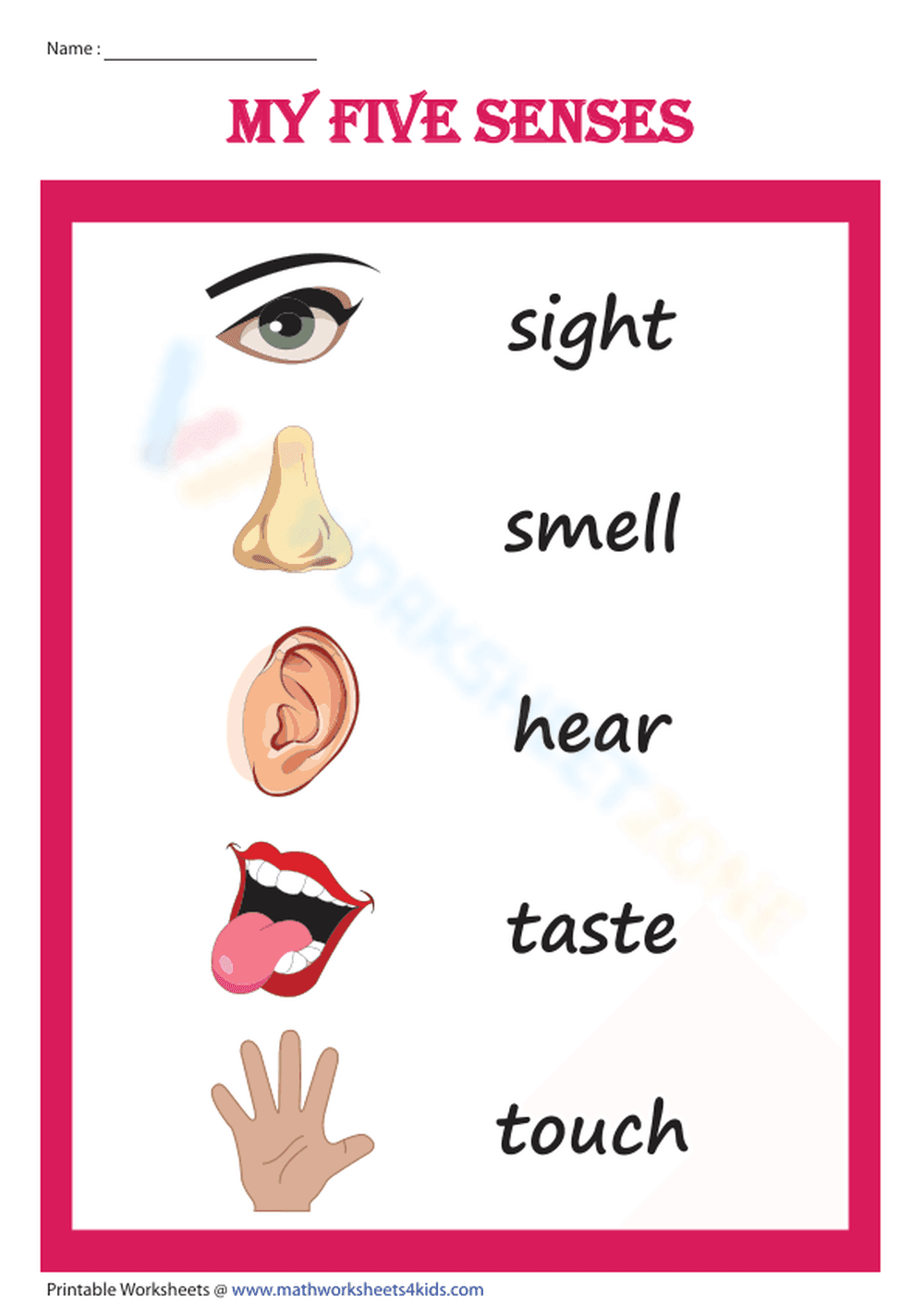

Essential Five Senses Chart for Kids | Kindergarten Science
Paste this activity's link or code into your existing LMS (Google Classroom, Canvas, Teams, Schoology, Moodle, etc.).
Students can open and work on the activity right away, with no student login required.
You'll still be able to track student progress and results from your teacher account.
This Kindergarten science chart provides a clear, visual introduction to the five senses. It helps students connect sensory organs like eyes, ears, and noses to their corresponding functions. By using this printable resource, early learners can develop the vocabulary needed to describe their observations and interact with the world around them effectively.
At a Glance
- Grade: Kindergarten · Subject: Science
- Standard:
K-LS1-1— Use observations to describe patterns of what plants and animals need to survive- Skill Focus: Identifying five senses and organs
- Format: 1 page · 5 tasks · Answer key included · PDF
- Best For: Initial instruction and classroom reference
- Time: 5–10 minutes
What's Inside
This single-page resource features a high-contrast layout for kindergarteners. It includes five sections pairing a sensory organ with its functional keyword: sight, smell, hear, taste, and touch. The document serves as a teaching aid and reference sheet, ensuring that primary science vocabulary is always accessible for student use during daily inquiry activities.
Zero-Prep Workflow
The zero-prep design allows implementation in under two minutes. First, print the PDF in color or grayscale. Second, distribute the sheet or project it for a whole-class activity. Third, review the five pairs together to verify understanding. No complex instructions or extra materials are required, making it ideal for substitute plans or quick science transitions.
Standards Alignment
The primary standard addressed is `K-LS1-1`, requiring students to use observations to describe patterns in nature. Identifying the tools of observation—the senses—is a foundational step in meeting this requirement. This resource also supports literacy by connecting high-quality images to concrete nouns. Both codes can be copied into lesson plans or curriculum mapping tools.
How to Use It
Use this chart during the Engage phase to activate prior knowledge. Point to each organ and have students mimic the action. As a formative assessment tip, ask students to identify the organ used to observe a bell ringing versus a lemon tasting, checking for immediate accuracy and recognition of the five core senses.
Who It's For
This resource is tailored for Kindergarten students and English Language Learners who benefit from strong visual-to-text associations. The clear icons provide a necessary scaffold for students who are not yet reading fluently. It pairs naturally with a hands-on Five Senses Scavenger Hunt or a Show and Tell activity where students describe objects using the vocabulary provided.
Aligned with the principles of visual literacy and early science inquiry, this Five Senses chart provides the necessary scaffolding for students to engage in evidence-based observation. By explicitly linking sensory organs to their functions, the resource supports the development of academic language in the early childhood classroom. Research by Fisher & Frey (2014) emphasizes the importance of using visual aids to support vocabulary acquisition and concept development in young learners. The clear identification of sight, smell, hearing, taste, and touch allows students to transition from simple perception to organized scientific observation. This instructional tool meets the requirements of standard K-LS1-1 by equipping students with the tools needed to gather data about their environment. Teachers can rely on this validated approach to ensure that all students, including those requiring additional linguistic support, can participate fully in science discussions and inquiry-based activities.


