


























Views
Downloads

Printable Sight Words Worksheet | Grade K ELA
Paste this activity's link or code into your existing LMS (Google Classroom, Canvas, Teams, Schoology, Moodle, etc.).
Students can open and work on the activity right away, with no student login required.
You'll still be able to track student progress and results from your teacher account.
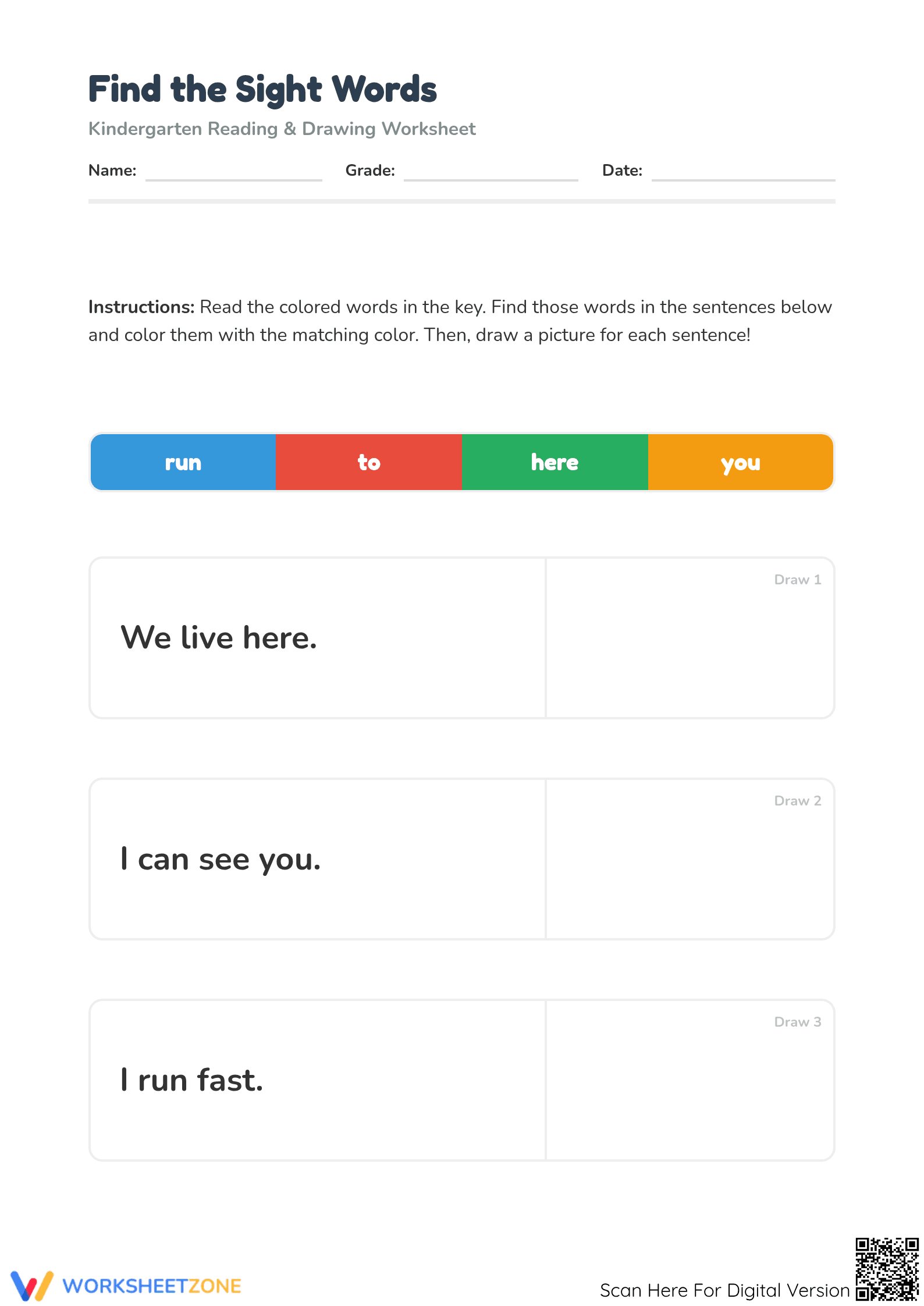
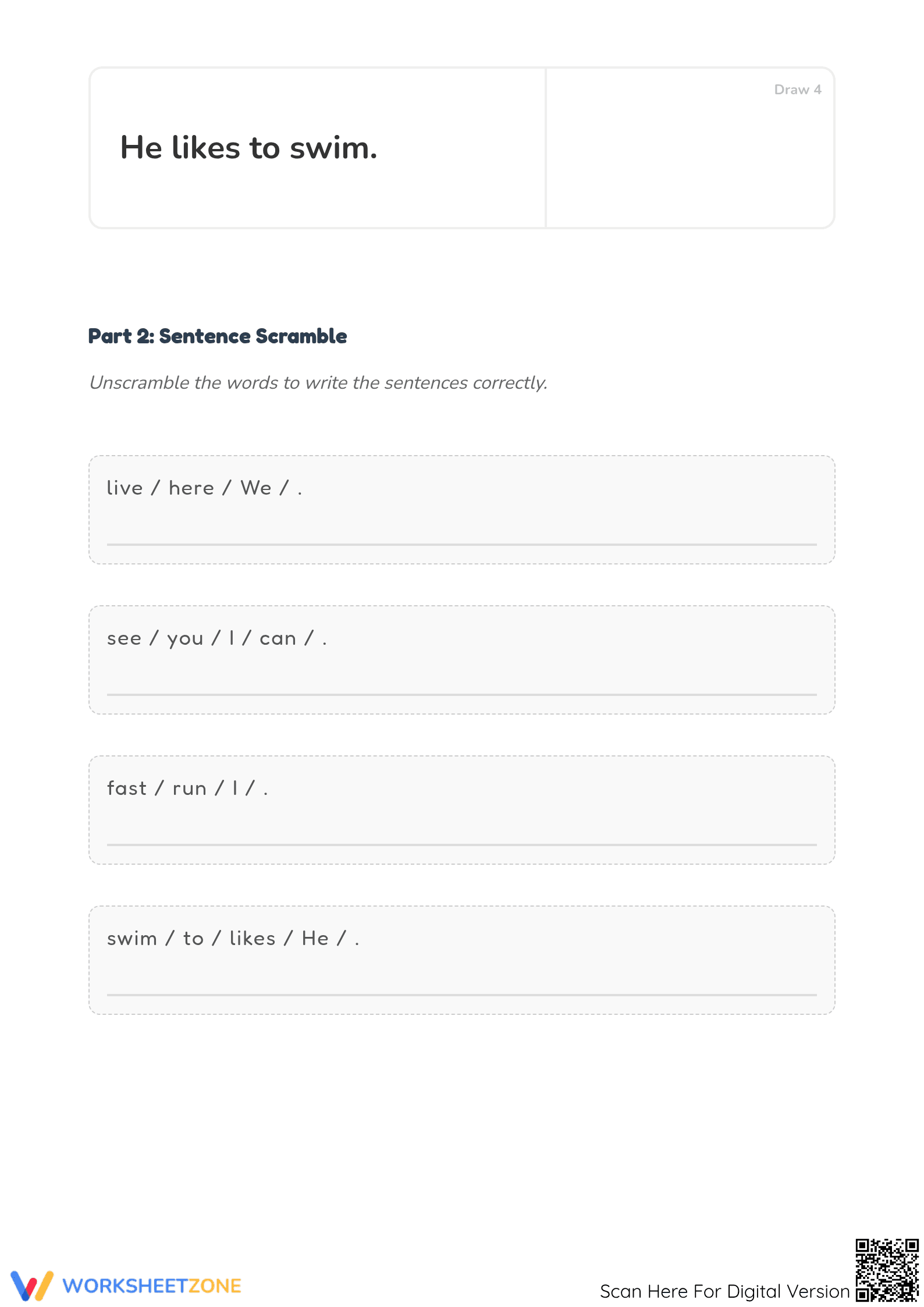
This foundational Kindergarten ELA worksheet helps early readers master high-frequency sight words and basic sentence structure. By combining color-coded word identification, reading comprehension through drawing, and sentence unscrambling, students actively build reading fluency and writing confidence in a single, engaging activity.
At a Glance
- Grade: Kindergarten · Subject: ELA
- Standard:
CCSS.ELA-LITERACY.RF.K.3.C— Read common high-frequency words by sight- Skill Focus: Sight Word Recognition
- Format: 2 pages · 8 problems · PDF
- Best For: Independent practice
- Time: 15–20 minutes
Inside this two-page resource, students will find a multi-modal approach to literacy. The first section features a color-coded sight word key where learners identify and color specific words within four simple sentences, followed by a space to draw a picture demonstrating reading comprehension. The second section challenges students with a sentence scramble, requiring them to correctly order the words from the previous page to form complete, grammatically correct sentences.
Skill Progression
- Guided practice: Students begin by using a color-coded key to locate target sight words within provided sentences, offering high support for word recognition.
- Supported practice: Next, learners draw a picture for each sentence, connecting the decoded text to meaning and demonstrating basic comprehension.
- Independent practice: Finally, students unscramble the same sentences without visual cues, applying their knowledge of syntax and sight words to write the sentences correctly.
This gradual-release approach ensures students build confidence as they move from simple identification to independent sentence construction.
Standards Alignment
This resource is directly aligned to CCSS.ELA-LITERACY.RF.K.3.C: Read common high-frequency words by sight. It also supports early writing skills by having students construct complete sentences. Both standard codes can be copied directly into lesson plans, IEP goals, or district curriculum mapping tools.
How to Use It
This worksheet is highly versatile for early childhood classrooms. Use it during morning work to reinforce sight words introduced earlier in the week, or place it in a literacy center for independent practice. As a formative assessment observation tip, watch how students approach the sentence scramble: do they capitalize the first word and recognize the ending punctuation to guide their word order? Expect students to complete both pages in approximately 15 to 20 minutes.
Who It's For
This activity is designed for Kindergarten students developing early reading and writing skills. It provides built-in differentiation through its multi-sensory tasks—visual learners benefit from the color-coding, while kinesthetic learners engage through drawing and writing. Pair this worksheet with a pocket chart sentence-building activity or a direct instruction lesson on high-frequency words to maximize student retention.
Mastering high-frequency words is a critical milestone in early literacy development. According to a recent ScienceDirect TpT Analysis, integrating multi-modal tasks—such as coloring, drawing, and writing—significantly improves sight word retention in young learners compared to rote memorization alone. This worksheet directly targets CCSS.ELA-LITERACY.RF.K.3.C, ensuring students can successfully read common high-frequency words by sight. By moving progressively from basic visual identification to hands-on sentence unscrambling, the activity reinforces both vocabulary acquisition and foundational syntax rules. Early, consistent exposure to these structured literacy tasks reduces cognitive load during independent reading, allowing Kindergarteners to focus their mental energy on decoding more complex, phonetically regular words. Educators can confidently rely on this evidence-based approach to build essential automaticity, effectively bridging the gap between isolated word recognition and meaningful text comprehension in the early childhood classroom.


