


























Views
Downloads
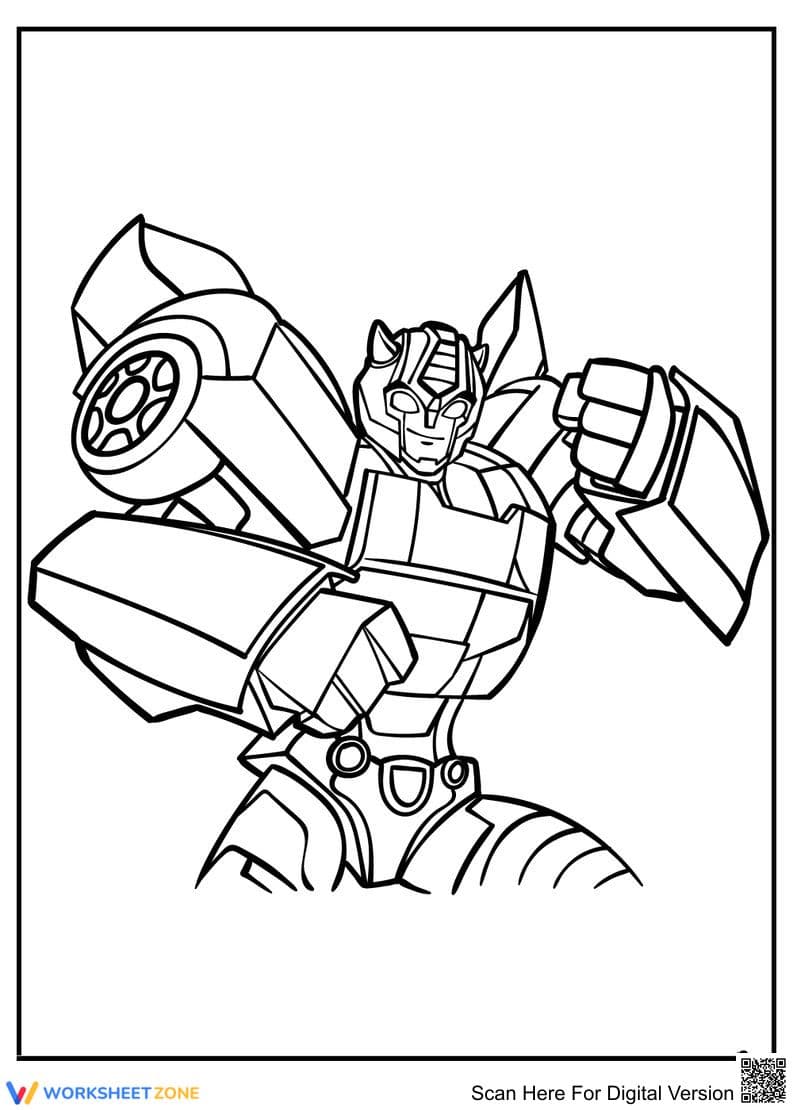

Fighting Transformers Printable Coloring Page | Grade K-5
Paste this activity's link or code into your existing LMS (Google Classroom, Canvas, Teams, Schoology, Moodle, etc.).
Students can open and work on the activity right away, with no student login required.
You'll still be able to track student progress and results from your teacher account.
This Fighting Transformers coloring worksheet provides elementary students with a high-interest creative outlet to develop essential fine motor control. By engaging with a familiar character like Bumblebee, learners practice the precision required for future writing tasks. This resource serves as an immediate, engaging activity for early finishers or as a reward for focused work.
At a Glance
- Grade: K-5 · Subject: Arts & English
- Standard:
CCSS.ELA-LITERACY.L.K.1.A— Print many upper- and lowercase letters through developed fine motor control- Skill Focus: Fine Motor Control
- Format: 1 page · 1 task · No answer key · PDF
- Best For: Early finishers and sub plans
- Time: 15–20 minutes
Inside this PDF, you will find a single, high-resolution coloring page featuring a dynamic depiction of a Transformer in a combat stance. The bold outlines are designed to help younger students practice staying within lines, while the complex mechanical details provide a challenge for older elementary students. There is no teacher setup required; simply print the page and provide coloring materials like crayons, markers, or colored pencils.
The zero-prep workflow for this resource is designed for maximum efficiency in busy classrooms. First, print the single-page PDF in approximately 30 seconds. Second, distribute the sheets to students during transition periods or as part of a choice board in under 1 minute. Third, review the completed work to observe pencil grip and color selection. Total teacher preparation time is under 2 minutes, making it an ideal emergency sub plan component.
This resource aligns with CCSS.ELA-LITERACY.L.K.1.A, which focuses on the physical act of writing and grip. While primarily an artistic activity, the hand-eye coordination developed here is a direct prerequisite for letter formation and spatial awareness on the page. This standard code can be copied directly into lesson plans, IEP goals, or district curriculum mapping tools to justify the inclusion of creative motor practice.
Use this worksheet during the cool down period after a high-energy lesson or as a formative assessment of a student's tripod grip and pressure control. It is also effective as a quiet-time activity during rainy day recesses or as a supplemental task for a media studies unit. Expected completion time ranges from 15 to 20 minutes depending on the student's attention to detail and choice of medium.
This worksheet is for Kindergarten through 5th-grade students who benefit from kinesthetic learning and creative breaks. It is particularly effective for students with occupational therapy goals related to hand strength and visual-motor integration. Pair this resource with a short narrative writing prompt about the character to extend the lesson into a full English Language Arts activity for older students.
The use of high-interest coloring activities like this Transformers sheet supports the development of pre-writing skills and visual-motor integration. According to the Fisher & Frey (2014) framework for gradual release of responsibility, providing students with low-stakes creative tasks can reduce cognitive load and improve engagement with more rigorous academic content later in the day. This specific worksheet targets CCSS.ELA-LITERACY.L.K.1.A by requiring the same muscle groups and precision used in letter formation. Research from the NAEP suggests that students who develop strong fine motor skills in early childhood demonstrate higher proficiency in written expression in later grades. By integrating character-based art into the classroom, educators can bridge the gap between play and formal instruction. This resource provides a structured yet flexible environment for students to master the physical conventions of standard English usage through artistic exploration. It is a practical tool for any elementary educator looking to support motor development.


