


























0
Views
0
Downloads

0.0
0
Save
0 Likes
Share
Emoji Feelings Identification Worksheet - Preschool/Kindergarten
0 Views
0 Downloads
Paste this activity's link or code into your existing LMS (Google Classroom, Canvas, Teams, Schoology, Moodle, etc.).
Students can open and work on the activity right away, with no student login required.
You'll still be able to track student progress and results from your teacher account.
Information
Description
What It Is:
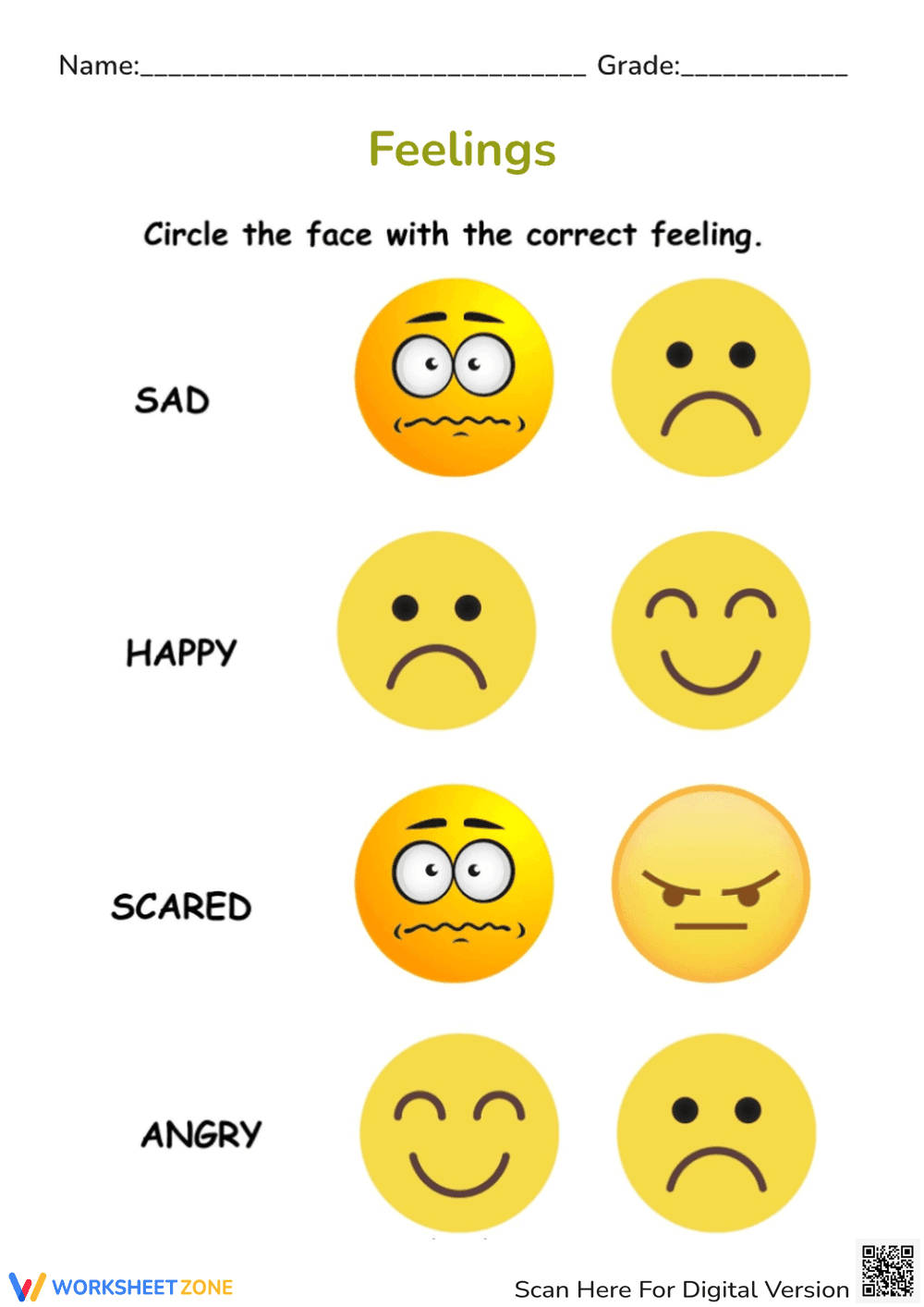
This is a worksheet titled 'Feelings' where students are asked to identify and circle the emoji that corresponds to a given emotion. The worksheet presents four emotions: Sad, Happy, Scared, and Angry. Each emotion is paired with two different emoji faces, and the student must choose the emoji that best represents that feeling. A space is provided for the student's name and grade at the top.
Grade Level Suitability:
Suitable for Preschool and Kindergarten. The worksheet focuses on basic emotions and uses simple visuals, making it appropriate for young children learning to identify and understand feelings. It could also be used for early intervention or special education settings.
Why Use It:
This worksheet helps children develop emotional literacy by learning to recognize and name different feelings. It promotes social-emotional learning (SEL) skills, such as self-awareness and understanding of others' emotions. It provides a fun and engaging way to practice identifying emotions through visual cues.
How to Use It:
The student reads the emotion word (Sad, Happy, Scared, Angry) and then circles the emoji face that best represents that emotion. Teachers or parents can discuss the emotions with the child and ask them to describe situations where they might feel that way. The completed worksheet can be reviewed to assess the child's understanding of different emotions.
Target Users:
This worksheet is designed for preschool and kindergarten students, children with autism spectrum disorder, or those needing extra support in social-emotional learning. It can be used by teachers, parents, therapists, or counselors.
This is a worksheet titled 'Feelings' where students are asked to identify and circle the emoji that corresponds to a given emotion. The worksheet presents four emotions: Sad, Happy, Scared, and Angry. Each emotion is paired with two different emoji faces, and the student must choose the emoji that best represents that feeling. A space is provided for the student's name and grade at the top.
Grade Level Suitability:
Suitable for Preschool and Kindergarten. The worksheet focuses on basic emotions and uses simple visuals, making it appropriate for young children learning to identify and understand feelings. It could also be used for early intervention or special education settings.
Why Use It:
This worksheet helps children develop emotional literacy by learning to recognize and name different feelings. It promotes social-emotional learning (SEL) skills, such as self-awareness and understanding of others' emotions. It provides a fun and engaging way to practice identifying emotions through visual cues.
How to Use It:
The student reads the emotion word (Sad, Happy, Scared, Angry) and then circles the emoji face that best represents that emotion. Teachers or parents can discuss the emotions with the child and ask them to describe situations where they might feel that way. The completed worksheet can be reviewed to assess the child's understanding of different emotions.
Target Users:
This worksheet is designed for preschool and kindergarten students, children with autism spectrum disorder, or those needing extra support in social-emotional learning. It can be used by teachers, parents, therapists, or counselors.


