


























Views
Downloads



Essential Grade 7 Factoring Worksheet: Numbers 4-100
Paste this activity's link or code into your existing LMS (Google Classroom, Canvas, Teams, Schoology, Moodle, etc.).
Students can open and work on the activity right away, with no student login required.
You'll still be able to track student progress and results from your teacher account.
This Grade 7 math worksheet strengthens number theory skills by challenging students to identify every factor for numbers ranging from 4 to 100. Students develop computational fluency and a deeper understanding of divisibility rules as they systematically list factor pairs in increasing order. This essential practice builds the foundational logic required for simplifying fractions and solving complex algebraic equations.
At a Glance
- Grade: 7 · Subject: Math
- Standard:
CCSS.MATH.CONTENT.4.OA.B.4— Find all factor pairs for a whole number in the range 1–100- Skill Focus: Factoring numbers 4 to 100
- Format: 5 pages · 29 problems · Answer key included · PDF
- Best For: Independent practice and number theory review
- Time: 25–35 minutes
What's Inside
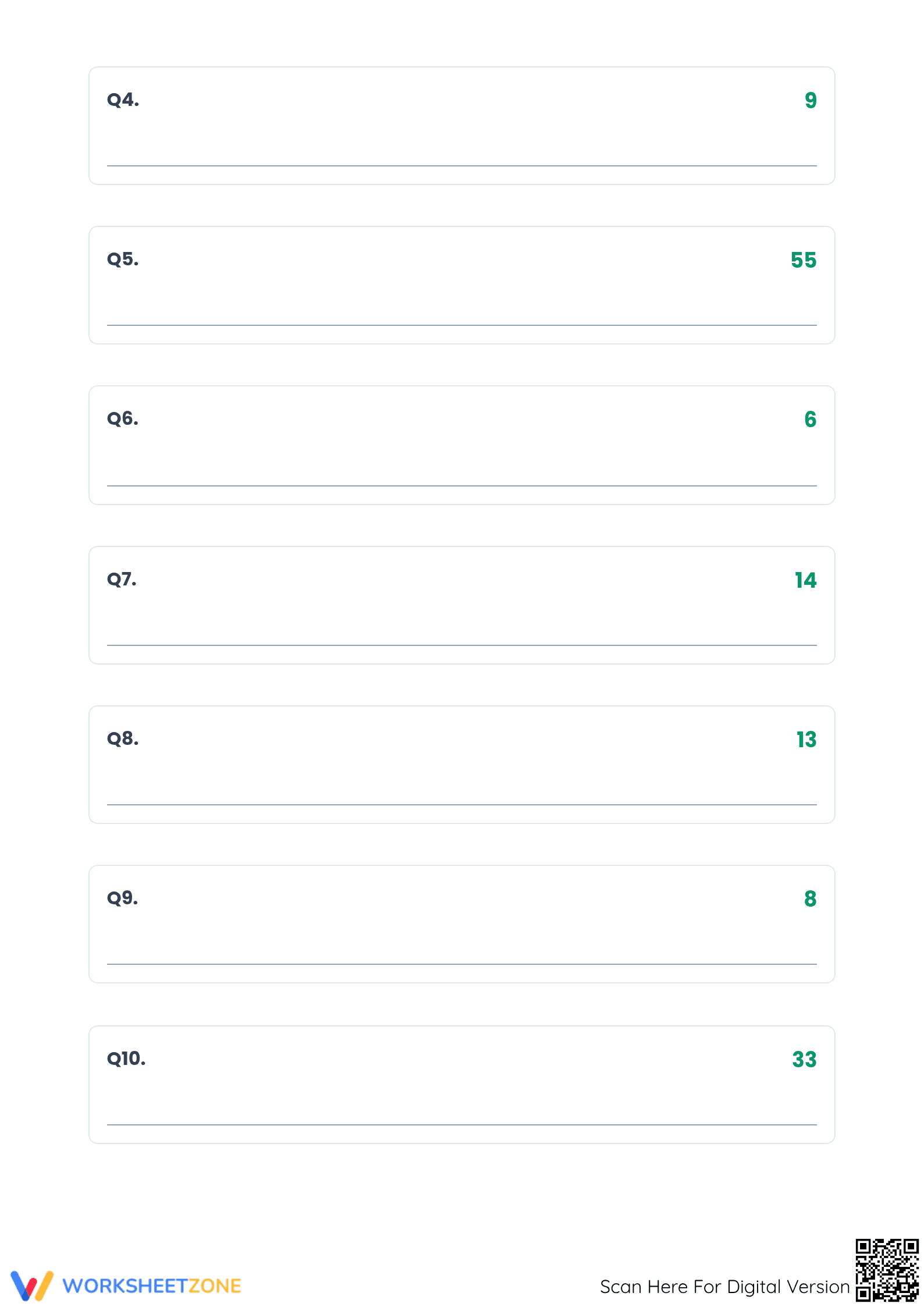
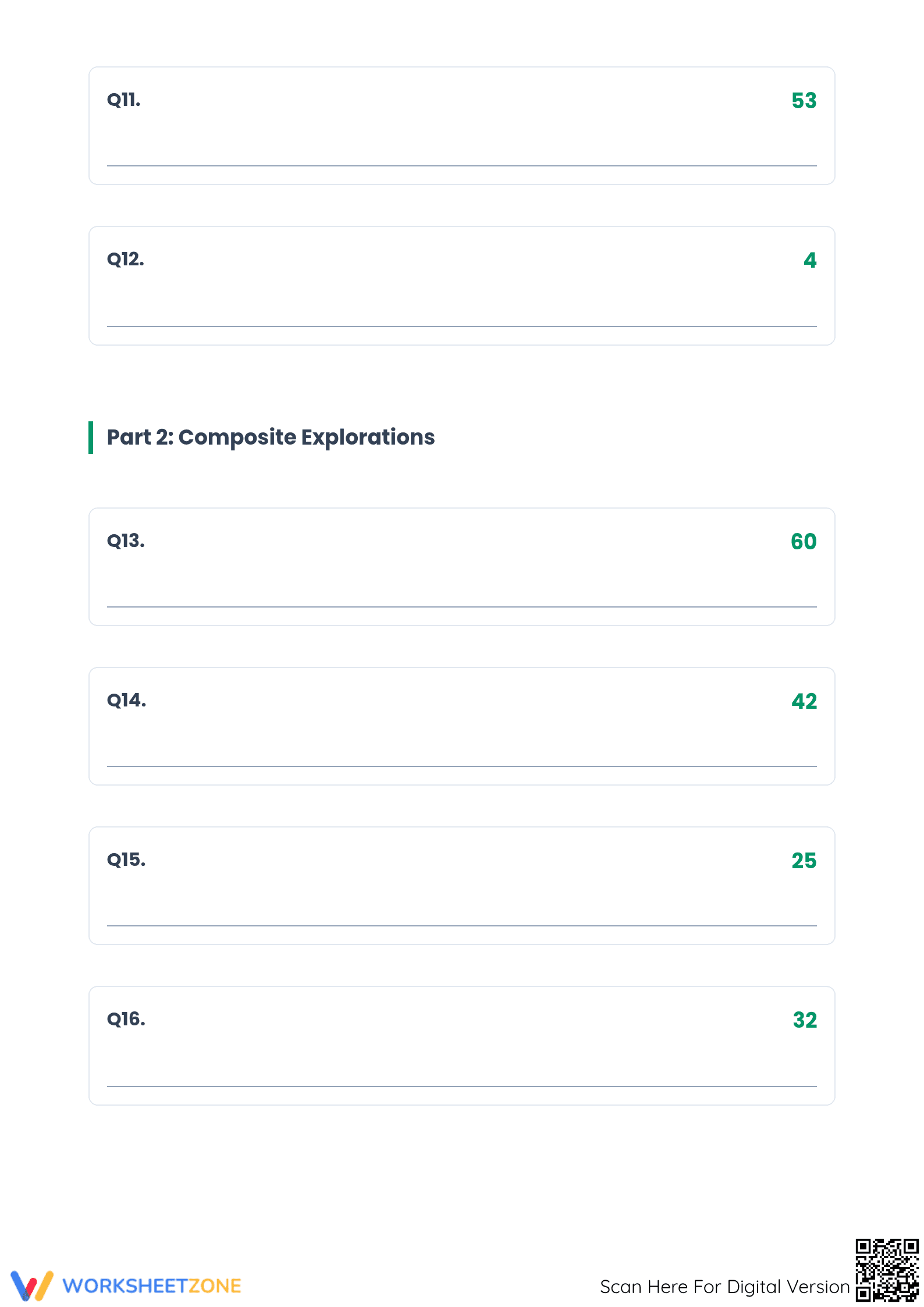
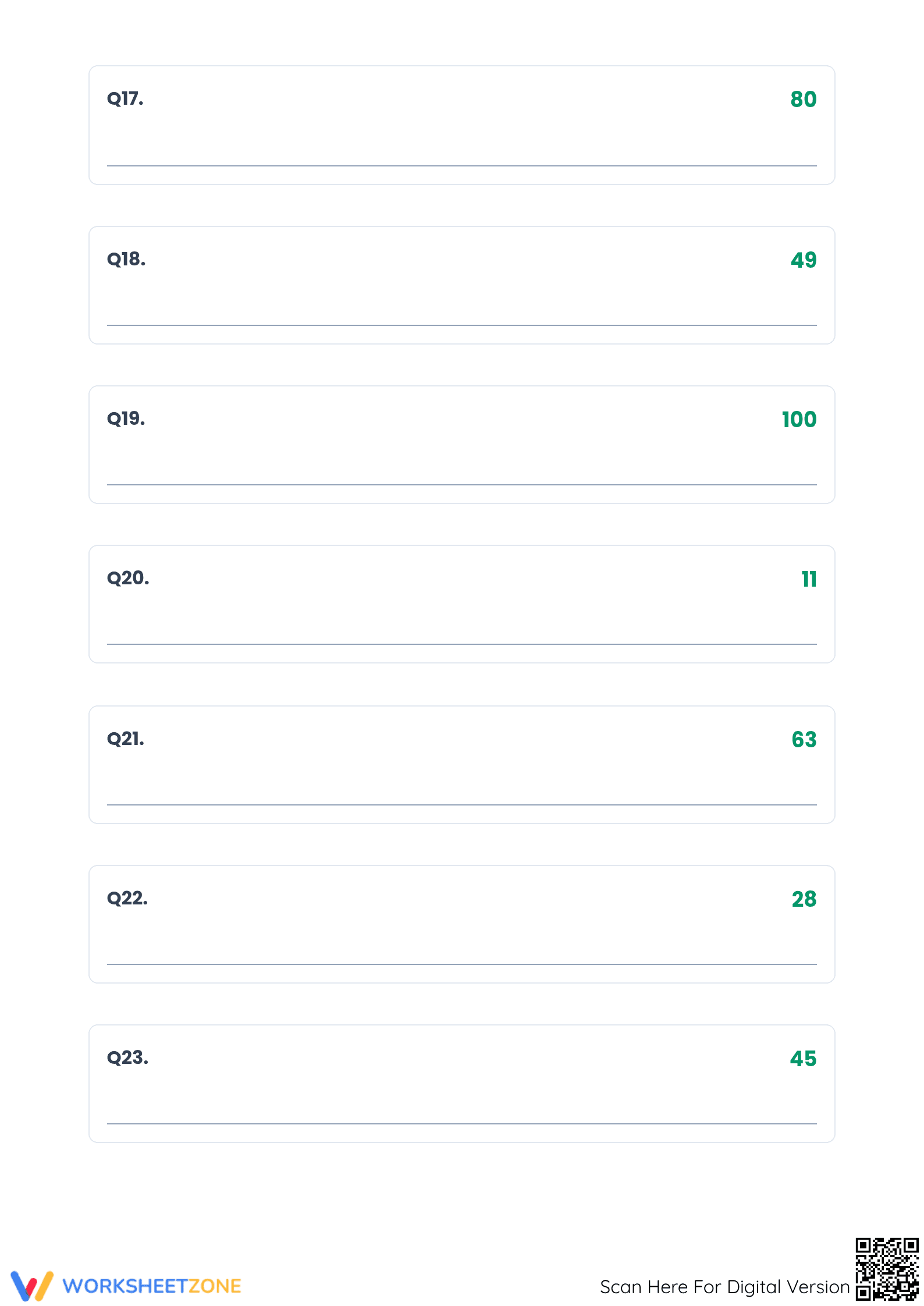
The resource contains 29 structured problems spread across five pages, beginning with foundational practice and progressing to advanced challenges. Each problem provides a clear workspace with dedicated lines for students to record their answers. A comprehensive study example using the number 24 is included on the first page to model the required increasing-order format. The full answer key ensures efficient grading and immediate feedback.
Zero-Prep Workflow
This classroom-ready tool requires minimal teacher involvement. First, print the five-page PDF (approximately 30 seconds). Second, distribute the worksheets to students and allow 5 minutes for them to study the provided example. Finally, review the completed factor lists using the included answer key during the last 10 minutes of class. Total teacher preparation time remains under two minutes, making it an ideal sub plan.
Standards Alignment
The primary focus aligns with `CCSS.MATH.CONTENT.4.OA.B.4`, which requires students to find all factor pairs for whole numbers in the range 1–100 and recognize that a whole number is a multiple of each of its factors. While originally a 4th-grade standard, mastery of these skills is vital for Grade 7 students working with rational numbers and proportional relationships. This standard code can be copied directly into lesson plans or IEP goals.
How to Use It
Deploy this worksheet during the independent practice phase of a lesson on number theory or as a warm-up activity to activate prior knowledge of divisibility. For a formative assessment, observe students as they tackle Part 2: Composite Explorations; specifically, check if they are missing middle factor pairs for larger numbers like 60 or 80. Most students will complete the full 29-problem set within 30 minutes.
Who It's For
This resource is designed for Grade 7 students who need to sharpen their mental math and divisibility logic. It serves as an excellent intervention tool for learners struggling with fraction reduction or as a Math Challenge for younger students ready for advanced number theory. Pair this worksheet with a divisibility rules anchor chart or a prime number chart to provide additional scaffolding for diverse learners.
The systematic practice of identifying factors is a critical component of mathematical proficiency, as emphasized in the RAND AIRS 2024 report on middle school numeracy. By engaging with 29 unique problems that range from prime numbers like 13 and 23 to highly composite numbers like 60 and 100, students develop the cognitive flexibility needed for higher-level algebra. This worksheet directly supports CCSS.MATH.CONTENT.4.OA.B.4 by requiring the exhaustive listing of factor pairs, a process that Fisher & Frey (2014) identify as essential for building procedural fluency. Research from EdReports 2024 indicates that frequent, focused practice on number properties significantly improves student performance on standardized assessments involving rational number operations. This evidence-based approach ensures that students move beyond simple multiplication facts to a comprehensive understanding of how numbers are constructed, providing a robust framework for all subsequent Grade 7 mathematics instruction.


