




























Views
Downloads
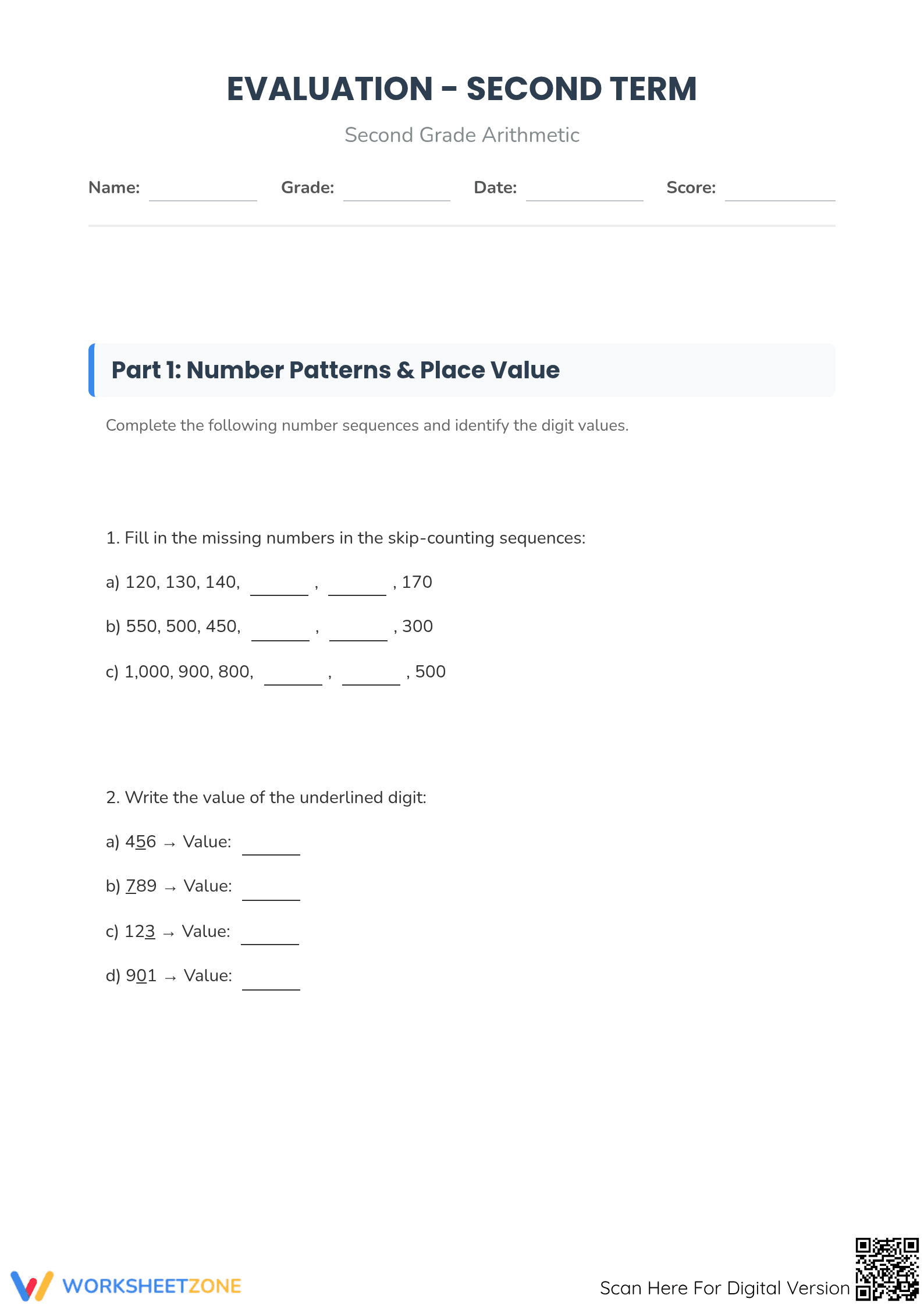
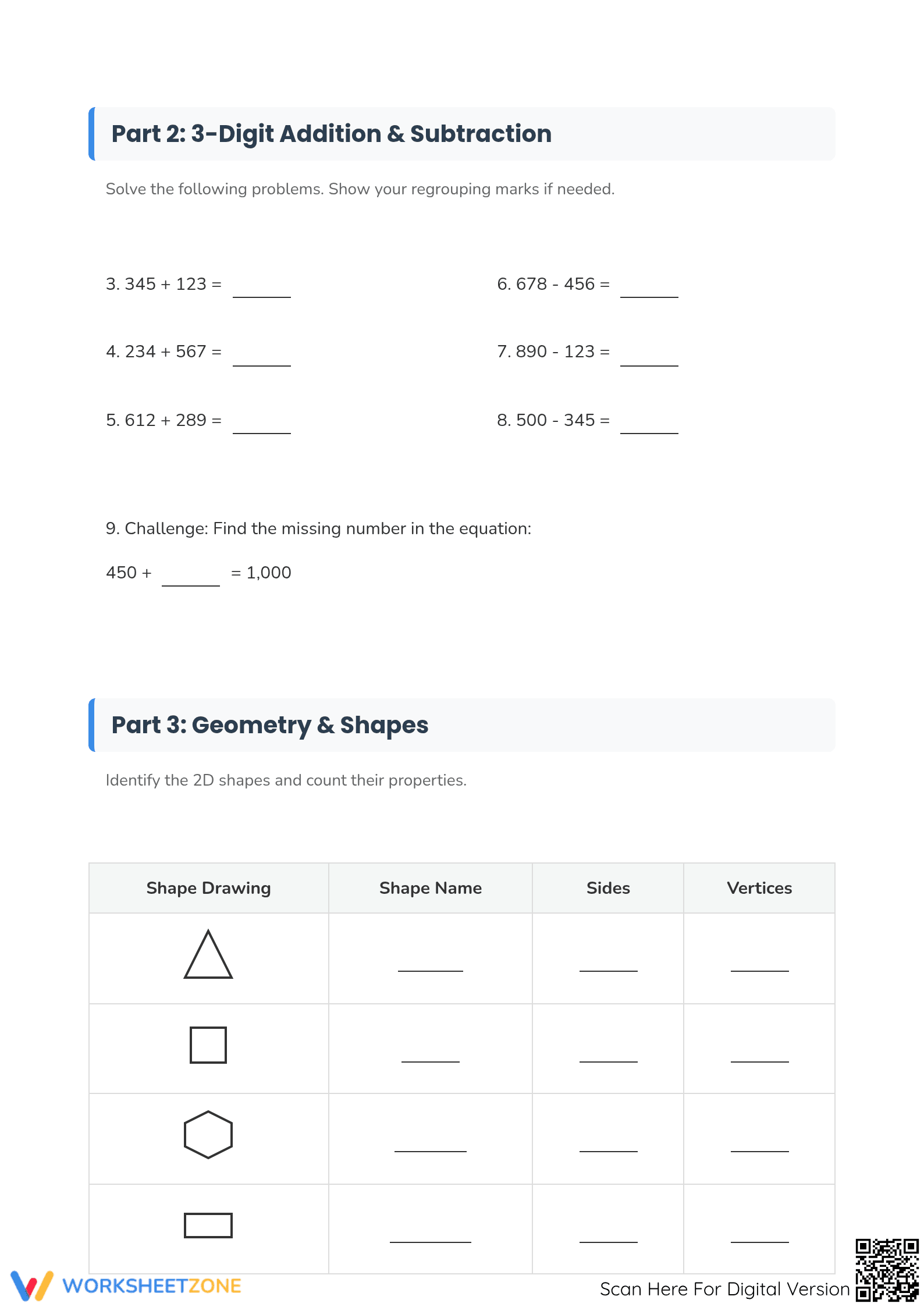
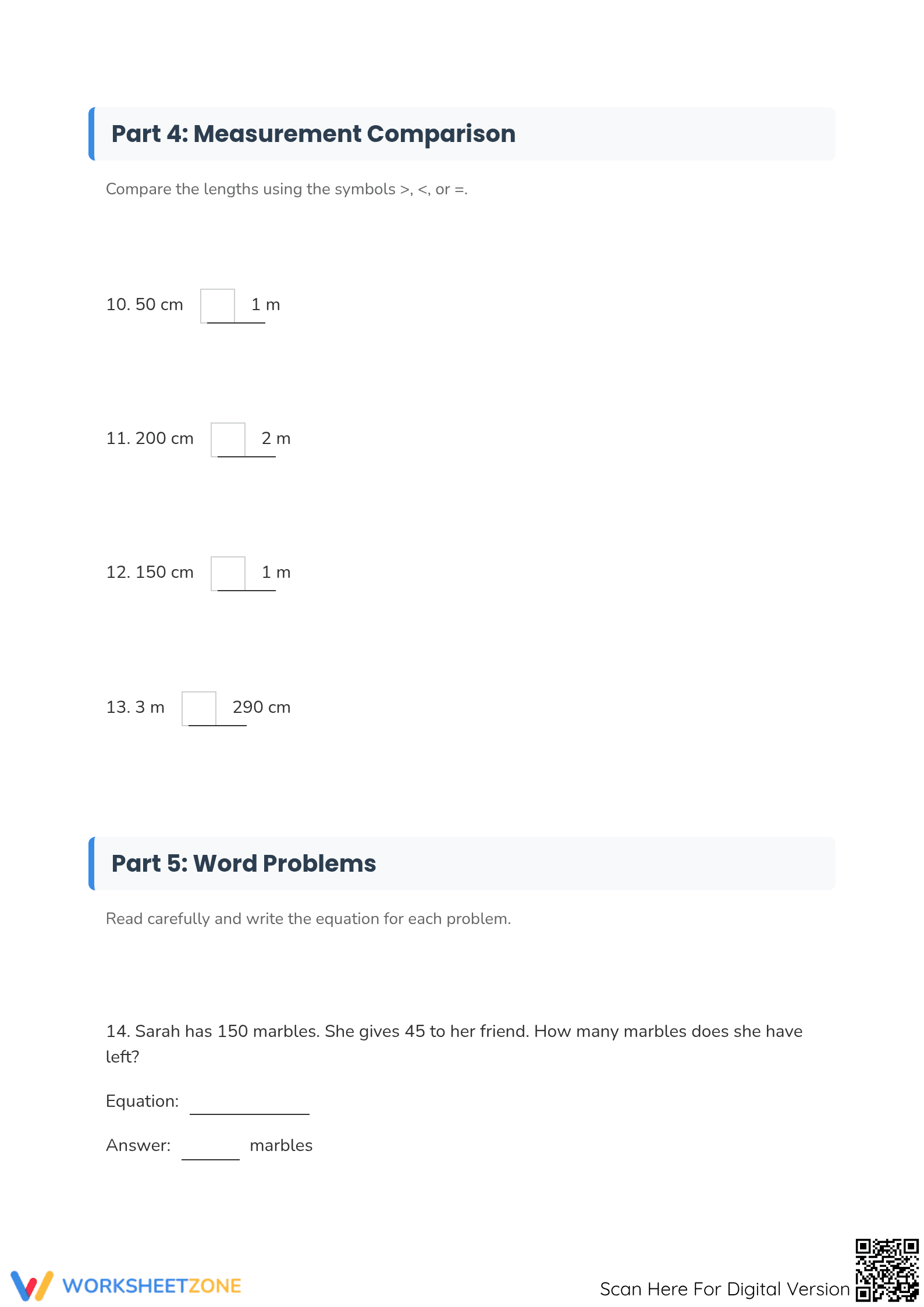
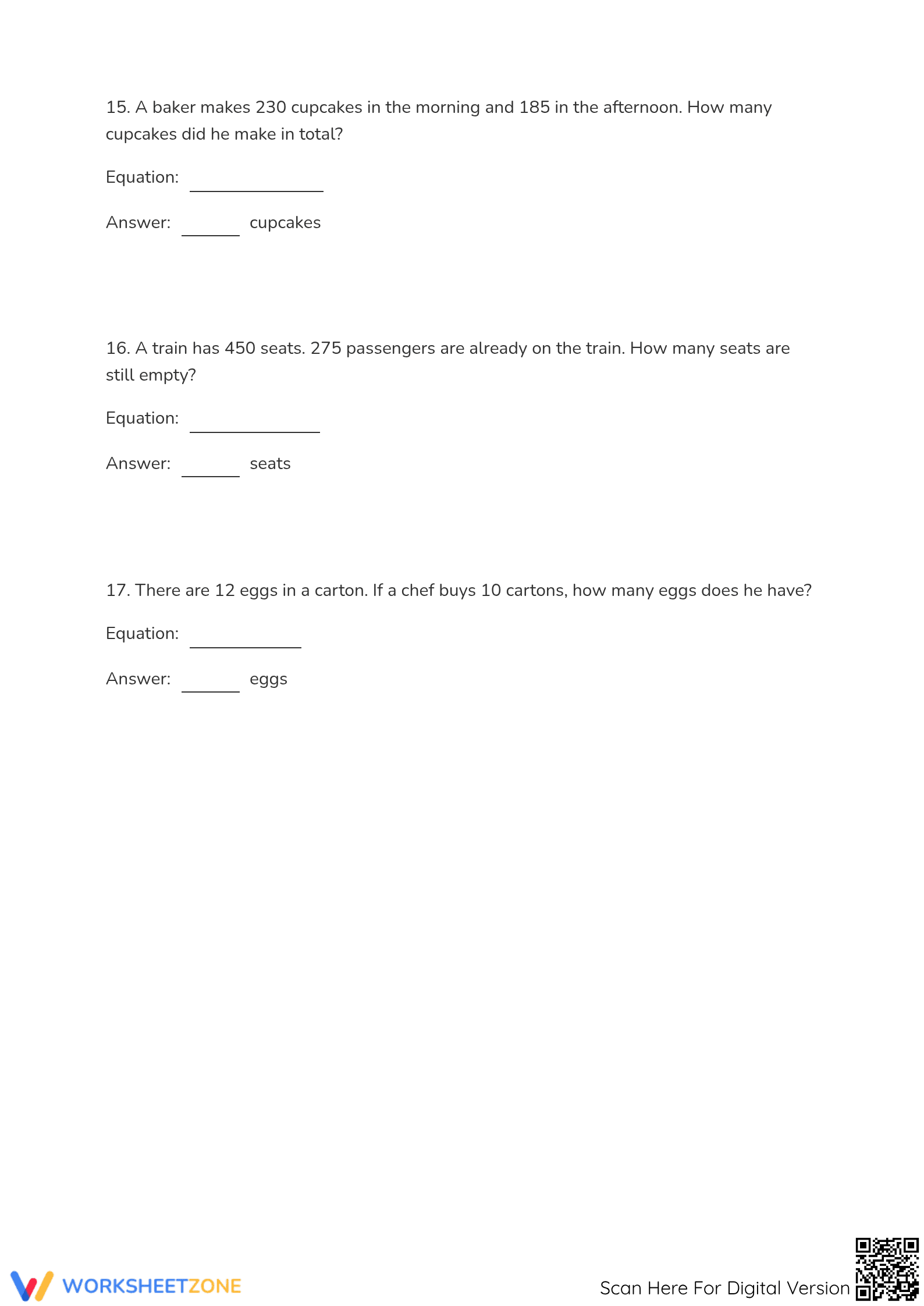

Essential Grade 2 Arithmetic Evaluation: 2.NBT.B.7 Aligned

Paste this activity's link or code into your existing LMS (Google Classroom, Canvas, Teams, Schoology, Moodle, etc.).
Students can open and work on the activity right away, with no student login required.
You'll still be able to track student progress and results from your teacher account.
This Grade 2 arithmetic evaluation provides a rigorous assessment of core competencies including three-digit operations, place value, and geometric properties. By completing 26 structured problems, students demonstrate their ability to apply mathematical reasoning to real-world scenarios while meeting essential standards. It serves as a vital tool for measuring progress and identifying specific learning gaps.
At a Glance
- Grade: Grade 2 · Subject: Math
- Standard:
2.NBT.B.7— Add and subtract within 1000 using concrete models or drawings and strategies- Skill Focus: Multi-digit arithmetic and geometry
- Format: 4 pages · 26 problems · Answer key included · PDF
- Best For: End-of-term assessment and mastery checks
- Time: 45–60 minutes
What's Inside
This 4-page assessment features five sections testing diverse skills. Students tackle skip-counting, place value, and 3-digit arithmetic with regrouping. The geometry part involves 2D shape identification, while word problems ensure practical application. A full answer key is included for teacher review.
Mastery Evidence
Each task maps to Grade 2 framework sub-skills. The word problems and regrouping exercises distinguish between approaching, meeting, and exceeding expectations. Space for regrouping marks provides procedural data. Scores can be entered directly into district gradebooks or IEP monitoring systems for longitudinal tracking.
Standards Alignment
The primary focus is 2.NBT.B.7, requiring addition and subtraction within 1000. Supporting standards include 2.NBT.A.2 and 2.G.A.1. These codes can be copied into lesson plans, IEP goals, or curriculum maps. Both standard codes can be copied directly into lesson plans, IEP goals, or district curriculum mapping tools.
How to Use It
Administer this during the second term to evaluate readiness for Grade 3. Use it as a summative assessment after instruction on multi-digit operations. Observe students during measurement comparisons to verify conceptual understanding. Completion typically takes 45 to 60 minutes in a classroom setting.
Who It's For
This is for Grade 2 classrooms and Grade 3 review. Word problems help ELLs develop mathematical vocabulary. Pair with base-ten blocks for students needing tactile supports. This is a natural pairing for any comprehensive arithmetic passage or anchor chart used during direct instruction.
The effective integration of multi-digit arithmetic, place value, and geometric reasoning within a single assessment aligns with research on the importance of cumulative review in mathematics. According to RAND AIRS 2024, standardized formats that bridge procedural fluency with conceptual application significantly improve long-term retention of mathematical properties. This evaluation addresses standard 2.NBT.B.7 by requiring students to perform addition and subtraction within 1000 while maintaining a focus on the underlying place value structure. By challenging students to translate word problems into equations and identify geometric attributes, the worksheet mirrors the rigor found in high-stakes testing environments while providing a classroom-ready format. Research indicates that frequent, standards-aligned formative assessments help teachers pivot instruction to meet the diverse needs of all learners. The 26 tasks included here provide a statistically significant sample of a student's ability to navigate the complex demands of the Grade 2 Math curriculum effectively.


