




























Views
Downloads



Essential Tone and Mood Worksheet | Grade 9 English I

Paste this activity's link or code into your existing LMS (Google Classroom, Canvas, Teams, Schoology, Moodle, etc.).
Students can open and work on the activity right away, with no student login required.
You'll still be able to track student progress and results from your teacher account.
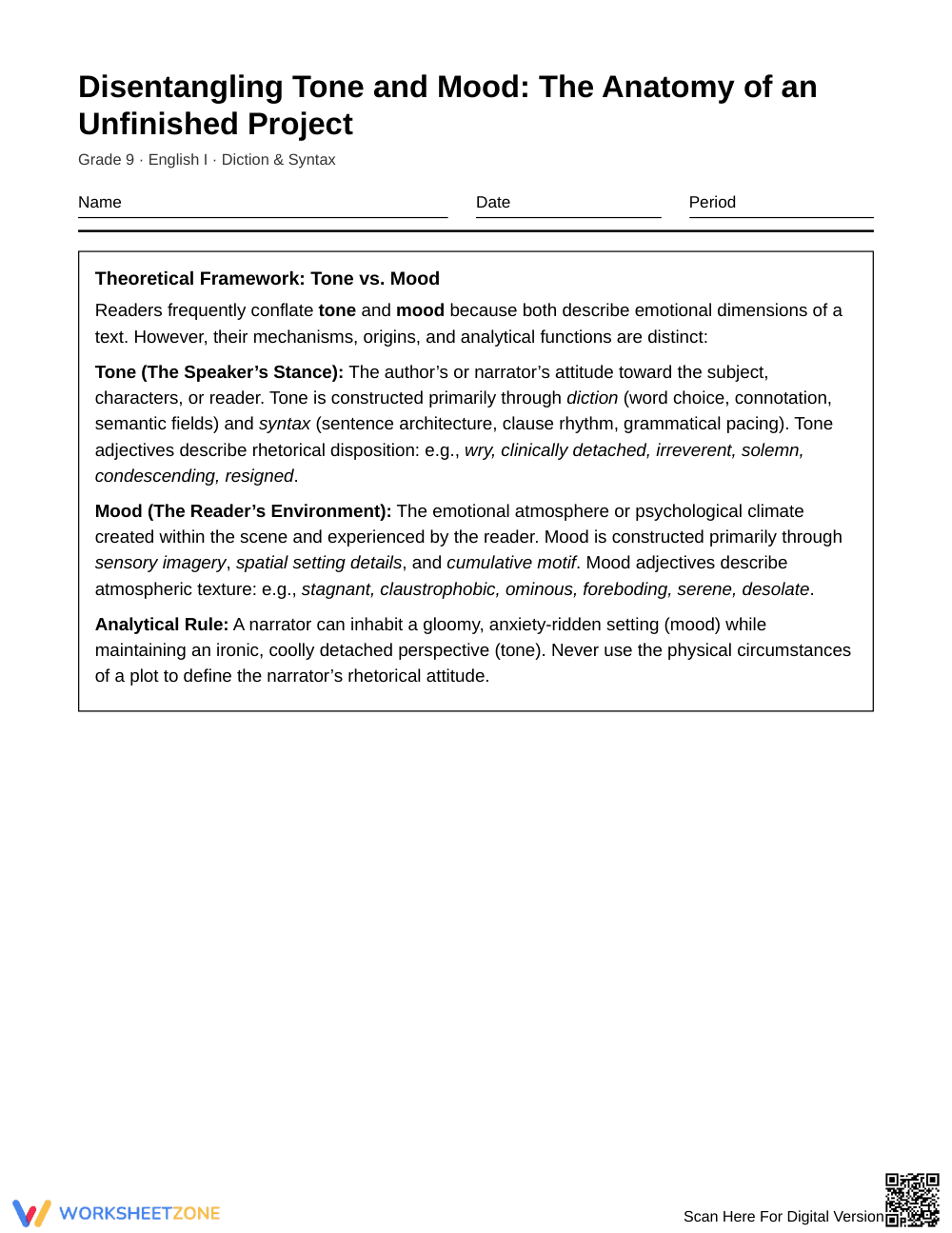
This Grade 9 English I worksheet trains high school readers to systematically distinguish between narrative tone and atmospheric mood. By diagnosing common analytical misconceptions and writing text-grounded corrections, students master how authors use diction and syntax to establish stance independently from physical setting details.
At a Glance
- Grade: 9 · Subject: English I
- Standard:
RL.9-10.4— Determine word meanings and analyze how word choices shape text tone- Skill Focus: Repair Confusion Between Tone and Mood
- Format: 6 pages · 10 problems · Answer key included · PDF
- Best For: Close reading and analytical writing practice
- Time: 45–60 minutes
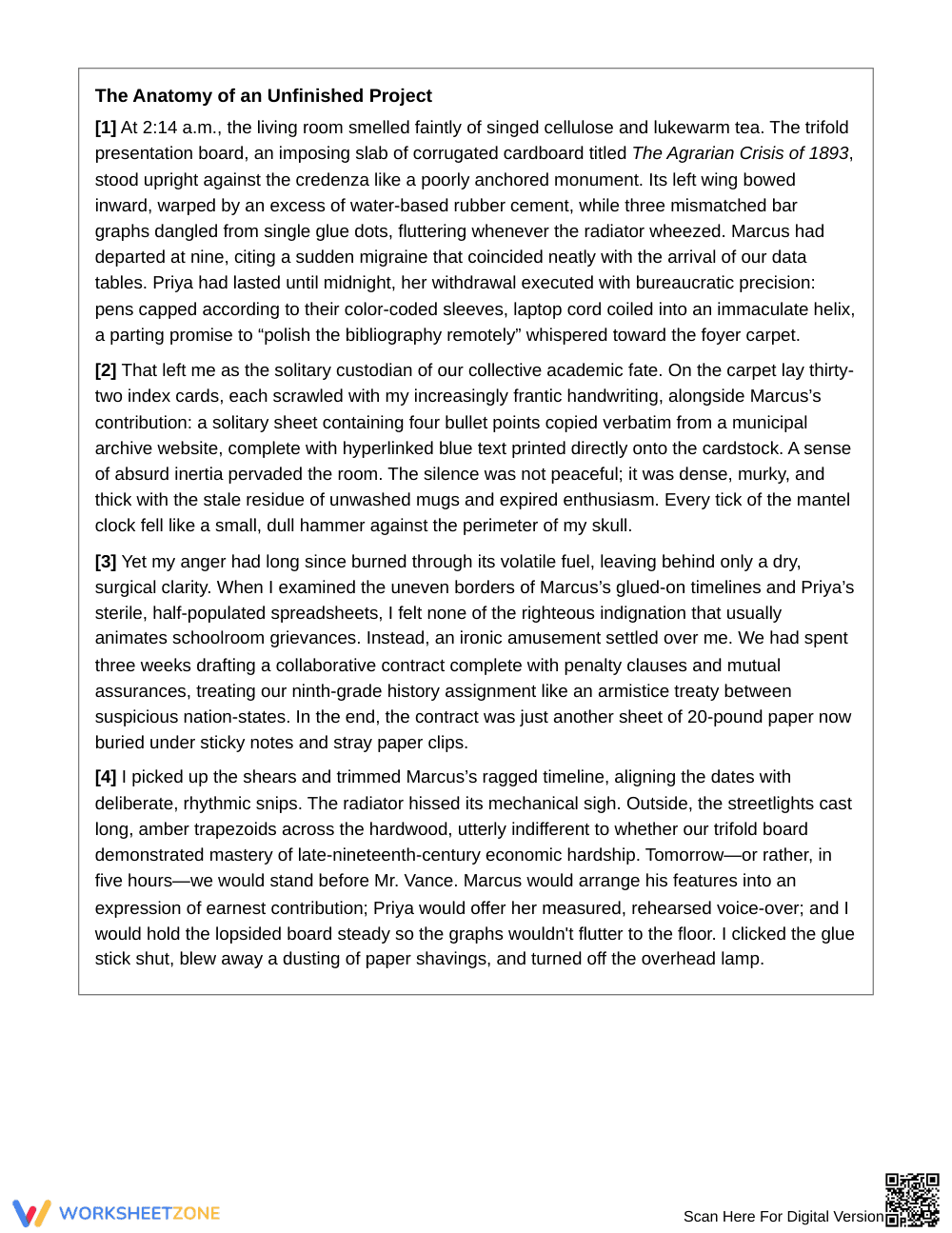
What's Inside: The resource features an anchored theoretical framework defining tone versus mood, followed by a four-paragraph narrative titled "The Anatomy of an Unfinished Project." Across 6 pages, students examine an annotated exemplar before completing 10 tasks divided into diagnostic evaluation and evidence-based rewriting. A comprehensive 3-page answer key provides complete model responses.
Skill Progression
- Guided Practice: An annotated exemplar dissects a flawed claim and models separating setting imagery from narrative tone.
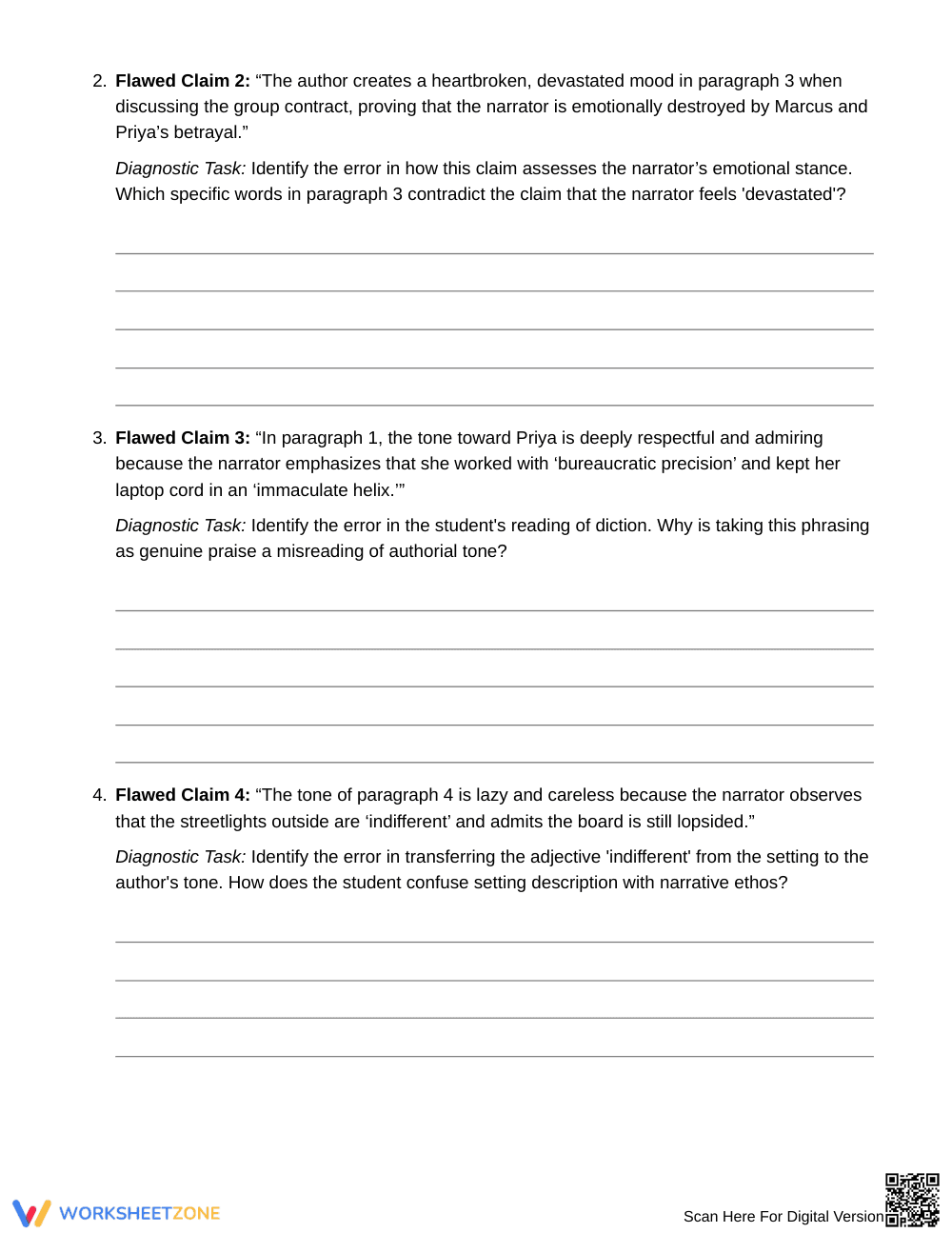
- Supported Practice (Tasks 1–5): Students evaluate 5 flawed claims in Part A, pinpointing fallacies such as confusing character action with authorial stance.
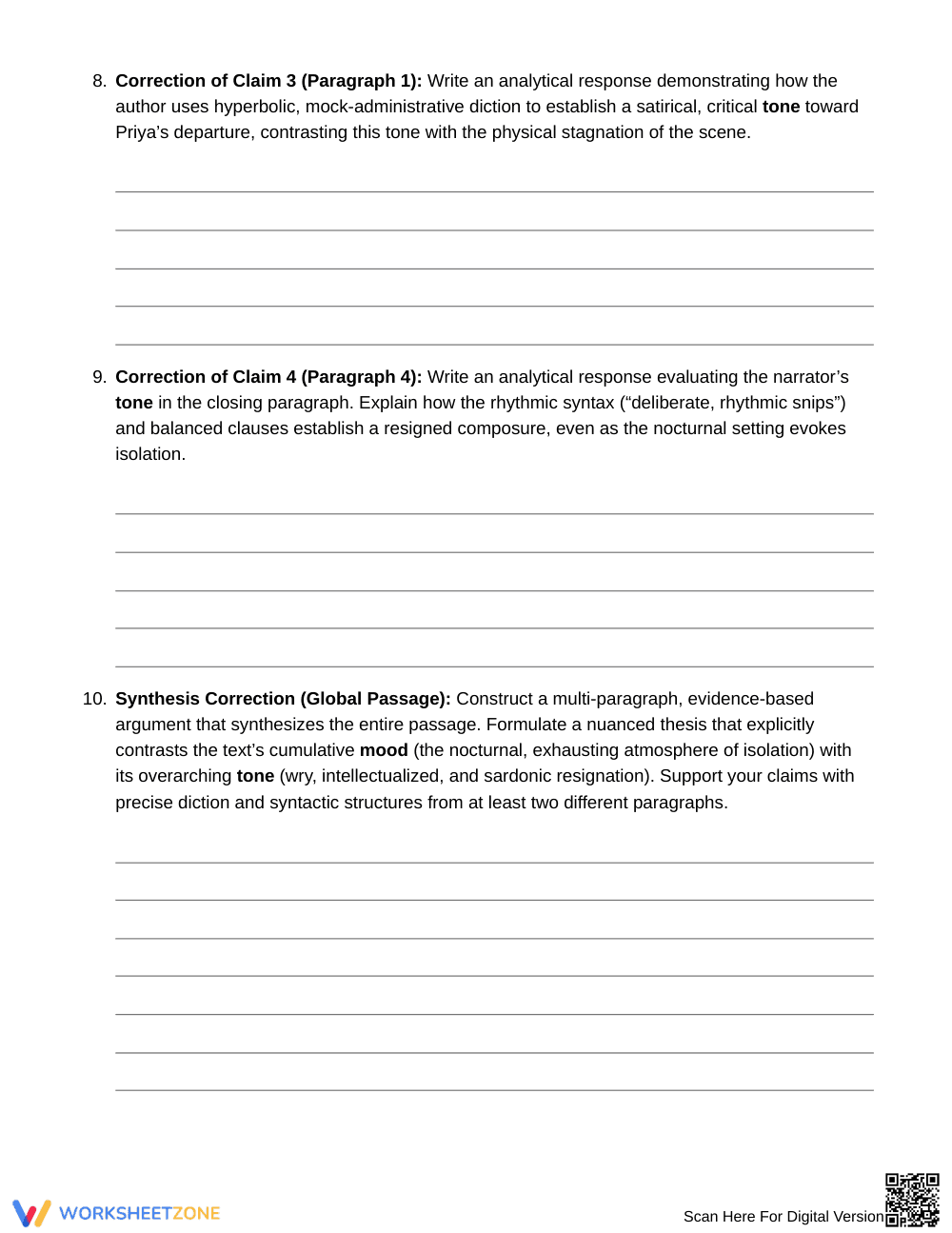
- Independent Practice (Tasks 6–10): In Part B, students write 4 evidence-based claim revisions and 1 multi-paragraph synthesis contrasting mood with sardonic tone.
This gradual-release progression moves learners systematically from diagnostic error recognition to independent analytical writing.
Standards Alignment
This worksheet aligns with `RL.9-10.4`: Determine the meaning of words and phrases as they are used in the text, including figurative and connotative meanings; analyze the cumulative impact of specific word choices on meaning and tone. It also reinforces `W.9-10.1` by requiring evidence-supported analytical claims. Both standard codes can be copied directly into lesson plans, IEP goals, or district curriculum mapping tools.
How to Use It
Deploy this worksheet after direct instruction on diction and narrative stance. In a 45-to-60-minute workshop, have students analyze Part A claims in pairs before drafting individual revisions in Part B. As a formative check, observe whether students identify the narrator's ironic stance toward Priya in Task 3 or misread mock-administrative praise literally.
Who It's For
This resource serves Grade 9 English I students needing targeted remediation on rhetorical analysis. It aids general classrooms and intervention groups moving past plot summary. Pair it with an anchor chart on tone words or a short story unit focusing on complex narrative perspective.
Distinguishing authorial attitude from narrative environment is essential for secondary literacy growth under standard RL.9-10.4, which tasks learners with determining word meanings and evaluating how specific lexical choices shape tone. High school readers routinely conflate the emotional atmosphere of a setting with the speaker's rhetorical stance, flattening sophisticated literature into basic plot summaries. According to research on structured disciplinary literacy by Fisher & Frey (2014), modeling explicit diagnostic evaluation of student errors enables learners to internalize metacognitive checks before attempting independent text reconstruction. By examining why a claim fails and immediately drafting evidence-supported corrections, students build robust syntactic awareness and analytical precision. This Grade 9 instructional design leverages 10 structured tasks across 6 pages to ensure secondary writers reliably differentiate sensory mood from nuanced authorial tone in complex literary texts.


