




























Views
Downloads

Essential Process Details Worksheet | Grade 7 ELA

Paste this activity's link or code into your existing LMS (Google Classroom, Canvas, Teams, Schoology, Moodle, etc.).
Students can open and work on the activity right away, with no student login required.
You'll still be able to track student progress and results from your teacher account.
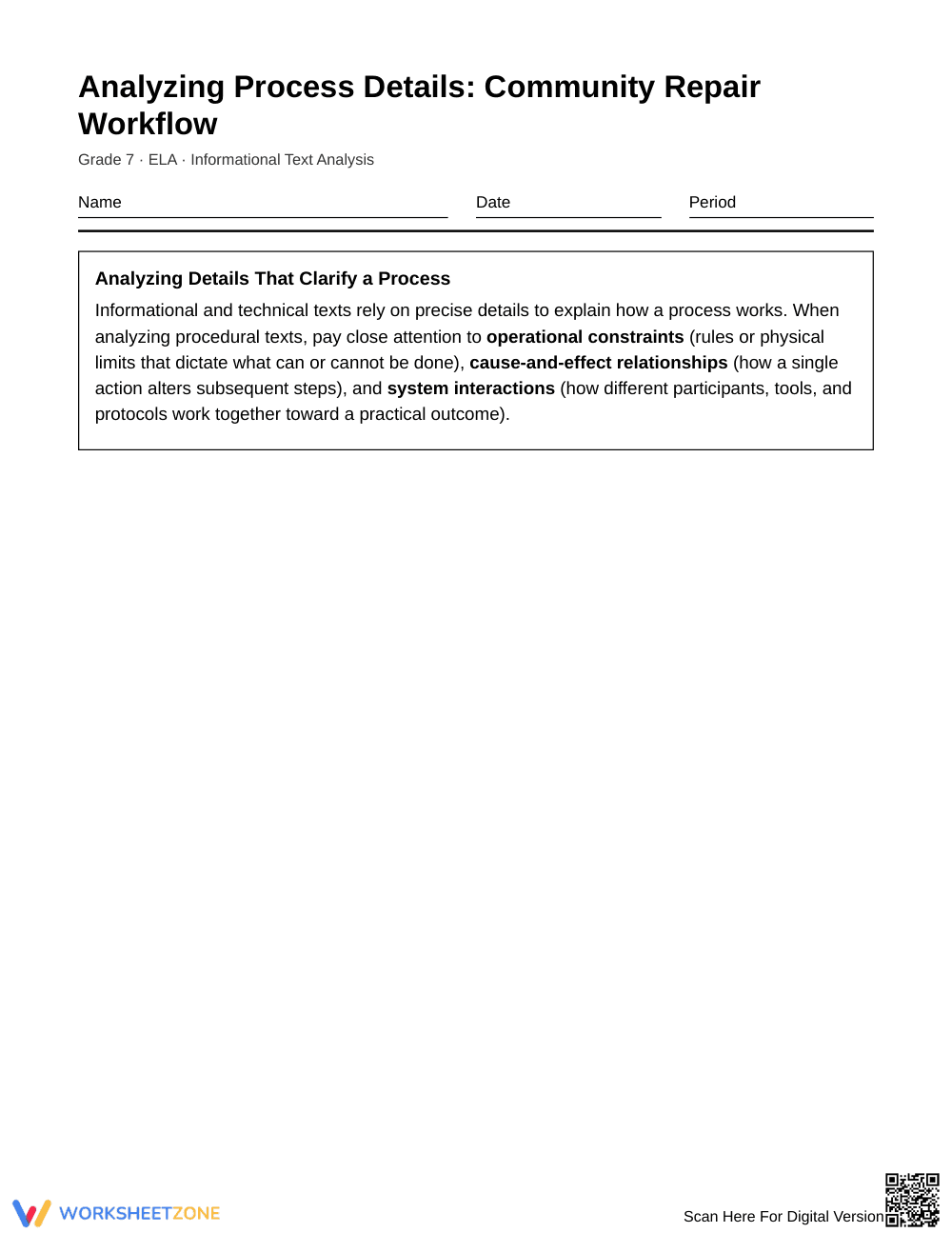
This informational text analysis worksheet guides Grade 7 students through examining how specific operational constraints, technical boundaries, and system interactions clarify a complex workflow. By reading a rich technical passage detailing a community electronics repair collective, learners evaluate how procedural details determine concrete outcomes, prevent equipment failures, and govern safety decisions across multi-step processes.
At a Glance
- Grade: 7 · Subject: ELA
- Standard:
RI.7.3— Analyze the interactions between individuals, events, and ideas in a text- Skill Focus: Details That Clarify a Process
- Format: 5 pages · 10 problems · Answer key included · PDF
- Best For: Close reading and technical text analysis
- Time: 40–50 minutes
What's Inside
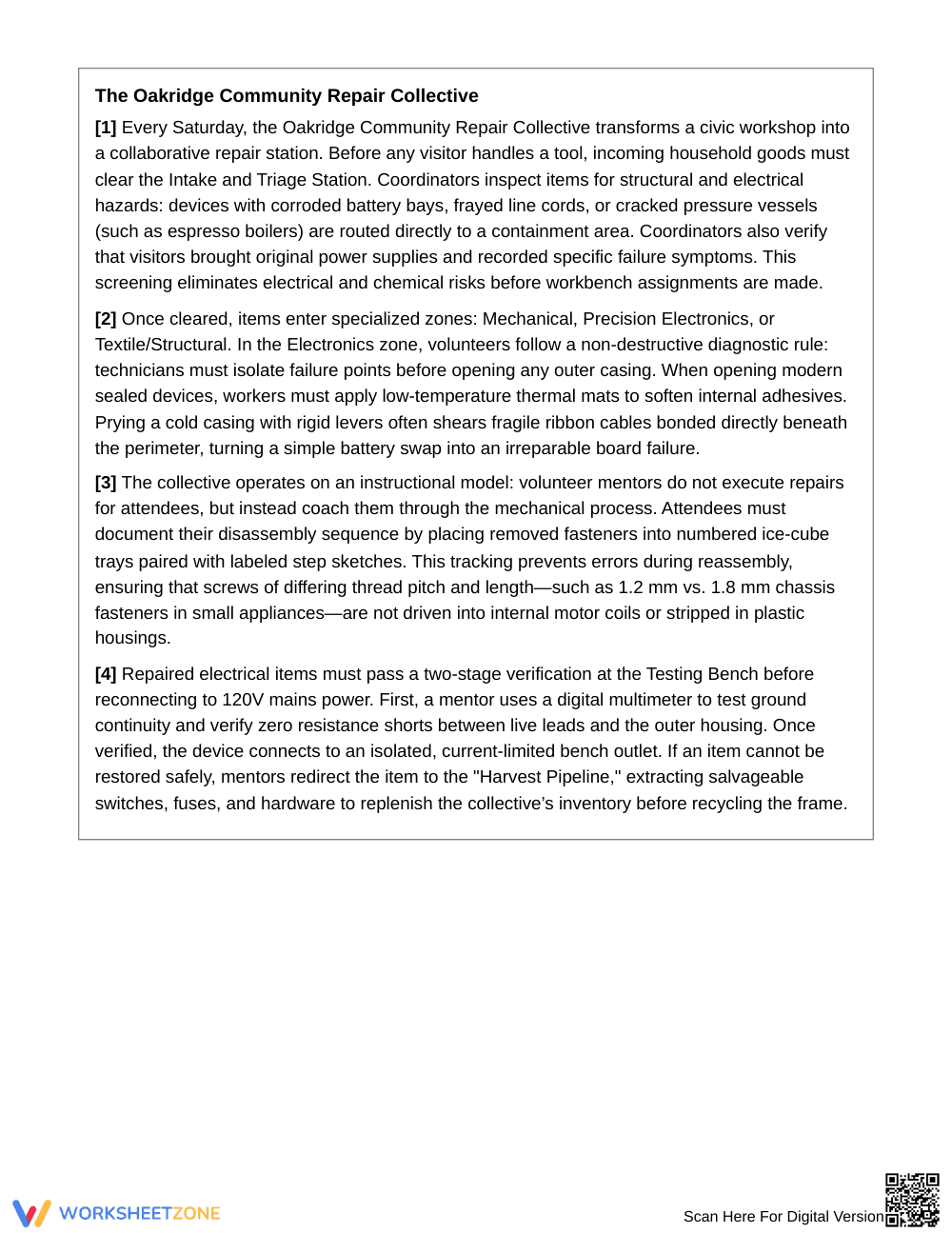
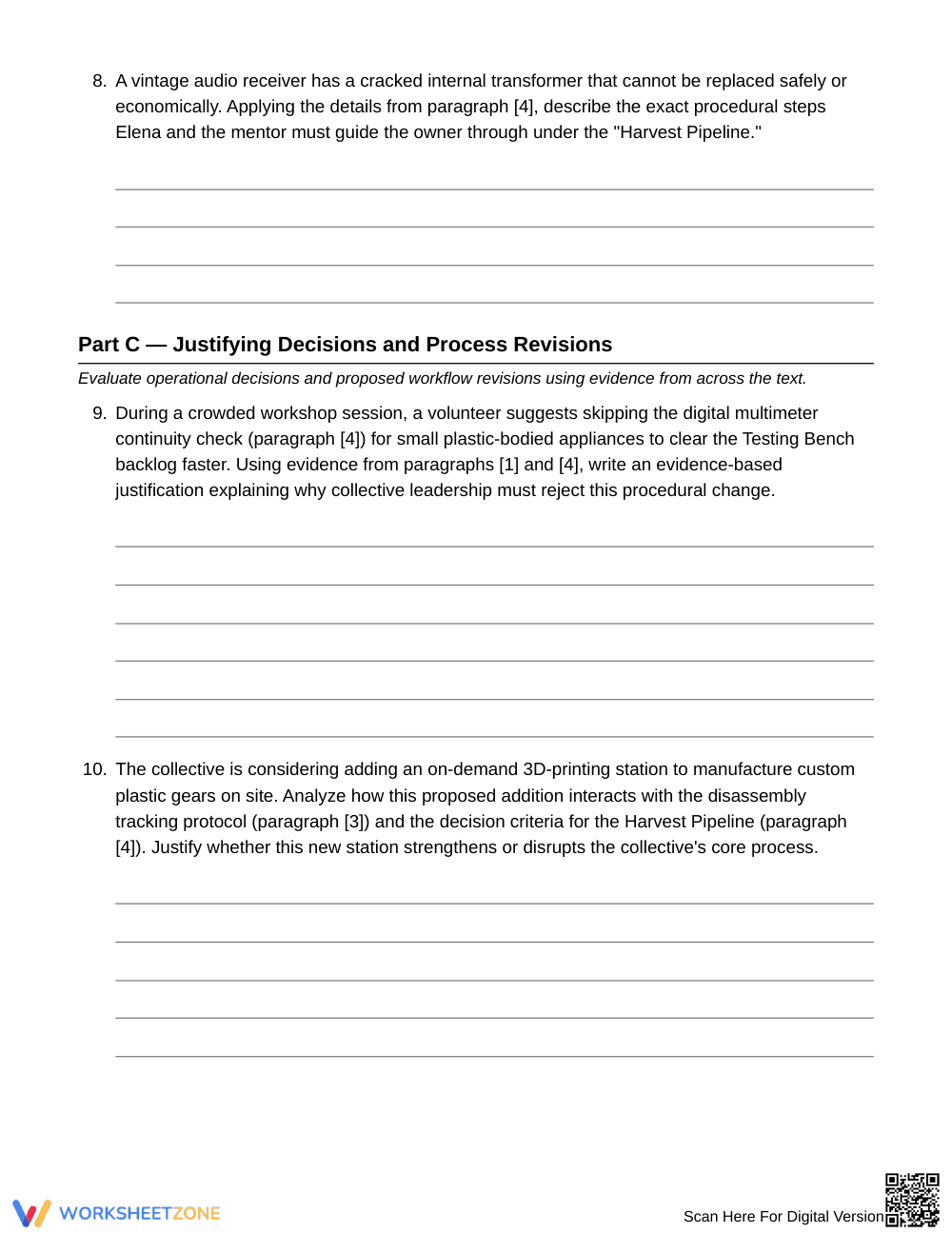
The resource presents a four-paragraph informational text describing the Oakridge Community Repair Collective, complete with explicit operational constraints, safety protocols, and coaching logistics. Across 5 pages, students complete 10 rigorous text-dependent questions arranged in three progressive tiers, including multiple-choice check items, scenario-based constructed responses, and multi-paragraph written justifications. The included 4-page answer key provides complete exemplar explanations and evidence citations for every item.
Skill Progression
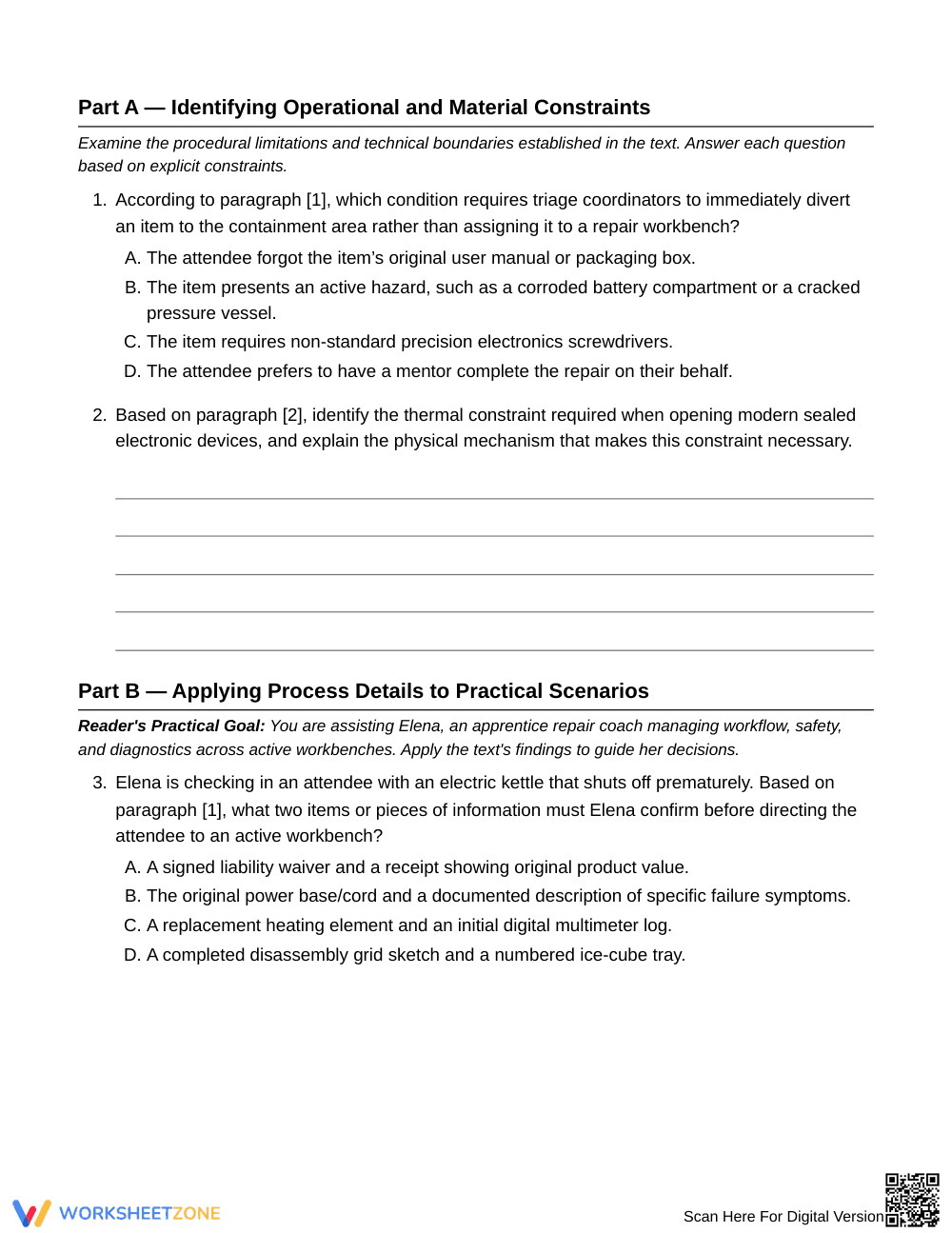
- Guided practice (Part A, Problems 1–2): Students identify explicit operational constraints and physical mechanisms directly stated in the text, isolating safety rules and material thresholds before applying them.
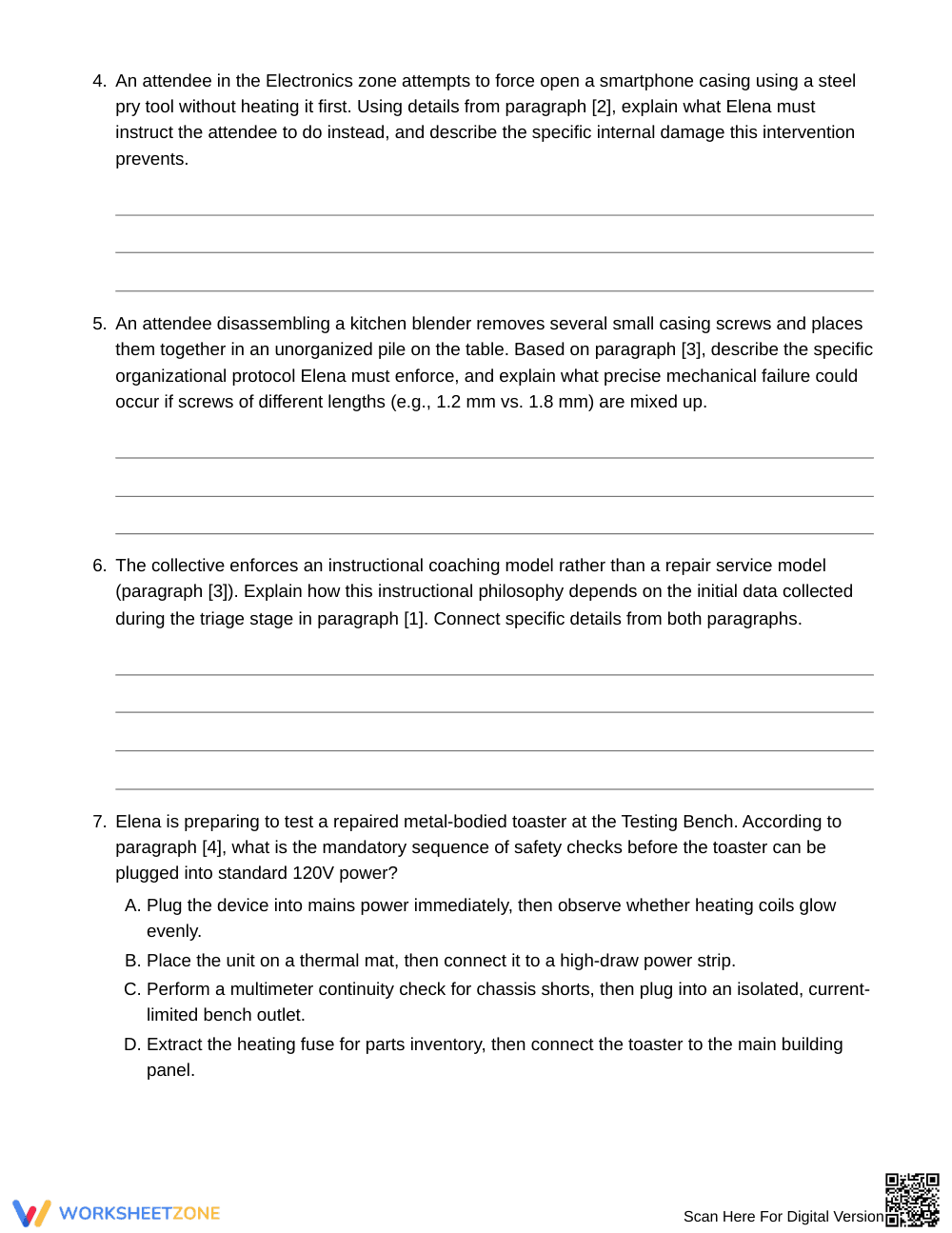
- Supported practice (Part B, Problems 3–8): Working through six scenario-based application tasks, students adopt the perspective of an apprentice coach to resolve practical workflow dilemmas, diagnose assembly errors, and trace cause-and-effect sequences across steps.
- Independent practice (Part C, Problems 9–10): Students synthesize multi-paragraph justifications to evaluate proposed procedural modifications, defending text-based protocols and balancing competing operational priorities.
This sequence mirrors the gradual release of responsibility model, ensuring students master foundational detail recall before undertaking complex system evaluations.
Standards Alignment
Primary Standard: `RI.7.3` — Analyze the interactions between individuals, events, and ideas in a text (e.g., how ideas influence individuals or events, or how individuals influence ideas or events). In this activity, students analyze how procedural rules directly alter worker behaviors and physical outcomes within a complex organizational system. Both standard codes can be copied directly into lesson plans, IEP goals, or district curriculum mapping tools.
How to Use It
Deploy this worksheet after direct instruction on informational text structures and procedural cause-and-effect relationships. In a whole-class setting, guide students through the introductory constraints in Part A, then release student pairs to troubleshoot the scenarios in Part B. As a formative assessment check, monitor student responses to Problem 5 to confirm that learners distinguish between general hardware errors and the specific mechanical consequences of misaligned screw pitch. Total estimated completion time is 40 to 50 minutes.
Who It's For
This activity is designed for Grade 7 general education English language arts classrooms, advanced Grade 6 readers, or Grade 8 intervention groups targeting non-fiction comprehension. Pair this worksheet directly with technical process diagrams or an introductory mini-lesson on operational vocabulary to provide targeted support for developing readers.
According to Fisher & Frey (2014), systematic close reading of complex technical texts enables adolescents to recognize how precise micro-level details govern macro-level organizational systems. Aligning directly with standard `RI.7.3`, this 10-task worksheet trains Grade 7 students to track operational boundaries, explain cause-and-effect sequences, and justify safety choices using informational text evidence. The multi-tiered design provides rigorous practice in distinguishing vital procedural constraints from incidental background details. By applying textual rules to apprentice repair scenarios, learners build the cognitive stamina required for high-stakes standardized assessments and authentic technical literacy tasks.


