


























Views
Downloads


Essential Nuanced Theme Worksheet | Grade 10 English II
Paste this activity's link or code into your existing LMS (Google Classroom, Canvas, Teams, Schoology, Moodle, etc.).
Students can open and work on the activity right away, with no student login required.
You'll still be able to track student progress and results from your teacher account.
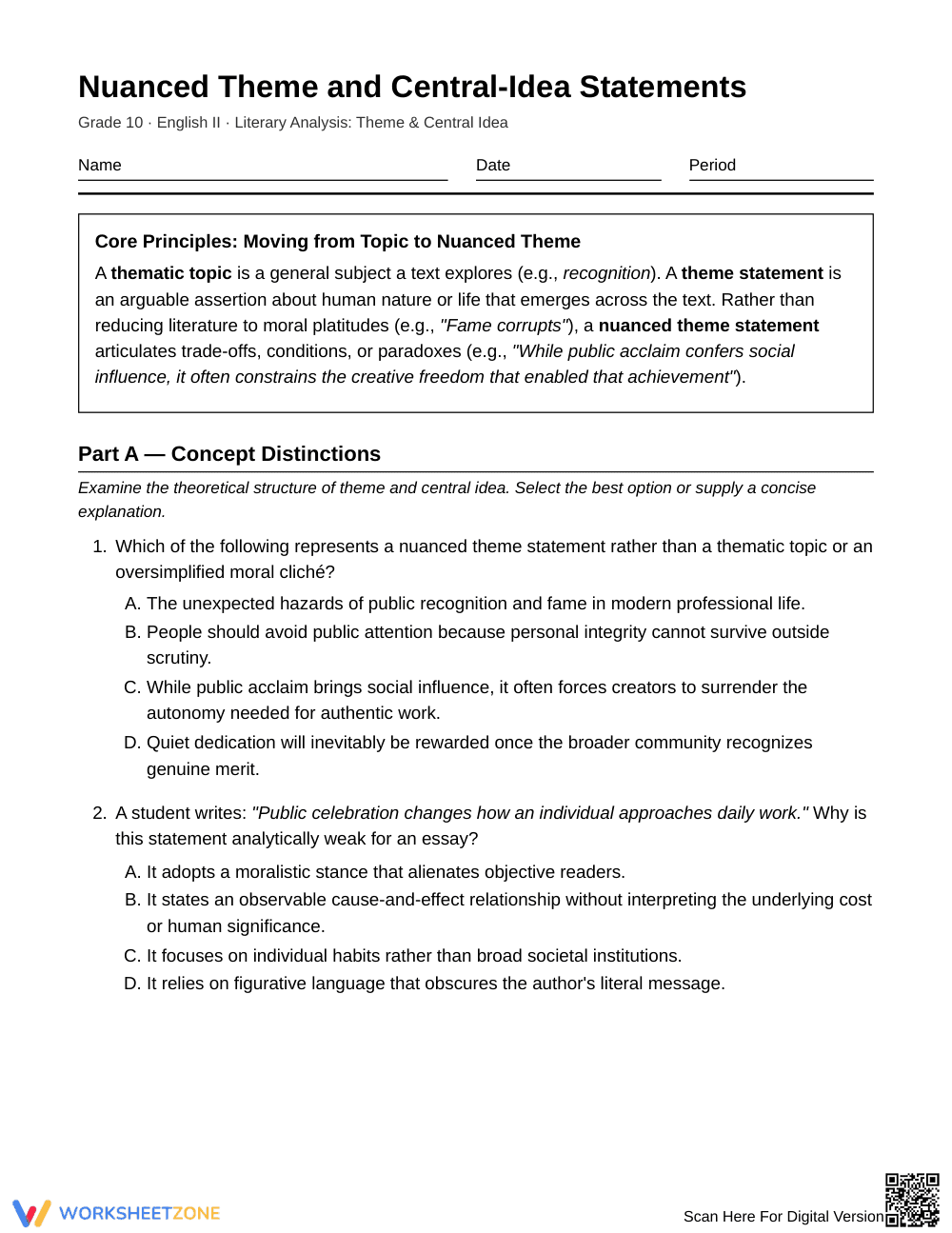
This Grade 10 English II worksheet trains high school readers to construct complex, arguable theme statements rather than simplistic moral platitudes. Students analyze paired fiction and nonfiction texts to examine structural tensions, evaluate craft choices, and draft defensible analytical claims supported by textual evidence.
At a Glance
- Grade: 10 · Subject: English II
- Standard:
RL.9-10.2— Determine a theme or central idea and analyze its development over text- Skill Focus: Nuanced Theme Statements
- Format: 5 pages · 10 problems · Answer key included · PDF
- Best For: Grade 10 literary analysis units
- Time: 45–60 minutes
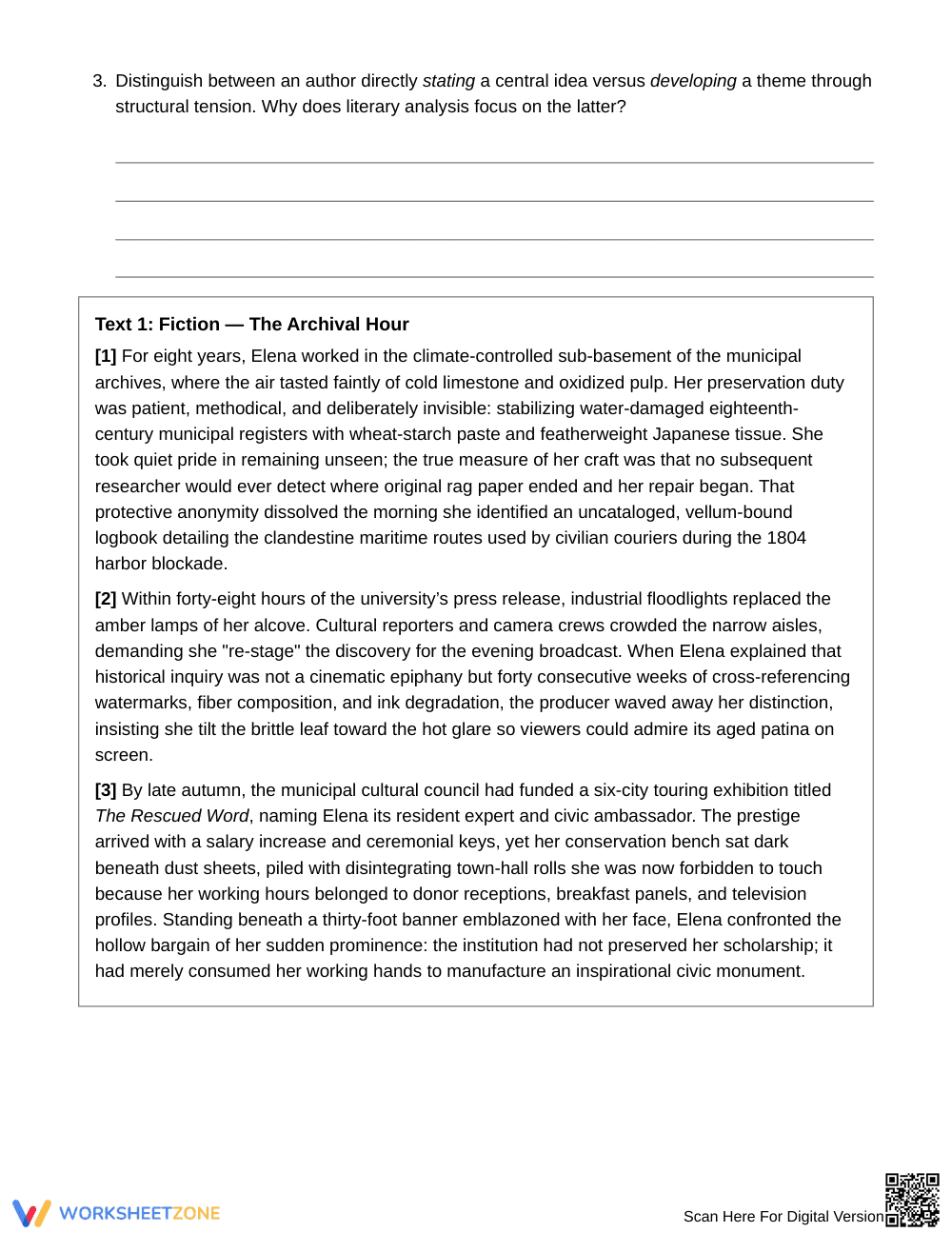
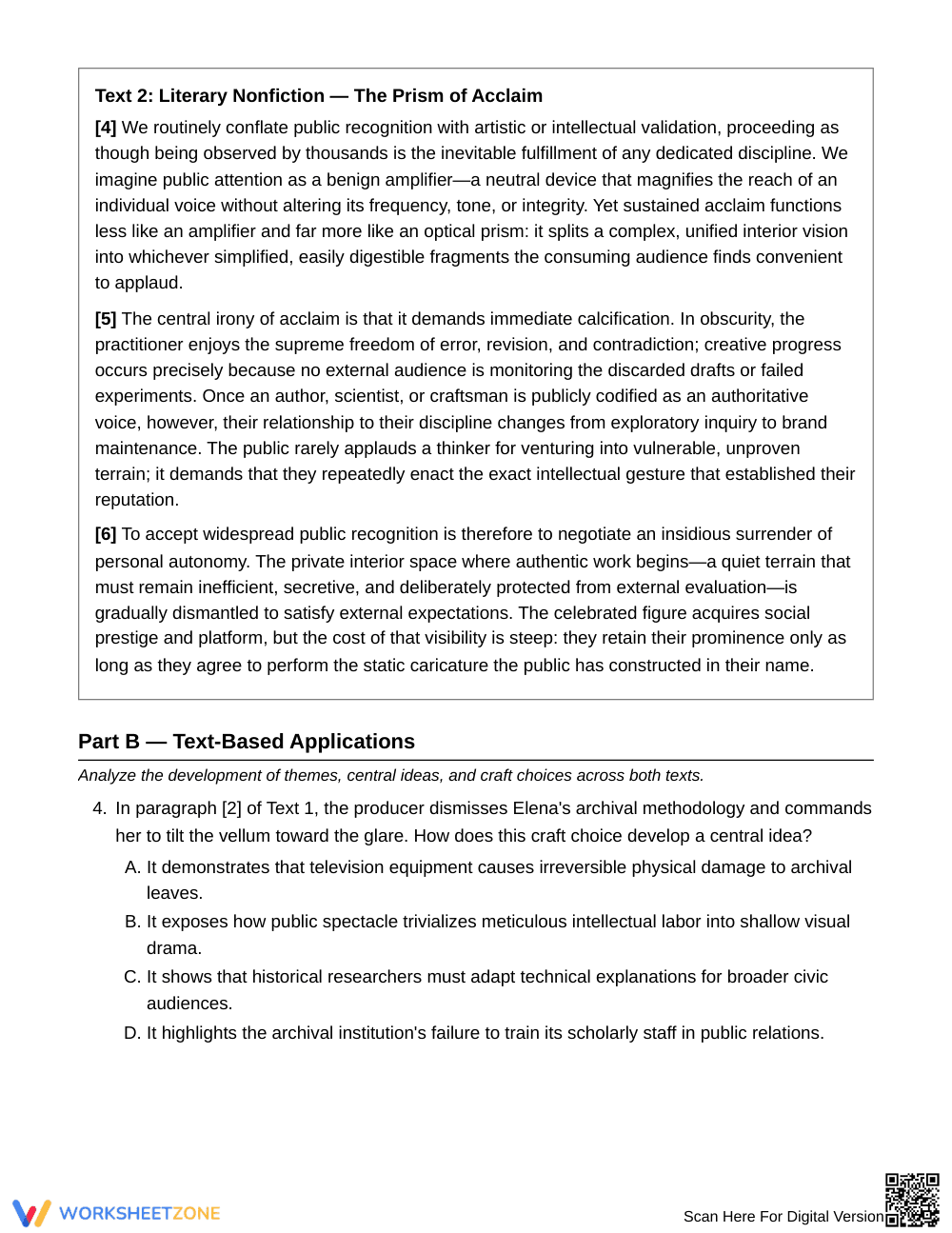
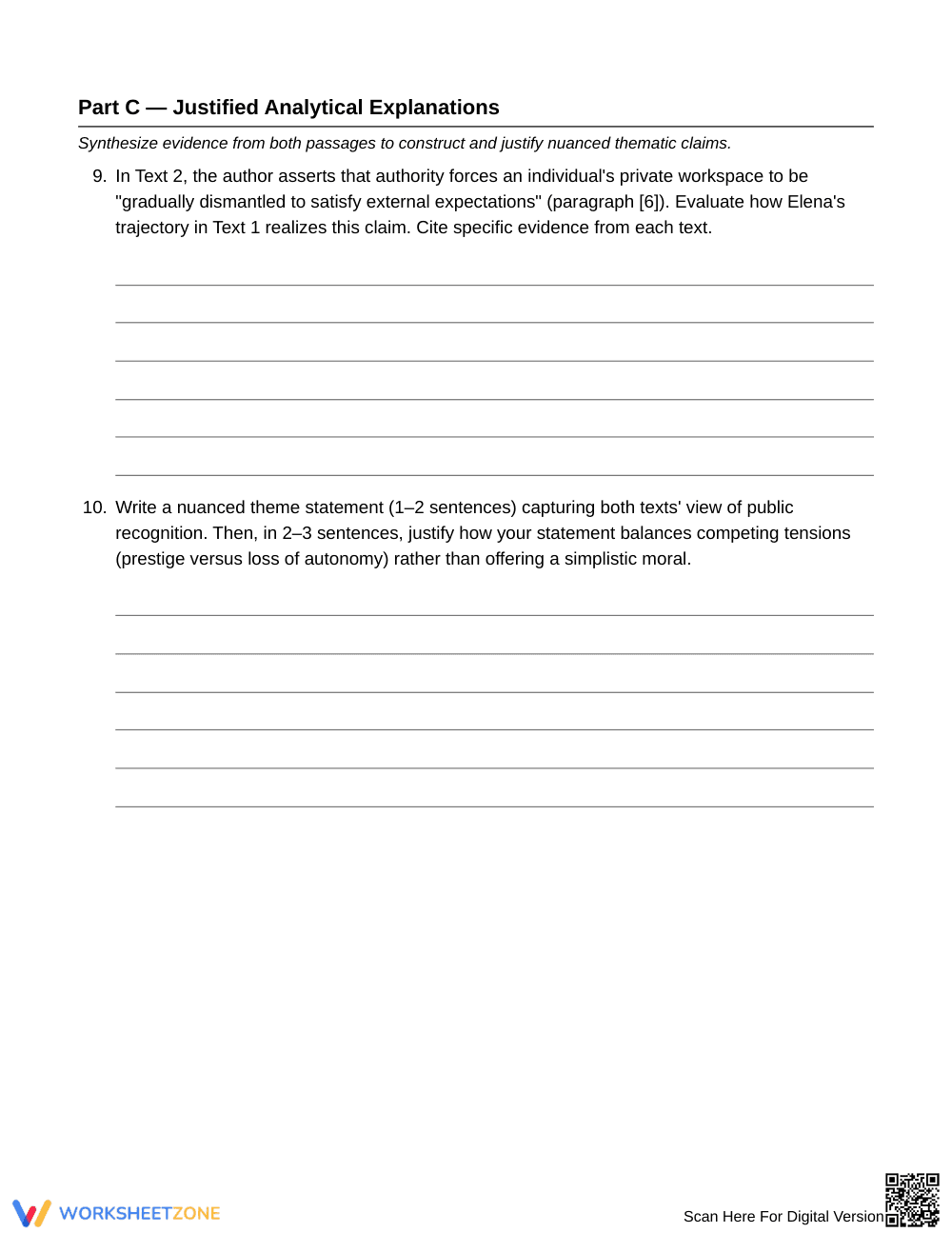
This 5-page instructional resource contains two paired readings—a short story and an analytical essay—alongside 10 structured analysis tasks. Students engage with a conceptual rule box, multiple-choice items, text-dependent short answers, and synthesis prompts. A 3-page answer key provides complete model responses and justifications.
- Guided practice (Tasks 1–3): Students review core definitions and identify why moral platitudes weaken literary essays.
- Supported practice (Tasks 4–8): Working through paired texts, learners analyze how authorial craft and symbolic contrasts develop central ideas.
- Independent practice (Tasks 9–10): Students synthesize evidence across both passages to write and justify an original, nuanced theme statement.
This progression supports a gradual-release model moving from concept recognition to rigorous textual synthesis.
This worksheet aligns directly with `RL.9-10.2`: Determine a theme or central idea of a text and analyze in detail its development over the course of the text. It also reinforces `RI.9-10.2` through comparative analysis of literary nonfiction. Both standard codes can be copied directly into lesson plans, IEP goals, or district curriculum mapping tools.
Use this worksheet during a literary analysis unit as a paired-text seminar activity or an independent benchmark assessment. For formative assessment, check student responses on Task 2 to verify that learners recognize analytical weakness before writing independent claims. The complete instructional sequence takes approximately 45 to 60 minutes to complete.
This resource is designed for Grade 10 English II students and high school writers preparing for analytical essay units. Support developing students with a theme sentence-frame anchor chart, while advanced learners can expand their Part C response into a multi-paragraph comparative essay.
According to research by Fisher & Frey (2014) on close reading and text-dependent questioning, secondary students require explicit frameworks to move from identifying basic narrative topics to formulating sophisticated, evidence-grounded thematic claims. Standard `RL.9-10.2` requires tenth-grade learners to determine a central idea or theme and trace its development across structural tensions and authorial craft choices. This Grade 10 English II worksheet operationalizes that shift through 10 sequenced tasks across paired literary and informational texts. By guiding students away from moralistic platitudes and toward balanced thematic arguments addressing trade-offs and underlying costs, the resource builds critical analytical stamina. Educators utilizing this 5-page curriculum tool provide students with targeted practice that strengthens analytical comprehension, close-reading rigor, and evidence-based writing fluency across diverse text structures.


