




























Views
Downloads



Essential Narrative Craft Worksheet | Grade 6 ELA

Paste this activity's link or code into your existing LMS (Google Classroom, Canvas, Teams, Schoology, Moodle, etc.).
Students can open and work on the activity right away, with no student login required.
You'll still be able to track student progress and results from your teacher account.
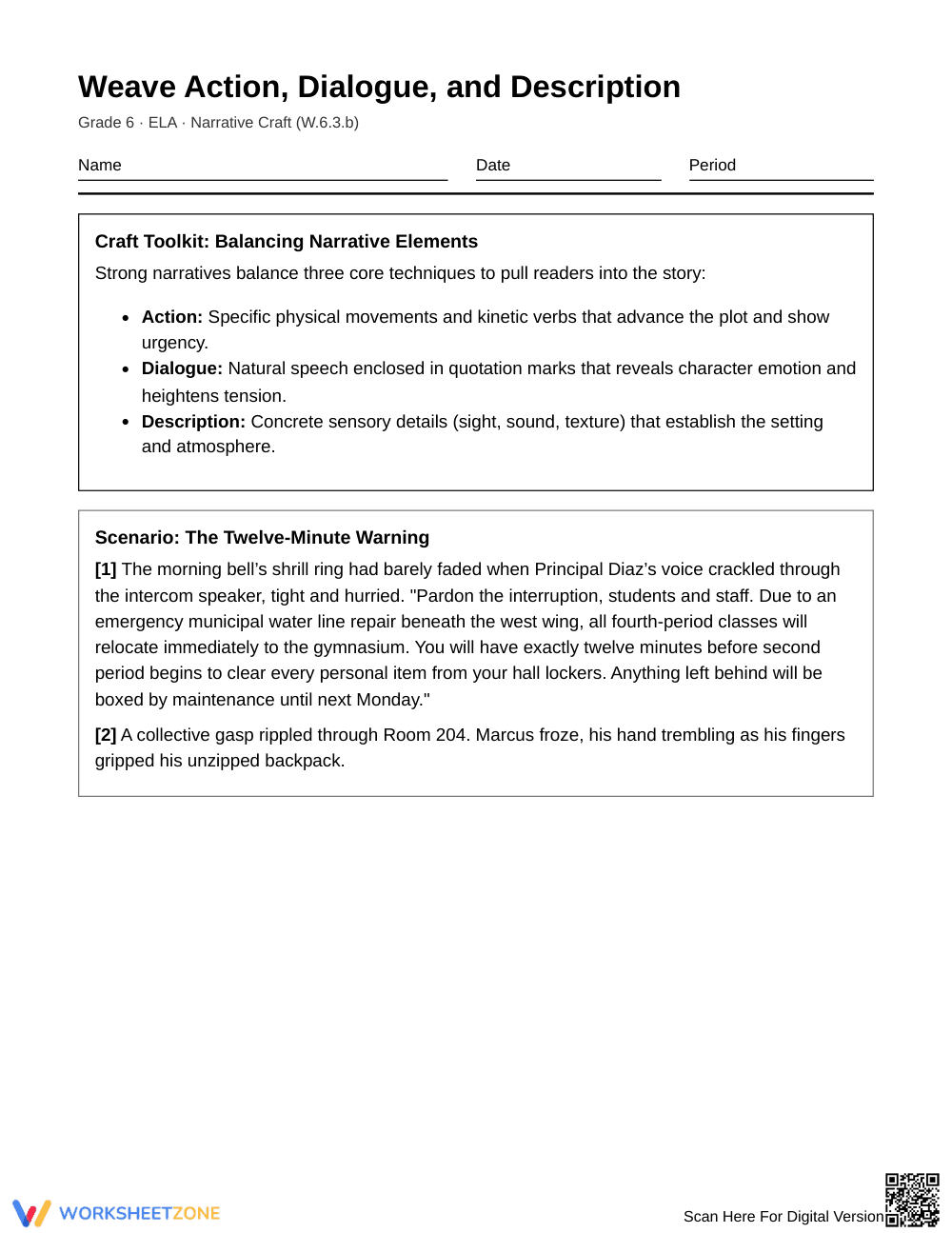
This printable Grade 6 narrative craft worksheet teaches middle school writers to intentionally weave kinetic action, formatted dialogue, and sensory description into dynamic story scenes. Students analyze an urgent school emergency scenario and progress step-by-step from structural planning to isolated micro-writing, full drafting, and targeted craft revision.
At a Glance
- Grade: 6 · Subject: ELA
- Standard:
W.6.3.b— Use narrative techniques such as dialogue, pacing, and description to develop experiences and events- Skill Focus: Weave Action, Dialogue, and Description
- Format: 5 pages · 8 problems · Answer key included · PDF
- Best For: Narrative writing unit independent craft practice
- Time: 40–50 minutes
What's Inside
This 5-page instructional resource contains 8 targeted writing tasks anchored by a high-stakes prompt, "The Twelve-Minute Warning." The packet begins with a foundational Craft Toolkit review defining narrative pacing, followed by structured conflict-mapping graphic prompts, four isolated craft drills, a 200-to-240-word drafting space, a metacognitive sentence-level revision table, and a 3-page exemplar answer key.
Skill Progression
- Guided practice (Tasks 1–2): Students establish high narrative stakes by outlining a chronological sequence of events and isolating a specific obstacle preventing the protagonist from reaching his locker.
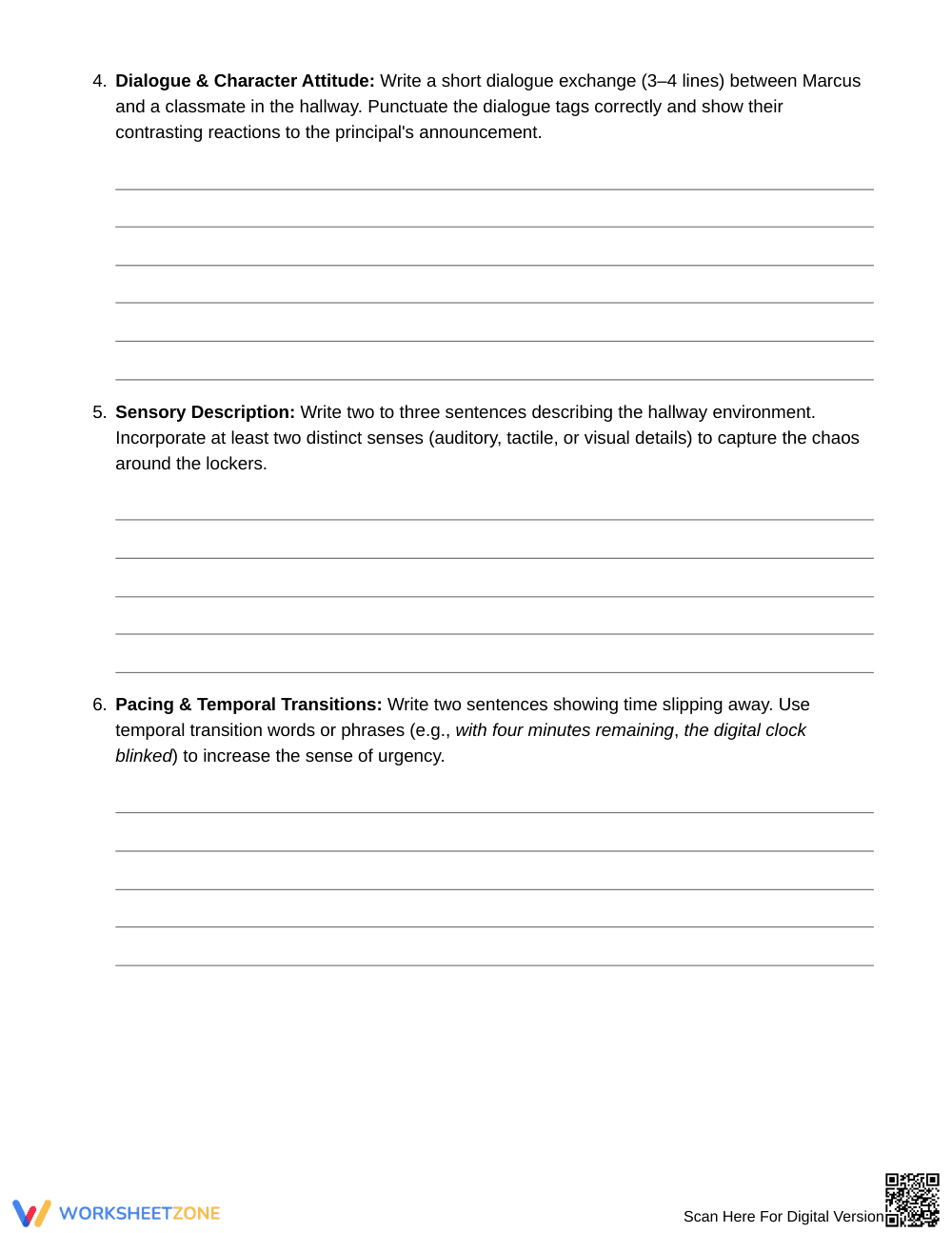
- Supported practice (Tasks 3–6): Learners complete four focused micro-writing drills that target dynamic action verbs, multi-line dialogue formatting, multi-sensory setting details, and temporal transition phrasing.
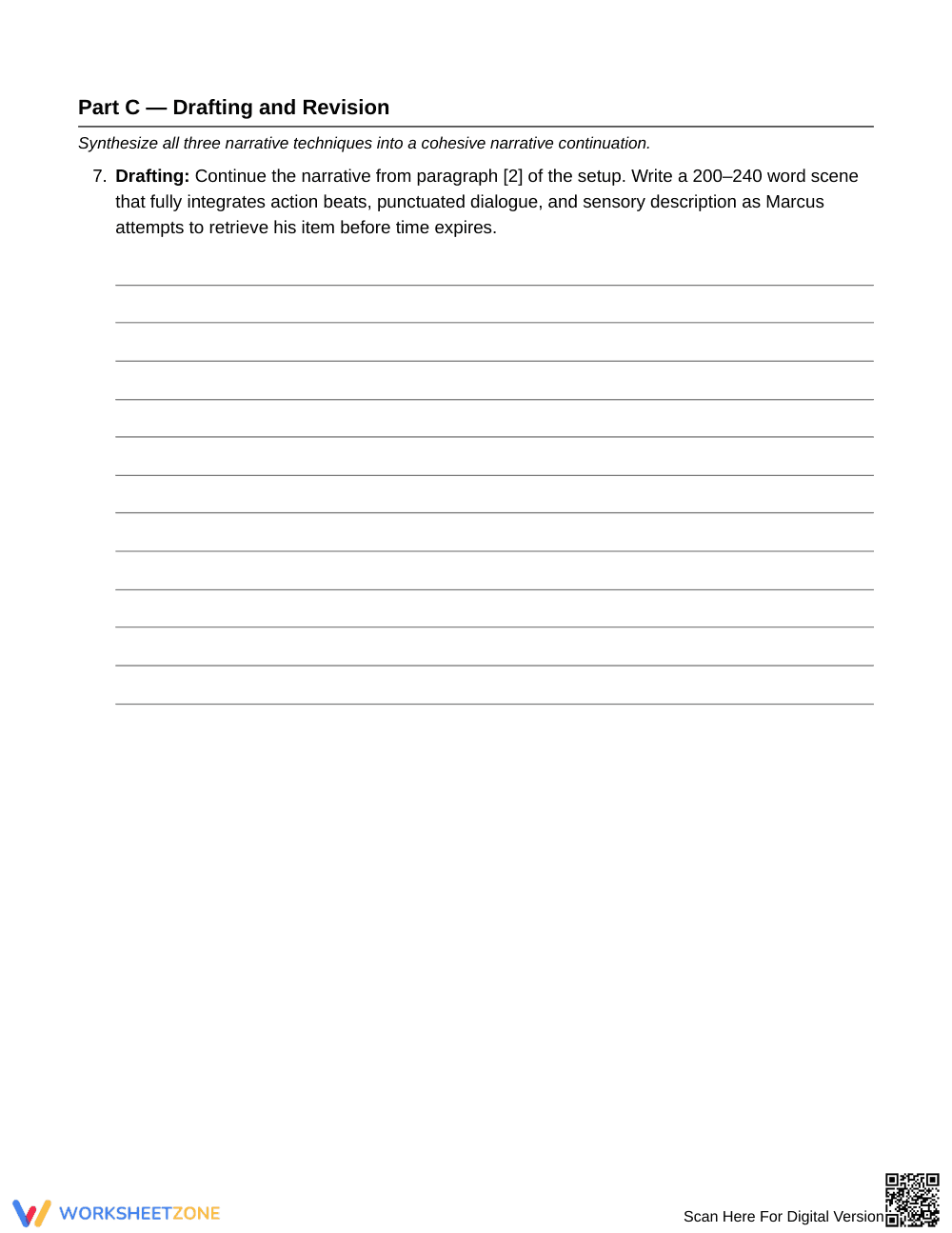
- Independent practice (Tasks 7–8): Writers synthesize all three core craft tools into a 200–240 word narrative climax, followed by an analytical revision task to improve sentence-level pacing.
This structured sequence utilizes the gradual release of responsibility framework, giving developing writers scaffolded rehearsal before demanding full compositional synthesis.
Standards Alignment
Primary Standard: `W.6.3.b` — Use narrative techniques, such as dialogue, pacing, and description, to develop experiences, events, and/or characters. This worksheet equips students to balance these three compositional elements rather than relying solely on plot summaries. Both standard codes can be copied directly into lesson plans, IEP goals, or district curriculum mapping tools.
How to Use It
Deploy this resource during the drafting phase of a narrative writing workshop, immediately after direct instruction on pacing and dialogue mechanics. Alternatively, use it as a mid-unit formative assessment to diagnose whether students understand how dialogue tags interact with physical action beats. While students write, circulate and check Part B to confirm students are choosing strong verbs instead of generic linking verbs. Expect students to finish the 8 tasks in 40 to 50 minutes.
Who It's For
Designed for general Grade 6 English Language Arts classrooms, this resource also supports striving writers who benefit from sentence-level constraints before producing extended prose. Pair this exercise with mentor text excerpts highlighting tense narrative scenes or an anchor chart demonstrating quotation mark rules.
According to Fisher & Frey (2014), explicit scaffolding of narrative writing techniques through deliberate practice prevents cognitive overload during extended compositional drafting. This 5-page Grade 6 ELA worksheet delivers rigorous alignment to standard W.6.3.b by breaking the complex skill of narrative weaving into 8 manageable tasks. Students first isolate kinetic action verbs, formatted dialogue exchanges, and sensory descriptions before integrating them into a cohesive story continuation. By incorporating deliberate sentence-level revision, the resource ensures middle school learners understand the exact structural mechanics behind narrative tension and pacing.


