




























Views
Downloads


Essential Embedded Comparisons Worksheet | Grade 8 ELA

Paste this activity's link or code into your existing LMS (Google Classroom, Canvas, Teams, Schoology, Moodle, etc.).
Students can open and work on the activity right away, with no student login required.
You'll still be able to track student progress and results from your teacher account.
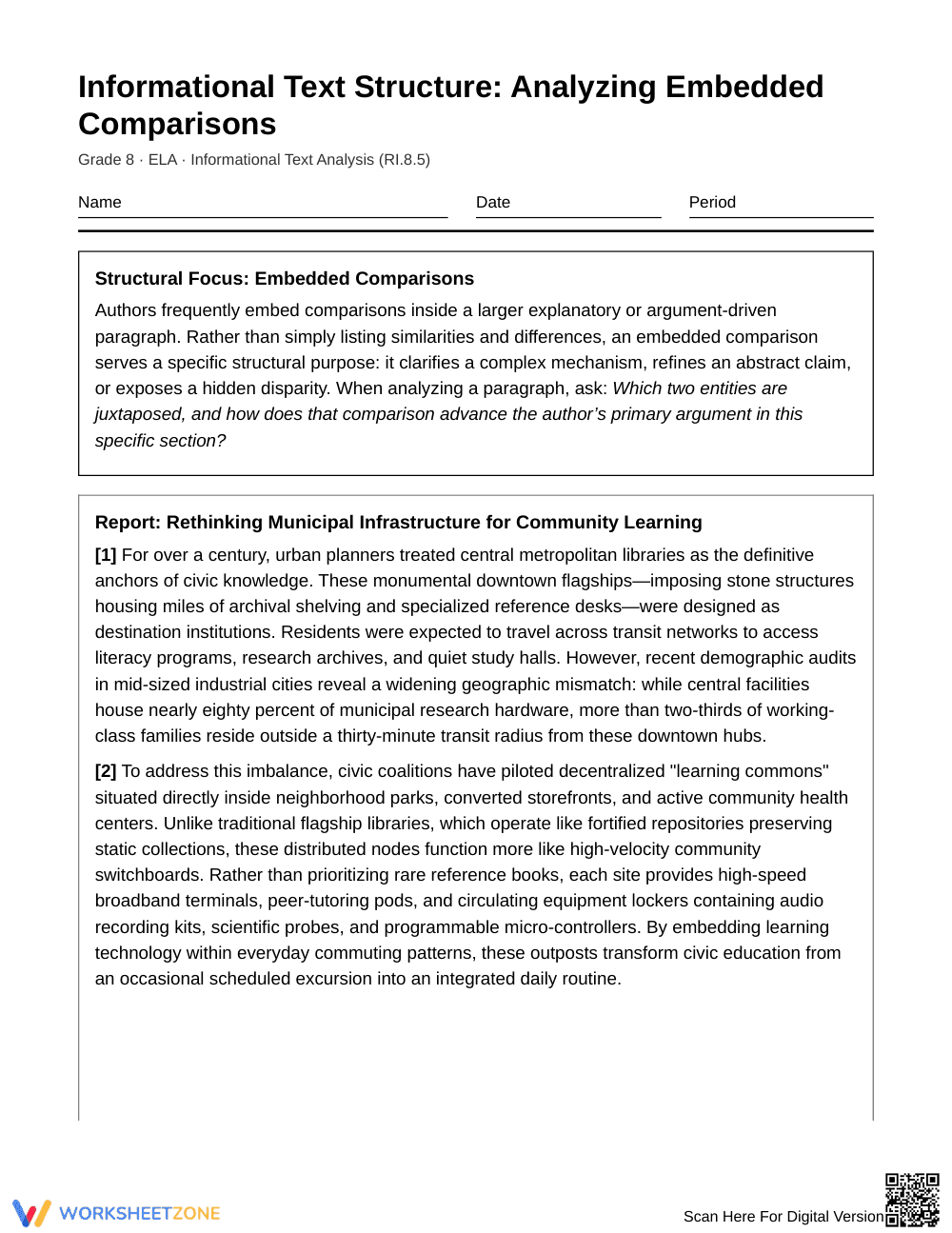
This informational text structure worksheet trains Grade 8 students to analyze how embedded comparisons develop an author's central ideas. Working with an original analytical report on municipal learning infrastructure, students examine juxtaposed concepts across paragraphs to understand how structural contrasts refine claims and support balanced arguments.
At a Glance
- Grade: 8 · Subject: ELA
- Standard:
RI.8.5— Analyze how a specific paragraph contributes to the development of central ideas- Skill Focus: Explain an Embedded Comparison
- Format: 5 pages · 12 problems · Answer key included · PDF
- Best For: Informational text close reading and analysis
- Time: 40–50 minutes
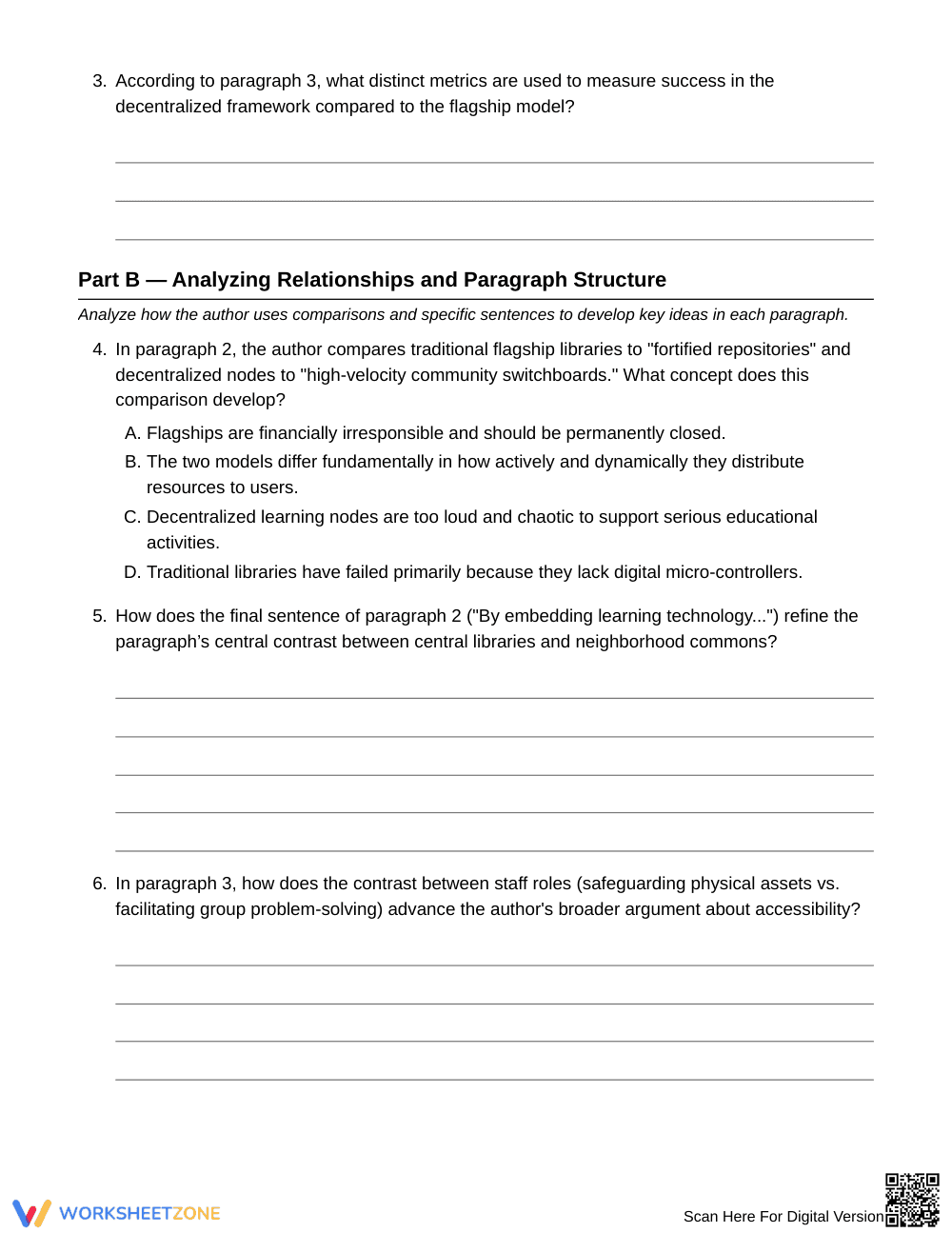
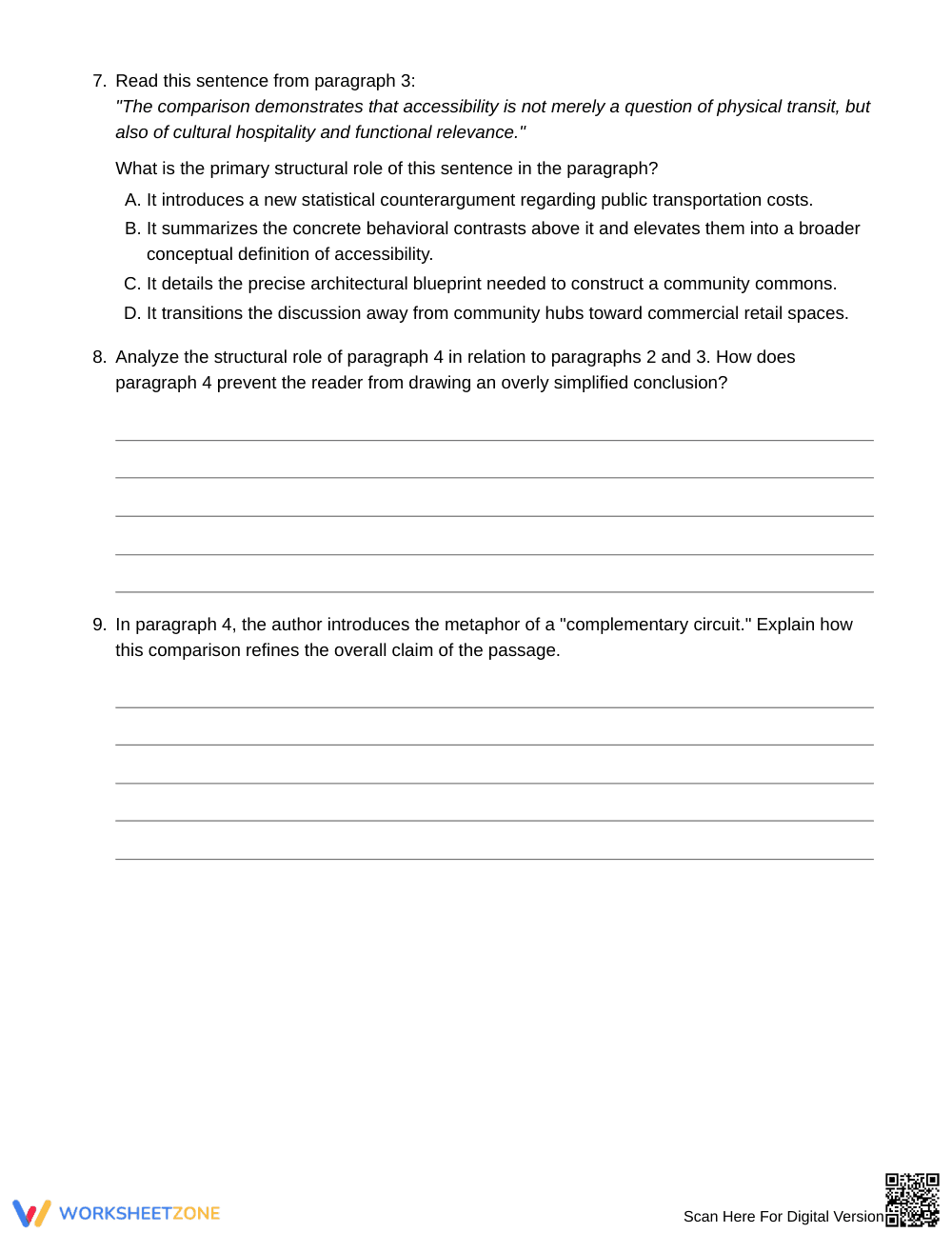
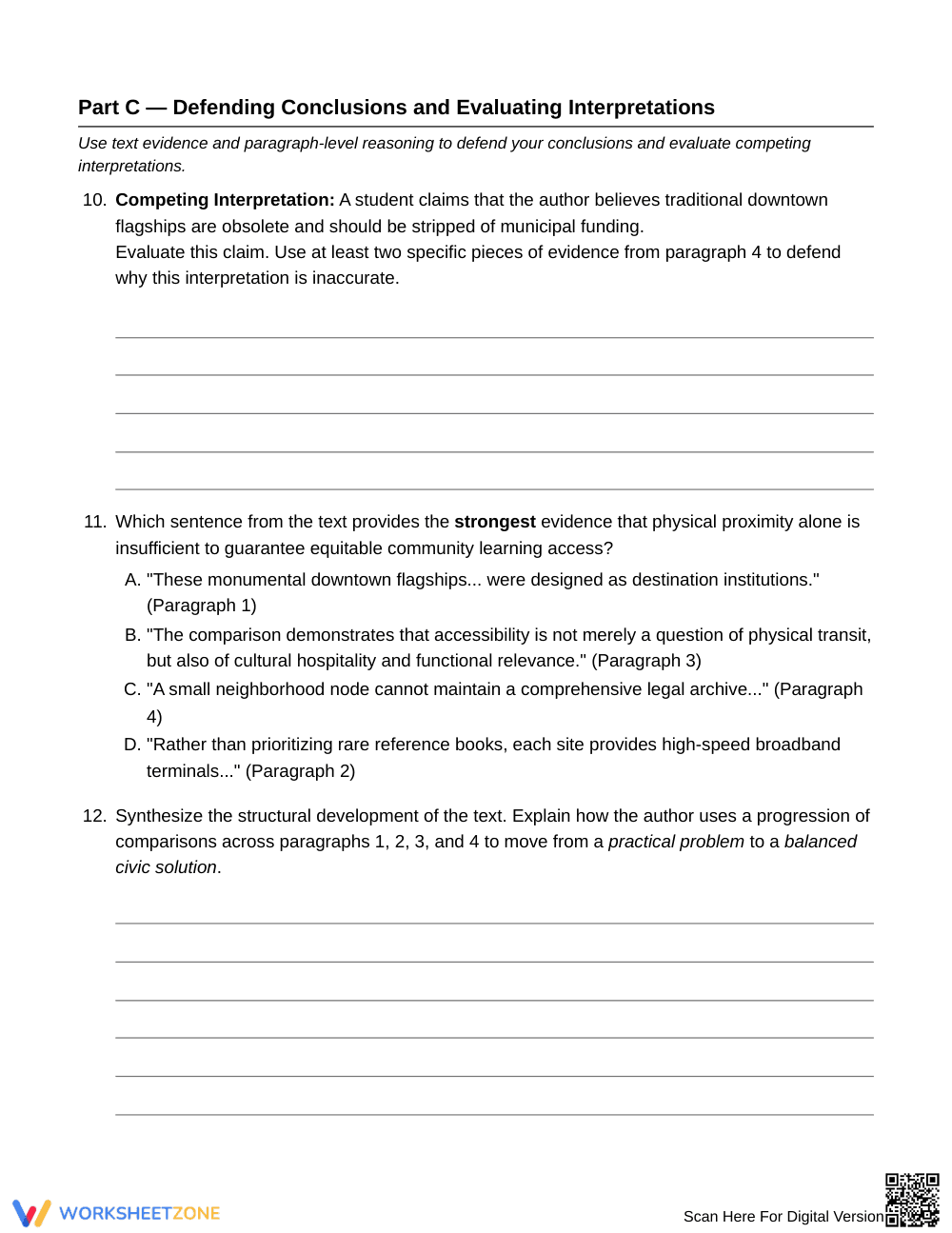
This 5-page printable resource features a multi-paragraph civic policy report titled "Rethinking Municipal Infrastructure for Community Learning," followed by 12 carefully sequenced questions. Students tackle multiple-choice items, text-dependent short answers, and paragraph-level synthesis prompts. A comprehensive 3-page answer key provides complete model responses and textual rationales for every item.
Skill Progression
- Guided Practice (Part A, 3 items): Students identify explicit textual details and surface-level disparities to ground their comprehension in the text's factual baseline.
- Supported Practice (Part B, 6 items): Students analyze embedded metaphors, structural sentences, and paragraph functions with targeted analytical prompts.
- Independent Practice (Part C, 3 items): Students evaluate competing interpretations, select high-leverage textual evidence, and synthesize the author's structural progression across all four paragraphs.
This scaffolded progression adheres to the gradual release of responsibility model, moving students systematically from foundational recall to sophisticated structural evaluation.
Standards Alignment
This worksheet is aligned directly to RI.8.5: "Analyze in detail the structure of a specific paragraph in a text, including the role of particular sentences in developing and refining a key concept." It also reinforces reading standard RI.8.1 by requiring textual evidence to defend analytical conclusions. Both standard codes can be copied directly into lesson plans, IEP goals, or district curriculum mapping tools.
How to Use It
Use this resource during or immediately following direct instruction on informational text structures and author craft. As a mid-unit formative assessment, observe whether students can distinguish between surface similarities and the broader rhetorical purpose of the embedded comparisons in Part B. The full activity requires approximately 40 to 50 minutes of focused instructional time.
Who It's For
This activity is designed for Grade 8 English Language Arts students developing rigorous non-fiction reading comprehension skills. It offers built-in scaffolding for emerging readers through structured line references, while challenging advanced learners with multi-sentence rhetorical synthesis. Pair this worksheet directly with mini-lessons on organizational patterns, authorial perspective, or rhetorical devices.
According to research from Fisher & Frey (2014) on close reading and text-dependent questioning, secondary students require systematic exposure to complex non-fiction texts that explicitly model how organizational structures advance an author's overarching purpose. When analyzing embedded comparisons under standard RI.8.5, students must look beyond simple literal contrasts to evaluate how specific paragraph-level juxtapositions clarify central ideas. This instructional worksheet engages Grade 8 learners in dissecting embedded metaphors and paragraph functions within an authentic policy text. By moving sequentially from explicit evidence retrieval to high-level rhetorical synthesis across 12 targeted tasks, the resource develops critical analytical capacities necessary for academic literacy and standardized assessment readiness. The structured format ensures that students gain repeated, scaffolded practice evaluating how structural craft shapes meaning, reinforcing enduring analytical reading routines.


