


























Views
Downloads

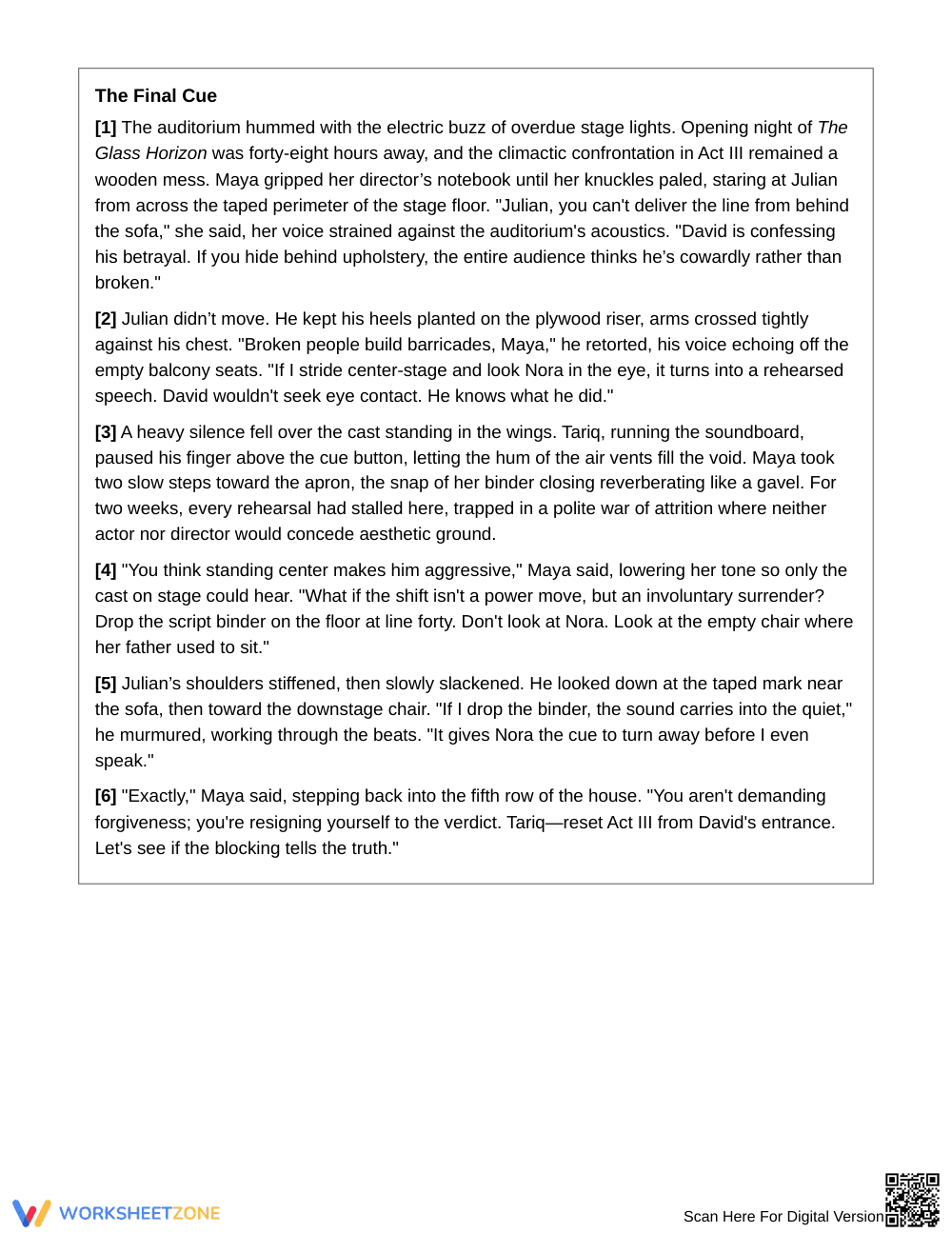
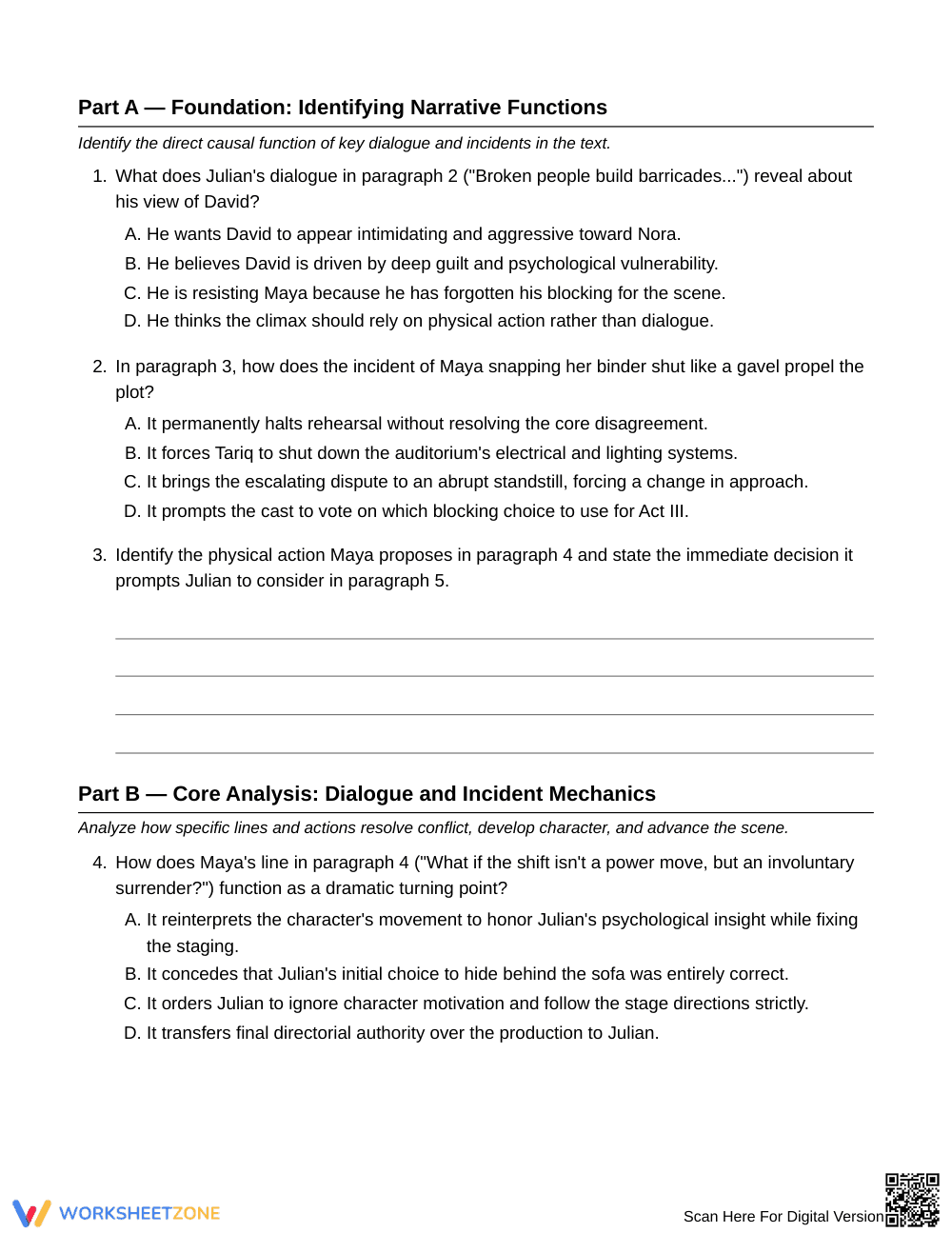
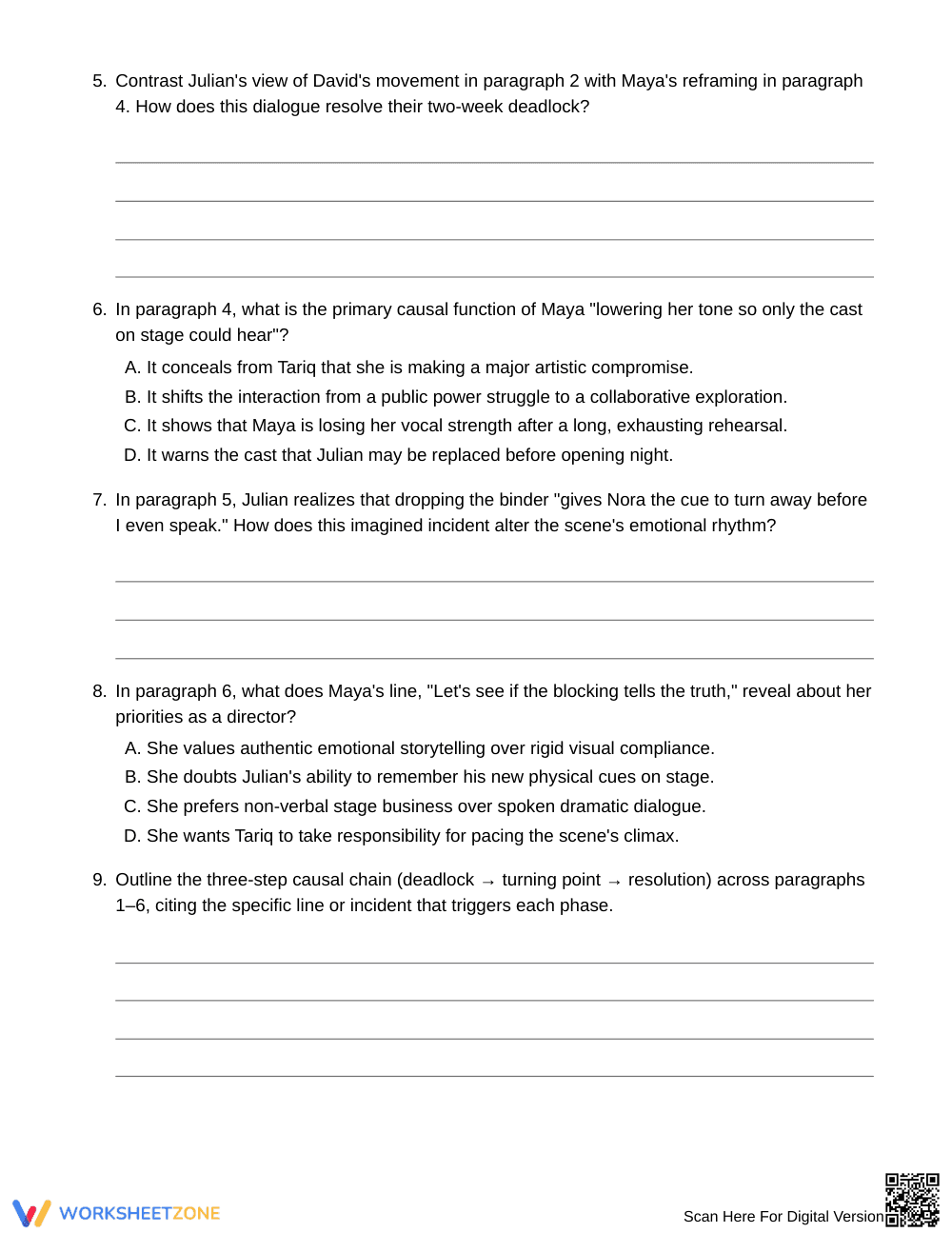
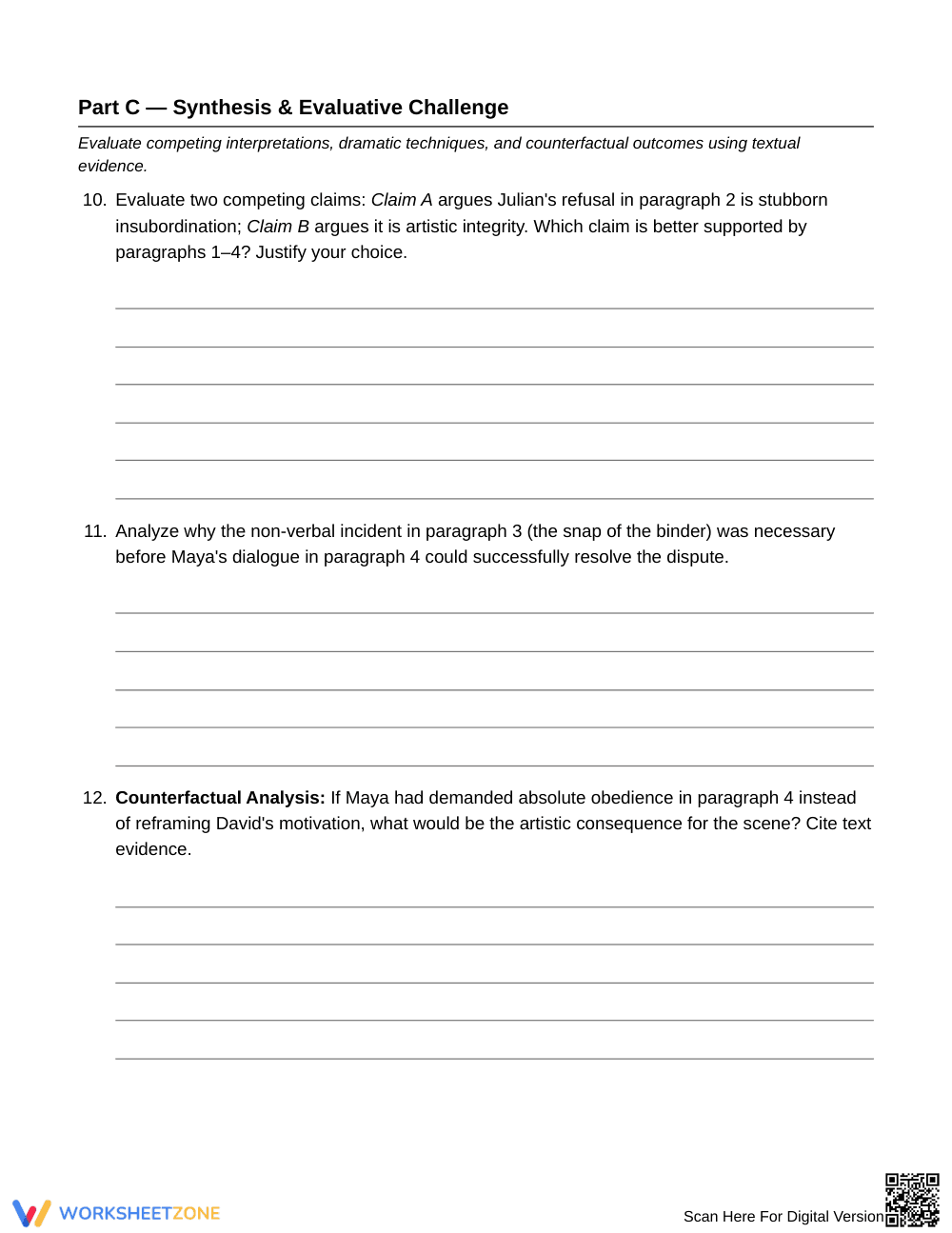

Essential Dialogue and Incident Worksheet | Grade 8 ELA
Paste this activity's link or code into your existing LMS (Google Classroom, Canvas, Teams, Schoology, Moodle, etc.).
Students can open and work on the activity right away, with no student login required.
You'll still be able to track student progress and results from your teacher account.
Mastering how dialogue and key incidents drive narrative development is essential for middle school literary analysis. This five-page worksheet engages Grade 8 students with twelve focused tasks based on the realistic theater passage 'The Final Cue,' examining how spoken interactions reveal motives, trigger decisions, and advance plot action.
At a Glance
- Grade: 8 · Subject: ELA
- Standard:
RL.8.3— Analyze how dialogue and incidents propel action, reveal character, or provoke decisions- Skill Focus: Dialogue and Incident Analysis
- Format: 5 pages · 12 problems · Answer key included · PDF
- Best For: Close reading and literary analysis practice
- Time: 40–50 minutes
What's Inside
This five-page printable includes a core concept reference box defining narrative functions, followed by twelve analytical problems. Tasks include multiple-choice identification, constructed-response items, a causal chain diagram, and claim evaluation. A two-page answer key provides complete scoring rationales and textual evidence.
Skill Progression
The worksheet follows a structured gradual release model across three analytical parts:
- Guided practice (Part A, 3 problems): Students identify narrative functions and character traits in multiple-choice questions with direct paragraph references.
- Supported practice (Part B, 6 problems): Learners analyze turning points and trace a three-step causal chain with scaffolded open-ended prompts.
- Independent practice (Part C, 3 problems): Students evaluate competing interpretations and conduct counterfactual analysis without scaffolding.
This sequence scaffolds the transition from basic identification to deep evaluative critique.
Standards Alignment
This resource aligns to `RL.8.3`: Analyze how particular lines of dialogue or incidents in a story or drama propel the action, reveal aspects of a character, or provoke a decision. It also supports `RL.8.1` by requiring text evidence for all claims. Both standard codes can be copied directly into lesson plans, IEP goals, or district curriculum mapping tools.
How to Use It
Use this activity during direct instruction on narrative craft or as post-reading practice. Assign Part A as a collaborative check before students tackle Parts B and C independently. For formative assessment, examine students' causal chain diagrams in Part B to detect whether they understand how non-verbal incidents drive plot shifts. Completion requires approximately 40 to 50 minutes.
Who It's For
This worksheet serves Grade 8 ELA students, high school reading intervention classes, and advanced Grade 7 readers. The opening rule box supports English learners, while Part C offers critical-thinking extensions for fast finishers. Pair this resource with a mini-lesson on character motivation or dramatic conflict.
According to Fisher & Frey (2014), structured close reading routines that guide students through progressive levels of text-dependent questions significantly increase analytical stamina and textual comprehension in secondary literacy classrooms. This Grade 8 worksheet operationalizes that framework by addressing Common Core standard RL.8.3, requiring learners to analyze how dialogue and plot incidents propel action, expose character motives, and provoke pivotal decisions. By structuring practice from multiple-choice identification to causal mapping and counterfactual evaluation, the resource provides the explicit cognitive scaffolding students need to evaluate subtle dramatic techniques. Classroom research highlights that pairing targeted evidence-gathering prompts with teacher modeling produces measurable gains in students' ability to interpret authorial craft independently. Incorporating this multi-tiered analysis of theater blocking and dialogue strengthens foundational reading comprehension while preparing middle schoolers for advanced high school literary discourse.


