


























Views
Downloads

Essential Defending Diction Worksheet | Grade 9 English I
Paste this activity's link or code into your existing LMS (Google Classroom, Canvas, Teams, Schoology, Moodle, etc.).
Students can open and work on the activity right away, with no student login required.
You'll still be able to track student progress and results from your teacher account.
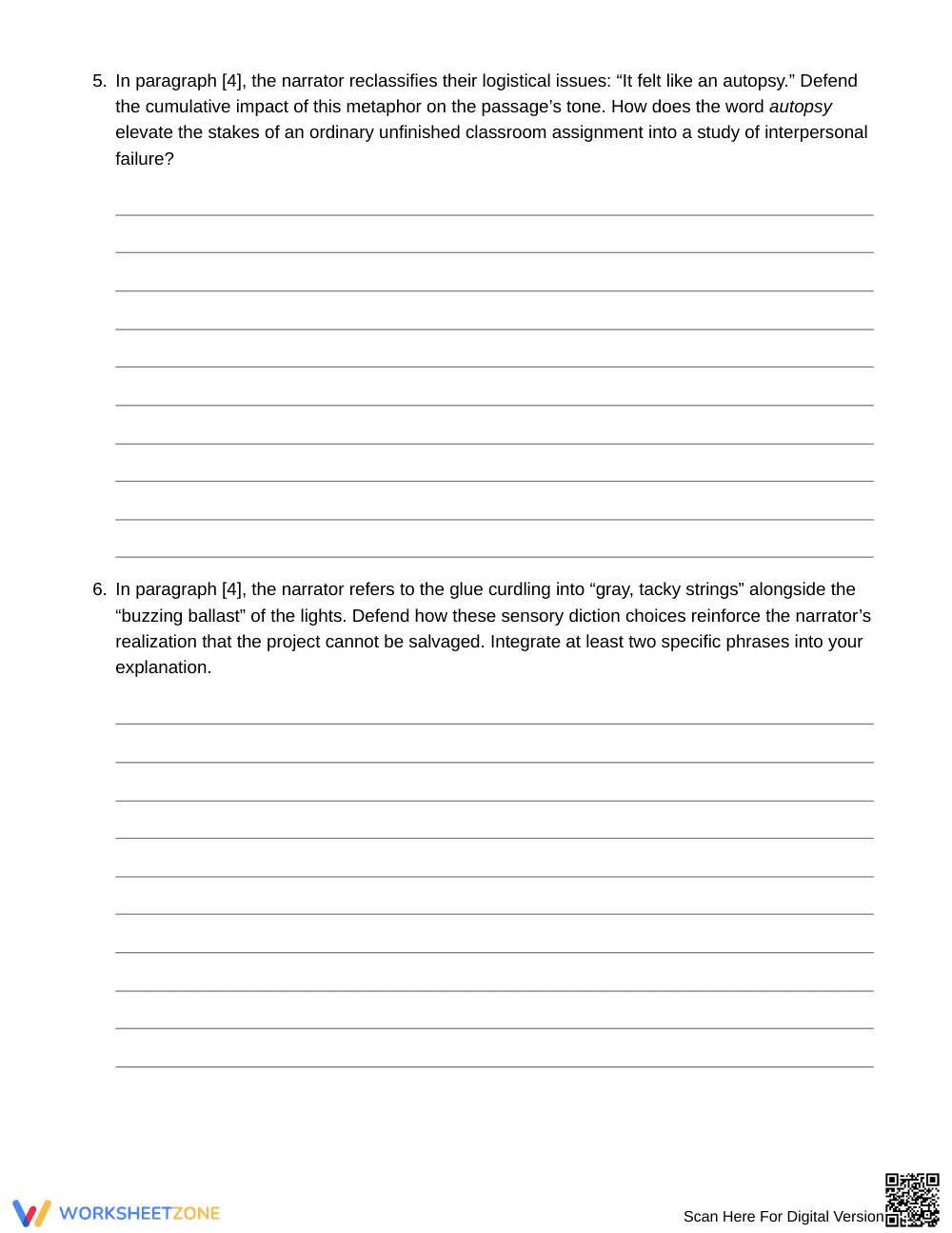
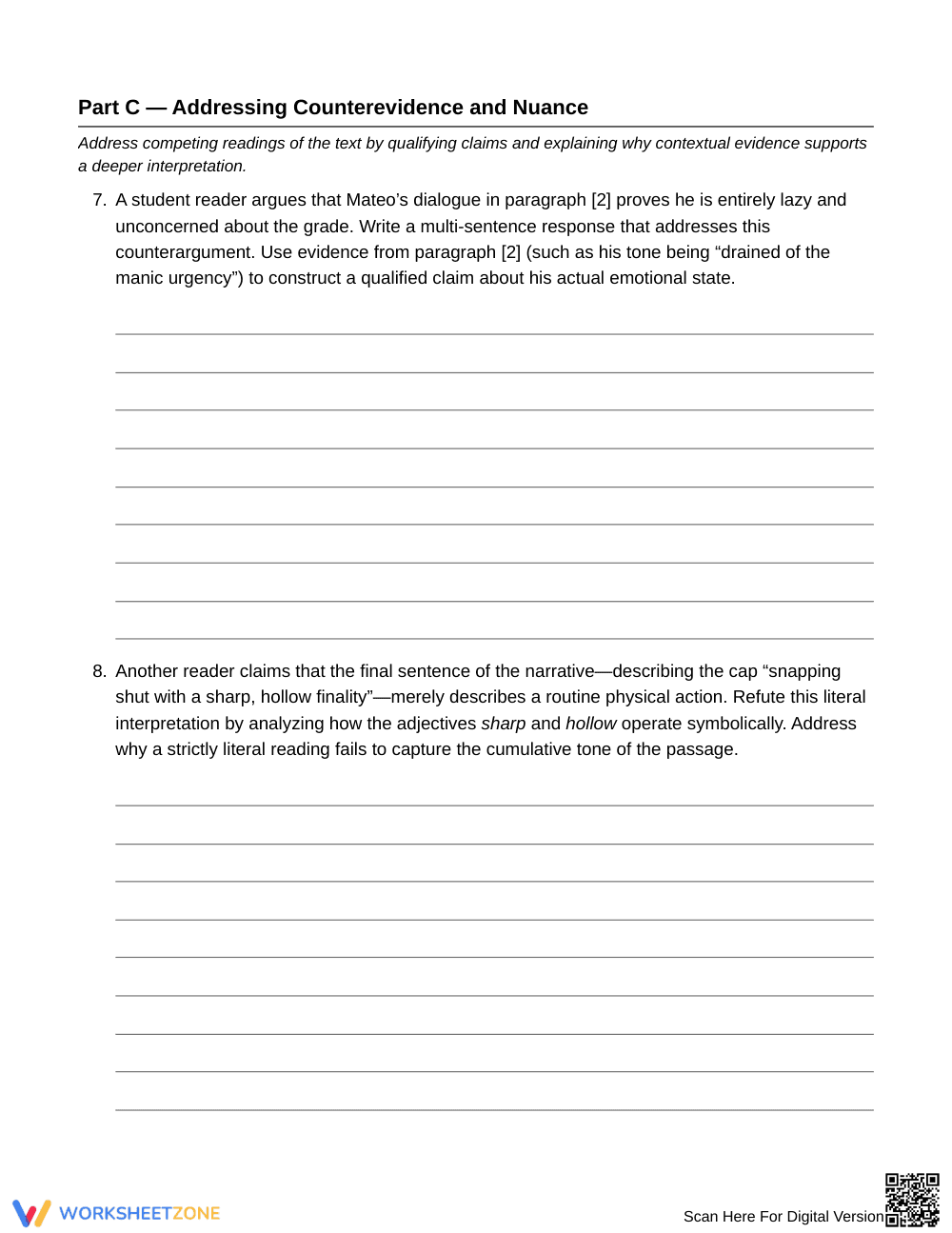
This 6-page literary analysis worksheet guides Grade 9 English I students to evaluate and defend authorial diction using an original narrative, "The Architecture of Silence." Across 8 targeted tasks, learners examine connotations, formulate qualified arguments, and address counterevidence to master analytical close reading.
At a Glance
- Grade: 9 · Subject: English I
- Standard:
RL.9-10.4— Analyze how precise word choices shape meaning, tone, and atmosphere.- Skill Focus: Defending the Effect of a Precise Word
- Format: 6 pages · 8 problems · Answer key included · PDF
- Best For: Close reading and analytical writing
- Time: 45–60 minutes
What's Inside
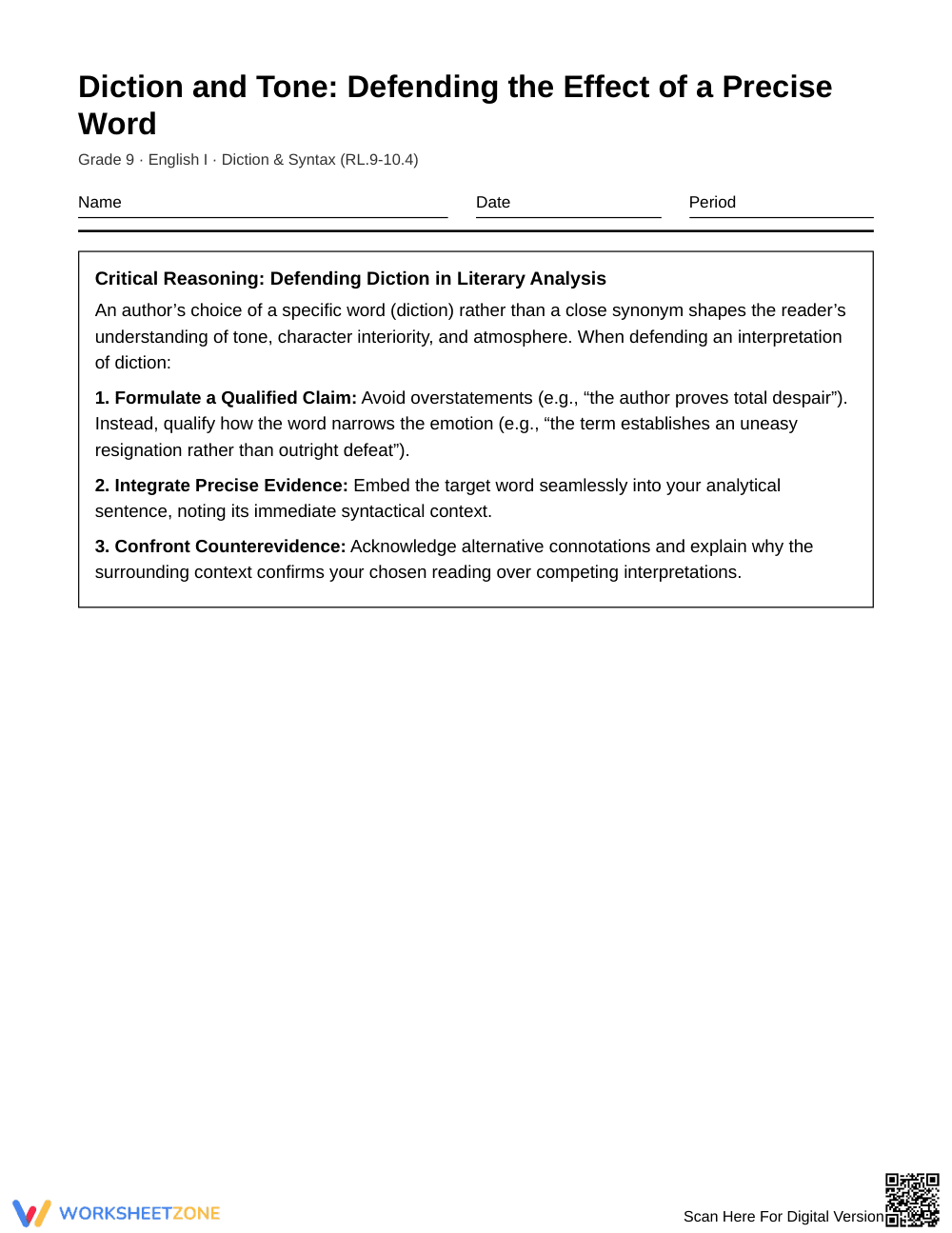
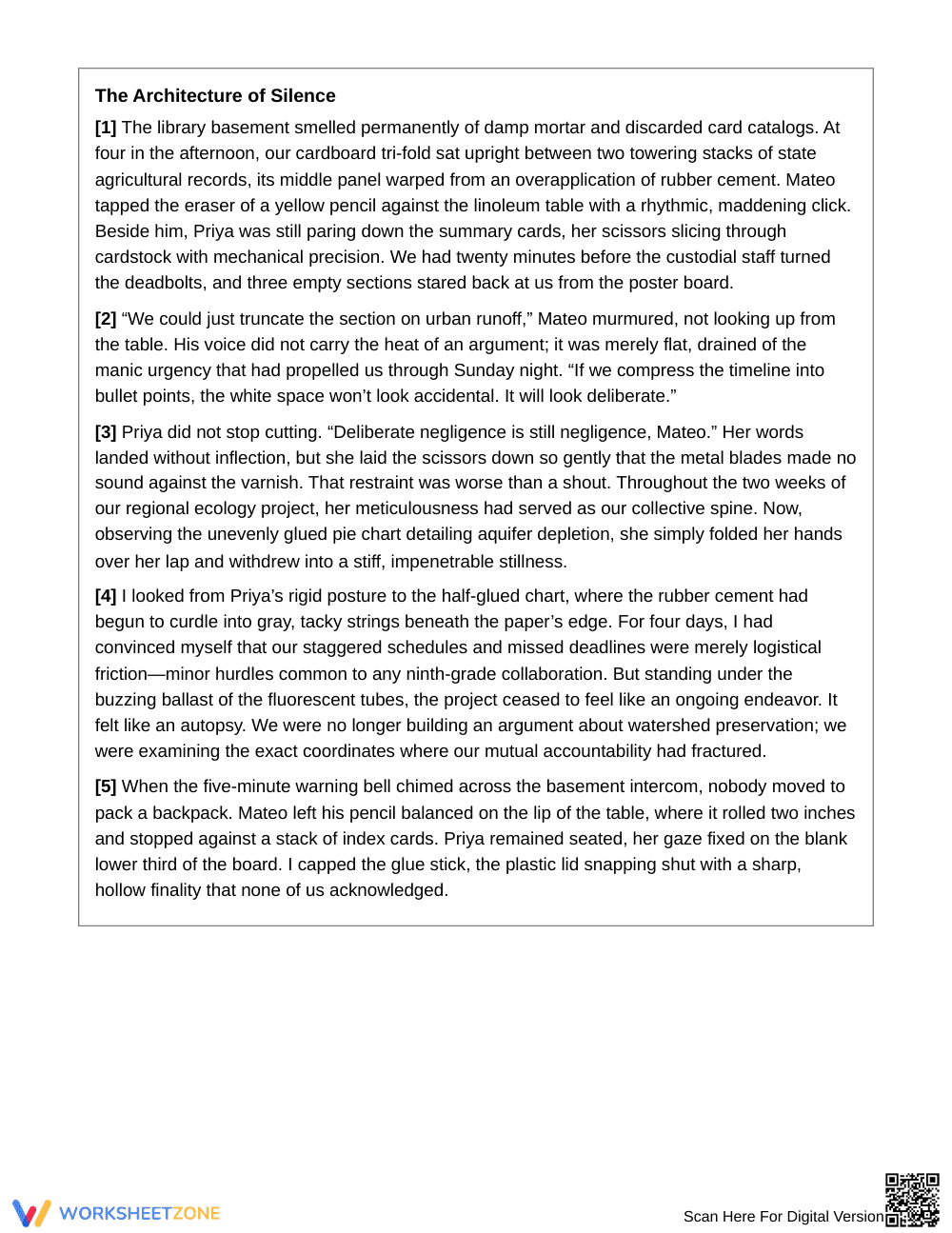
This resource features a foundational reference box outlining three core principles for diction defense, accompanied by the 5-paragraph short story. Students complete 8 analytical questions across three progressive sections. A detailed 3-page answer key provides complete model responses, qualified claims, and counterargument explanations.
Skill Progression
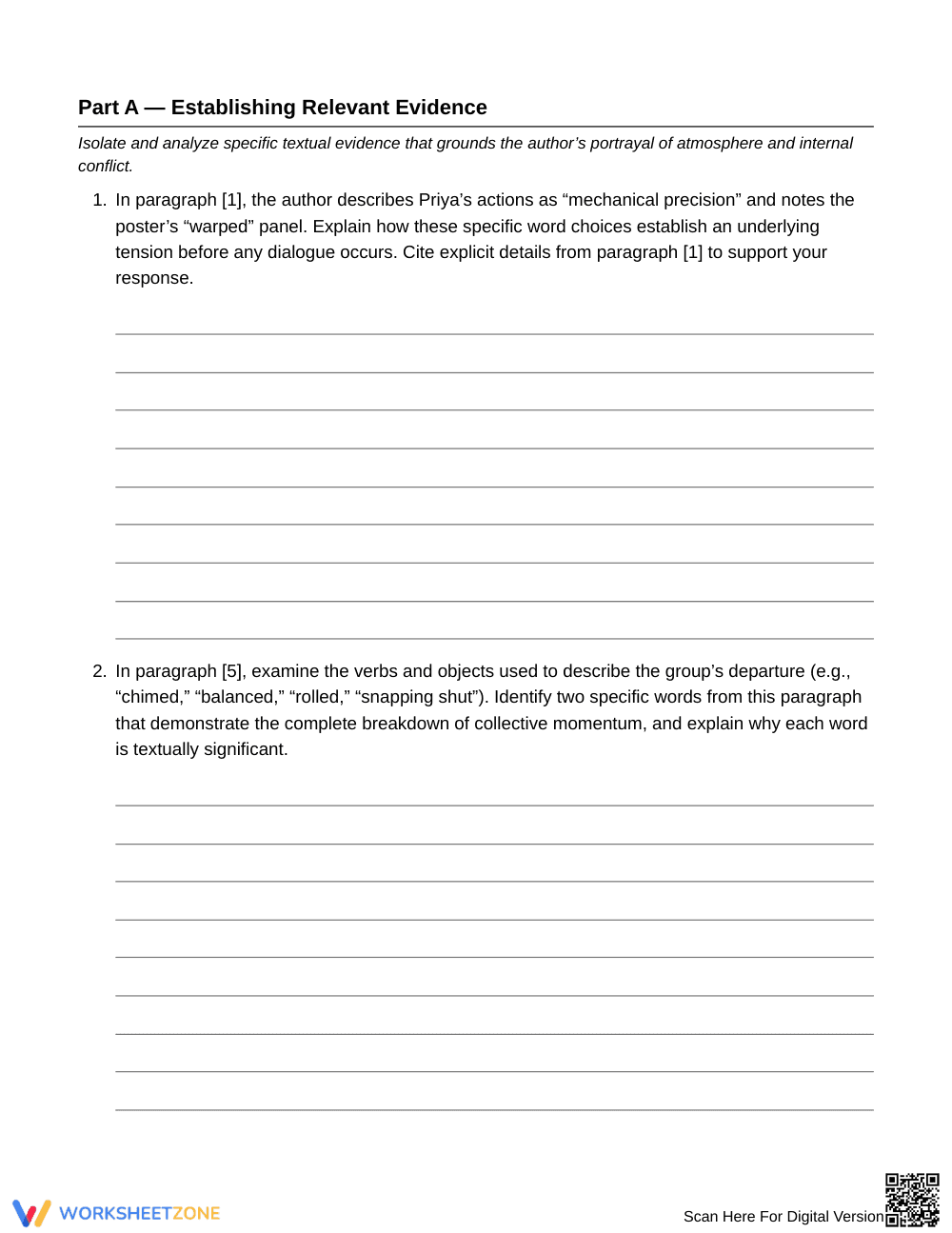
- Guided practice (Part A, 2 tasks): Students locate textual details and examine how descriptive words establish mood and interpersonal tension.
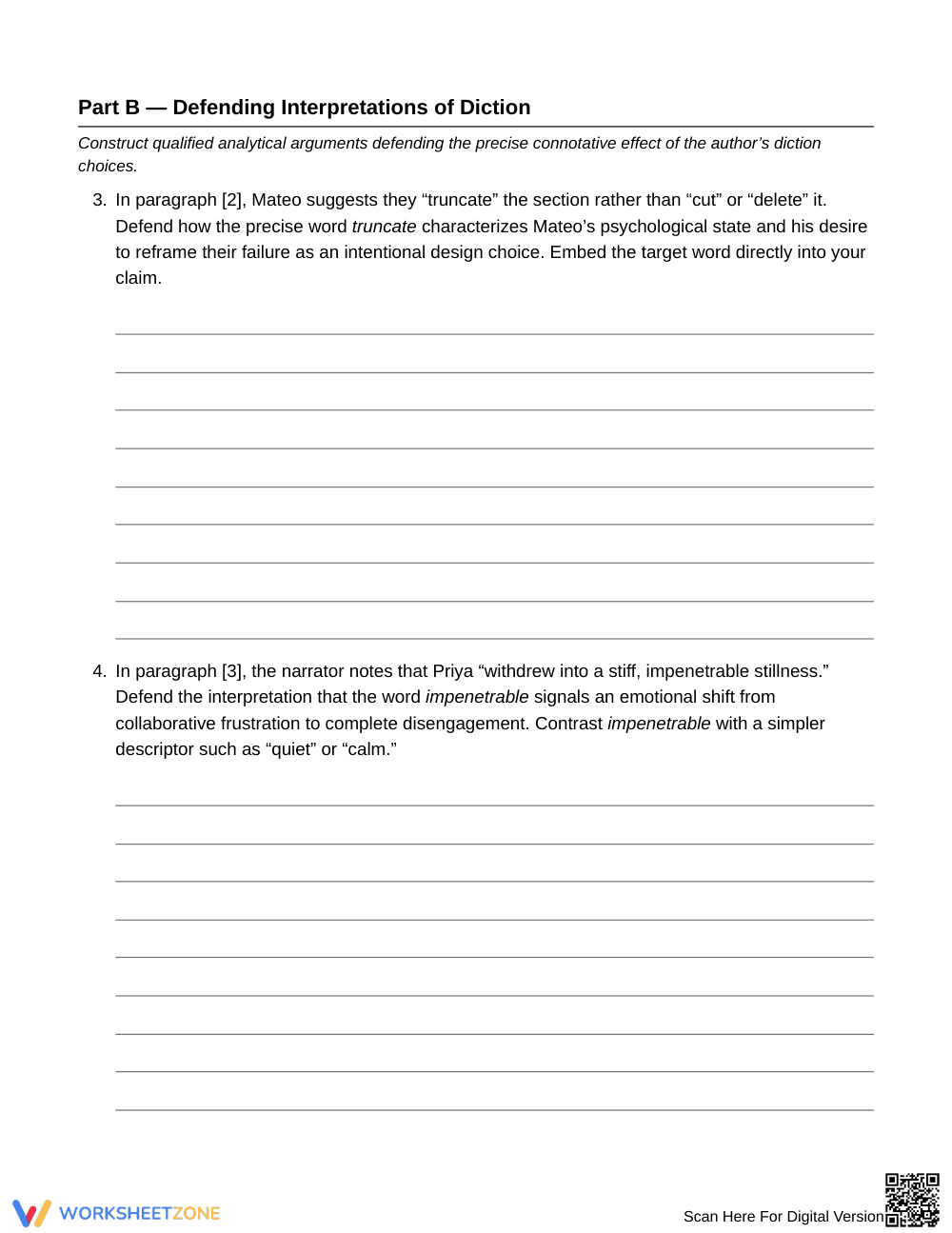
- Supported practice (Part B, 4 tasks): Students construct qualified claims defending how specific word choices shape tone and character interiority.
- Independent practice (Part C, 2 tasks): Students analyze nuanced counterarguments and refute overly literal readings using textual evidence.
This sequence follows a gradual-release model that builds from evidence identification to qualified critical argumentation.
Standards Alignment
This resource aligns with RL.9-10.4: Determine the meaning of words and phrases as they are used in the text, including figurative and connotative meanings, and analyze the cumulative impact of specific word choices on meaning and tone. It also reinforces W.9-10.1 through written evidence-based defense. Both standard codes can be copied directly into lesson plans, IEP goals, or district curriculum mapping tools.
How to Use It
Assign this worksheet following direct instruction on diction and connotation to reinforce analytical writing. Alternatively, use Part C as a mid-unit formative check to evaluate whether students qualify claims effectively. During independent work, check that students avoid absolute statements. The full activity requires approximately 45 to 60 minutes.
Who It's For
Built for Grade 9 English I classrooms, this printable resource suits general education and honors courses practicing close reading. Provide the reference box strategies as sentence frames for emerging writers, or assign counterargument refutations to advanced learners. Pair this worksheet with an anchor chart on tone words.
Aligned directly to standard RL.9-10.4, this Grade 9 instructional resource develops student mastery in analyzing authorial diction and defending the effect of precise word choices within complex literary prose. Grounded in the instructional frameworks outlined by Fisher & Frey (2014), the worksheet implements structured close-reading routines that move learners systematically from textual evidence isolation to qualified argumentative defense and counterevidence refutation. By analyzing nuanced connotations, sensory imagery, and metaphoric language in context, ninth-grade students build essential analytical reasoning skills necessary for advanced literary critique. The included 3-page exemplar key equips educators with clear benchmark responses for evaluating qualified claims, embedded textual evidence, and counterargument logic. This targeted print-and-go worksheet ensures rigorous, standards-based instruction that strengthens reading comprehension, academic vocabulary acquisition, and analytical writing proficiency across diverse secondary English language arts classroom settings.


