


























Views
Downloads




Essential Cell Structure Worksheet | Grade 6 Science
Paste this activity's link or code into your existing LMS (Google Classroom, Canvas, Teams, Schoology, Moodle, etc.).
Students can open and work on the activity right away, with no student login required.
You'll still be able to track student progress and results from your teacher account.
This comprehensive science resource helps middle school students overcome persistent misconceptions that equate microscopic cell organelles with macroscopic organism organs. Through structured concept checks, targeted error analysis, and applied biology scenarios, learners distinguish organelle-level functions from whole-organism physiology and build durable mental models of plant and animal cell structures.
At a Glance
- Grade: 6 · Subject: Science
- Standard: Middle School Life Science — Distinguish organelle functions from whole-organism organ systems
- Skill Focus: Correct Cell-Part and Whole-Organism Confusion
- Format: 5 pages · 16 problems · Answer key included · PDF
- Best For: Misconception repair and formative assessment
- Time: 40–50 minutes
What's Inside
The 5-page printable document features 16 rigorous tasks organized into three targeted sections. It begins with an organelle scale summary and a modeled error repair box before challenging students with multiple-choice scale checks, 8 detailed misconception repair prompts, microscopic slide identification, and a comparative organelle matrix, supported by a 3-page complete answer key.
Skill Progression
- Guided practice (Tasks 1–4): Foundational questions establish accurate organelle roles, using a reference summary and synthetic data to scaffold scale distinctions.
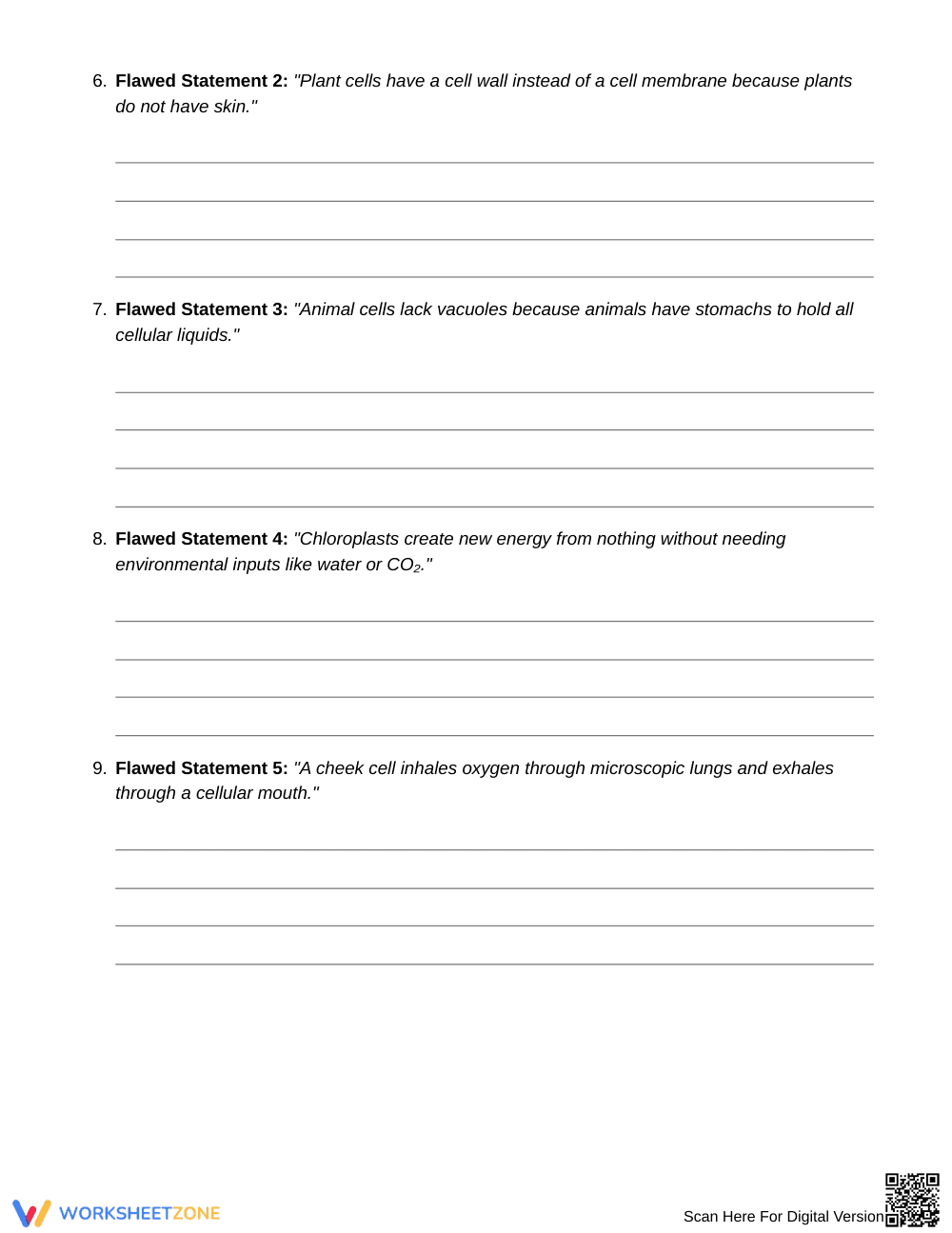
- Supported practice (Tasks 5–12): Eight error-analysis prompts require students to diagnose anthropomorphic flaws and write corrections using a modeled repair framework.
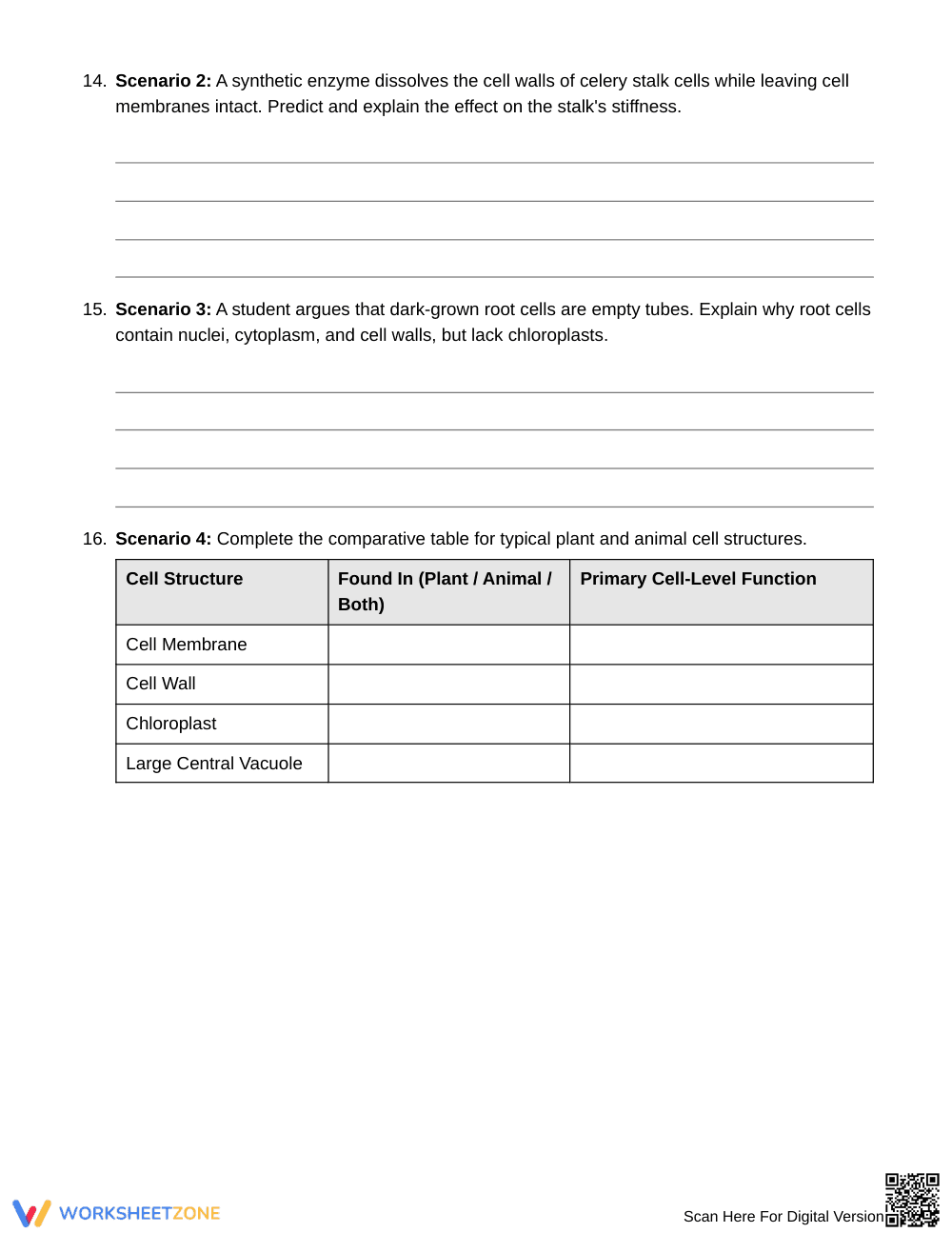
- Independent practice (Tasks 13–16): Applied scenarios task students with analyzing tissue slides, predicting celery turgor loss, explaining root cell specialization, and completing a comparative organelle table.
This structure follows a gradual-release model, guiding learners from basic structural identification to independent scientific reasoning and error diagnosis.
Standards Alignment
This resource aligns directly with core middle school life science standards addressing cell structure and function, requiring students to provide evidence that living things are made of cells whose specialized parts carry out vital life processes. This content supports structural biology frameworks by emphasizing that cell membranes, walls, chloroplasts, and vacuoles function biochemically rather than as organismal organs.
How to Use It
Deploy this worksheet after direct instruction on cell anatomy to evaluate student comprehension and root out anthropomorphic thinking. It serves effectively as a mid-unit formative assessment or collaborative station activity where partners diagnose the Part B error statements together. During completion, monitor whether students describe the nucleus as a conscious "brain" to immediately redirect them toward chemical control mechanisms. The resource requires approximately 40 to 50 minutes to complete.
Who It's For
This worksheet is designed for Grade 6 science students mastering introductory cellular biology, including English language learners and students with IEPs who benefit from explicit misconception modeling. Pair this activity with microscopic onion skin or cheek cell lab observations to ground abstract organelle functions in tangible biological evidence.
According to Fisher & Frey (2014), structured error analysis and guided corrective reasoning significantly strengthen conceptual understanding in middle school science classrooms by requiring students to actively dismantle persistent intuitive misconceptions. Rather than merely memorizing organelle vocabulary terms, sixth-grade learners frequently conflate microscopic cellular parts with macroscopic structures like animal skin, respiratory lungs, or conscious human brains. This comprehensive 16-task cell structure worksheet directly confronts this documented cognitive challenge through systematic diagnosis and repair exercises that clearly distinguish cell-level life processes from whole-organism anatomy and physiology. By combining focused reference summaries with explicit error correction protocols, students successfully bridge foundational biological vocabulary with applied scientific inquiry. Rigorous educational research underscores that actively identifying and repairing flawed scientific claims during formative practice yields deeper conceptual mastery, stronger long-term retention, and advanced analytical literacy across middle school life science curricula.


