


























Views
Downloads

Essential Enzyme Review Worksheet | Middle School Biology
Paste this activity's link or code into your existing LMS (Google Classroom, Canvas, Teams, Schoology, Moodle, etc.).
Students can open and work on the activity right away, with no student login required.
You'll still be able to track student progress and results from your teacher account.
This comprehensive biology worksheet helps middle school students master the mechanics of enzyme functions and biochemical reactions. By progressing through targeted labeling exercises and real-world application questions, learners will solidify their understanding of the lock-and-key model and how catalysts drive essential digestive processes.
At a Glance
- Grade: 7 · Subject: Biology
- Standard:
MS-LS1-7— Model how food is rearranged through chemical reactions- Skill Focus: Enzyme structure and function
- Format: 5 pages · 15 problems · Answer key included · PDF
- Best For: End-of-unit review
- Time: 30–45 minutes
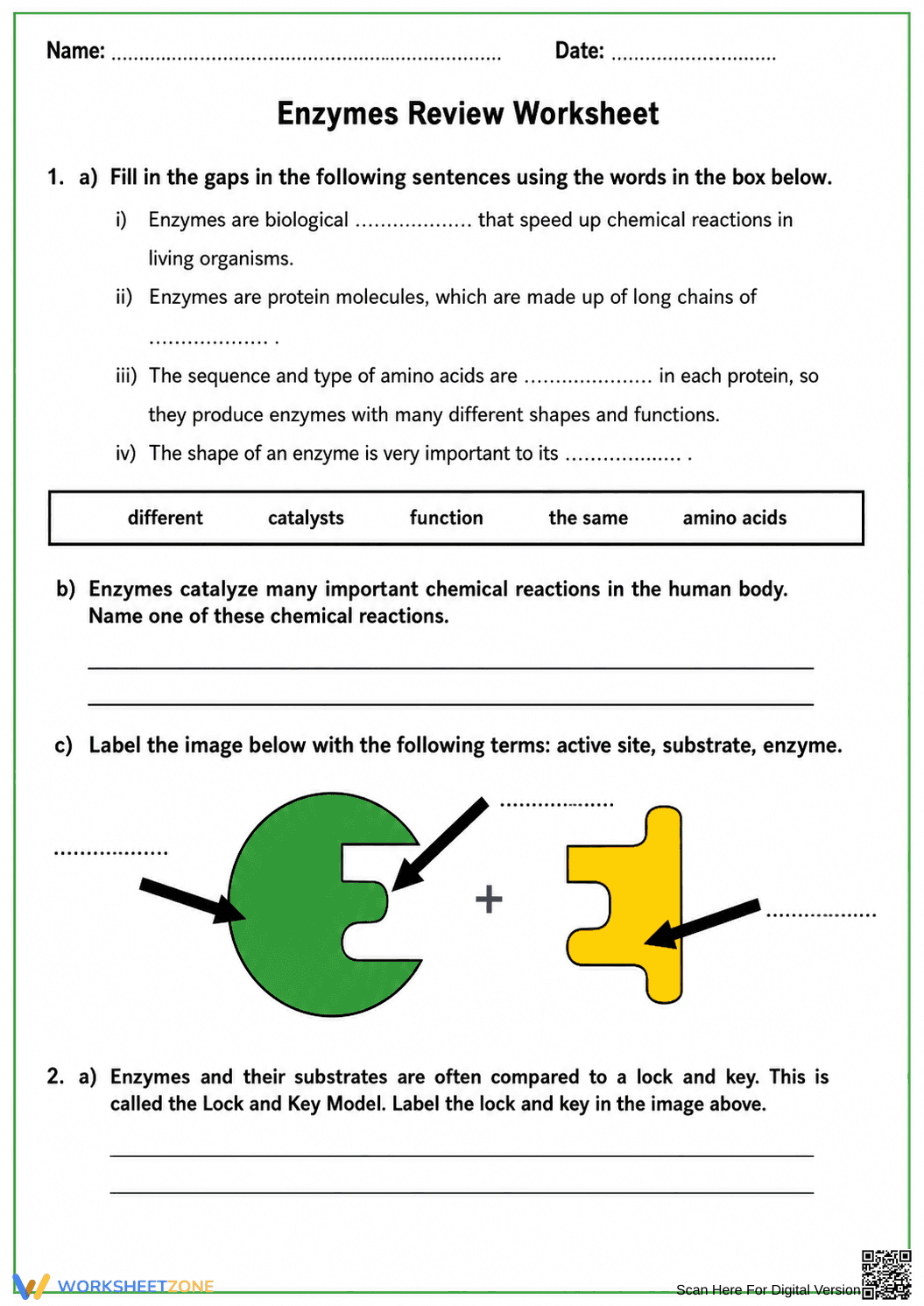
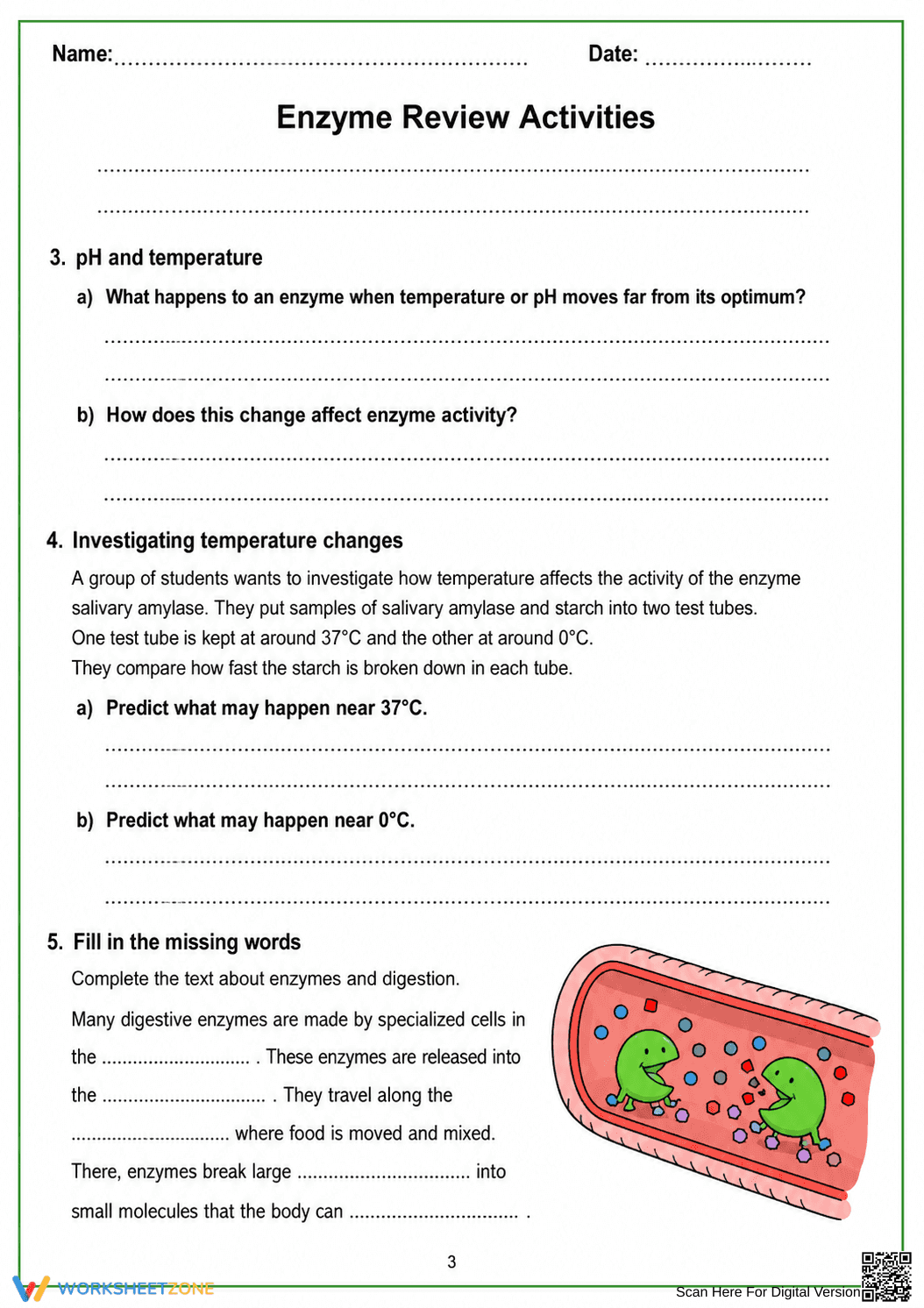
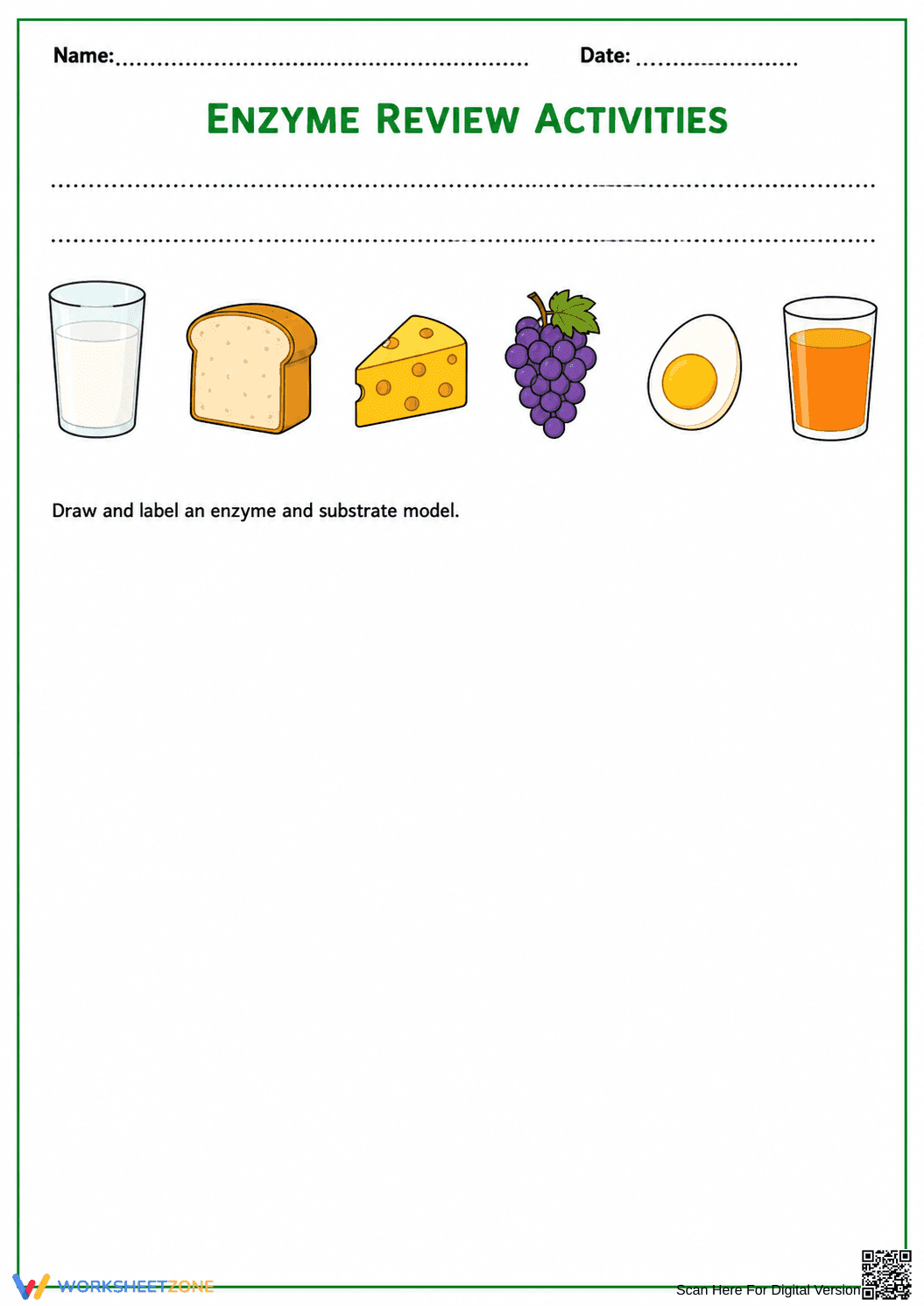
This five-page packet features a variety of task types designed to thoroughly assess student comprehension. It includes fill-in-the-blank exercises with a provided word bank, diagram labeling tasks for active sites and substrates, short-answer explanation prompts, and data prediction questions based on temperature changes. An answer key is included to streamline grading.
Skill Progression
- Guided practice: The first page introduces foundational vocabulary using a word bank and simple labeling tasks to establish the lock-and-key model.
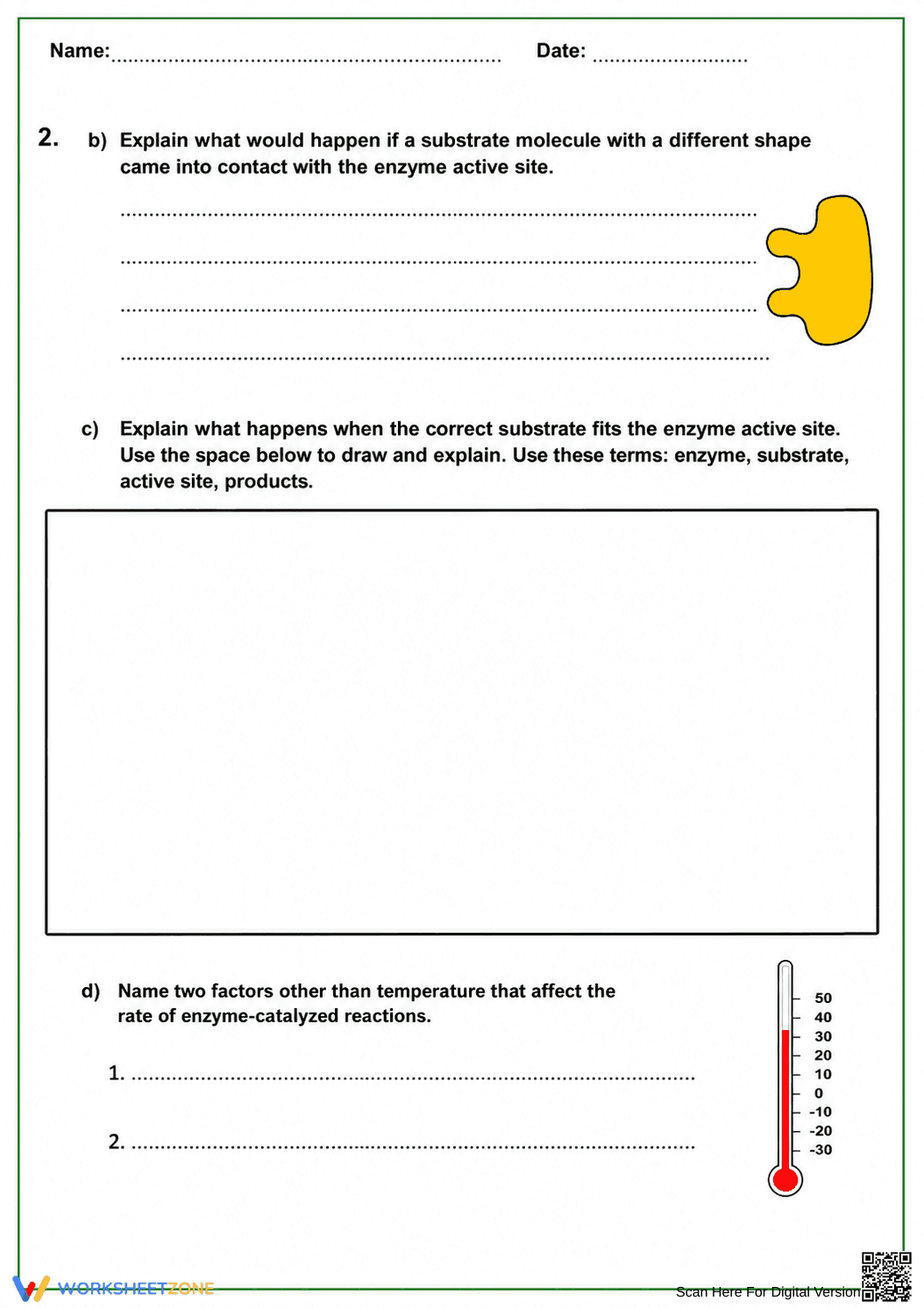
- Supported practice: Students transition to explaining concepts, such as predicting what happens when a substrate does not fit the active site or when temperatures fluctuate.
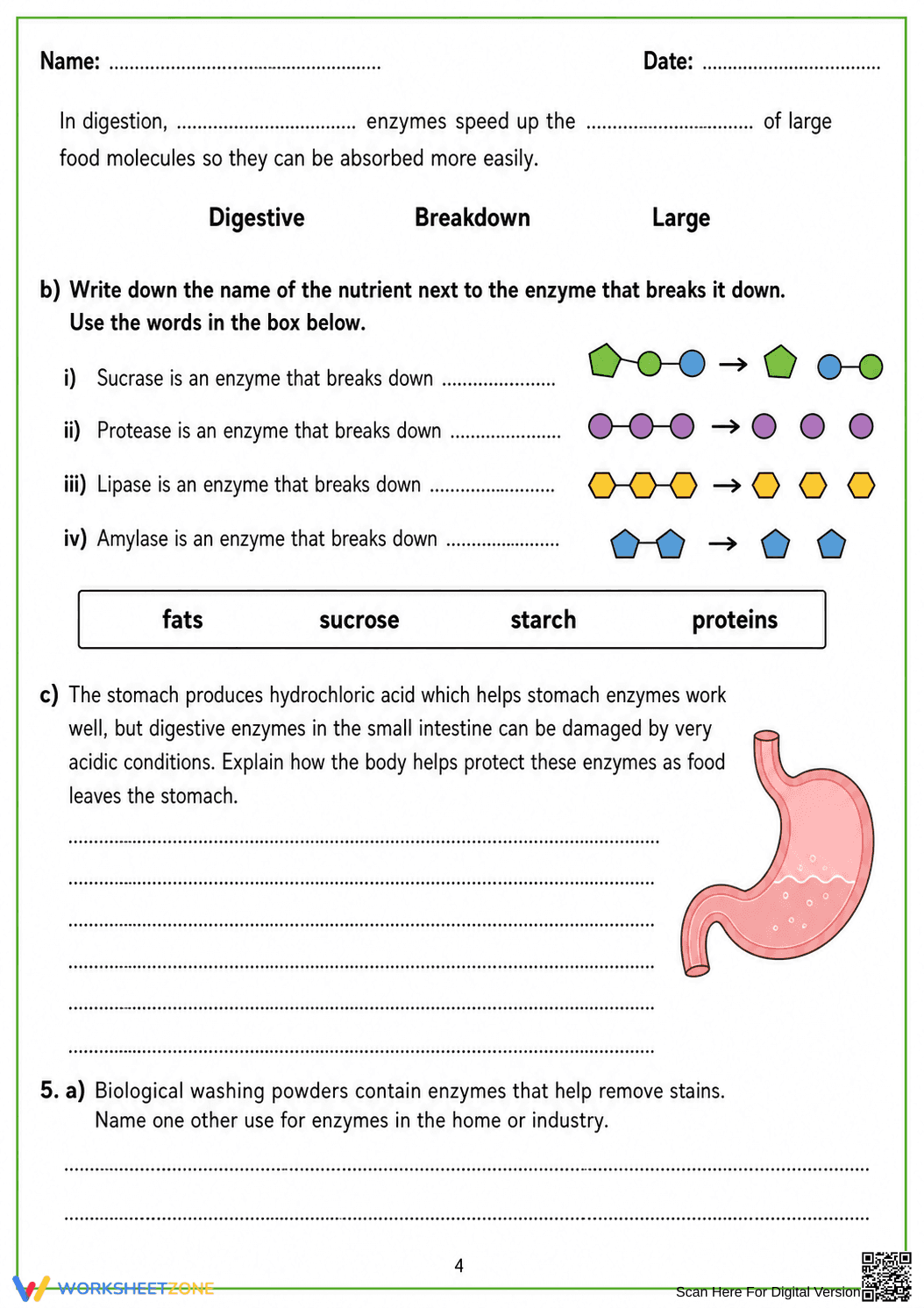
- Independent practice: The final pages require learners to apply their knowledge to complex scenarios, including matching specific digestive enzymes to nutrients and drawing their own models.
This structured approach follows a gradual-release model, moving students from basic recall to higher-order application.
Standards Alignment
This resource is aligned to MS-LS1-7: Develop a model to describe how food is rearranged through chemical reactions forming new molecules that support growth and/or release energy as this matter moves through an organism. It also supports foundational concepts in cellular biology and human body systems. Both standard codes can be copied directly into lesson plans, IEP goals, or district curriculum mapping tools.
How to Use It
Deploy this packet as a comprehensive review assignment after direct instruction on biochemistry and the digestive system. It functions perfectly as an in-class collaborative activity where small groups discuss the short-answer prompts, or as a standalone homework assignment. While students are working, observe their drawn models of the enzyme-substrate complex as a quick formative assessment to ensure they grasp the concept of active site specificity. Expect students to complete the full packet in 30 to 45 minutes.
Who It's For
This resource is designed primarily for middle school life science and biology students in grades 6 through 8. To support learners who need additional scaffolding, teachers can allow the use of interactive science notebooks or textbook glossaries during the fill-in-the-blank sections. It pairs excellently with a hands-on laboratory experiment demonstrating catalase activity or a visual anchor chart detailing the human digestive tract.
Aligning instructional materials to rigorous science frameworks ensures students develop accurate mental models of microscopic processes. This resource supports MS-LS1-7 by requiring students to model how food is rearranged through chemical reactions. According to a ScienceDirect TpT Analysis, providing students with multi-modal tasks—such as combining vocabulary recall with diagram labeling and predictive reasoning—significantly improves retention of abstract biochemical concepts. When learners actively draw and explain the lock-and-key mechanism, they move beyond rote memorization into authentic scientific modeling. By integrating these specific visual and analytical exercises, educators can effectively bridge the gap between macroscopic observations, like human digestion, and the microscopic enzymatic actions that make them possible. This targeted practice builds the foundational scientific literacy required for advanced high school biology coursework and standardized assessments.


