


























Views
Downloads
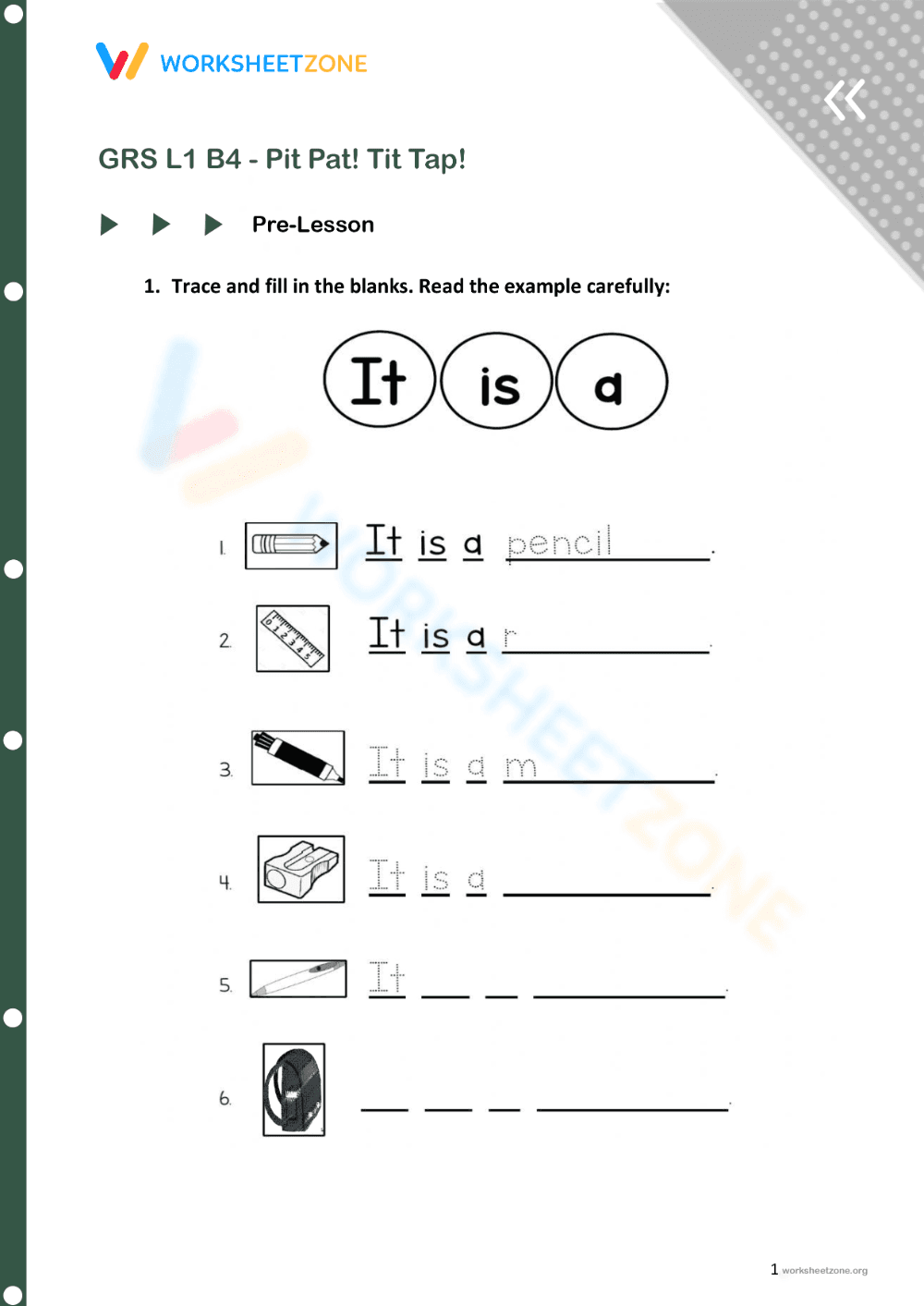


Grade 1 Phonics & Sentences — Printable No-Prep Worksheet
Paste this activity's link or code into your existing LMS (Google Classroom, Canvas, Teams, Schoology, Moodle, etc.).
Students can open and work on the activity right away, with no student login required.
You'll still be able to track student progress and results from your teacher account.
This comprehensive ELA packet targets foundational phonics and early sentence construction for young learners. Students practice identifying short vowel phonemes, matching letter sounds, and writing simple sentences using high-frequency words. This resource provides a structured pathway from letter-sound recognition to independent sentence writing, ensuring students build confidence in reading and writing.
At a Glance
- Grade: Grade 1 · Subject: English Language Arts
- Standard:
CCSS.ELA-LITERACY.RF.1.3— Apply grade-level phonics and word analysis skills in decoding words- Skill Focus: Phonics and Sentence Building
- Format: 3 pages · 6 tasks · Answer key not included · PDF
- Best For: Independent practice and homework reinforcement
- Time: 20–30 minutes
This packet contains three distinct pages designed to support a complete lesson cycle. The first page features a pre-lesson tracing activity where students write simple sentences using school vocabulary. The second page contains three phonics tasks focusing on CVC word completion, phoneme identification, and matching pictures with identical sounds. The final page provides a homework sheet with a word search puzzle and sentence-writing prompts.
This resource is designed for immediate classroom integration with a simple three-step workflow. First, print the three pages for your class, which takes less than two minutes. Second, distribute the pre-lesson page to guide students through tracing and vocabulary matching. Finally, review the completed phonics tasks and homework sentences during your regular ELA block. This structured layout makes the packet ideal for emergency sub plans or independent morning work.
Standards Alignment
This worksheet aligns directly with the Common Core State Standard CCSS.ELA-LITERACY.RF.1.3, which requires students to know and apply grade-level phonics and word analysis skills in decoding words. Additionally, it supports early writing standards by encouraging students to construct complete sentences with proper capitalization and punctuation. Both standard codes can be copied directly into lesson plans, IEP goals, or district curriculum mapping tools.
How to Use It
Use this packet during your direct phonics instruction. Begin by projecting the pre-lesson page to model tracing and sentence structure. During independent work time, have students complete the phonics matching tasks on page two. Observe if students can correctly identify the /p/, /a/, /n/, and /t/ sounds. The entire packet takes approximately 30 minutes to complete across multiple sessions.
Who It's For
This resource is perfect for first-grade students learning basic phonics, as well as kindergarteners needing enrichment or second graders requiring remedial support. It pairs naturally with decodable readers and letter-tile activities. Teachers can easily adapt the tasks for English language learners by providing additional visual cues for the vocabulary words.
According to the Fisher & Frey (2014) framework for gradual release of responsibility, structured ELA materials that transition from guided tracing to independent writing significantly improve student retention of phonics rules. This packet directly addresses CCSS.ELA-LITERACY.RF.1.3 by scaffolding phoneme identification and sentence construction. Research indicates that systematic phonics instruction combined with immediate writing application helps early readers bridge the gap between decoding and encoding. By integrating visual prompts with word-building tasks, this resource reinforces orthographic mapping and vocabulary acquisition. Educators can utilize these targeted exercises to monitor student progress in blending sounds and forming complete thoughts. The structured layout ensures that students receive consistent practice, which is critical for developing reading fluency and writing stamina in early childhood classrooms.


