


























Views
Downloads


Grade 1 Phonics — Printable No-Prep Worksheet
Paste this activity's link or code into your existing LMS (Google Classroom, Canvas, Teams, Schoology, Moodle, etc.).
Students can open and work on the activity right away, with no student login required.
You'll still be able to track student progress and results from your teacher account.
This comprehensive phonics packet helps early elementary students master letter-sound correspondences and basic word decoding. By integrating letter tracing, beginning sound identification, and sentence completion, students build foundational reading skills. This resource streamlines lesson planning by providing a structured pathway from warm-up to independent practice.
At a Glance
- Grade: Grade 1 · Subject: English Language Arts
- Standard:
CCSS.ELA-LITERACY.RF.1.3— Know and apply grade-level phonics and word analysis skills in decoding words- Skill Focus: Phonics and word recognition
- Format: 3 pages · 25 problems · Answer key not included · PDF
- Best For: Independent practice and homework reinforcement
- Time: 30–45 minutes
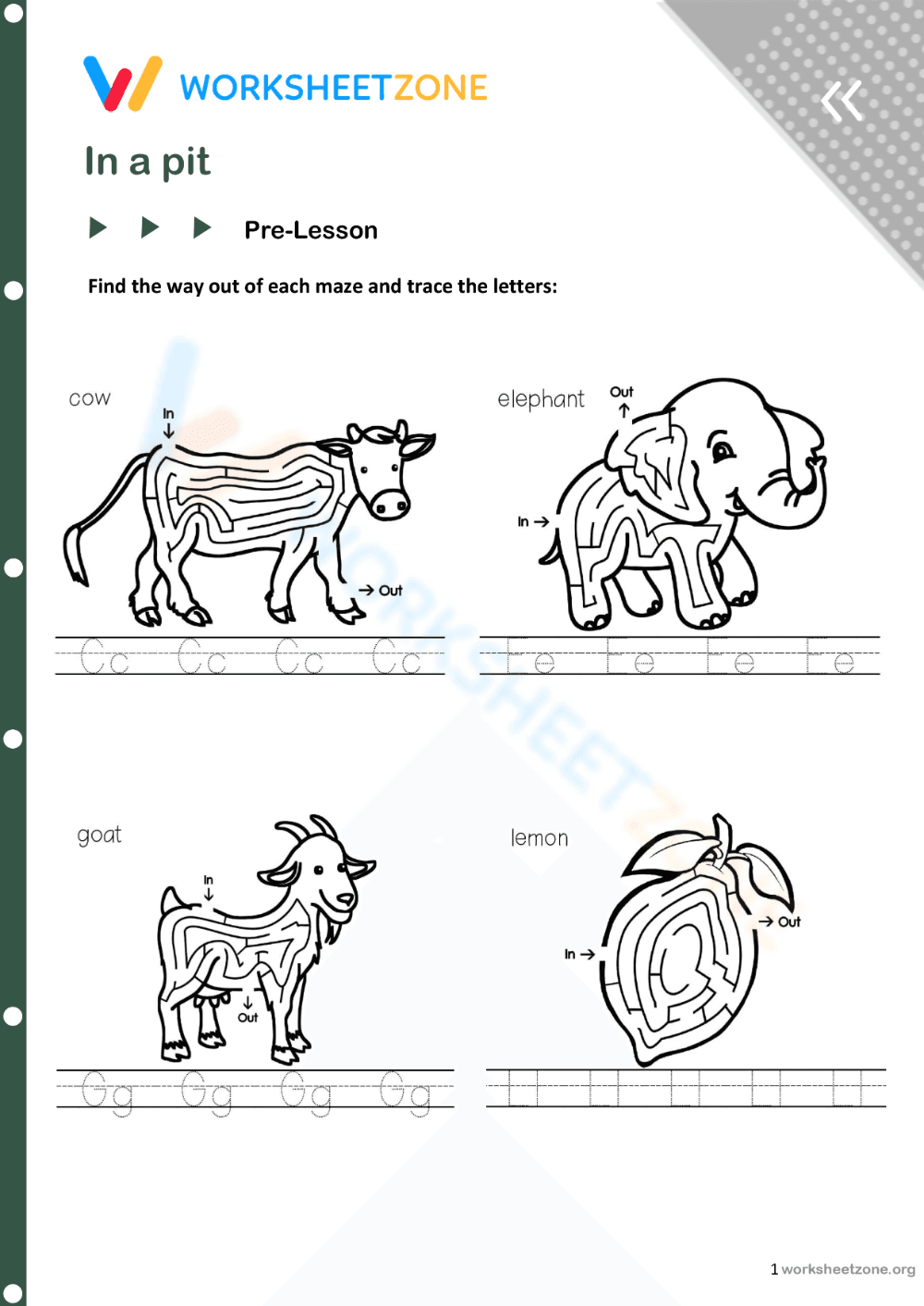
This three-page packet contains a complete lesson sequence. The first page features a pre-lesson activity with four animal-themed mazes and letter-tracing guides for handwriting practice. The second page contains the main worksheet, offering six beginning sound identification tasks and six sentence completion exercises with visual aids. The final page provides an eight-item word-to-picture matching homework assignment alongside a short creative writing prompt.
Zero-Prep Workflow
This packet is designed to minimize teacher preparation time, requiring under 2 minutes of setup. Follow these three steps to integrate it:
- Print (1 minute): Photocopy the double-sided packet.
- Distribute (30 seconds): Hand out the sheets.
- Review (15 minutes): Guide students through the pre-lesson, then let them work.
This layout makes the packet excellent for emergency sub plans.
Standards Alignment
This worksheet aligns directly with the Common Core State Standard CCSS.ELA-LITERACY.RF.1.3, which requires students to know and apply grade-level phonics and word analysis skills in decoding words. It specifically supports decoding regularly spelled one-syllable words and recognizing letter-sound correspondences. Both standard codes can be copied directly into lesson plans, IEP goals, or district curriculum mapping tools.
How to Use It
Use this packet during the independent practice portion of your phonics lesson. Start by completing the letter-tracing mazes together as a warm-up. During the sentence completion phase, walk around the room to observe if students can match the action verbs to the corresponding illustrations. Expect students to complete the main worksheet in approximately 20 minutes, leaving the final page for homework.
Who It's For
This resource is tailored for Grade 1 students learning basic phonics, but it also serves as an excellent intervention tool for struggling Grade 2 readers or an enrichment activity for advanced Kindergarteners. It pairs naturally with decodable readers, pocket chart letter cards, and direct instruction lessons focused on short vowel sounds and consonant blends.
This phonics packet targets the core requirements of CCSS.ELA-LITERACY.RF.1.3 by guiding students through letter-sound correspondence and word recognition. According to research from Fisher & Frey (2014) on the gradual release of responsibility, scaffolding instruction from guided pre-lessons to independent homework reinforces cognitive retention. By engaging students in tracing, auditory discrimination of beginning sounds, and visual word-matching, this resource addresses diverse learning modalities. The structured progression ensures that early readers build the orthographic mapping skills necessary for fluent decoding. Educators can integrate these 25 tasks into daily ELA routines to measure progress and identify decoding deficits. The writing prompt bridges the gap between reading reception and active written production.


