


























Views
Downloads

Grade 2 Spelling Test | Term 4 Essential Practice
Paste this activity's link or code into your existing LMS (Google Classroom, Canvas, Teams, Schoology, Moodle, etc.).
Students can open and work on the activity right away, with no student login required.
You'll still be able to track student progress and results from your teacher account.
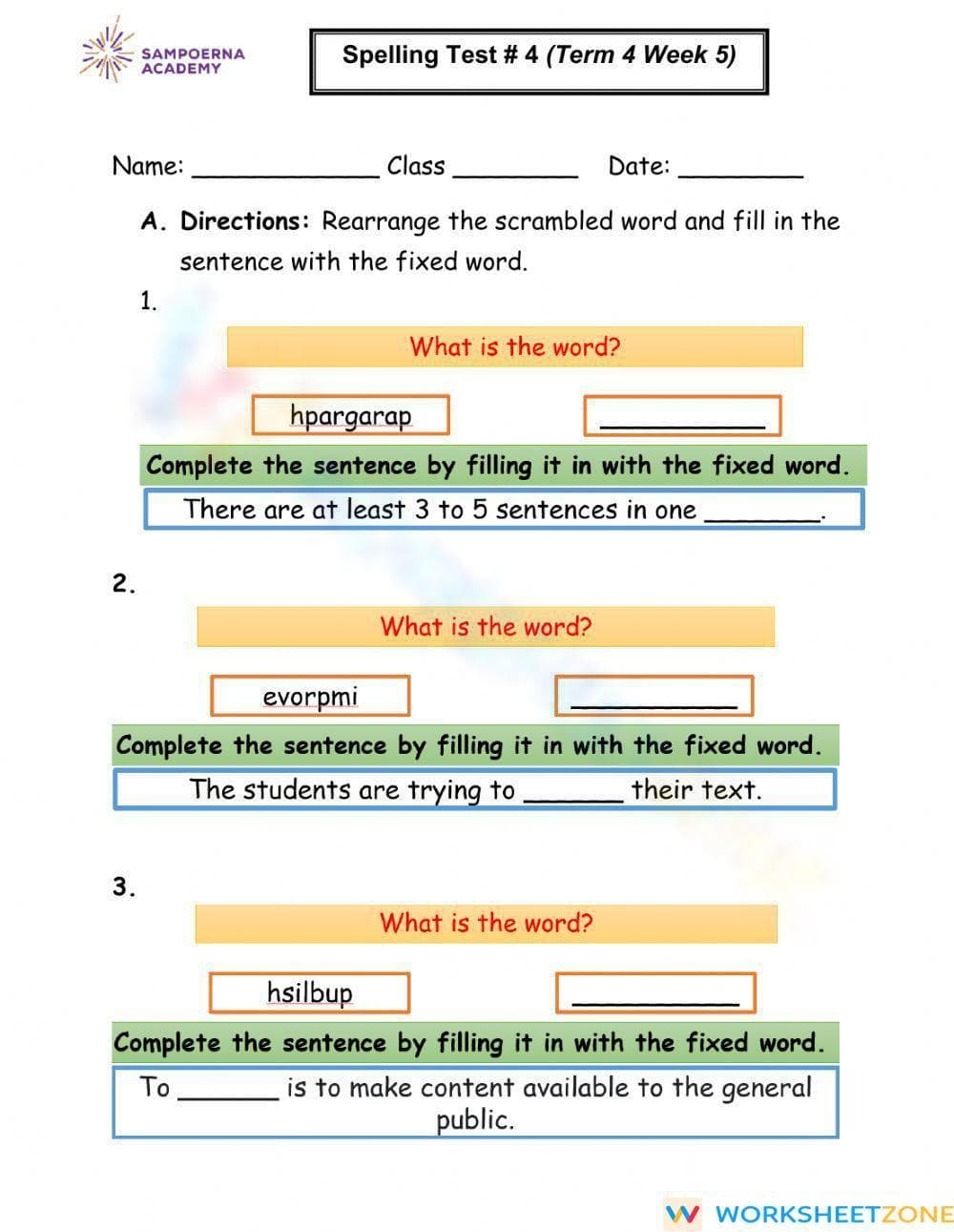
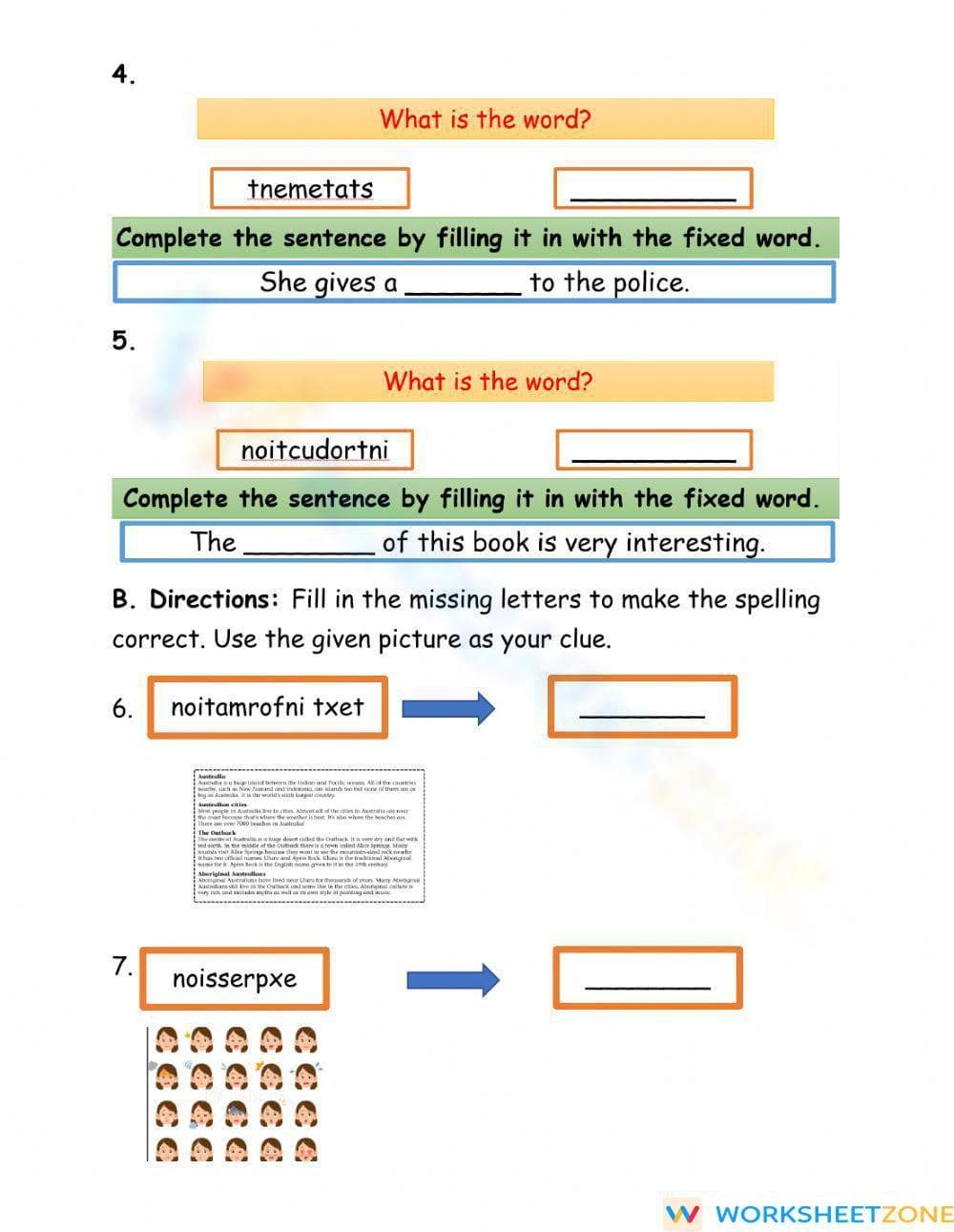
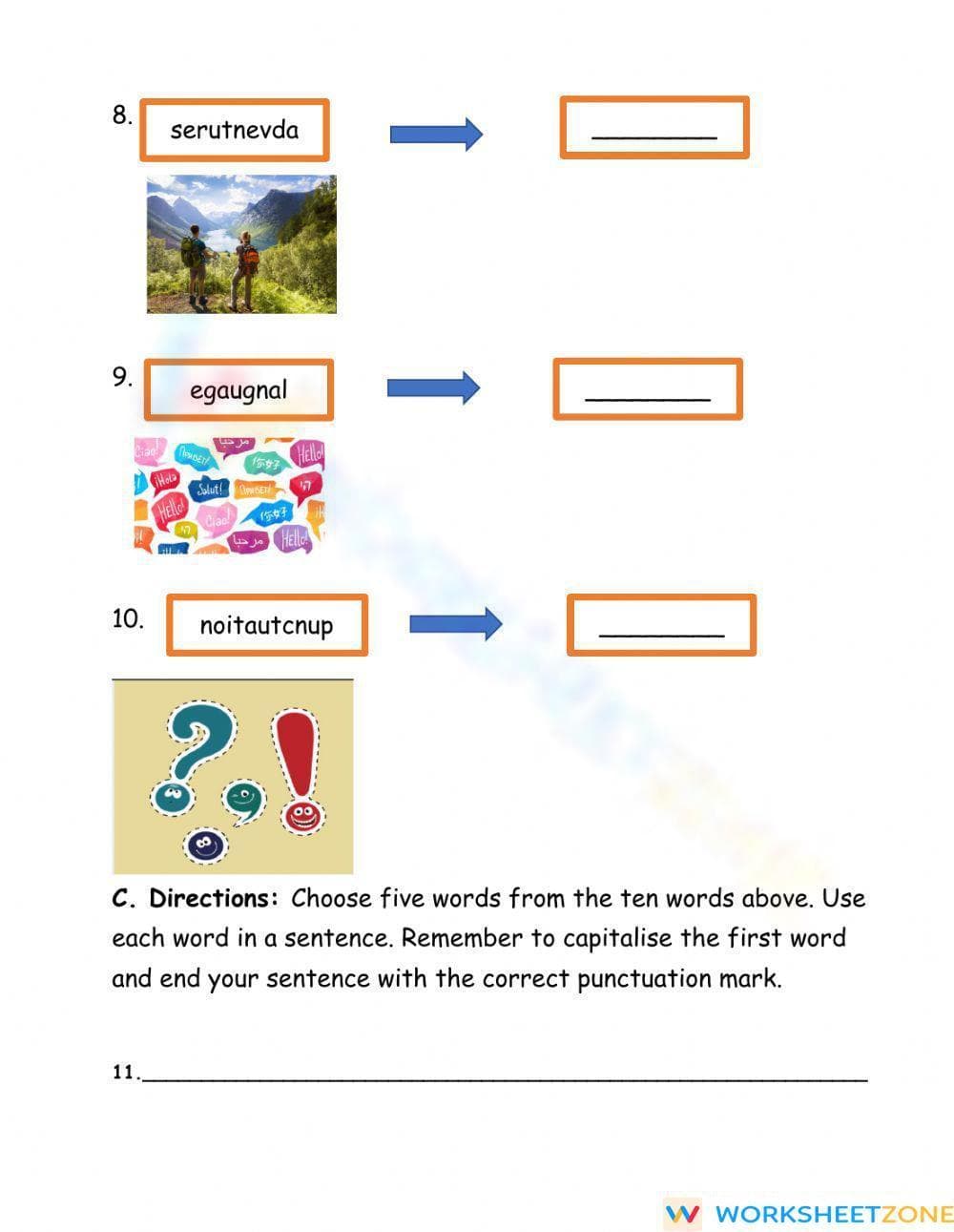
This Grade 2 ELA worksheet provides a comprehensive assessment of spelling and vocabulary for Term 4. Students engage in word unscrambling and sentence construction to demonstrate mastery of complex spelling patterns. By completing these 15 structured tasks, learners solidify their understanding of academic vocabulary while practicing essential writing mechanics and punctuation skills.
At a Glance
- Grade: Grade 2 · Subject: English Language Arts (ELA)
- Standard:
CCSS.ELA-LITERACY.L.2.2.D— Generalize learned spelling patterns when writing words and sentences accurately- Skill Focus: Spelling and Vocabulary Mastery
- Format: 4 pages · 15 problems · Answer key included · PDF
- Best For: Weekly assessment and spelling pattern reinforcement
- Time: 20–30 minutes
This 4-page PDF contains a multi-part assessment designed for easy navigation. Part A features five word-unscramble tasks paired with context clues in sentences. Part B includes five spelling challenges using visual aids to support vocabulary recognition. Part C requires students to select five words from the assessment and apply them in original sentences, focusing on capitalization and punctuation. A full answer key is provided for rapid grading.
The workflow for this resource is designed for maximum efficiency in the classroom. Step 1: Print the 4-page packet for your class (30 seconds). Step 2: Distribute the worksheets and provide 20 minutes for independent completion (1 minute). Step 3: Use the included answer key for quick review or peer-grading sessions (2 minutes). The total teacher prep time is under two minutes, making it an ideal candidate for emergency sub plans or routine weekly testing.
This resource is meticulously aligned with CCSS.ELA-LITERACY.L.2.2.D, which requires students to generalize learned spelling patterns when writing words. The inclusion of sentence construction tasks also supports CCSS.ELA-LITERACY.L.2.1, focusing on the use of collective nouns and irregular plural nouns. These standard codes can be copied directly into lesson plans, IEP goals, or district curriculum mapping tools to ensure instructional compliance.
Use this worksheet as a summative assessment at the end of a spelling unit to gauge student progress. For formative use, observe students during Part B to see if they rely on the visual cues or internalize the phonics patterns. The expected completion time is 25 minutes, providing enough data to inform future small-group instruction. It serves as a clear indicator of which students require additional support with multi-syllabic academic words.
This worksheet is primarily designed for Grade 2 students but is appropriate for Grade 3 learners requiring remediation or Grade 1 students ready for enrichment. It works perfectly alongside direct instruction on word patterns or as a follow-up to reading passages containing the target vocabulary. The visual scaffolds in Part B make it accessible for English Language Learners and students with IEP accommodations.
The Grade 2 Spelling Test for Term 4 Week 5 serves as a critical tool for monitoring lexical development and phonological awareness. According to the RAND AIRS 2024 report, structured spelling assessments that integrate context clues and sentence writing are more effective at promoting long-term retention than isolated rote memorization. This worksheet facilitates the "Generalize learned spelling patterns when writing words" objective under CCSS.ELA-LITERACY.L.2.2.D by requiring students to move beyond recognition to active production. By embedding vocabulary like "introduction," "paragraph," and "statement" within contextual sentences, the resource reinforces the semantic-orthographic connection necessary for reading fluency. Research from EdReports 2024 indicates that frequent, low-stakes assessments of this nature provide teachers with the actionable data needed to differentiate instruction and close achievement gaps in early literacy.


