


























1 / 4
0
Views
0
Downloads

0.0
0
Save
0 Likes
Share
Worksheet to Update Skills on Empirical Formulas
0 Views
0 Downloads
Paste this activity's link or code into your existing LMS (Google Classroom, Canvas, Teams, Schoology, Moodle, etc.).
Students can open and work on the activity right away, with no student login required.
You'll still be able to track student progress and results from your teacher account.
Information
Description
What It Is:
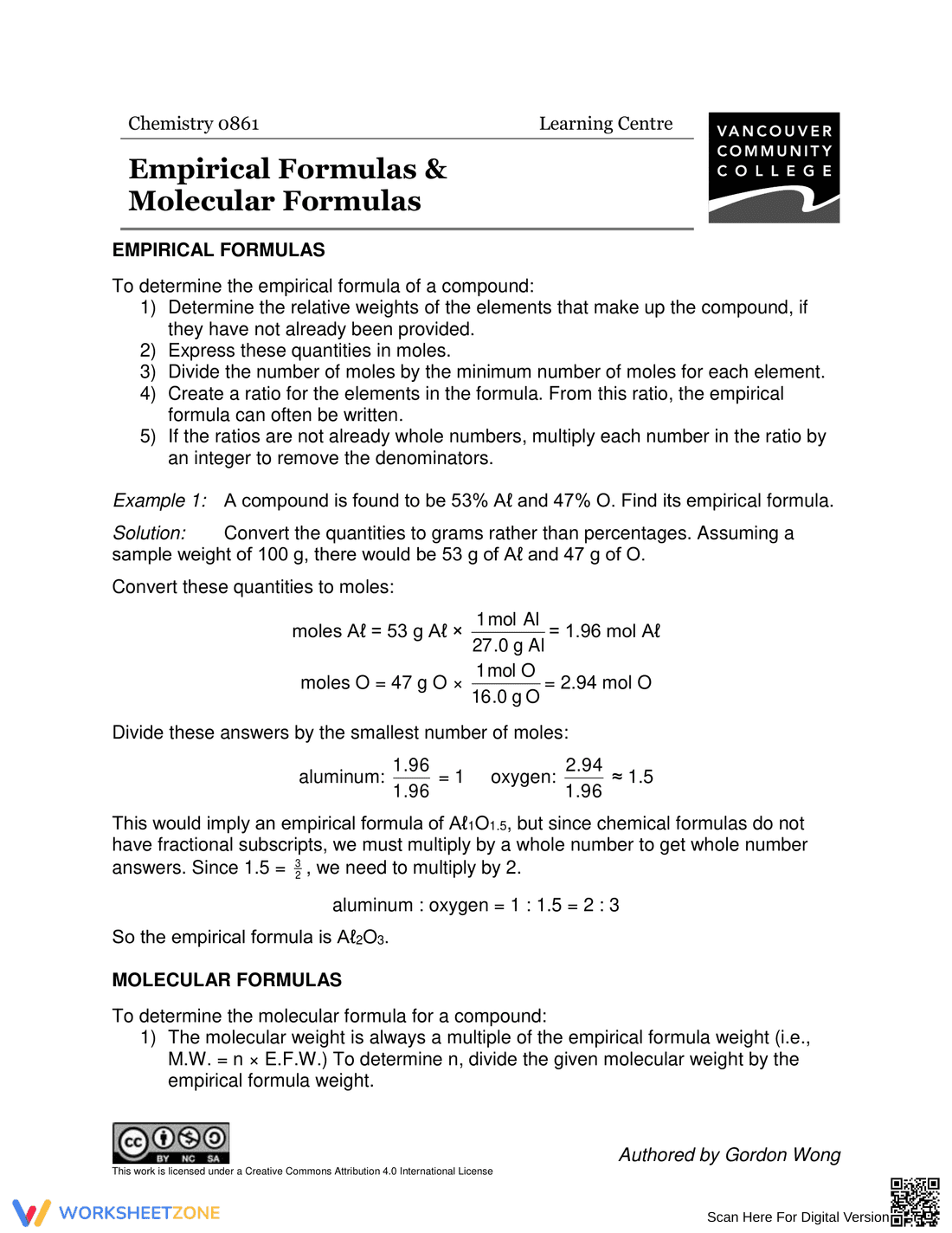
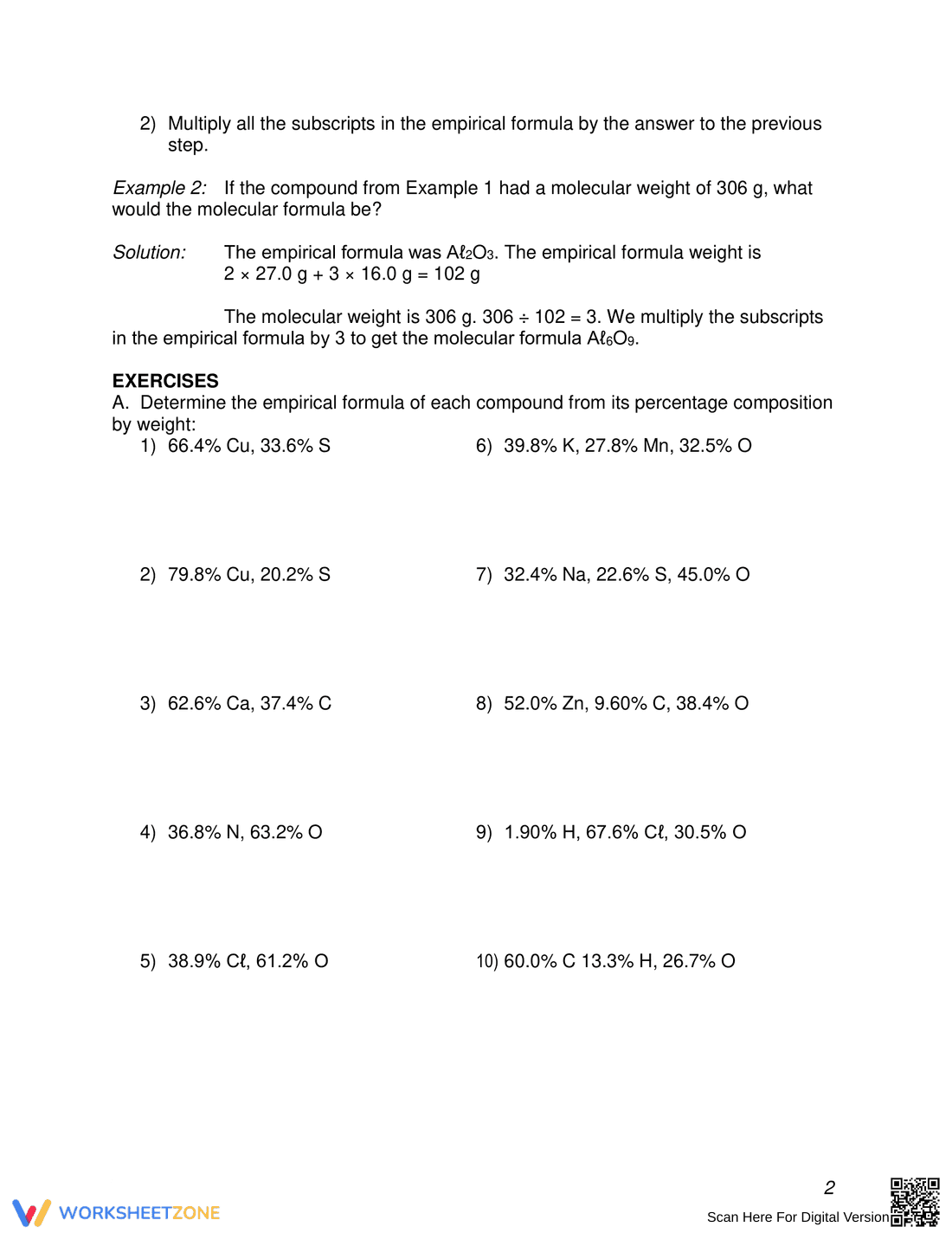
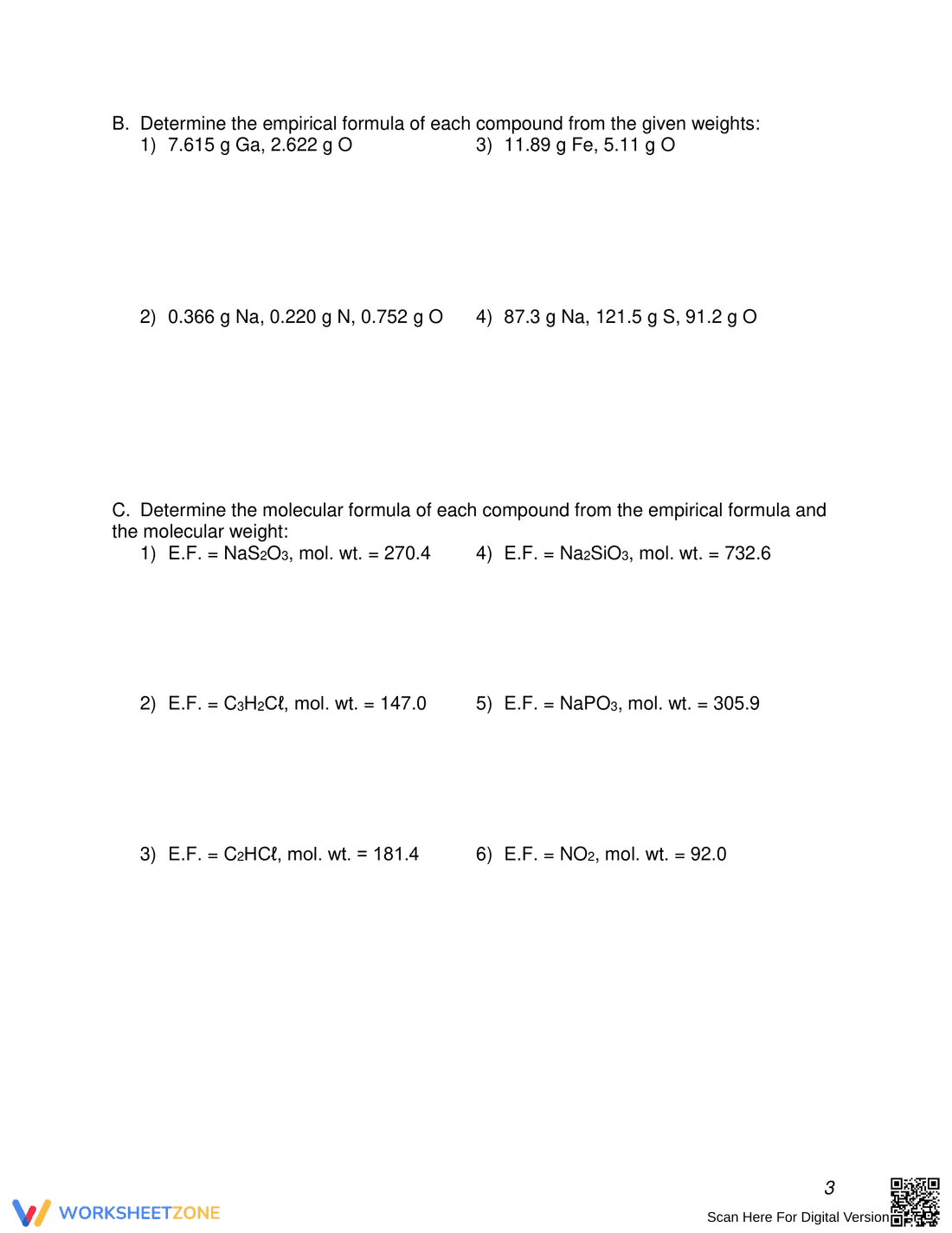
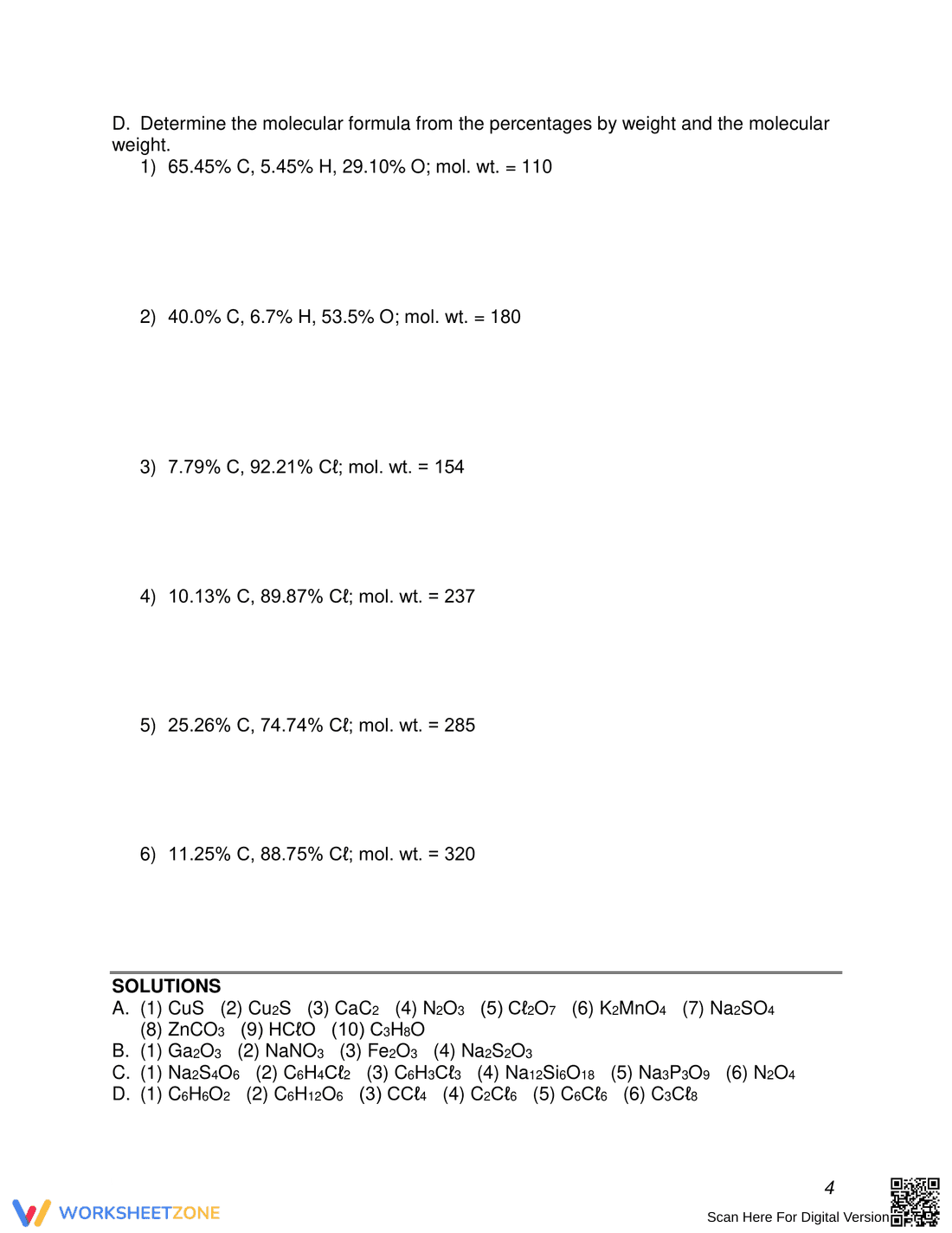
This is a chemistry worksheet focused on determining empirical and molecular formulas. It provides step-by-step instructions for calculating empirical formulas, including converting weights to moles, dividing by the smallest number of moles, and adjusting ratios to whole numbers. An example problem is worked out, showing how to find the empirical formula of a compound made of aluminum and oxygen. The worksheet also introduces the concept of molecular formulas and how to determine them using molecular weight and empirical formula weight.
Grade Level Suitability:
This worksheet is suitable for high school chemistry students (Grades 10-12) and introductory college chemistry courses. The concepts require a solid understanding of moles, atomic weights, and basic algebra, which are typically covered in these grade levels.
Why Use It:
This worksheet helps students learn and practice the process of calculating empirical and molecular formulas. It provides a clear, structured approach to problem-solving, reinforcing key concepts in stoichiometry and chemical composition. The worked example serves as a model for students to follow when solving similar problems.
How to Use It:
Students should read the instructions carefully and work through the example problem. They can then use the worksheet as a template for solving additional problems related to empirical and molecular formulas. The steps can be followed sequentially to arrive at the correct formulas. Teachers can use this as an in-class activity, homework assignment, or review material.
Target Users:
The target users are high school chemistry students, introductory college chemistry students, and teachers who are looking for a clear and concise resource for teaching empirical and molecular formulas. Anyone studying chemistry and needing to understand these concepts will find this worksheet helpful.
This is a chemistry worksheet focused on determining empirical and molecular formulas. It provides step-by-step instructions for calculating empirical formulas, including converting weights to moles, dividing by the smallest number of moles, and adjusting ratios to whole numbers. An example problem is worked out, showing how to find the empirical formula of a compound made of aluminum and oxygen. The worksheet also introduces the concept of molecular formulas and how to determine them using molecular weight and empirical formula weight.
Grade Level Suitability:
This worksheet is suitable for high school chemistry students (Grades 10-12) and introductory college chemistry courses. The concepts require a solid understanding of moles, atomic weights, and basic algebra, which are typically covered in these grade levels.
Why Use It:
This worksheet helps students learn and practice the process of calculating empirical and molecular formulas. It provides a clear, structured approach to problem-solving, reinforcing key concepts in stoichiometry and chemical composition. The worked example serves as a model for students to follow when solving similar problems.
How to Use It:
Students should read the instructions carefully and work through the example problem. They can then use the worksheet as a template for solving additional problems related to empirical and molecular formulas. The steps can be followed sequentially to arrive at the correct formulas. Teachers can use this as an in-class activity, homework assignment, or review material.
Target Users:
The target users are high school chemistry students, introductory college chemistry students, and teachers who are looking for a clear and concise resource for teaching empirical and molecular formulas. Anyone studying chemistry and needing to understand these concepts will find this worksheet helpful.


