


























0
Views
0
Downloads

0.0
0
Save
0 Likes
Share
Identifying Emotions With Emojis Worksheet
0 Views
0 Downloads
Paste this activity's link or code into your existing LMS (Google Classroom, Canvas, Teams, Schoology, Moodle, etc.).
Students can open and work on the activity right away, with no student login required.
You'll still be able to track student progress and results from your teacher account.
Information
Description
What It Is:
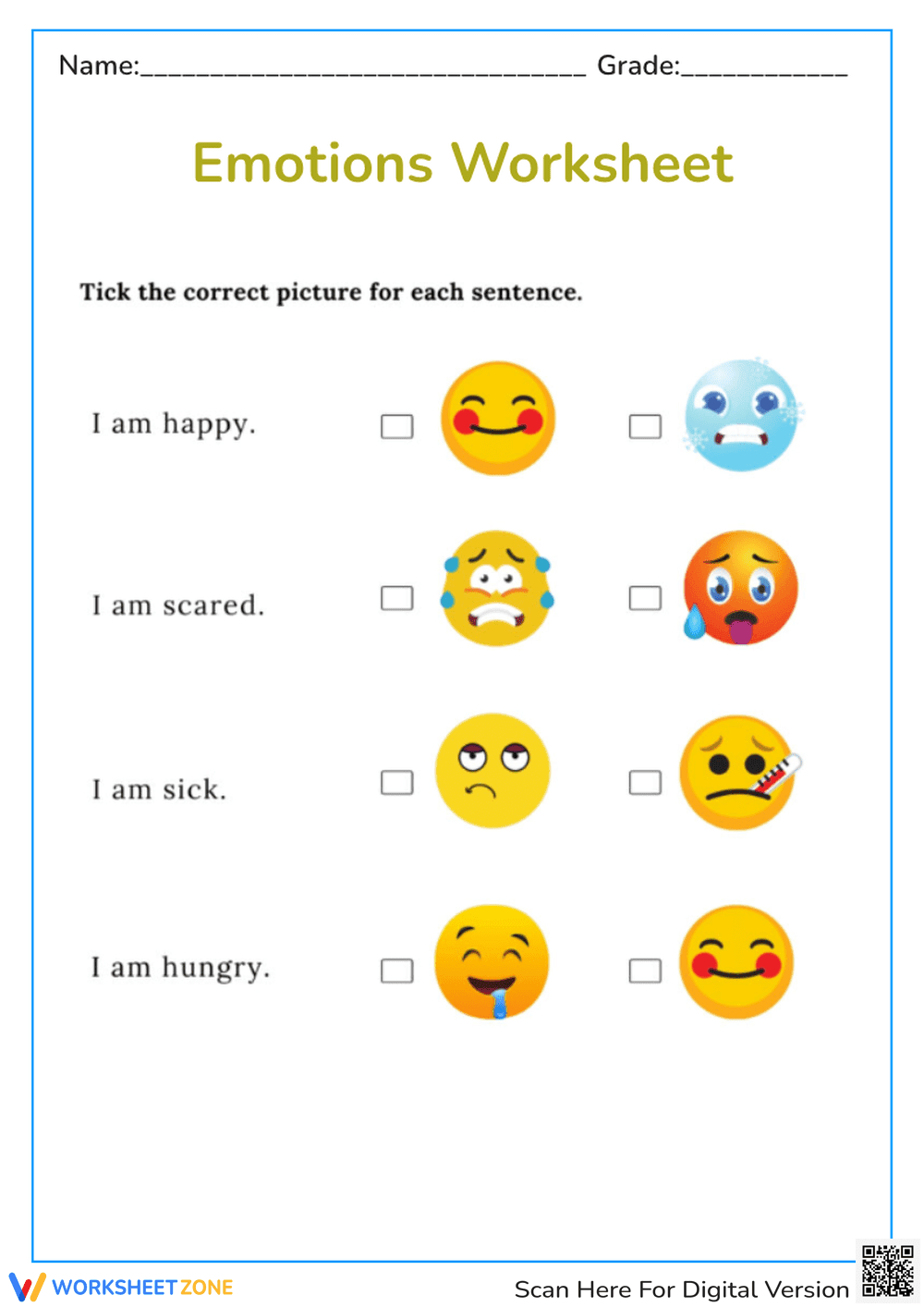
This Emotions Worksheet is a colorful and interactive activity designed to help children identify and understand different feelings. It features four rows with simple "I am..." sentences paired with expressive emoji options, asking students to select the correct visual representation for each emotion.
Why Use It:
This resource supports social-emotional learning (SEL) and early literacy. By connecting descriptive words to facial expressions, students develop emotional intelligence, improve reading comprehension, and enhance their ability to recognize non-verbal cues.
How to Use It:
• Read the short sentence on the left of each row together or independently.
• Examine the two emoji options to determine which one reflects the emotion described.
• Use a pencil or crayon to tick the small checkbox next to the correct picture.
Grade Suitability:
Best for Early Childhood and Kindergarten.
• Younger kids focus on recognizing facial expressions and naming feelings.
• Older students focus on reading simple sight words and connecting them to concepts.
Target Users:
Teachers, parents, and caregivers looking for engaging social-emotional development tools.
This Emotions Worksheet is a colorful and interactive activity designed to help children identify and understand different feelings. It features four rows with simple "I am..." sentences paired with expressive emoji options, asking students to select the correct visual representation for each emotion.
Why Use It:
This resource supports social-emotional learning (SEL) and early literacy. By connecting descriptive words to facial expressions, students develop emotional intelligence, improve reading comprehension, and enhance their ability to recognize non-verbal cues.
How to Use It:
• Read the short sentence on the left of each row together or independently.
• Examine the two emoji options to determine which one reflects the emotion described.
• Use a pencil or crayon to tick the small checkbox next to the correct picture.
Grade Suitability:
Best for Early Childhood and Kindergarten.
• Younger kids focus on recognizing facial expressions and naming feelings.
• Older students focus on reading simple sight words and connecting them to concepts.
Target Users:
Teachers, parents, and caregivers looking for engaging social-emotional development tools.


