


























Views
Downloads

Emotional Intelligence Reflection | Grade 6-7 Essential
Paste this activity's link or code into your existing LMS (Google Classroom, Canvas, Teams, Schoology, Moodle, etc.).
Students can open and work on the activity right away, with no student login required.
You'll still be able to track student progress and results from your teacher account.
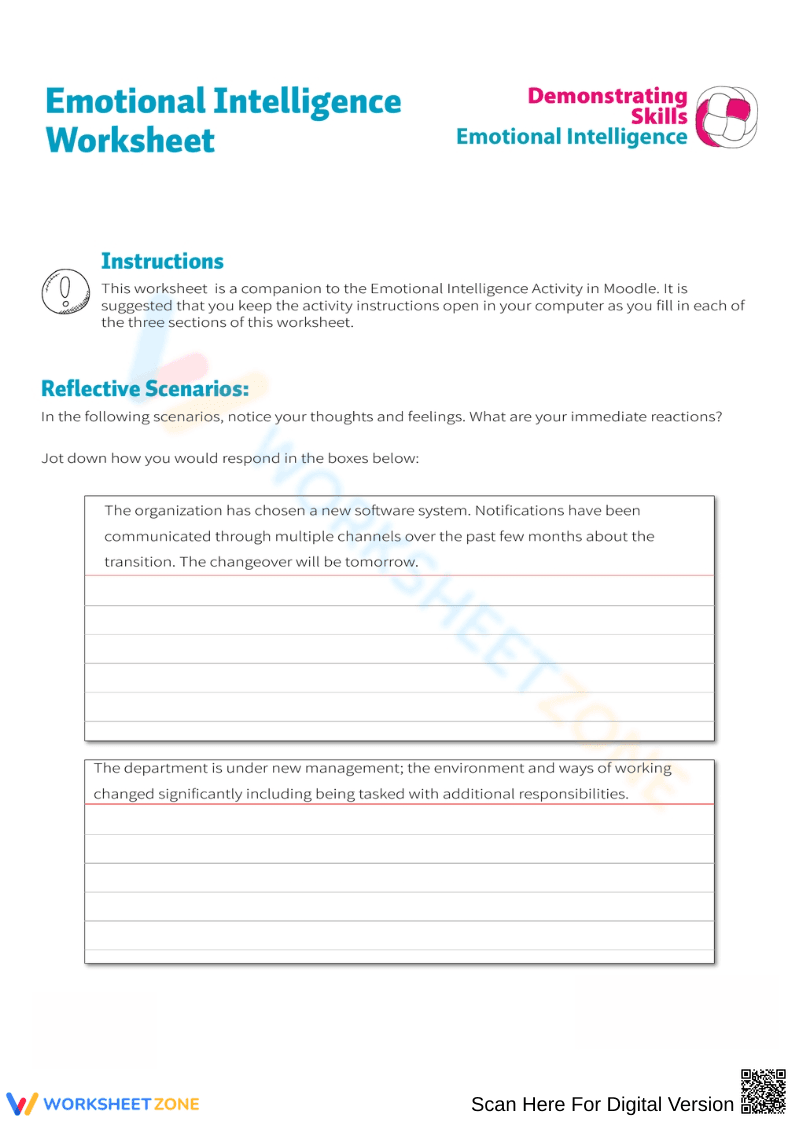
This Grade 6 and 7 emotional intelligence worksheet provides a structured framework for students to analyze their internal reactions to challenging real-world scenarios. By focusing on adaptability and optimism, students develop the self-awareness necessary for personal growth and effective decision-making. It transforms abstract social-emotional concepts into concrete writing and reflection exercises.
At a Glance
- Grade: 6-7 · Subject: English / SEL
- Standard:
CCSS.ELA-LITERACY.W.6.10— Write routinely for a range of discipline-specific tasks and purposes- Skill Focus: Emotional Intelligence & Self-Reflection
- Format: 3 pages · 7 tasks · Reflection-based · PDF
- Best For: SEL blocks or advisory periods
- Time: 25–40 minutes
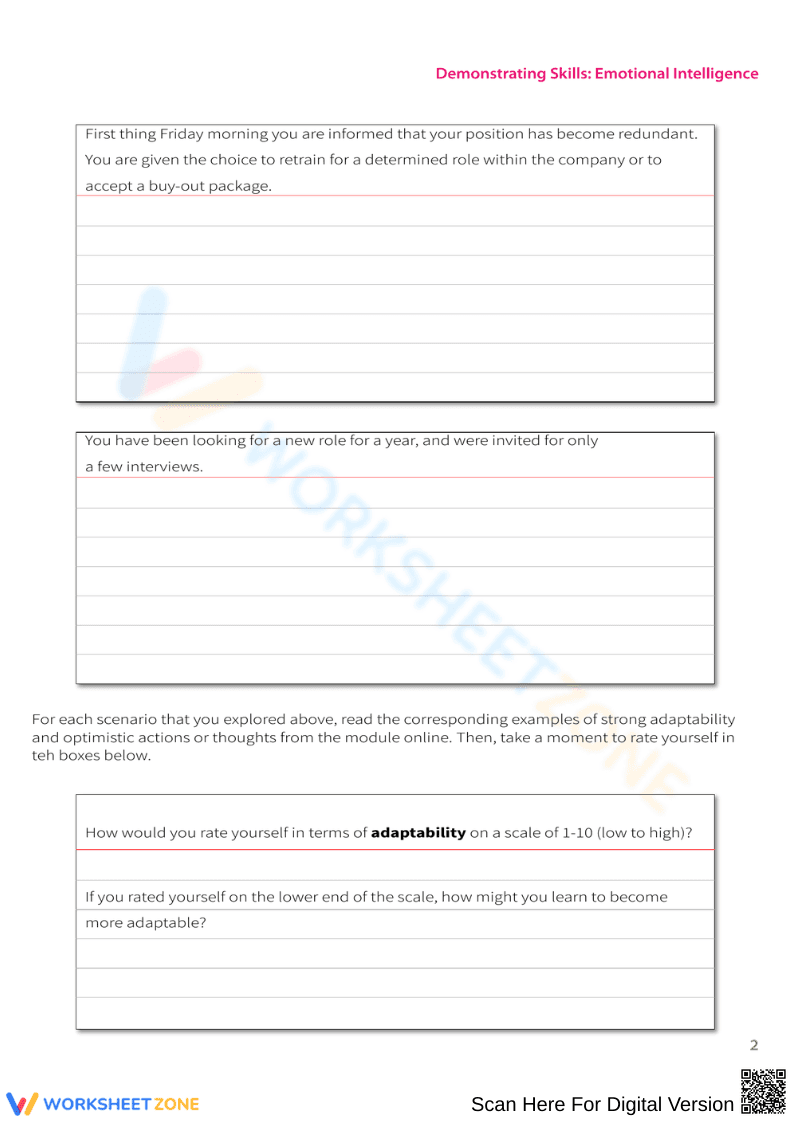
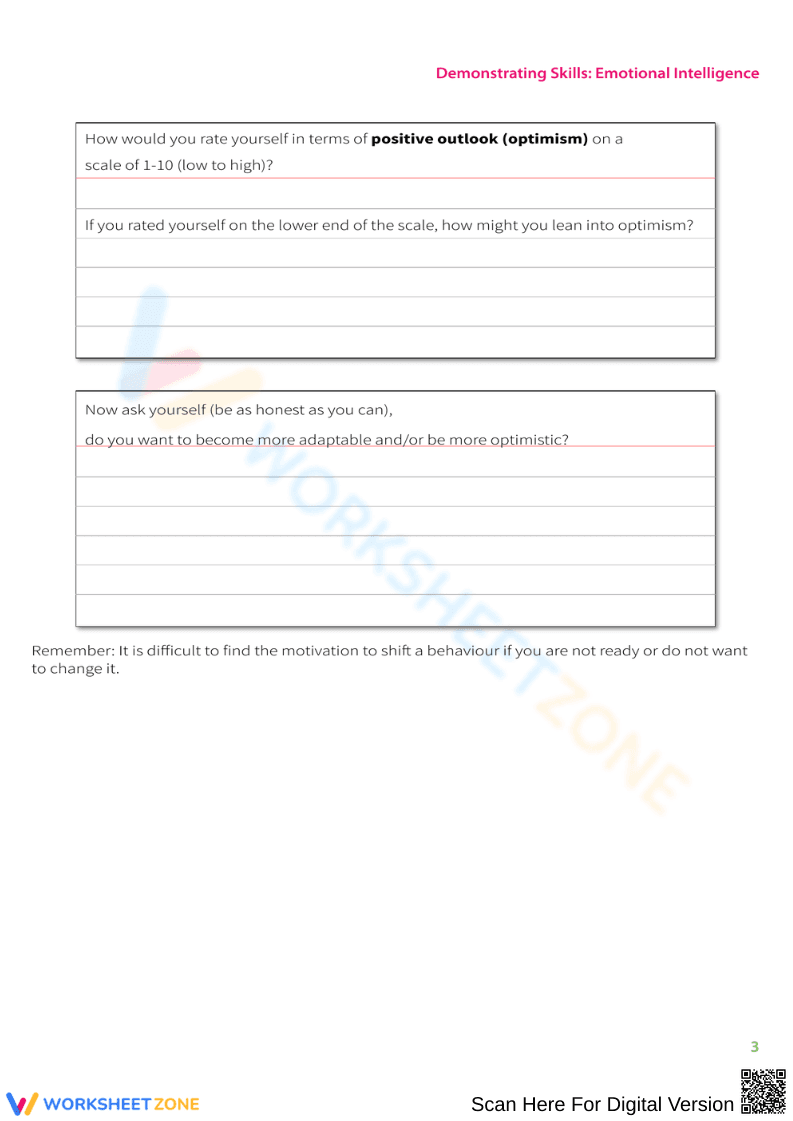
The 3-page PDF contains four detailed workplace and life scenarios designed to trigger emotional responses. Students are provided with generous lined space to jot down immediate reactions. The second half of the resource features 1-10 rating scales for adaptability and optimism, followed by open-ended prompts that encourage students to identify specific ways they can lean into positive behaviors.
This resource is designed for immediate implementation with a total teacher prep time of under 2 minutes. Simply print the 3-page document and distribute it to students during an advisory period or ELA block. Because the instructions are self-contained and the scenarios are relatable, students can work through the reflections independently, making this an ideal choice for substitute teacher plans or quiet reflection days.
The primary alignment is `CCSS.ELA-LITERACY.W.6.10`, which requires students to write routinely for a range of discipline-specific tasks, purposes, and audiences. By engaging with these prompts, students practice the shorter time frame writing necessary for self-assessment and behavioral analysis. This standard code can be copied directly into lesson plans, IEP goals, or district curriculum mapping tools.
Use this worksheet as a mid-unit check-in during a Social-Emotional Learning (SEL) module. It works best after a direct instruction lesson on the definitions of adaptability and optimism. As a formative assessment, observe which scenarios cause the most hesitation in students; this provides a clear indicator of which real-world stressors may require more group discussion or role-playing.
This resource is tailored for middle school students in grades 6 and 7 who are beginning to navigate more complex social dynamics. It is particularly effective for students working on self-regulation goals or those in leadership programs. Pair this with a short video on growth mindset or an anchor chart detailing the Circle of Control to provide additional scaffolding.
Research from Fisher & Frey (2014) emphasizes that metacognitive reflection—thinking about one's own thinking and emotional state—is a critical component of adolescent literacy and behavioral development. This worksheet addresses CCSS.ELA-LITERACY.W.6.10 by providing a discipline-specific writing task that requires students to synthesize their internal feelings with external situational demands. By utilizing 7 distinct tasks across 3 pages, the resource ensures that students spend sufficient time in deep reflection rather than surface-level responses. According to the RAND AIRS 2024 report, structured SEL interventions that incorporate written reflection show a measurable impact on student self-efficacy and classroom climate. This printable guide offers a low-barrier entry point for teachers to integrate these high-impact strategies without extensive preparation, ensuring that emotional intelligence becomes a regular part of the academic routine.


