




























Views
Downloads
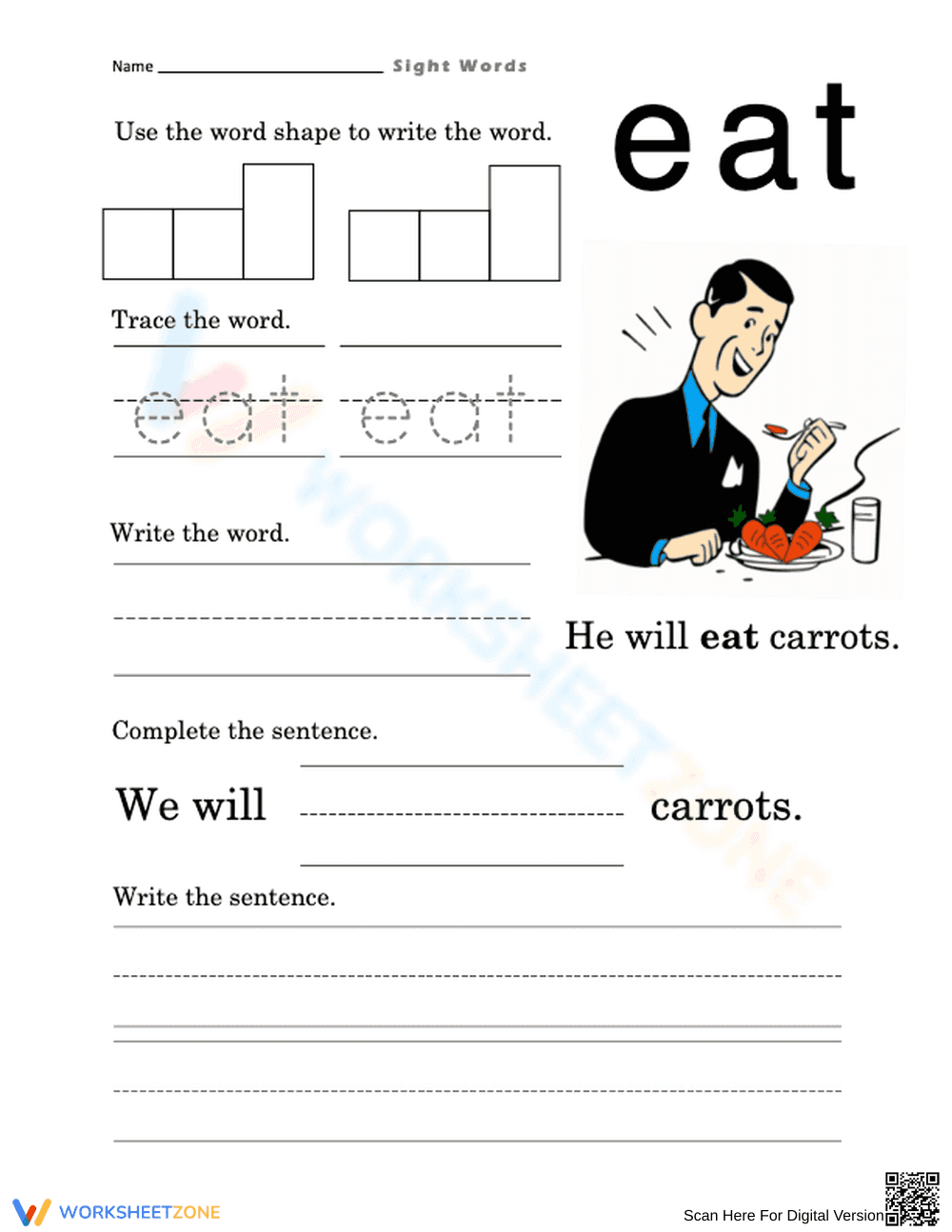

"Eat" Sight Word Worksheet | Grade 2-3 Essential Printable

Paste this activity's link or code into your existing LMS (Google Classroom, Canvas, Teams, Schoology, Moodle, etc.).
Students can open and work on the activity right away, with no student login required.
You'll still be able to track student progress and results from your teacher account.
This "eat" sight word worksheet helps Grade 2 and 3 students master a fundamental high-frequency word through multi-sensory writing and usage practice. By combining visual word-shape recognition with tactile tracing and sentence-level application, students transition from simple identification to active literacy usage. This printable resource ensures young learners gain the spelling confidence required for fluent reading and writing.
At a Glance
- Grade: 2–3 · Subject: English Language Arts
- Standard:
CCSS.ELA-LITERACY.RF.2.3.F— Recognize and read grade-appropriate irregularly spelled words for fluent reading- Skill Focus: Sight word recognition and spelling
- Format: 1 page · 9 tasks · Answer key included · PDF
- Best For: Independent morning work or literacy centers
- Time: 10–15 minutes
What's Inside
This single-page PDF contains nine specific student activities designed to reinforce the sight word "eat." The layout includes a word-shape box task to build visual memory, two tracing opportunities for muscle memory, and multiple lines for independent word and sentence writing. A contextual cloze sentence and a full-sentence transcription task ensure that students understand how to apply the word in a standard English sentence structure.
Zero-Prep Workflow
Implementing the 3-step zero-prep workflow saves valuable instructional time. First, print the single-sheet PDF (30 seconds). Second, distribute to students as they arrive for morning work (30 seconds). Finally, review the completed sentences as a class or during independent reading time (1 minute). Total teacher prep time remains under 2 minutes, making this an ideal solution for busy educators or emergency sub plans.
Standards Alignment
The activities are directly aligned with CCSS.ELA-LITERACY.RF.2.3.F, which requires students to recognize and read grade-appropriate irregularly spelled words. By requiring students to trace, write, and use the word in context, the worksheet also supports CCSS.ELA-LITERACY.L.2.2.E, focusing on general spelling patterns and word mastery. Both standard codes can be copied directly into lesson plans, IEP goals, or district curriculum mapping tools.
How to Use It
Assign this worksheet as an independent practice activity during small-group literacy rotations or as a focused morning warm-up to settle students into their writing routines. For a formative assessment observation, watch how students approach the word-shape boxes; if they struggle to fit the letters into the boxes, it may indicate a need for additional visual-spatial phonics support. Most students will complete all tasks within 10 to 15 minutes.
Who It's For
This worksheet is intended for Grade 2 and 3 students who need targeted practice with high-frequency "sight" words to improve their reading fluency and writing accuracy. It is particularly effective for students requiring extra spelling scaffolds or as a review for English Language Learners. Pair this resource with a grade-level reading passage containing the word "eat" to reinforce recognition in a natural text environment.
The mastery of high-frequency words like "eat" is a critical component of early literacy development, as identified in the RAND AIRS 2024 report on foundational reading skills. Aligned with CCSS.ELA-LITERACY.RF.2.3.F, this worksheet provides the structured repetition necessary for students to move from rote memorization to automatic recognition. Research by Fisher & Frey (2014) emphasizes that the gradual release of responsibility—moving from tracing (guided) to sentence writing (independent)—is the most effective way to ensure long-term retention of irregular spelling patterns. By engaging students in 9 distinct tasks that bridge the gap between visual identification and contextual application, this resource supports the cognitive shifts required for fluent decoding. Consistent, short-burst practice with sight words significantly reduces the cognitive load during reading, allowing students to focus more on comprehension rather than individual word identification.


