


























Views
Downloads
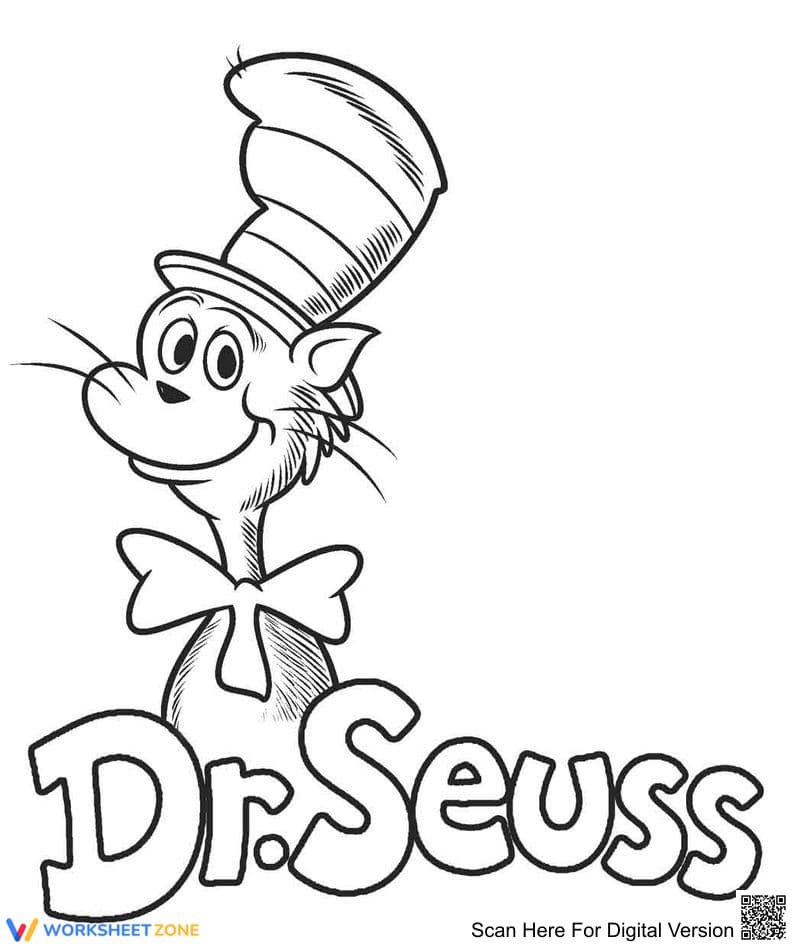

Dr. Seuss Coloring Page | Essential Grade K-5 Activity
Paste this activity's link or code into your existing LMS (Google Classroom, Canvas, Teams, Schoology, Moodle, etc.).
Students can open and work on the activity right away, with no student login required.
You'll still be able to track student progress and results from your teacher account.
This Dr. Seuss coloring worksheet provides a creative outlet for students to engage with iconic literary characters while developing essential fine motor control. By focusing on the Cat in the Hat, students bridge the gap between visual storytelling and character identification. It serves as a perfect accompaniment to Read Across America celebrations or classroom library introductions.
At a Glance
- Grade: K-5 · Subject: English / Arts
- Standard:
CCSS.ELA-LITERACY.RL.K.7— Describe the relationship between illustrations and the story characters- Skill Focus: Fine motor skills & character recognition
- Format: 1 page · 1 task · No answer key · PDF
- Best For: Read Across America or early finishers
- Time: 15–20 minutes
Inside this resource, you will find a high-quality, single-page PDF featuring a large, clear illustration of Dr. Seuss’s most famous character. The bold outlines are specifically designed to support younger learners in practicing precision, while the open space allows older students to experiment with shading and texture. No additional teacher setup or materials beyond basic coloring supplies are required.
The zero-prep workflow for this activity is designed for maximum efficiency. First, print the single-page PDF in under 30 seconds. Second, distribute the sheets to students during a transition or as a reward. Third, allow students to work independently while you conduct small-group reading or administrative tasks. Total teacher preparation time is under 2 minutes, making it an ideal sub-plan addition for any elementary classroom.
This worksheet aligns with `CCSS.ELA-LITERACY.RL.K.7`, which focuses on using illustrations to describe characters and events. By coloring the Cat in the Hat, students internalize the visual traits of the protagonist, aiding in later recall during reading comprehension exercises. This standard code can be copied directly into lesson plans, IEP goals, or district curriculum mapping tools.
Use this worksheet as a hook before reading a Dr. Seuss book to build excitement and visual familiarity. Alternatively, use it as a formative assessment tool by observing how students choose colors based on the original text's descriptions. It typically takes 15 to 20 minutes to complete, fitting perfectly into morning work or literacy center rotations during thematic units.
This resource is for elementary students in grades K-5, particularly those needing sensory breaks or fine motor practice. It pairs naturally with a classroom reading of "The Cat in the Hat" or a Dr. Seuss-themed anchor chart. It is also highly effective for English Language Learners (ELLs) to build vocabulary related to colors and clothing in a low-stress environment.
According to the RAND AIRS 2024 report, integrating visual arts into early literacy instruction significantly improves student engagement and retention of character-driven narratives. This Dr. Seuss coloring page addresses `CCSS.ELA-LITERACY.RL.K.7` by encouraging students to interact with the visual representation of a literary figure, a foundational step in understanding how illustrations support text meaning. Research from Fisher & Frey (2014) suggests that non-linguistic representations, such as coloring and drawing, allow students to process complex story elements without the immediate pressure of high-stakes writing. By providing a structured yet creative task, this worksheet supports the development of fine motor skills while reinforcing character recognition across the K-5 grade span. It serves as a versatile tool for teachers looking to blend artistic expression with standards-based literacy goals during thematic units or national reading events, ensuring that even the youngest learners can participate in the literary community through accessible, high-interest materials.


