


























Views
Downloads
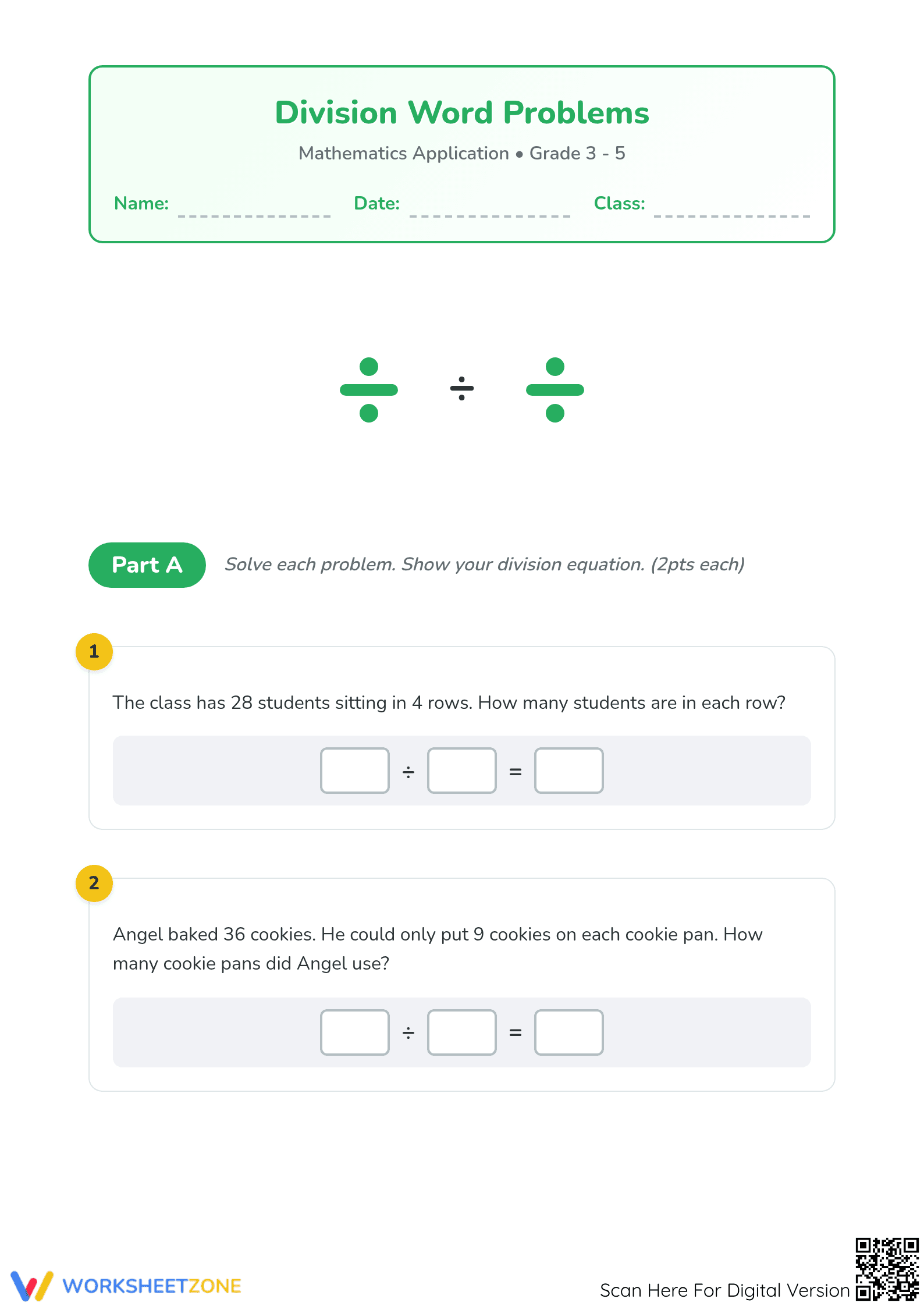
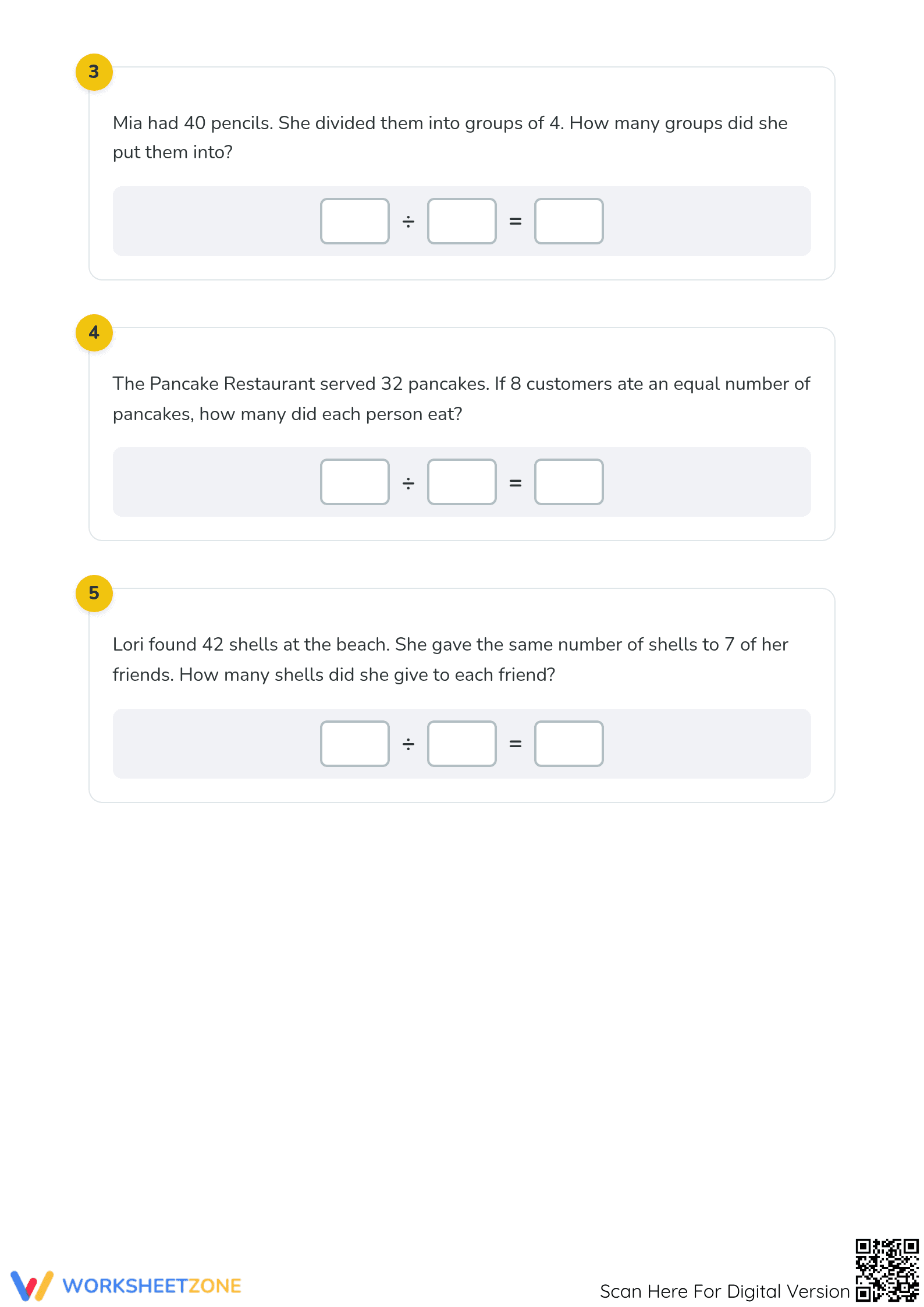
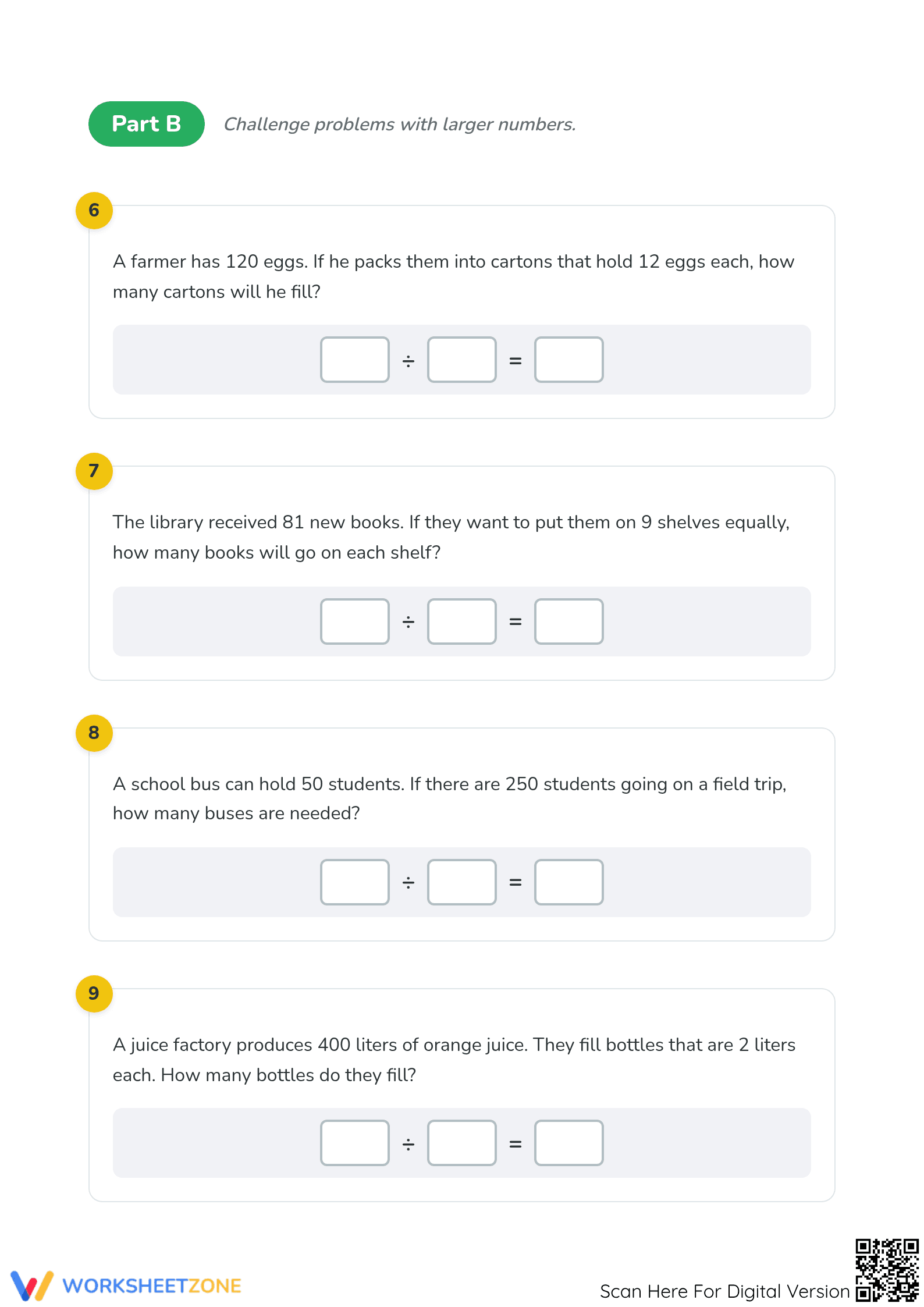
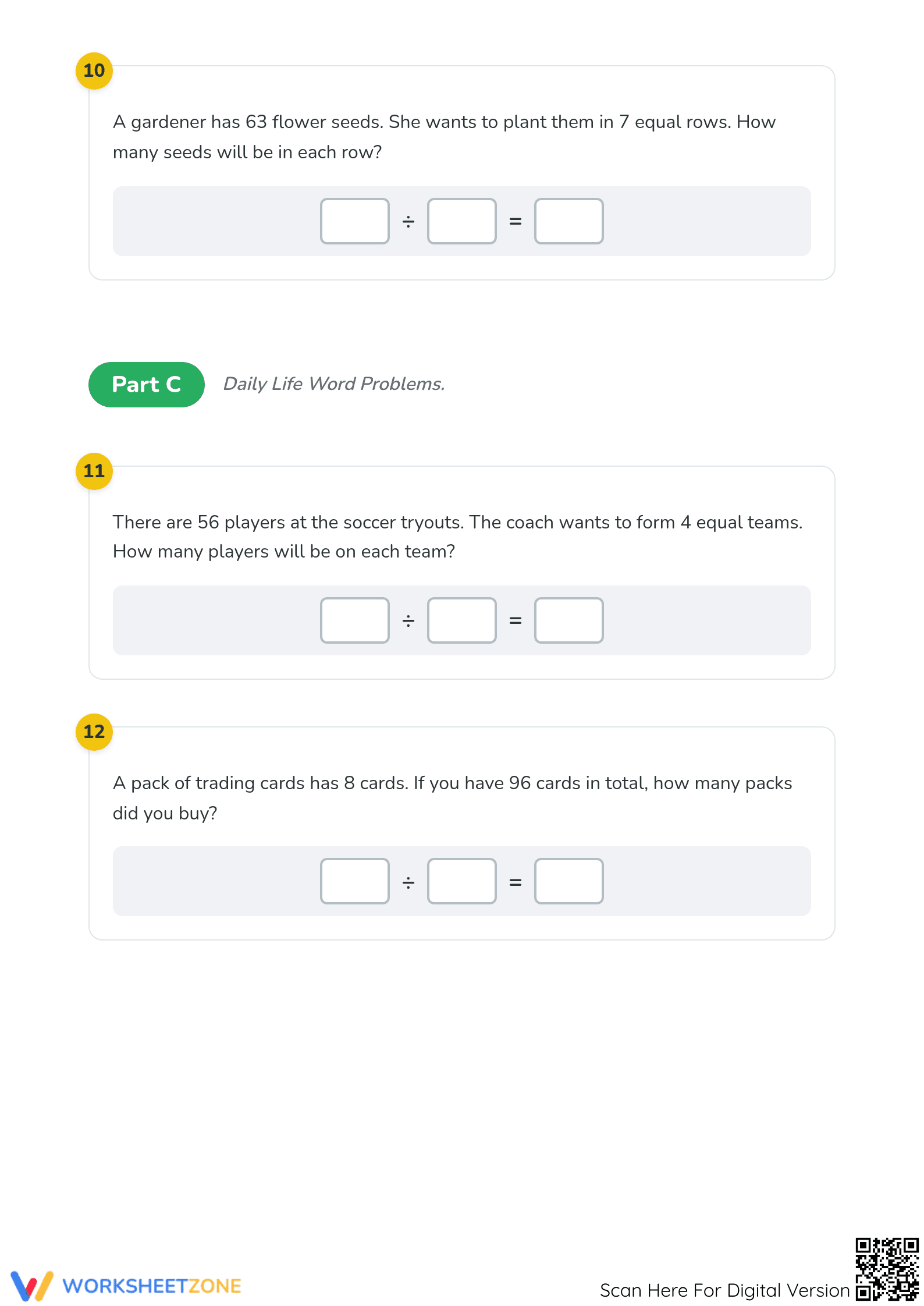
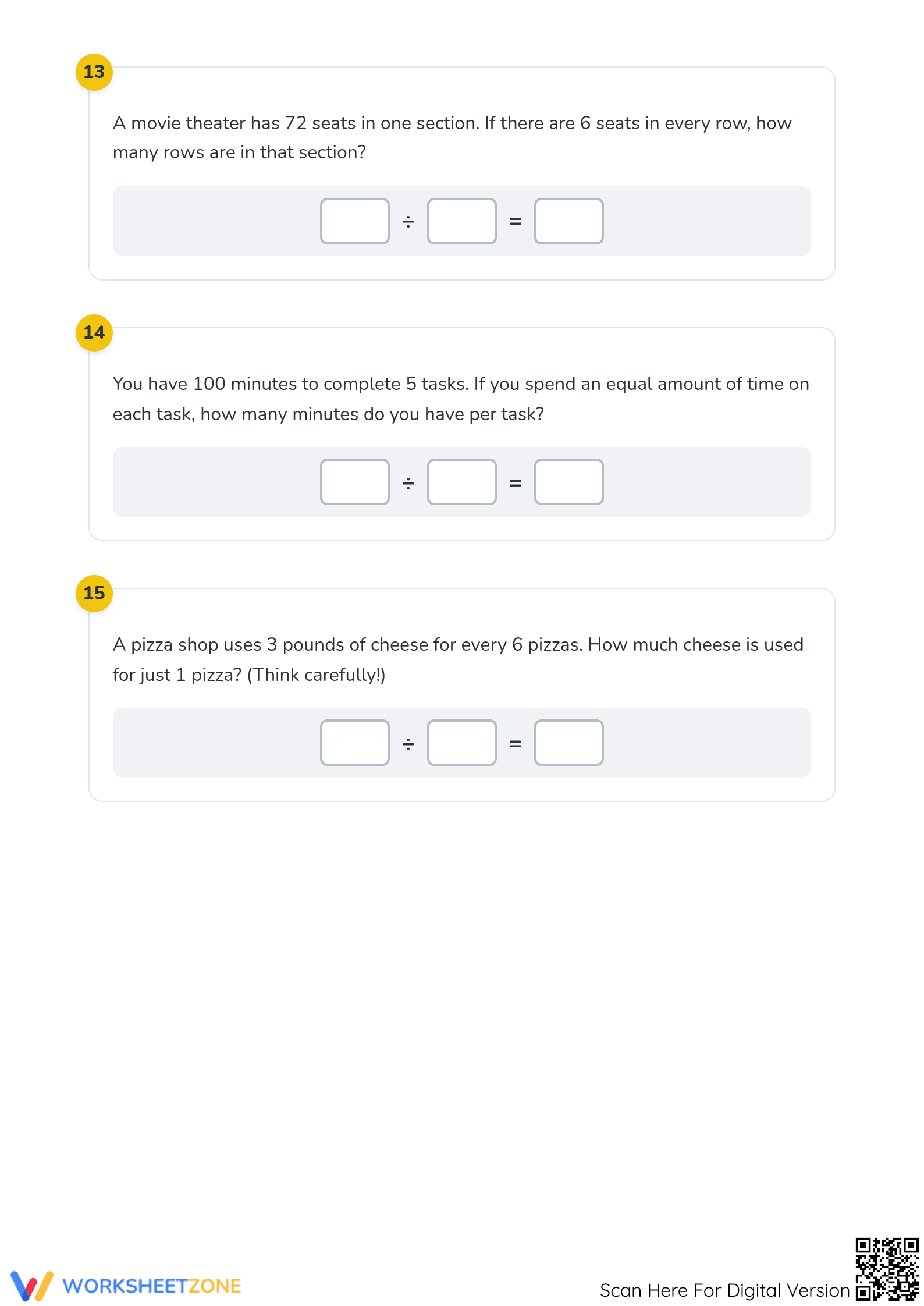

Grade 3 Division — Printable No-Prep Worksheet
Paste this activity's link or code into your existing LMS (Google Classroom, Canvas, Teams, Schoology, Moodle, etc.).
Students can open and work on the activity right away, with no student login required.
You'll still be able to track student progress and results from your teacher account.
This worksheet provides targeted practice for Grade 3 students on solving division word problems. Through a series of 16 structured questions, learners will apply their understanding of basic division facts to real-world scenarios, strengthening their ability to interpret and solve problems involving equal groups. It’s an essential tool for building foundational division skills.
At a Glance
- Grade: 3 · Subject: Math
- Standard:
CCSS.MATH.CONTENT.3.OA.A.3— Use division within 100 to solve word problems involving equal groups.- Skill Focus: Division Word Problems
- Format: 5 pages · 16 problems · Answer key included · PDF
- Best For: Independent practice, homework, or formative assessment.
- Time: 20–30 minutes
What's Inside
This resource contains a five-page PDF file. The first four pages present 16 unique division word problems, with four problems per page and ample space for students to show their work. The final page provides a complete answer key for easy and efficient grading, making it simple for teachers or students to check their work.
A Zero-Prep Workflow
This worksheet is designed for maximum classroom efficiency with a simple three-step workflow. First, print the five-page document; this takes less than a minute. Second, distribute the worksheet to students for independent work, a group activity, or as a homework assignment. Finally, review the answers using the included key, which facilitates quick grading or a peer-review session. The total teacher preparation time is under 2 minutes, making this an ideal resource for substitute plans or last-minute needs.
Standards Alignment
This worksheet is directly aligned with the Common Core State Standard CCSS.MATH.CONTENT.3.OA.A.3, which requires students to "Use multiplication and division within 100 to solve word problems in situations involving equal groups, arrays, and measurement quantities." The tasks provide focused practice on this critical third-grade skill. Both standard codes can be copied directly into lesson plans, IEP goals, or district curriculum mapping tools.
How to Use It
This resource is versatile. Use it as independent practice after a direct instruction lesson on division strategies to see what students can do on their own. Alternatively, assign it for homework to reinforce classroom learning. For a formative assessment tip, circulate as students work and observe which strategies they use to solve the problems—are they drawing pictures, using repeated subtraction, or applying known facts? Most students will complete the worksheet in 20 to 30 minutes.
Who It's For
This worksheet is designed for third-grade students who are developing their division skills. It is also suitable for fourth graders needing a review of basic division concepts in a real-world context. The clear layout and straightforward tasks make it accessible for most learners. Pair this worksheet with a multiplication and division fact chart to support students who still need that scaffold.
Reinforcing procedural fluency through contextualized problems is a core component of elementary mathematics education. This worksheet, aligned with standard CCSS.MATH.CONTENT.3.OA.A.3, provides practice in solving division word problems, a skill essential for mathematical reasoning. Research consistently shows that students who can connect abstract operations to concrete situations develop a more robust understanding. A report from the National Assessment of Educational Progress (NAEP) highlights that problem-solving applications remain a key area for student growth. By providing structured practice on interpreting and solving word problems, this resource helps students build the foundational skills necessary for more complex multi-step problems they will encounter in later grades. This approach of targeted, standards-aligned practice reflects the evidence-based recommendations for effective instruction outlined in numerous studies, ensuring students are not just computing but truly problem-solving.


