


























Views
Downloads

Essential Diary of a Wimpy Kid Vocab Worksheet | Grade 7-9
Paste this activity's link or code into your existing LMS (Google Classroom, Canvas, Teams, Schoology, Moodle, etc.).
Students can open and work on the activity right away, with no student login required.
You'll still be able to track student progress and results from your teacher account.
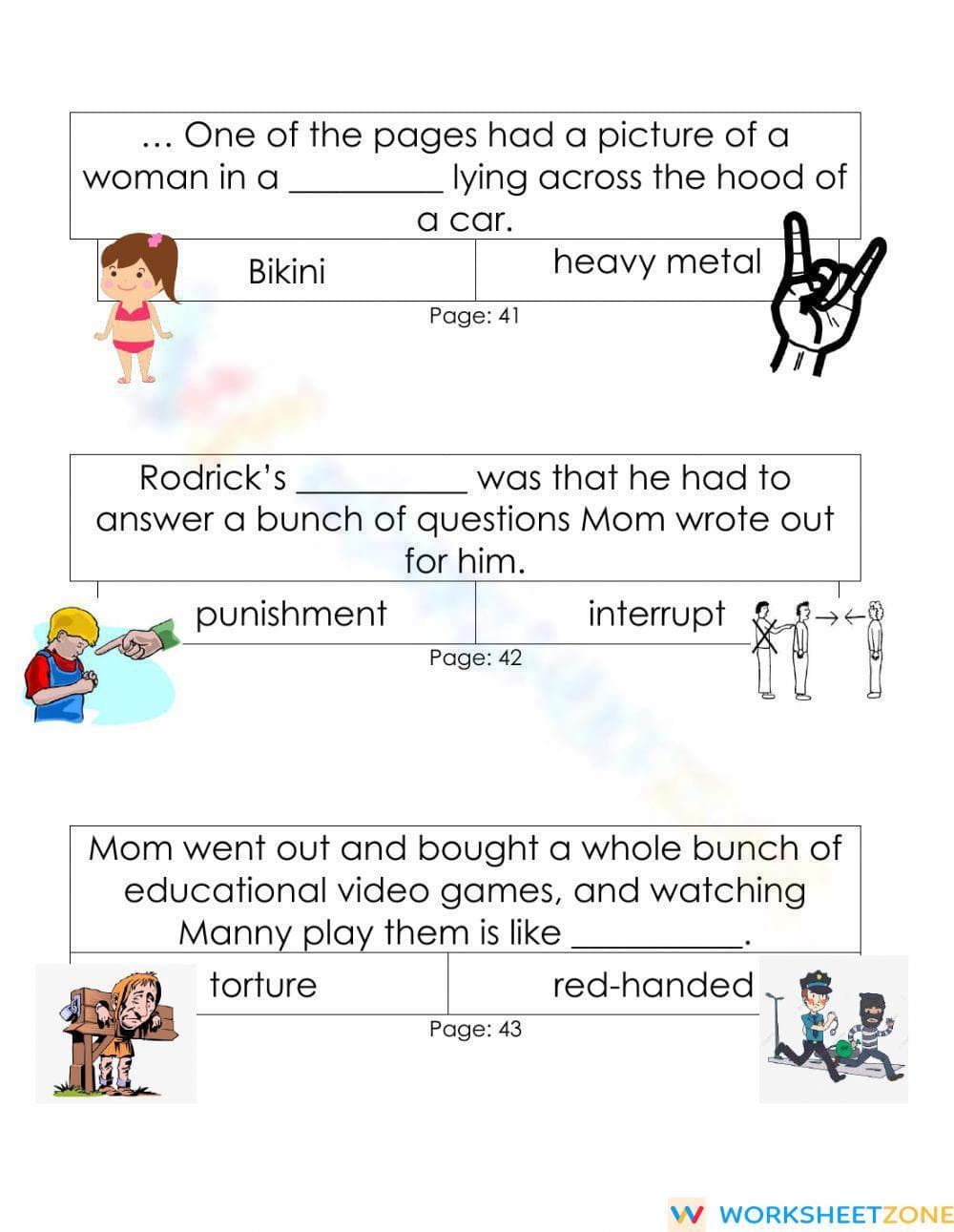
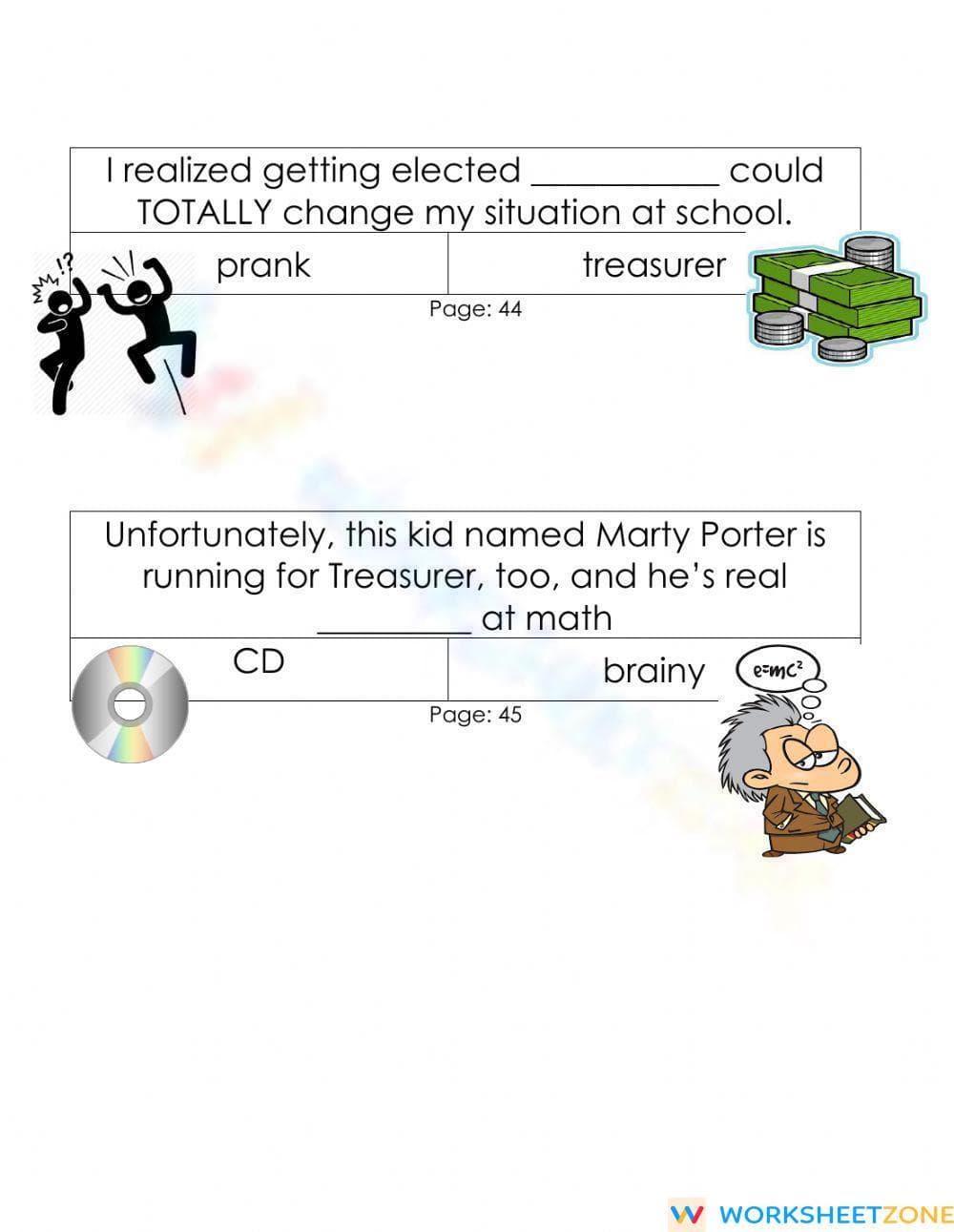
This targeted literature supplement helps middle school students master high-frequency vocabulary through the familiar lens of Jeff Kinney's popular series. By analyzing specific sentences from pages 41 to 45, learners practice identifying word meanings using local context clues. This activity ensures students don't just memorize definitions but understand how professional authors deploy language to create tone and characterization.
At a Glance
- Grade: 7–9 · Subject: English Language Arts
- Standard:
CCSS.ELA-LITERACY.L.7.4— Determine or clarify the meaning of unknown words using context clues.- Skill Focus: Vocabulary in Literature
- Format: 2 pages · 5 problems · Answer key included · PDF
- Best For: Quick bell-ringers or independent reading checks
- Time: 10–15 minutes
What's Inside
The worksheet features five distinct fill-in-the-blank challenges meticulously mapped to the text of Diary of a Wimpy Kid. Each question provides a verbatim sentence from the book with a strategic omission, paired with two high-interest vocabulary choices such as "punishment," "torture," and "brainy." The layout includes visual aids and character illustrations that provide additional non-linguistic scaffolding, making the 2-page document accessible and engaging for reluctant readers.
Zero-Prep Workflow
- Print: Generate a class set in less than 30 seconds; the high-contrast design ensures clarity even on economy settings.
- Distribute: Pass out as a transition activity between direct instruction and independent reading time (1 minute).
- Review: Use the included answer key for immediate peer-grading or a quick whole-class check to identify common misconceptions (5 minutes).
Total teacher preparation time is under 2 minutes, making this an ideal emergency sub plan or Friday morning warm-up.
Standards Alignment
The primary focus is CCSS.ELA-LITERACY.L.7.4, which requires students to determine the meaning of unknown and multiple-meaning words and phrases based on 7th-grade level reading and content. By selecting from plausible options within a narrative frame, students must apply syntactic and semantic analysis to confirm their choices. This standard code can be copied directly into lesson plans, IEP goals, or district curriculum mapping tools.
How to Use It
This resource functions best as a formative assessment during a novel study. Assign it after students have read the corresponding pages (41-45) to verify comprehension and vocabulary retention. Teachers can also use the sentences as a springboard for a short "word choice" discussion, asking students to explain why one vocabulary option fits the character's voice better than the other. Completion time typically ranges from 10 to 15 minutes.
Who It's For
Designed for Grade 7, 8, and 9 ELA classrooms, this worksheet is particularly effective for students who benefit from high-interest, low-complexity text. It provides excellent support for English Language Learners (ELL) by pairing vocabulary with clear visual contexts. It pairs naturally with the Diary of a Wimpy Kid series or any unit focusing on humorous realistic fiction.
Mastering vocabulary in context is a cornerstone of the CCSS.ELA-LITERACY.L.7.4 standard, as it moves students away from rote memorization toward authentic linguistic application. Research by Fisher & Frey (2014) indicates that vocabulary instruction is most effective when integrated with the texts students are already reading, rather than as isolated word lists. This worksheet provides five specific opportunities for students to engage in this evidence-based practice, using high-interest content that reduces cognitive barriers to learning. By requiring students to choose between two distinct options, the task forces a comparative analysis of meaning that deepens semantic understanding. The inclusion of original book context ensures that the skill practice is grounded in authentic 7th-grade level literature. Educators can use these five data points to quickly gauge class-wide mastery of context-clue strategies before moving on to more complex vocabulary demands in the middle school curriculum.


