


























Views
Downloads
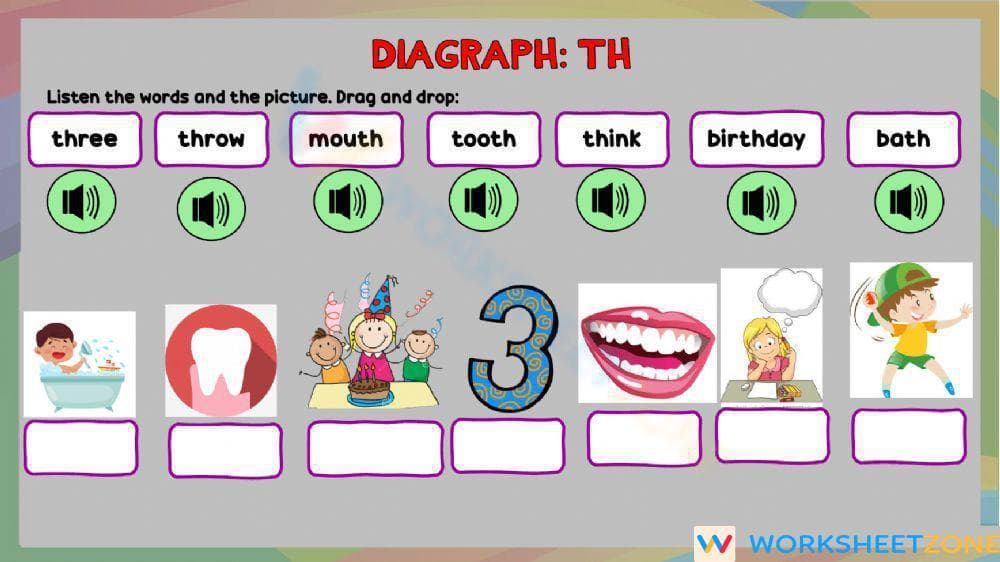

Essential Digraph TH Worksheet | Grade 1 Phonics
Paste this activity's link or code into your existing LMS (Google Classroom, Canvas, Teams, Schoology, Moodle, etc.).
Students can open and work on the activity right away, with no student login required.
You'll still be able to track student progress and results from your teacher account.
This essential digraph TH phonics worksheet helps students master the /th/ sound through a structured listening and matching activity. By connecting spoken words to visual representations, learners strengthen their phonemic awareness and decoding skills. This resource provides immediate reinforcement for students as they distinguish the unique sound produced by this common consonant digraph.
At a Glance
- Grade: 1 · Subject: English Language Arts
- Standard:
CCSS.ELA-LITERACY.RF.1.3.A— Know the spelling-sound correspondences for common consonant digraphs- Skill Focus: Digraph TH (Initial and Final)
- Format: 1 page · 7 problems · Answer key included · PDF
- Best For: Phonics centers and independent practice
- Time: 10–15 minutes
What's Inside
This single-page PDF features 7 tasks designed to improve auditory processing and orthographic mapping. Students interact with words such as "three," "mouth," and "birthday." Each word is paired with a clear illustration and a speaker icon, facilitating a multi-sensory learning experience. The layout is clean and uncluttered, ensuring that young learners focus entirely on the phonetic target.
Zero-Prep Workflow
- Step 1: Print (30 seconds) – Simply open the PDF and hit print for the entire class or specific small groups.
- Step 2: Distribute (30 seconds) – Hand out the worksheets; no scissors, glue, or additional supplies are required for this focused listening activity.
- Step 3: Review (1 minute) – Use the included answer key to quickly verify student progress or conduct a rapid whole-class check.
Total teacher preparation time is under two minutes, making this an ideal resource for busy educators.
Standards Alignment
This resource is primarily aligned to CCSS.ELA-LITERACY.RF.1.3.A, which requires students to know the spelling-sound correspondences for digraphs. By identifying "th" in initial and final positions, students develop foundational literacy skills. Both standard codes can be copied directly into lesson plans, IEP goals, or district curriculum mapping tools.
How to Use It
Incorporate this worksheet during the "Independent Practice" phase of a phonics lesson. It works well as a formative assessment tool; observe students as they match cues to pictures to identify who needs more scaffolding. The expected completion time is roughly 12 minutes for most first graders.
Who It's For
This worksheet is designed for Grade 1, though it is effective for Kindergarteners or Grade 2 students needing remedial support. It pairs naturally with a digraph anchor chart or a short reading passage. The visual cues support English Language Learners (ELL) as they build vocabulary and phonetic confidence.
Research indicates that explicit phonics instruction, specifically focusing on consonant digraphs like /th/, is a critical component of early literacy development. According to the RAND AIRS 2024 report on foundational reading skills, students who receive systematic practice in mapping sounds to letter patterns show significantly higher decoding accuracy by the end of primary school. This worksheet addresses the CCSS.ELA-LITERACY.RF.1.3.A standard by providing 7 targeted opportunities for students to recognize and produce the digraph TH sound in various word positions. By utilizing a listening-first approach, the activity reduces cognitive load, allowing students to focus on phonemic isolation before moving to more complex reading tasks. This method is consistent with evidence-based practices that advocate for multi-sensory engagement in phonics instruction. Educators can rely on this tool to provide the repetitive, high-quality practice required for students to achieve mastery in spelling-sound correspondences and bridge the gap between phonological awareness and successful orthographic processing.


