


























Views
Downloads
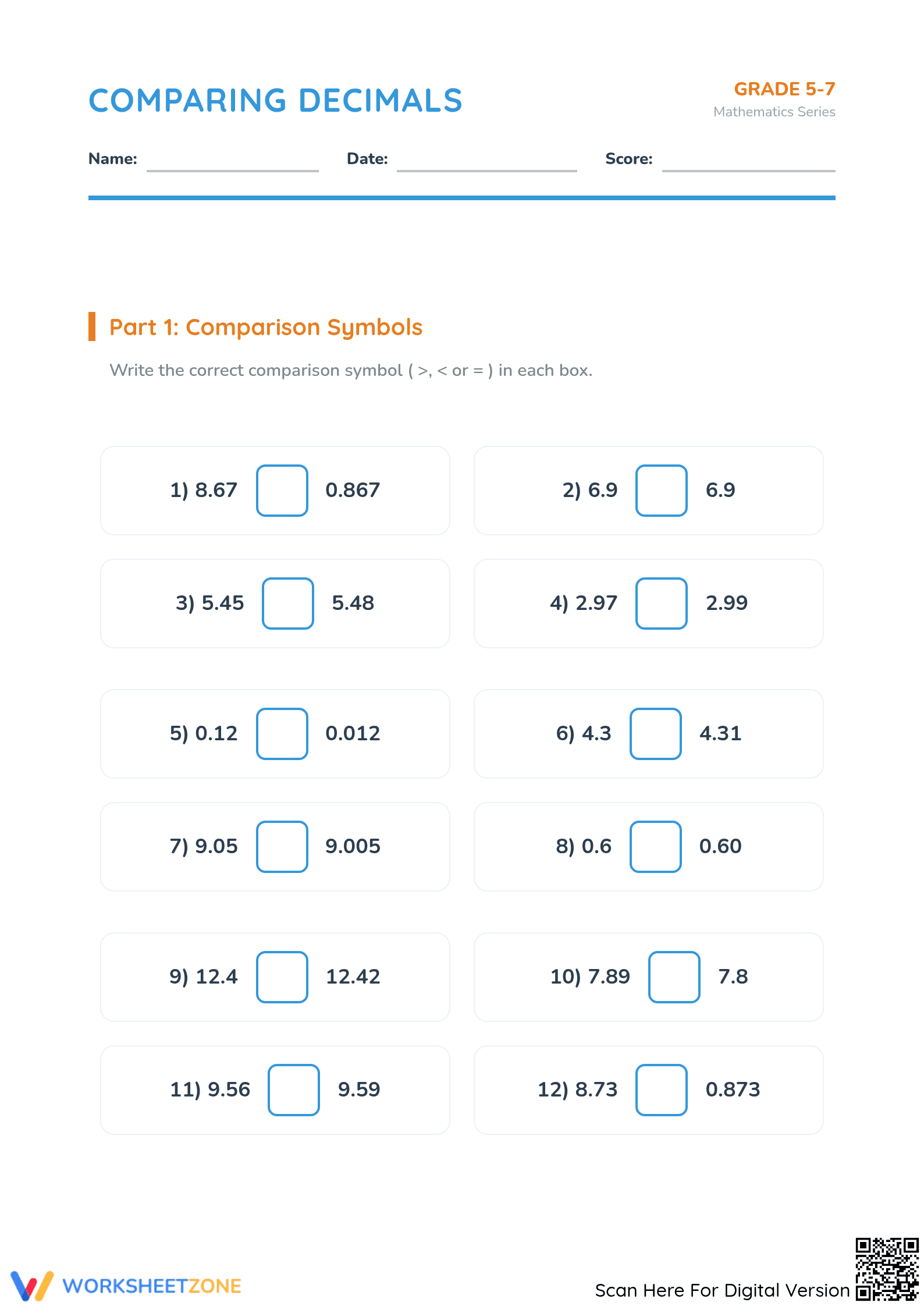
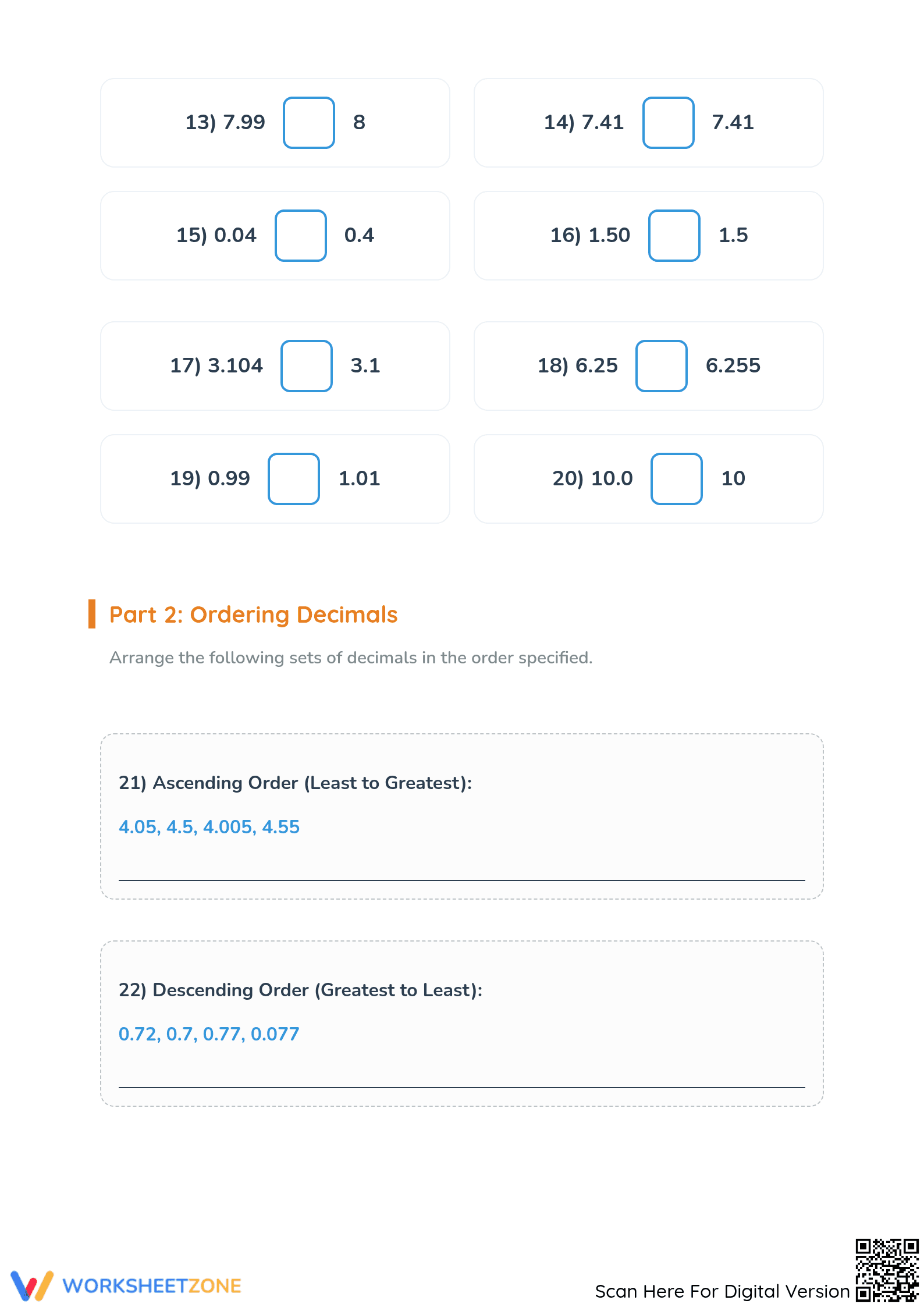
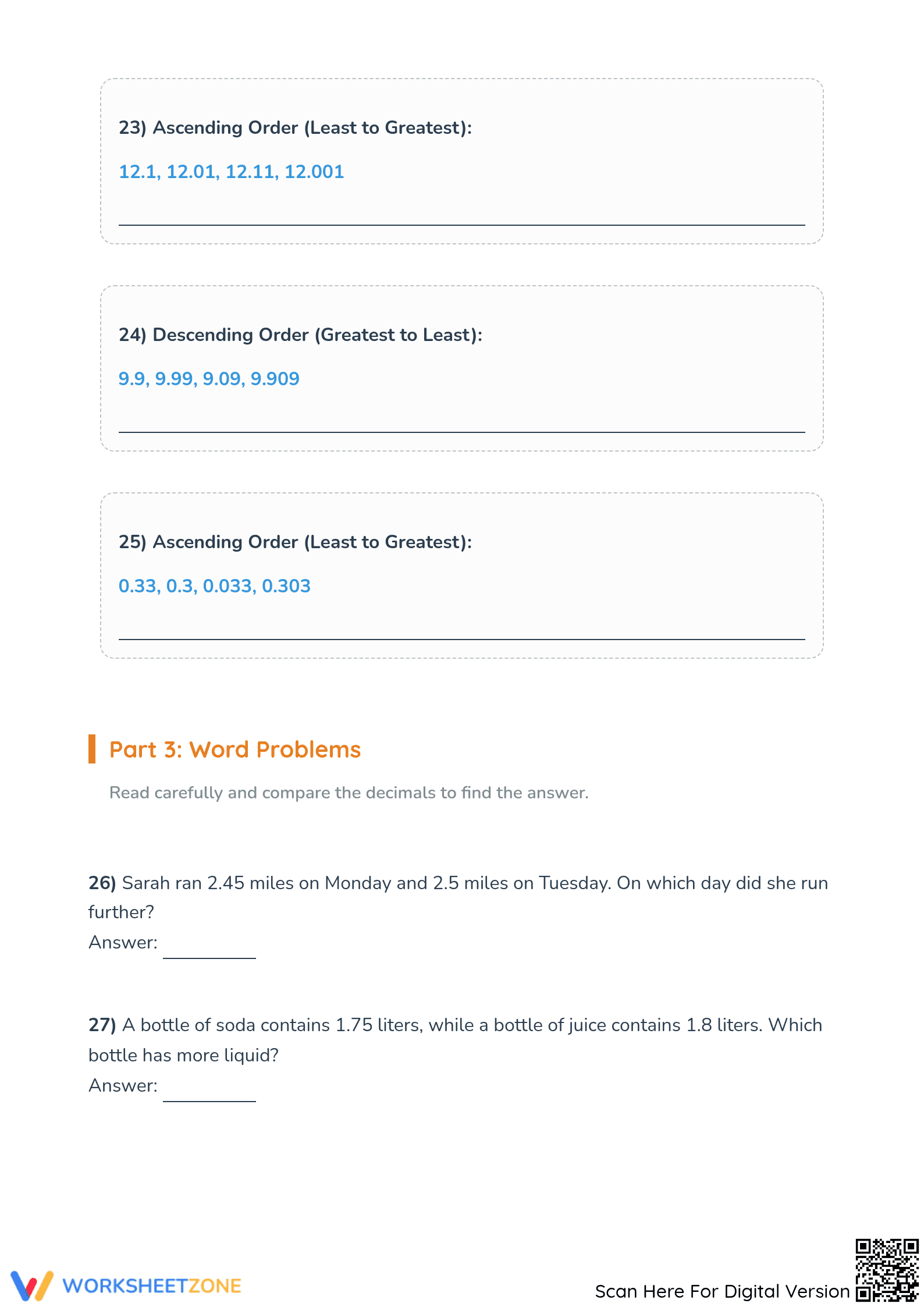
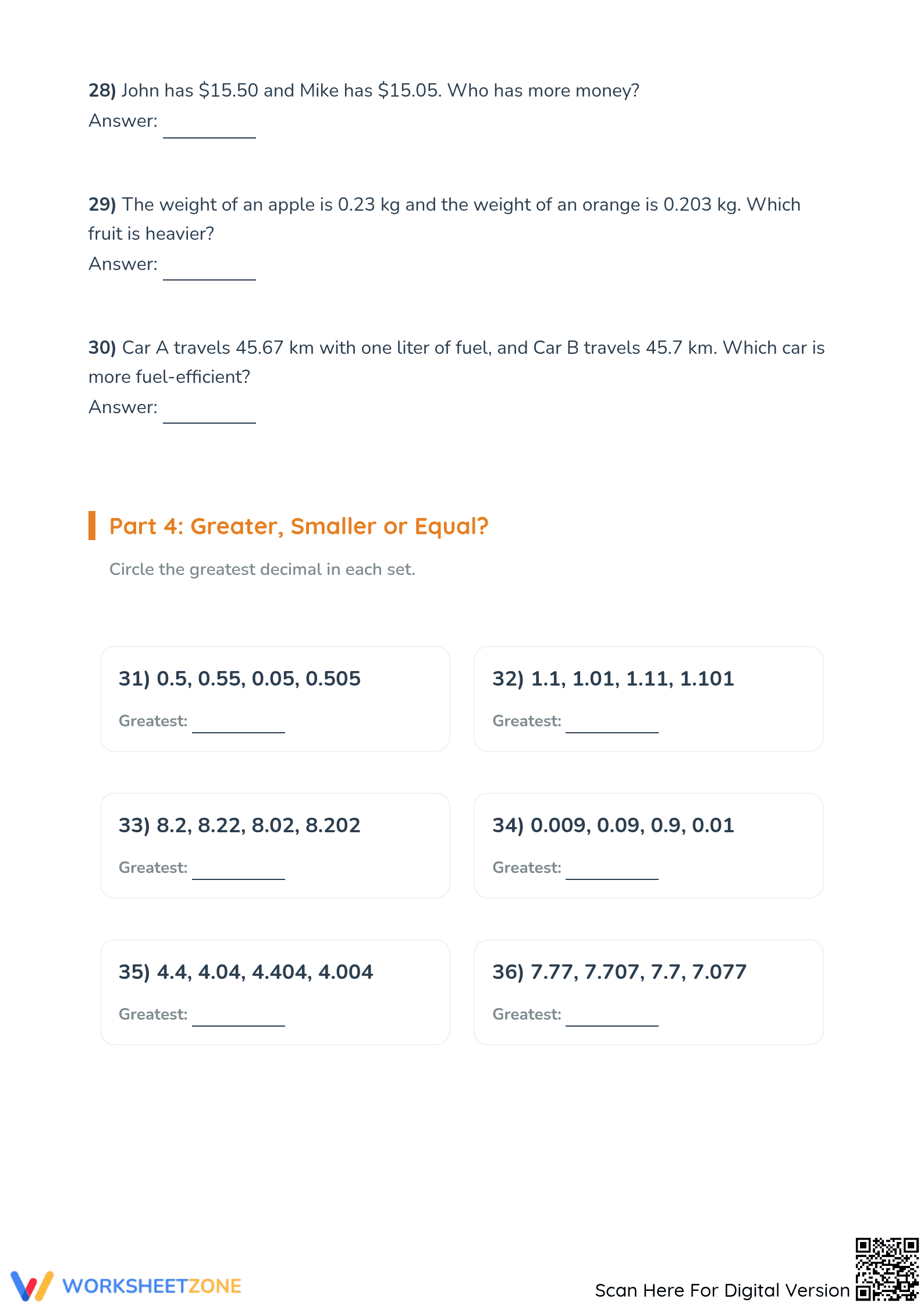

Printable Comparing and Ordering Decimals Worksheet, Grade 5
Paste this activity's link or code into your existing LMS (Google Classroom, Canvas, Teams, Schoology, Moodle, etc.).
Students can open and work on the activity right away, with no student login required.
You'll still be able to track student progress and results from your teacher account.
Mastering Decimal Comparisons: A Comprehensive Practice Set
This five-page worksheet provides a structured approach to comparing and ordering decimals. Students will progress through 40 problems, from basic symbol comparison to complex multi-decimal ordering and real-world word problems. Learners will demonstrate a deep understanding of place value and decimal relationships across multiple instructional contexts.
At a Glance
- Grade: 5 · Subject: Math
- Standard:
CCSS.MATH.CONTENT.5.NBT.A.3.B— Compare two decimals to thousandths based on place value meanings using comparison symbols- Skill Focus: Comparing and ordering decimal numbers
- Format: 5 pages · 40 problems · Answer key included · PDF
- Best For: Independent practice and formative assessment
- Time: 30–45 minutes
What's Inside the Five-Page Decimal Packet
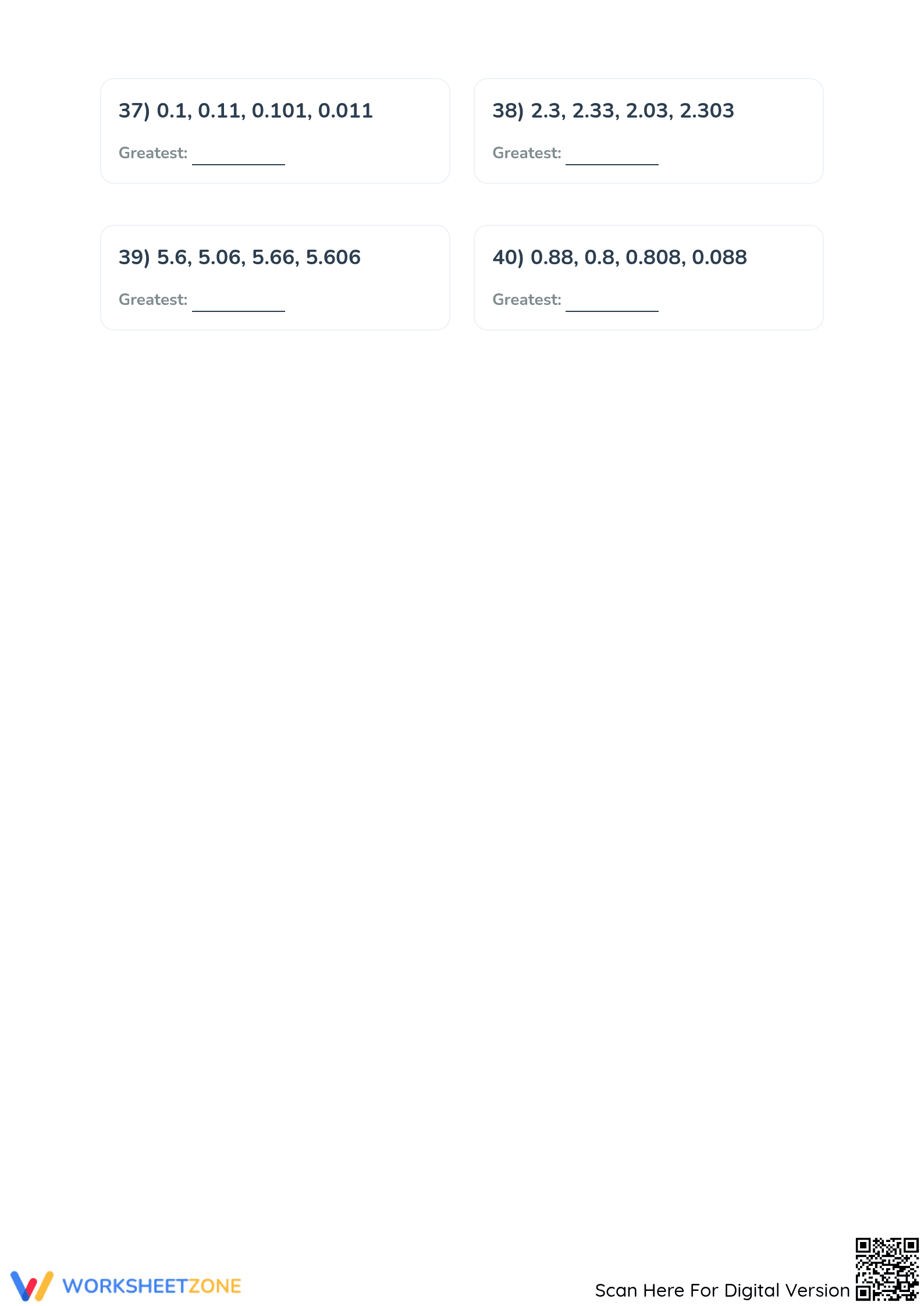
Inside this PDF, you will find four distinct sections built for decimal fluency. Part 1 features 20 comparison symbol tasks. Part 2 moves into ordering sets of four decimals. Part 3 applies these skills to five word problems involving distance. Finally, Part 4 challenges students to identify the greatest decimal in sets of four numbers.
Zero-Prep Classroom Workflow
The zero-prep workflow is designed for efficiency. First, print the five-page packet (1 minute). Second, distribute the materials as part of a main lesson or math center (1 minute). Third, use the included answer key to review results or facilitate self-grading (5 minutes). This process requires minimal teacher preparation, making it ideal for sub plans.
National Standards Alignment
This worksheet is strictly aligned to the Common Core State Standard `CCSS.MATH.CONTENT.5.NBT.A.3.B`: Compare two decimals to thousandths based on meanings of the digits in each place, using >, =, and < symbols to record the results of comparisons. It also supports vertical alignment for Grade 4 and Grade 6 students. Both standard codes can be copied directly into lesson plans, IEP goals, or district curriculum mapping tools.
How to Use This Worksheet in Your Lesson
Use this worksheet after direct instruction on decimal place value. It serves as an excellent tool for formative assessment; observe students during Part 4 to see if they check the highest place value column first. Expect completion within 45 minutes. It can also be split across multiple days for shorter warm-up sessions or targeted skill practice.
Who This Resource is For
This resource is primarily for Grade 5 students, but offers reinforcement for Grades 4-7. The word problems are effective for students who need to see mathematical concepts in linguistic contexts. Pair this with a decimal anchor chart or place value mat to provide additional scaffolding for students who are struggling with basic comparison logic.
Research from RAND AIRS 2024 emphasizes that repetitive, structured practice with decimal place value is essential for transitioning from whole number operations to rational number concepts. This worksheet addresses the whole number bias by providing numerous examples where digits in the thousandths place dictate value, regardless of digit count. By engaging with 40 targeted tasks, students develop the cognitive flexibility required to navigate decimal comparisons without relying on faulty heuristics. This alignment with evidence-based strategies ensures students build a durable foundation for future work with percentages and ratios. The structured progression from abstract symbols to concrete word problems mirrors the Gradual Release of Responsibility model, providing necessary repetition for mastery while maintaining high cognitive demand. This resource stands as a high-quality tool for data-driven instruction in any mathematics classroom. CCSS.MATH.CONTENT.5.NBT.A.3.B is the cornerstone of this design.


