


























Views
Downloads

Printable Wordsworth Daffodils Worksheet | Grade 8 ELA
Paste this activity's link or code into your existing LMS (Google Classroom, Canvas, Teams, Schoology, Moodle, etc.).
Students can open and work on the activity right away, with no student login required.
You'll still be able to track student progress and results from your teacher account.
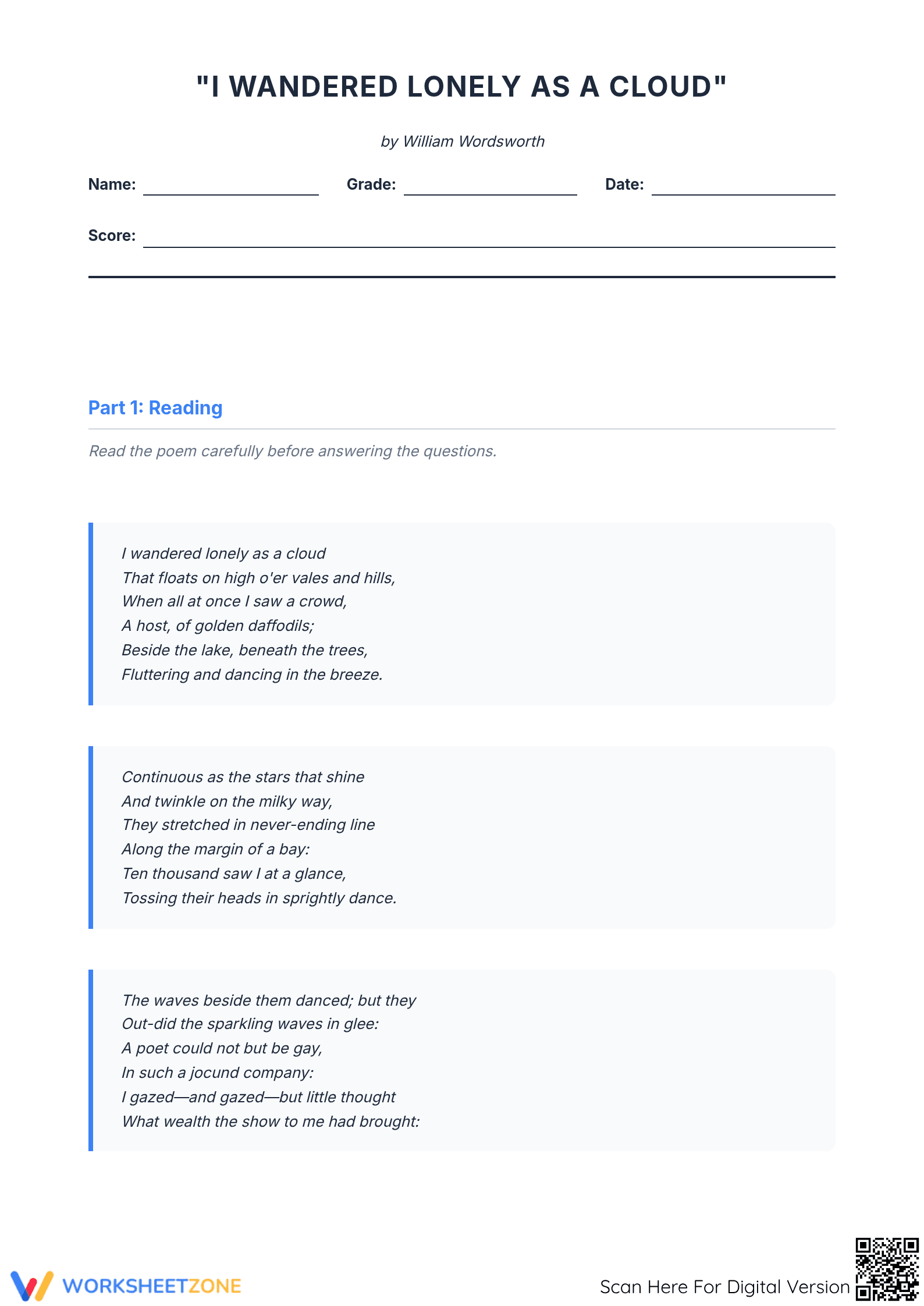
Master the nuances of classic Romantic poetry with this comprehensive 'I Wandered Lonely as a Cloud' analysis worksheet. Students engage directly with William Wordsworth’s iconic text to identify figurative language and extract deep meaning from every stanza. This resource transforms a complex literary reading into a structured, successful learning experience for middle and high schoolers.
At a Glance
- Grade: 8 · Subject: English Language Arts
- Standard:
CCSS.ELA-LITERACY.RL.8.4— Determine the meaning of words and phrases as they are used in a text- Skill Focus: Poetry analysis and literary devices
- Format: 4 pages · 7 problems · Answer key included · PDF
- Best For: Independent practice and literary analysis lessons
- Time: 25–35 minutes
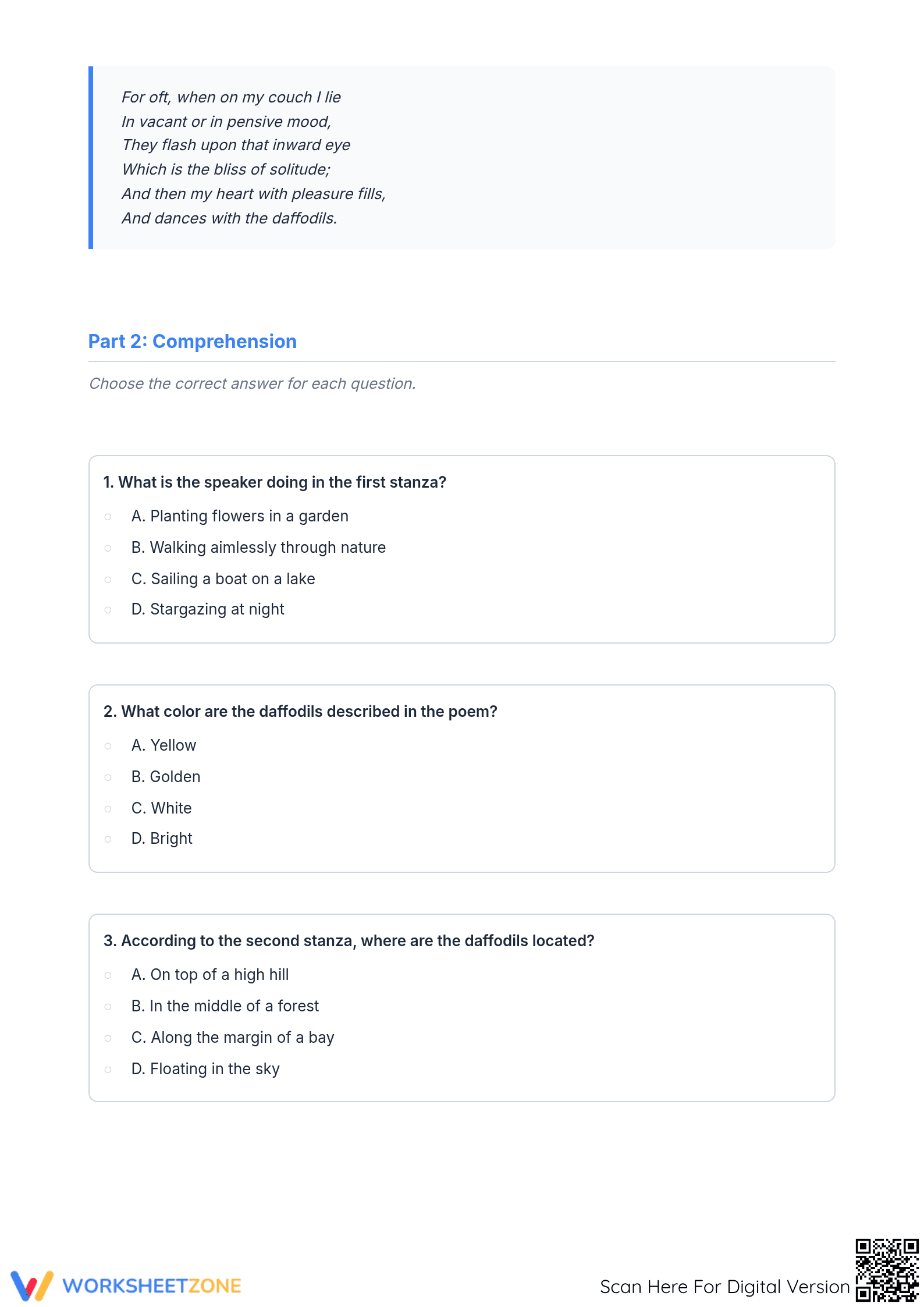
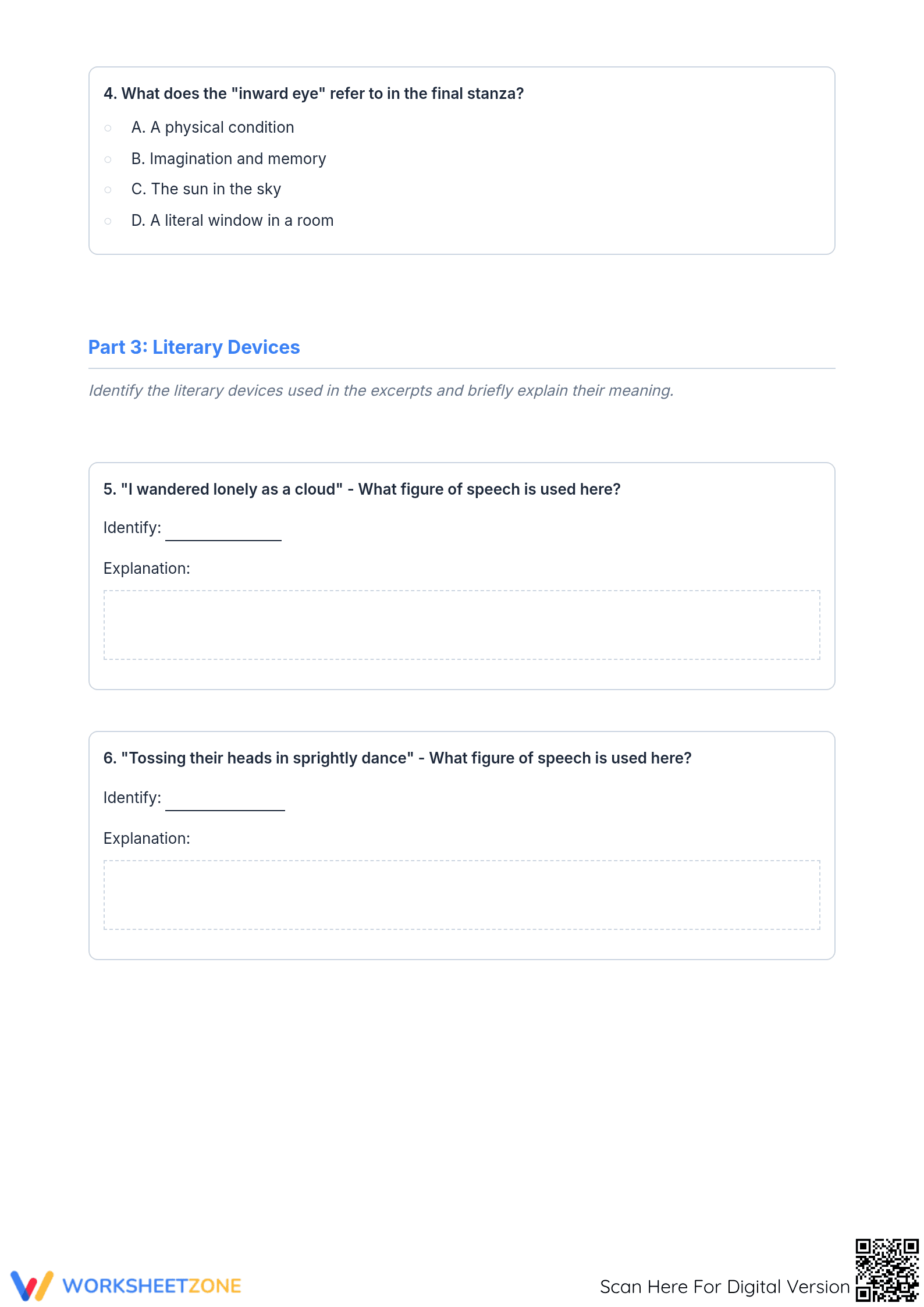
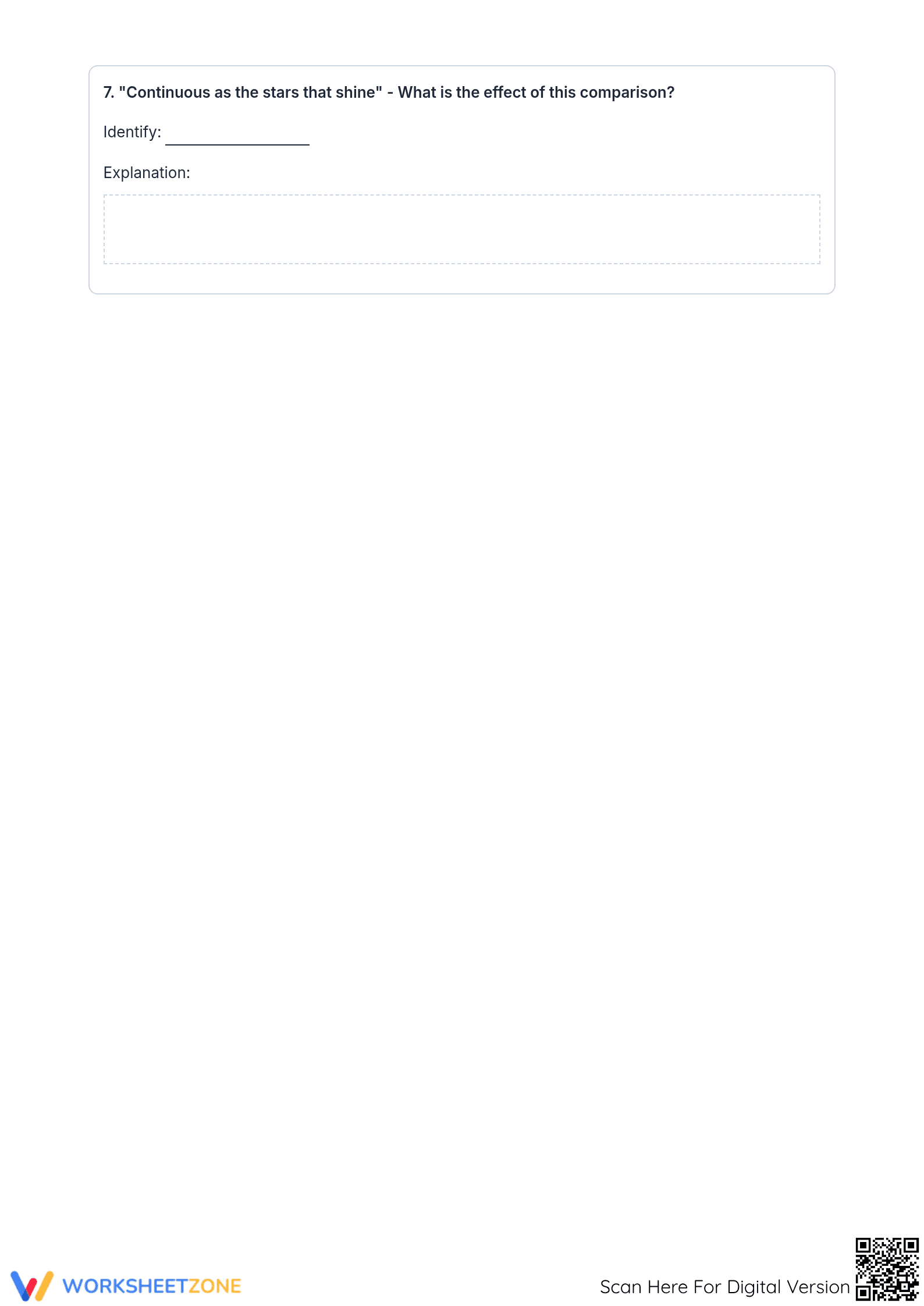
This four-page PDF includes the full text of Wordsworth's 'Daffodils' poem, clearly divided into reading and analysis segments. The worksheet features four multiple-choice comprehension questions that target literal and inferential meaning. Additionally, three open-ended tasks require students to identify and explain specific literary devices, such as similes and personification. A complete answer key is provided to facilitate quick grading or self-correction.
- Guided Reading: Students read the stanzas in a clean layout to enhance focus on Wordsworth's imagery.
- Supported Comprehension: Four multiple-choice questions scaffold understanding of the speaker's actions and the poem's literal setting.
- Independent Analysis: Three tasks challenge students to explain the functional effect of specific comparisons and personification within the text.
This sequence follows a gradual-release model, moving from basic recognition to sophisticated explanation.
The primary focus is CCSS.ELA-LITERACY.RL.8.4, requiring students to determine the meaning of words and phrases, including figurative and connotative meanings. The resource also supports CCSS.ELA-LITERACY.RL.8.1 by asking students to cite textual evidence to support their analysis of what the text says explicitly. Both standard codes can be copied directly into lesson plans, IEP goals, or district curriculum mapping tools.
Distribute this worksheet as a summative assessment after a unit on Romanticism or use it during direct instruction to model the 'close reading' technique. Educators should observe students during the literary devices section to ensure they can differentiate between identifying a technique and explaining its impact on the reader. Completion typically takes 30 minutes.
This resource is ideal for Grade 7, 8, and 9 students who are developing their ability to analyze complex metaphors. It pairs naturally with an anchor chart on figurative language or a broader lesson on 19th-century British literature. The clear formatting supports students with IEPs who benefit from segmented tasks.
According to a 2024 NAEP report on reading proficiency, structured exposure to classical poetry is essential for developing the higher-order thinking skills required for college and career readiness. This worksheet provides that critical exposure by centering on `CCSS.ELA-LITERACY.RL.8.4`, a standard that bridges the gap between literal decoding and aesthetic appreciation. By requiring students to not only identify similes and personification but also explain their functional effect within stanzas, the resource aligns with best practices in evidence-based literacy instruction. Research from Fisher & Frey (2014) emphasizes that scaffolded analysis is key to helping students internalize complex text structures. This tool facilitates the rigorous interrogation of language, ensuring that students can articulate how word choice shapes tone and meaning in poetry. It is a reliable asset for any secondary ELA curriculum focusing on foundational literary analysis and rigorous academic growth.


