


























Views
Downloads
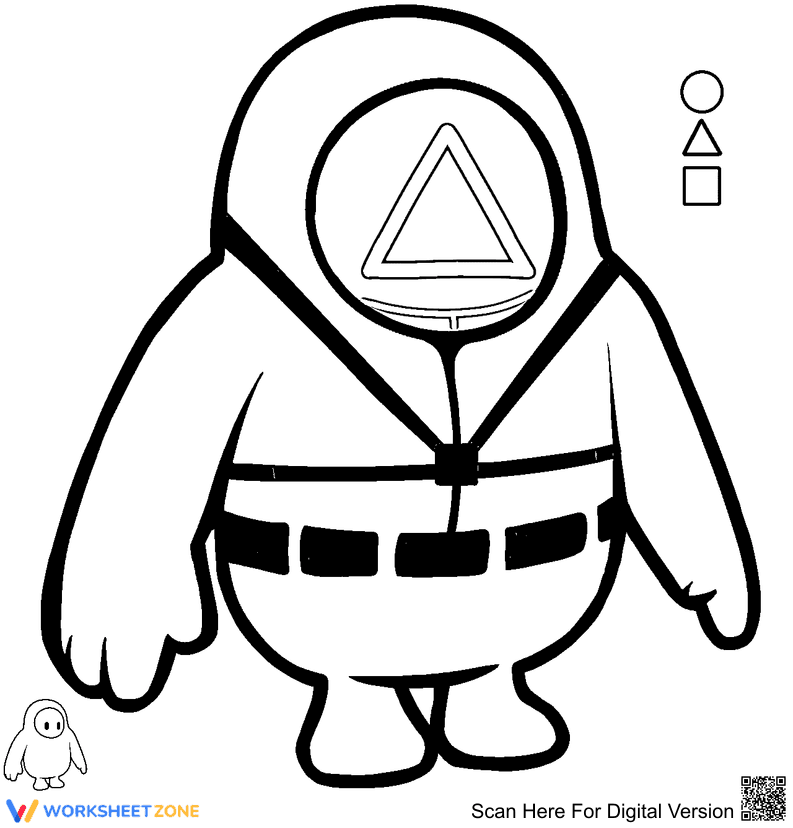

Squid Game Triangle Guard Coloring Page | Essential
Paste this activity's link or code into your existing LMS (Google Classroom, Canvas, Teams, Schoology, Moodle, etc.).
Students can open and work on the activity right away, with no student login required.
You'll still be able to track student progress and results from your teacher account.
This printable Squid Game Triangle Guard coloring page provides early learners with a high-interest opportunity to develop essential fine motor skills and shape recognition. By focusing on the iconic triangle symbol, students engage in a creative task that reinforces geometric vocabulary while practicing precise hand-eye coordination. This activity ensures students remain focused on artistic expression while building foundational skills.
At a Glance
- Grade: K-2 · Subject: Arts & Coloring
- Standard:
CCSS.MATH.CONTENT.K.G.A.2— Correctly name shapes regardless of their orientations or overall size- Skill Focus: Fine Motor & Shape Recognition
- Format: 1 page · 1 task · No answer key needed · PDF
- Best For: Morning work or early finishers
- Time: 15–20 minutes
What's Inside: This resource consists of a single-page PDF featuring a large, stylized version of the Squid Game triangle guard. The illustration includes bold, thick outlines to assist younger students in staying within the lines. In the upper right corner, three geometric icons (circle, triangle, square) are provided to help students identify the specific shape associated with this character.
Zero-Prep Workflow: This worksheet is designed for immediate classroom use with a total teacher preparation time of under 2 minutes. First, print the required number of copies for your group (30 seconds). Second, distribute the pages along with crayons or markers to your students (30 seconds). Finally, review the completed work to assess shape recognition and motor control (1 minute). It is an ideal sub-plan addition.
Standards Alignment: The primary standard addressed is `CCSS.MATH.CONTENT.K.G.A.2`, which requires students to correctly name shapes regardless of their orientations or overall size. By identifying the triangle on the guard's mask, students apply geometric knowledge to a recognizable image. This standard code can be copied directly into lesson plans, IEP goals, or district curriculum mapping tools.
How to Use It: Use this worksheet as a calming morning work activity to settle students as they enter the classroom. It also serves as an excellent formative assessment tool; observe whether students can identify the triangle shape before they begin coloring. Expected completion time ranges from 15 to 20 minutes depending on the student's level of detail and artistic focus.
Who It's For: This activity is designed for preschool through second-grade students who are working on shape identification and grip strength. It is particularly effective for students who respond well to popular culture themes. Pair this resource with a shape-themed anchor chart or a direct instruction lesson on the properties of triangles for a comprehensive learning experience.
According to the RAND AIRS 2024 report on early childhood development, the integration of familiar popular culture icons into fine motor activities significantly increases student engagement and task persistence. This printable worksheet focuses on the triangle shape, directly supporting CCSS.MATH.CONTENT.K.G.A.2 by requiring students to interact with geometric forms in a non-abstract context. Research from Fisher & Frey (2014) suggests that creative coloring tasks serve as a vital bridge for developing the pincer grasp necessary for later writing proficiency. By providing a high-interest subject like the Squid Game guard, educators can facilitate longer periods of focused practice. This resource ensures that students meet foundational geometry standards while practicing the hand-eye coordination required for academic success. The 1-page design allows for immediate implementation in diverse classroom settings, providing a measurable way to observe student progress in shape identification and color application within defined boundaries.


