


























Views
Downloads
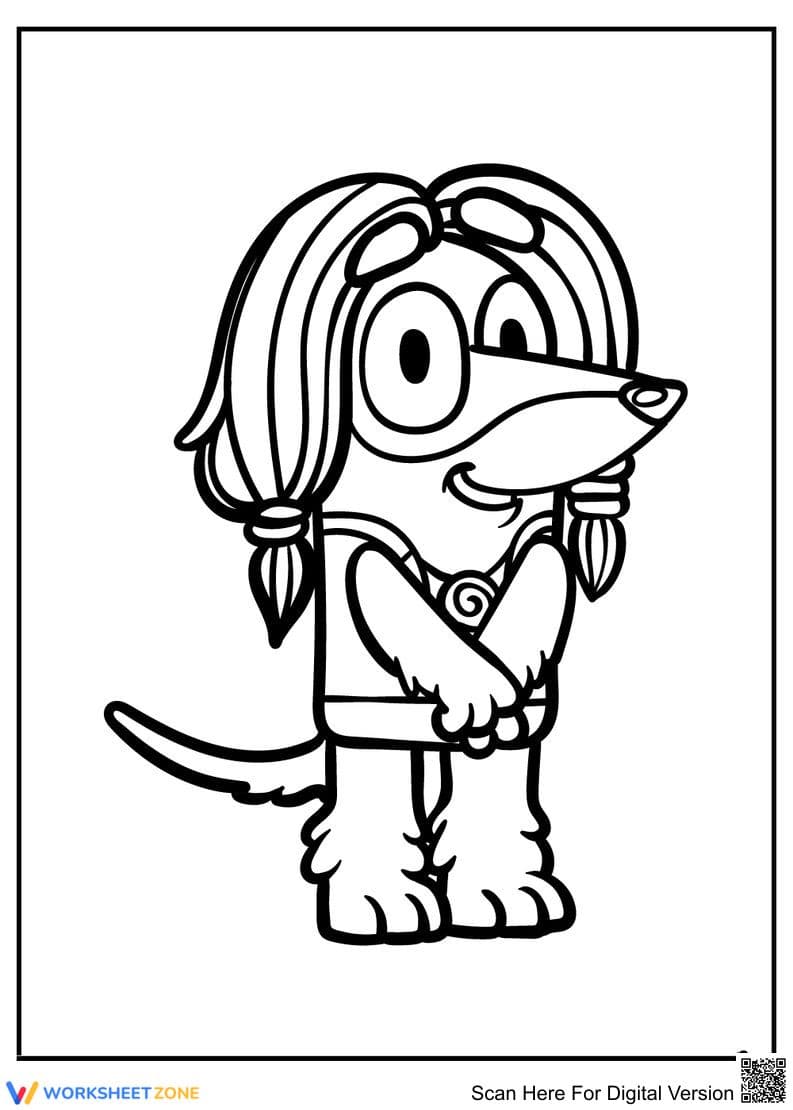

Indy Coloring Page | Essential Grade K-5 Printable
Paste this activity's link or code into your existing LMS (Google Classroom, Canvas, Teams, Schoology, Moodle, etc.).
Students can open and work on the activity right away, with no student login required.
You'll still be able to track student progress and results from your teacher account.
This Indy coloring page provides a creative outlet for elementary students to practice fine motor control and color recognition. By engaging with a familiar character, learners develop the hand-eye coordination necessary for early writing tasks. It serves as a high-interest activity that bridges the gap between artistic expression and foundational literacy skills.
At a Glance
- Grade: K-5 · Subject: Arts & Crafts
- Standard:
CCSS.ELA-LITERACY.L.K.1— Use fine motor control to demonstrate command of standard writing conventions- Skill Focus: Fine motor development
- Format: 1 page · 1 task · No answer key · PDF
- Best For: Early finishers and morning work
- Time: 15–20 minutes
Inside this resource, you will find a single-page, high-resolution PDF featuring Indy, the beloved character from the Bluey series. The line art is crisp and clear, designed to accommodate various coloring mediums such as crayons, colored pencils, or markers. There are no complex instructions, making it accessible for the youngest learners to begin immediately without teacher intervention.
Zero-Prep Workflow
- Print: Select the single-page PDF and print enough copies for your group (30 seconds).
- Distribute: Hand out the sheets during transition periods, morning arrival, or as a creative reward (30 seconds).
- Review: Display completed work on a classroom art wall to build community and celebrate student effort (1 minute).
Total teacher preparation time is under 2 minutes, making this an ideal solution for emergency sub plans or unexpected schedule gaps.
Standards Alignment
This activity aligns with `CCSS.ELA-LITERACY.L.K.1` by supporting the physical development required for legible writing. While primarily an artistic task, the grip strength and spatial awareness practiced here are essential prerequisites for mastering letter formation. Both standard codes can be copied directly into lesson plans, IEP goals, or district curriculum mapping tools.
How to Use It
Use this worksheet as a calm-down activity after recess or as a quiet task for early finishers during ELA rotations. It is also an excellent formative assessment tool; observe how students hold their coloring tools and their ability to stay within lines to gauge fine motor maturity. Expected completion time ranges from 15 to 20 minutes depending on the student's attention to detail.
Who It's For
This resource is ideal for Kindergarten through 5th-grade students, particularly those who benefit from sensory-based learning or require additional fine motor practice. It pairs naturally with a character-based reading passage or an anchor chart about primary and secondary colors to extend the instructional value beyond simple coloring.
According to the RAND AIRS 2024 report on early childhood development, the integration of high-interest visual media in the classroom significantly increases student engagement and persistence in task completion. This Indy coloring page leverages that engagement to address CCSS.ELA-LITERACY.L.K.1, focusing on the fine motor control necessary for standard English writing conventions. Research from Fisher & Frey (2014) emphasizes that non-textual tasks like coloring serve as vital scaffolds for younger learners, allowing them to develop the hand strength and coordination required for more rigorous academic writing later in their schooling. By providing a familiar character context, this worksheet reduces cognitive load, allowing students to focus entirely on the physical mechanics of tool manipulation. This resource is a practical application of evidence-based strategies that prioritize the physical foundations of literacy, ensuring that students are prepared for the transition from drawing to formal writing.


