


























Views
Downloads
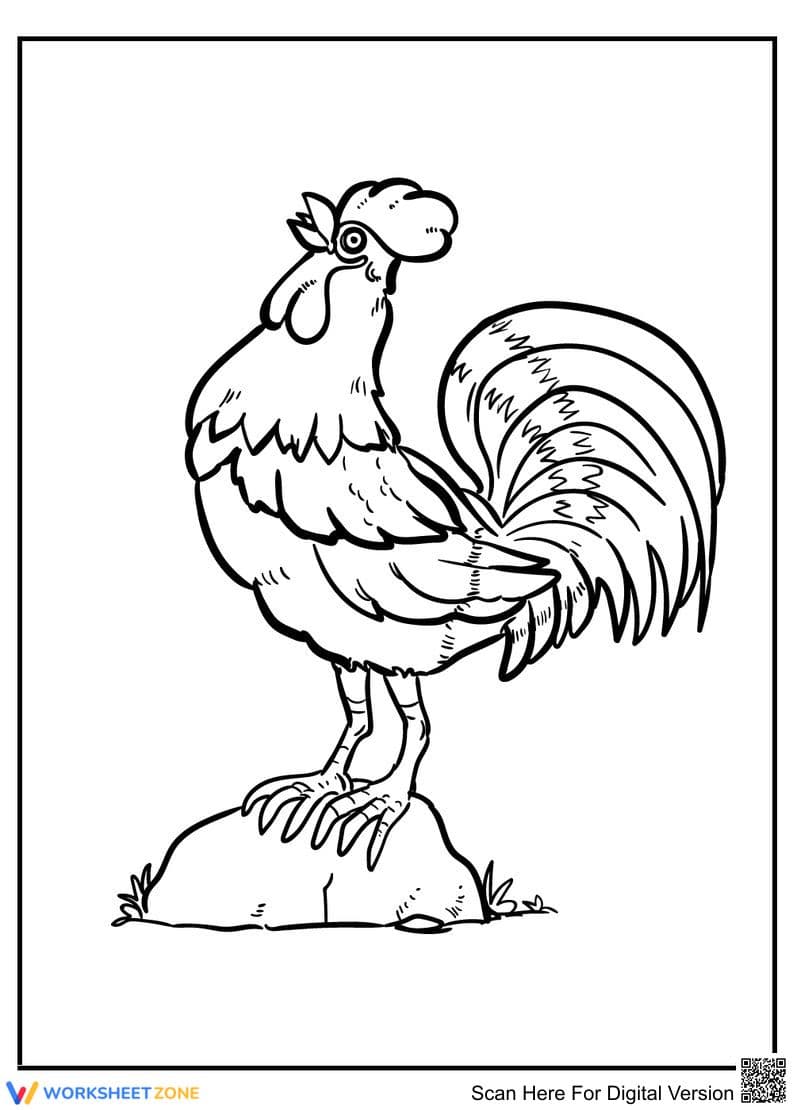

Crowing Chicken Coloring Page | Essential K-5 Printable
Paste this activity's link or code into your existing LMS (Google Classroom, Canvas, Teams, Schoology, Moodle, etc.).
Students can open and work on the activity right away, with no student login required.
You'll still be able to track student progress and results from your teacher account.
Overview
This crowing chicken coloring page provides a high-quality illustration for students to practice fine motor control and artistic expression. By focusing on the detailed lines of the rooster, learners develop the hand-eye coordination necessary for early writing tasks. It serves as an engaging creative break or a thematic supplement to farm animal lessons.
At a Glance
- Grade: K-5 · Subject: Arts & English
- Standard:
CCSS.ELA-LITERACY.L.K.5.A— Sort common objects into categories to gain a sense of the concepts.- Skill Focus: Fine motor development
- Format: 1 page · 1 task · No answer key · PDF
- Best For: Morning work or early finishers
- Time: 15–20 minutes
What's Inside
Inside this resource, you will find a single-page, high-resolution PDF featuring a detailed crowing chicken standing on a rock. The bold outlines are designed to help younger students stay within the lines while providing enough detail for older elementary students to experiment with shading and texture. No additional materials are required beyond standard coloring supplies.
Zero-Prep Workflow
The zero-prep workflow for this worksheet is designed for maximum efficiency. First, print the single-page PDF (30 seconds). Second, distribute the sheets to students along with crayons or colored pencils (1 minute). Third, allow students to work independently while you transition between lessons or manage small groups (0 minutes prep). Total teacher preparation time is under two minutes.
Standards Alignment
This worksheet aligns with CCSS.ELA-LITERACY.L.K.5.A by encouraging students to identify and categorize farm animals within a broader literacy or science context. While primarily an artistic activity, it supports the development of the small muscle groups required for the conventions of standard English writing. Both standard codes can be copied directly into lesson plans, IEP goals, or district curriculum mapping tools.
How to Use It
Use this worksheet as a quiet-time activity following a read-aloud about farm life or as a formative assessment of a student's grip and pressure control. For an instructional moment, ask students to describe the chicken's features before they begin coloring. Expect completion within 15 to 20 minutes depending on the student's age and detail level.
Who It's For
This resource is ideal for Kindergarten through 5th-grade students, particularly those needing extra fine motor support or English Language Learners building animal vocabulary. It pairs naturally with an anchor chart about farm animals or a direct instruction lesson on the life cycle of a chicken.
Research from Fisher & Frey (2014) emphasizes the importance of integrating visual arts and fine motor practice into the early elementary curriculum to support cognitive development and literacy readiness. This crowing chicken coloring page addresses CCSS.ELA-LITERACY.L.K.5.A by providing a concrete visual representation of a category-specific animal, allowing students to engage with vocabulary through a tactile medium. According to the RAND AIRS 2024 report, low-stakes creative activities like coloring can significantly reduce classroom anxiety and improve student focus during subsequent high-stakes academic tasks. By providing 1 clear, high-contrast image, this worksheet ensures that students of all ability levels can achieve a sense of completion and mastery. The inclusion of such resources in a balanced curriculum supports the gradual release of responsibility by allowing for independent, self-directed exploration of artistic themes and biological subjects.


