


























Views
Plays

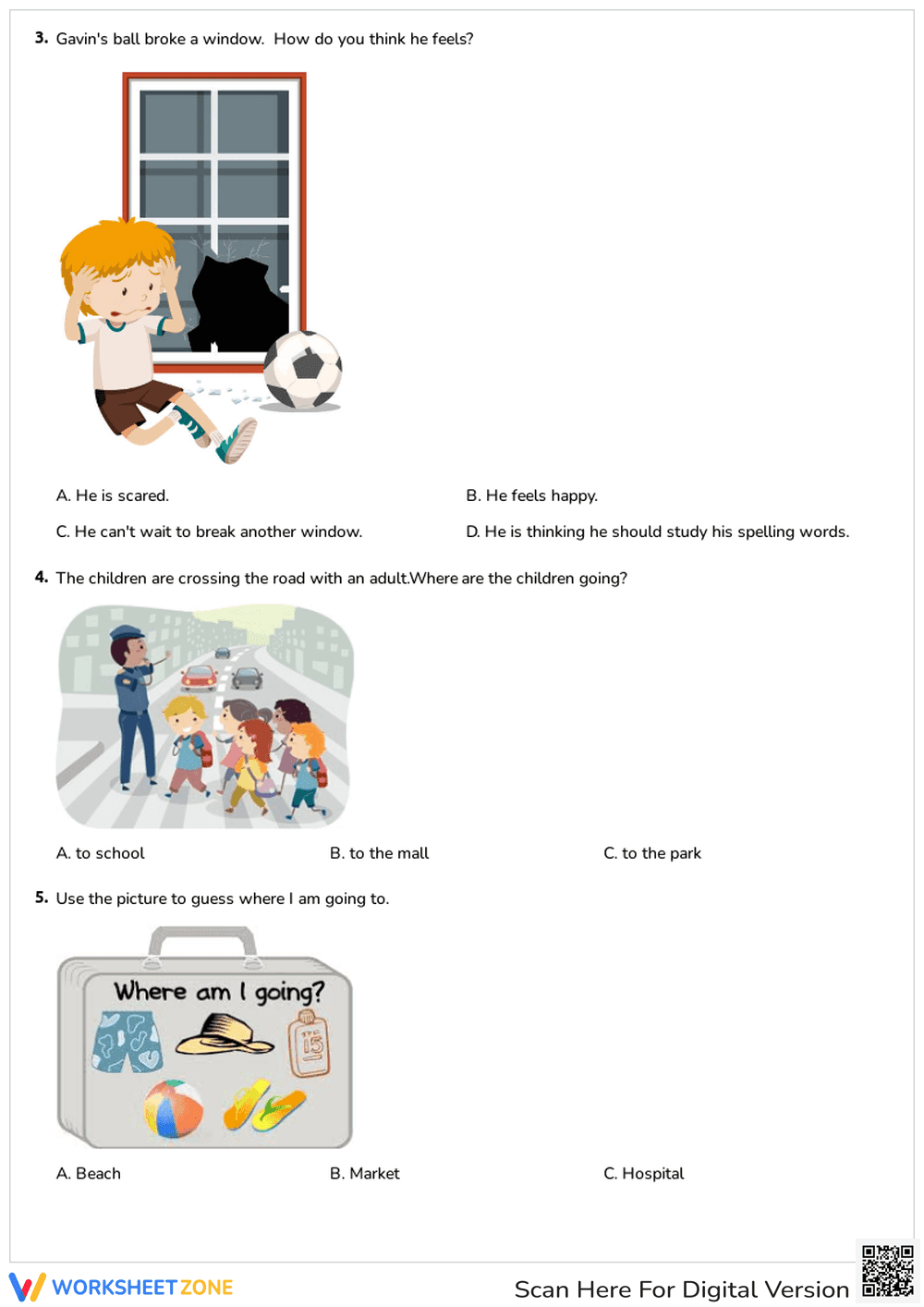
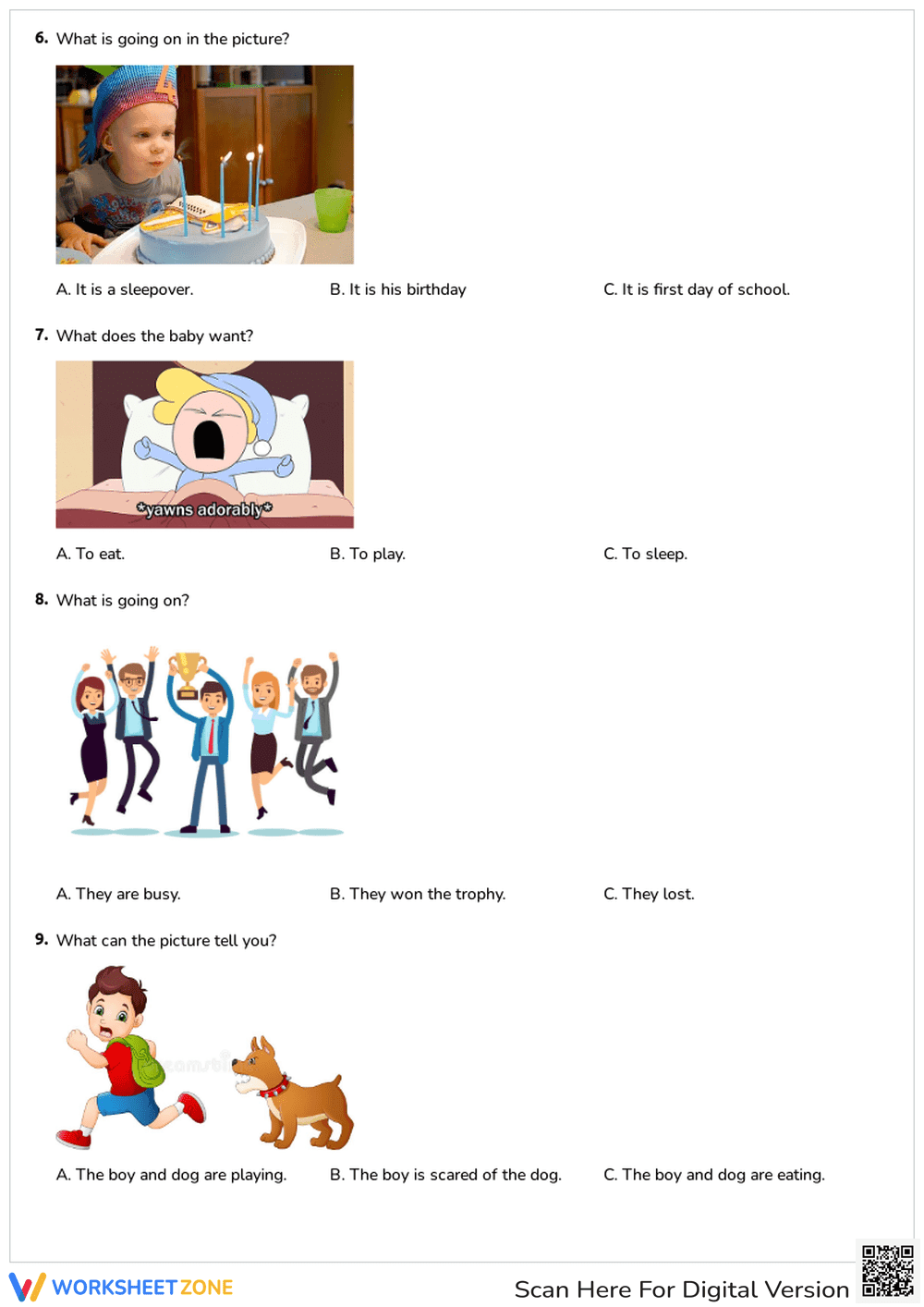
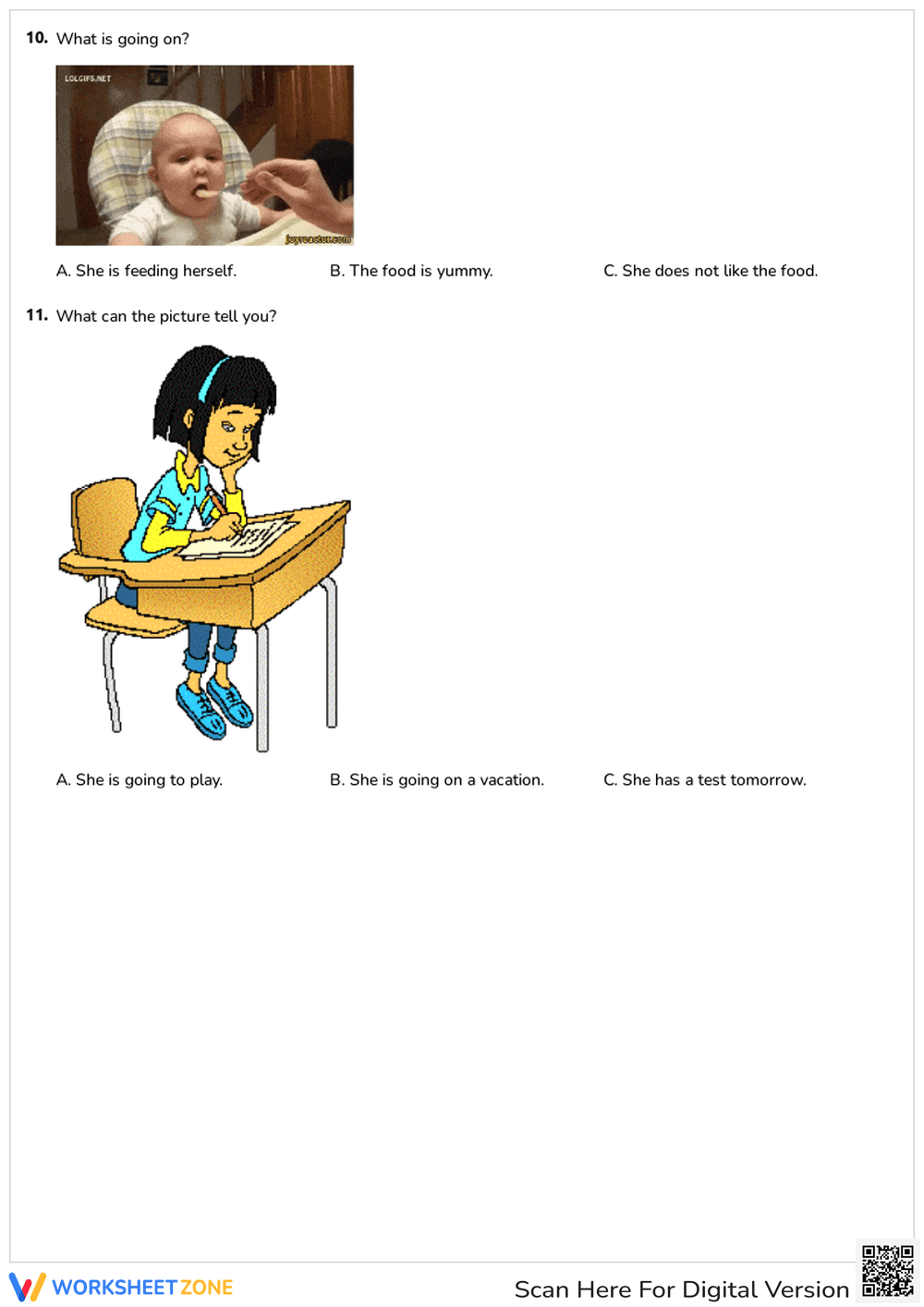

Printable Picture Inference Quiz | Grade 1 ELA
Paste this activity's link or code into your existing LMS (Google Classroom, Canvas, Teams, Schoology, Moodle, etc.).
Students can open and work on the activity right away, with no student login required.
You'll still be able to track student progress and results from your teacher account.
This Grade 1 picture inference worksheet helps early readers develop essential comprehension skills by analyzing visual clues. Students will look at engaging illustrations and read short sentences to determine what is happening, how characters feel, or what will happen next, building a strong foundation for critical thinking and reading comprehension.
At a Glance
- Grade: 1 · Subject: ELA
- Standard:
CCSS.ELA-LITERACY.RL.1.7— Use illustrations and details to describe events- Skill Focus: Making Inferences from Pictures
- Format: 4 pages · 11 problems · Answer key included · PDF
- Best For: Formative assessment and independent practice
- Time: 15–20 minutes
Inside this four-page assessment, educators will find 11 multiple-choice questions designed specifically for early readers. Each task pairs a vibrant, relatable image with a short text prompt or question. Students must synthesize the visual information with the text to select the correct answer from three or four options. The layout is clean and distraction-free, making it highly accessible for young learners. A complete answer key is included to streamline the grading process.
- Guided practice: Begin by completing the first two questions together as a class, modeling how to look for visual evidence like facial expressions or broken objects.
- Supported practice: Have students work in pairs for the next few questions, discussing their observations before selecting an answer.
- Independent practice: Assign the remaining questions individually to assess each student's ability to draw conclusions independently.
This gradual-release approach ensures students understand the mechanics of making inferences before applying the skill on their own.
This resource is directly aligned to CCSS.ELA-LITERACY.RL.1.7, requiring students to use illustrations and details in a story to describe its characters, setting, or events. By prompting learners to analyze visual data to answer questions, it reinforces early analytical skills. Both standard codes can be copied directly into lesson plans, IEP goals, or district curriculum mapping tools.
This versatile worksheet functions perfectly as a midterm quiz, a formative assessment, or a focused literacy center activity. Use it after direct instruction on making inferences to gauge student understanding. As a formative assessment tip, observe whether students are relying solely on the pictures or if they are attempting to read the accompanying text; this can provide valuable insights into their decoding skills. Expect students to complete the 11 questions in approximately 15 to 20 minutes.
This resource is ideal for Kindergarten and Grade 1 students who are transitioning from emergent to early fluent reading stages. It provides excellent differentiation for visual learners and English Language Learners (ELLs) who benefit from strong picture support when tackling comprehension tasks. Pair this quiz with a read-aloud session where you pause to ask similar inference questions using a picture book.
Developing early inference skills is a critical milestone in reading comprehension. This resource aligns with CCSS.ELA-LITERACY.RL.1.7, focusing on the ability to use illustrations and details to describe events. According to Fisher & Frey (2014), explicit instruction in using visual cues significantly enhances a young student's capacity to draw accurate conclusions from text. By integrating high-interest images with targeted questions, this worksheet provides the structured practice necessary for students to move beyond literal comprehension. The 11 carefully scaffolded tasks encourage learners to synthesize multiple pieces of information, a foundational skill for future academic success. Regular engagement with picture-based inference activities builds confidence and equips early readers with the analytical tools they need to tackle more complex texts as they progress through elementary school, ensuring they are well-prepared for advanced literacy demands.


