


























Views
Downloads
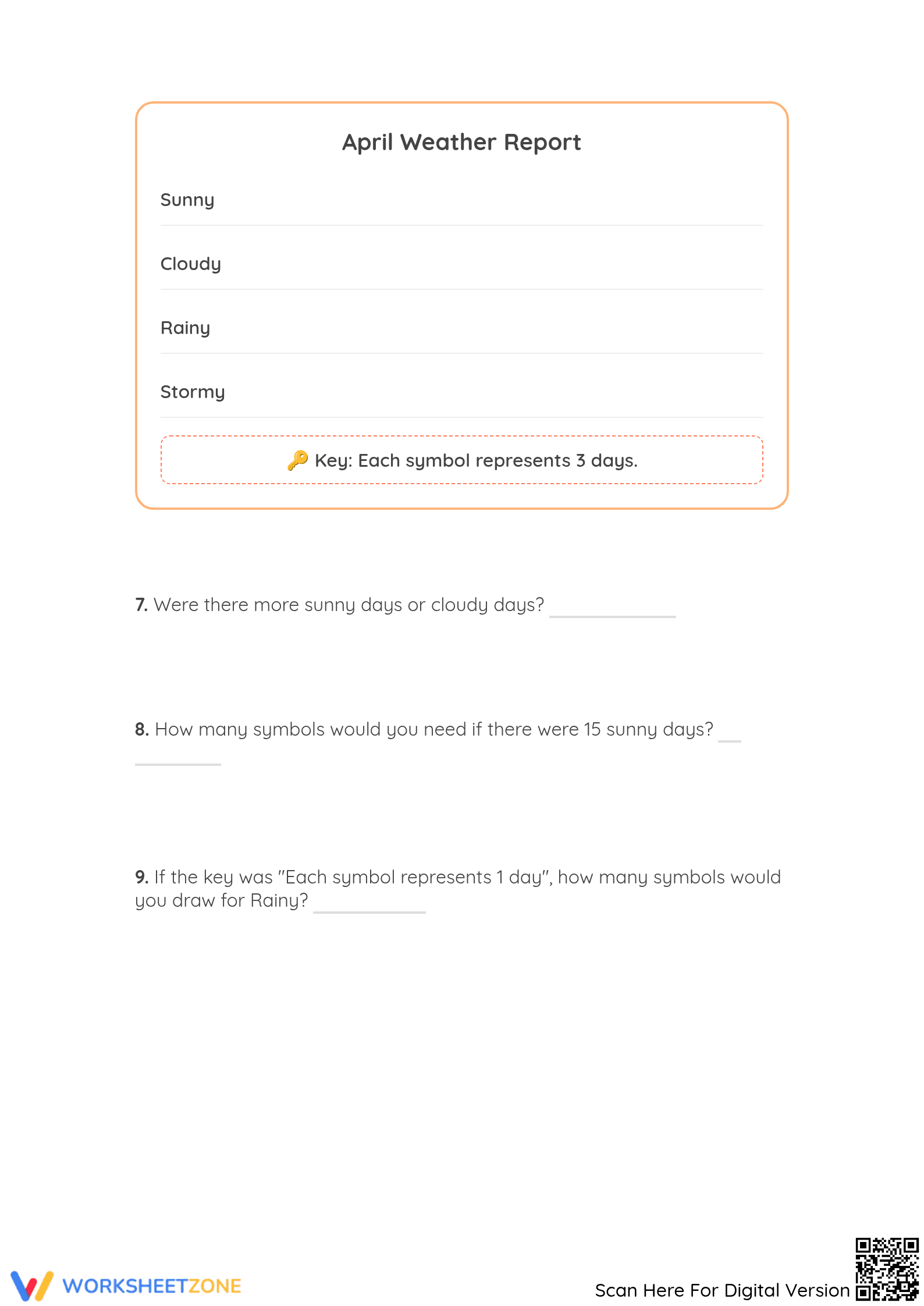

Printable Pictograph Worksheet | Grade 2 Math Guide
Paste this activity's link or code into your existing LMS (Google Classroom, Canvas, Teams, Schoology, Moodle, etc.).
Students can open and work on the activity right away, with no student login required.
You'll still be able to track student progress and results from your teacher account.
Mastering Data with Pictures
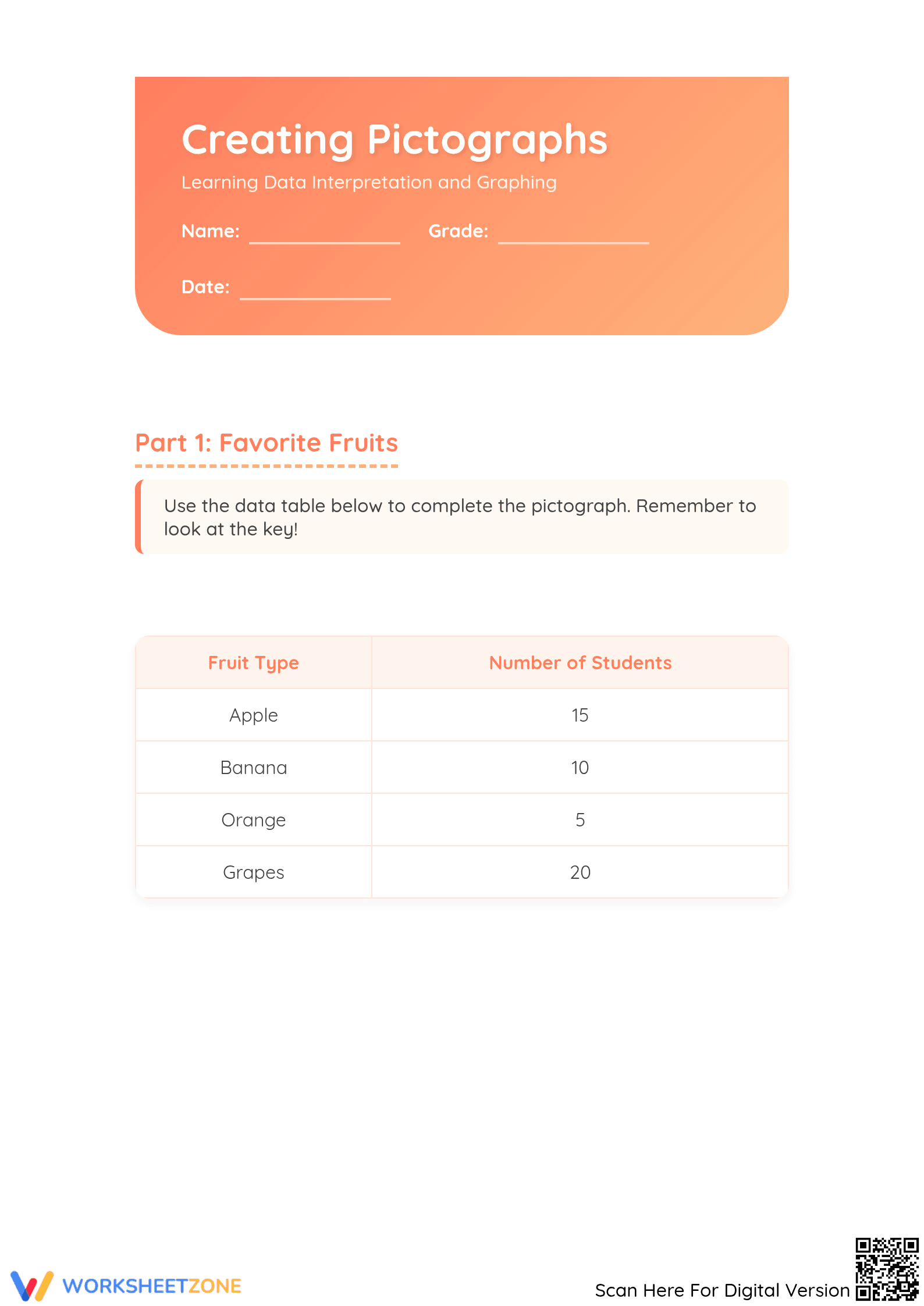
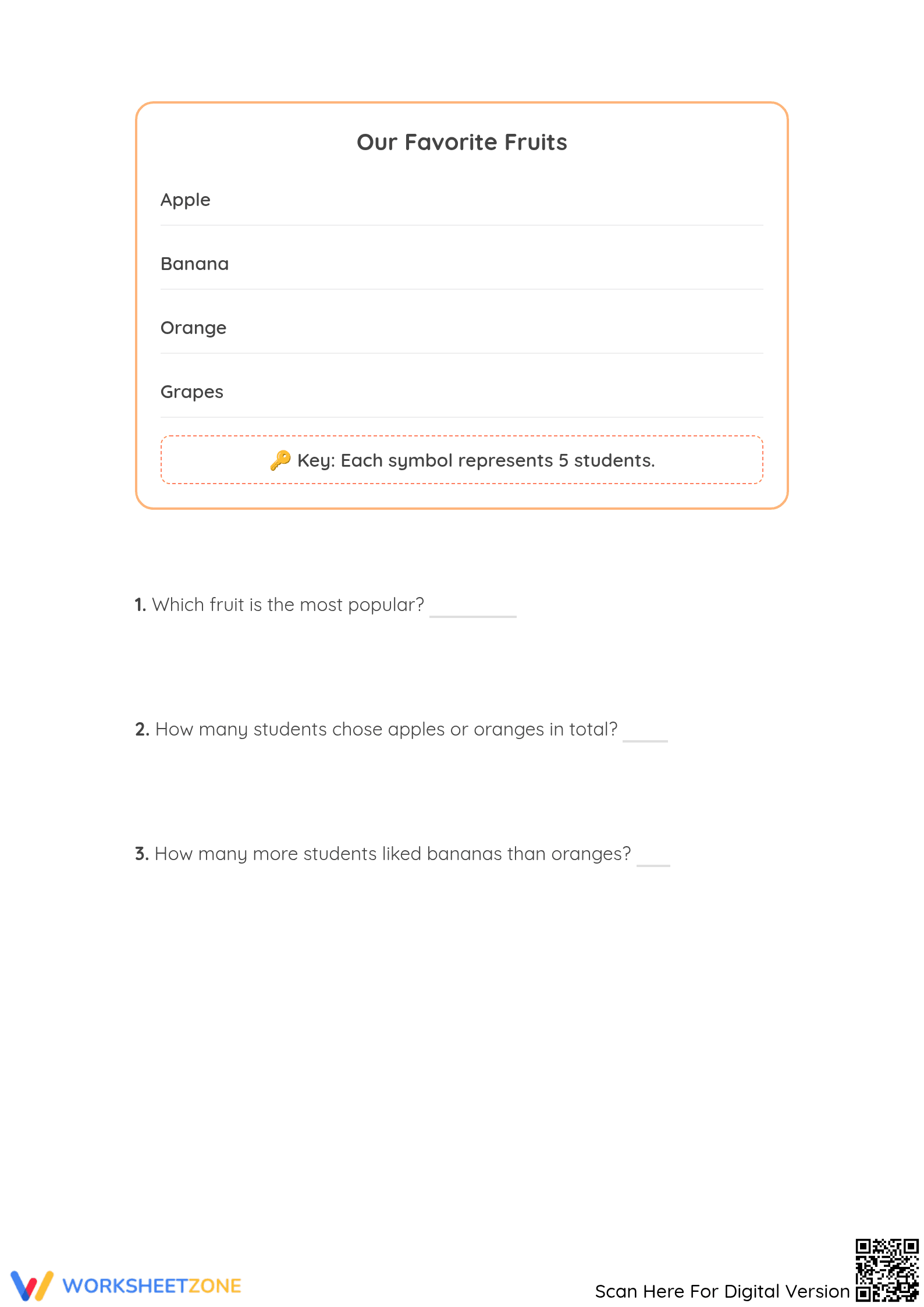
This worksheet provides a complete and focused opportunity for second-grade students to master the skill of creating pictographs. It walks learners through the process of taking a simple data set and translating it into a clear, organized picture graph. Students will practice reading tally charts and then use the information to draw the correct number of symbols, reinforcing one-to-one correspondence and basic data analysis skills in a visual format.
At a Glance
- Grade: 2 · Subject: Math
- Standard:
CCSS.MATH.CONTENT.2.MD.D.10— Represent and interpret data by drawing a picture graph.- Skill Focus: Creating Pictographs
- Format: 5 pages · 4 problems · Answer key included · PDF
- Best For: Independent practice, math centers, or homework.
- Time: 20–30 minutes
What's Inside
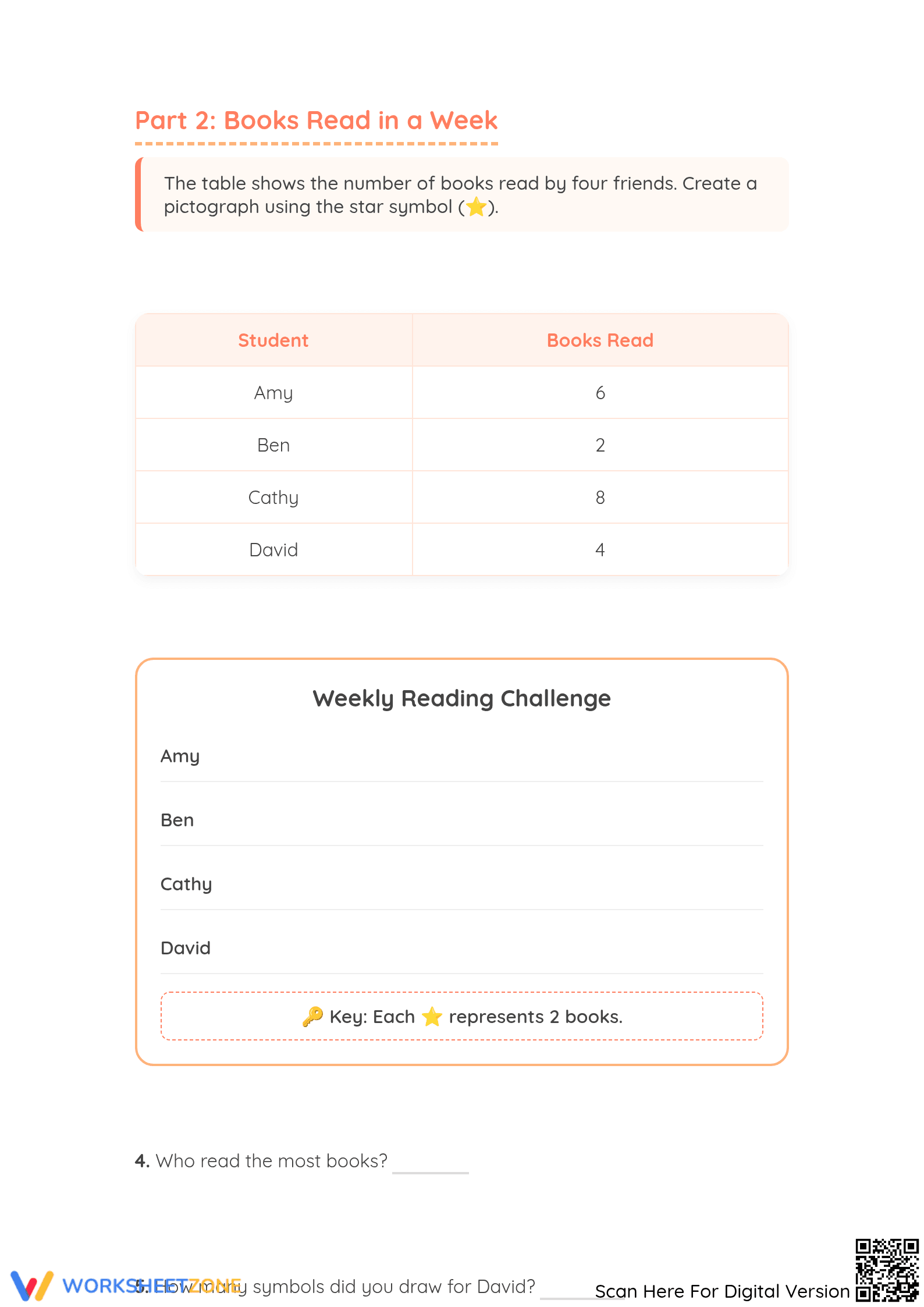
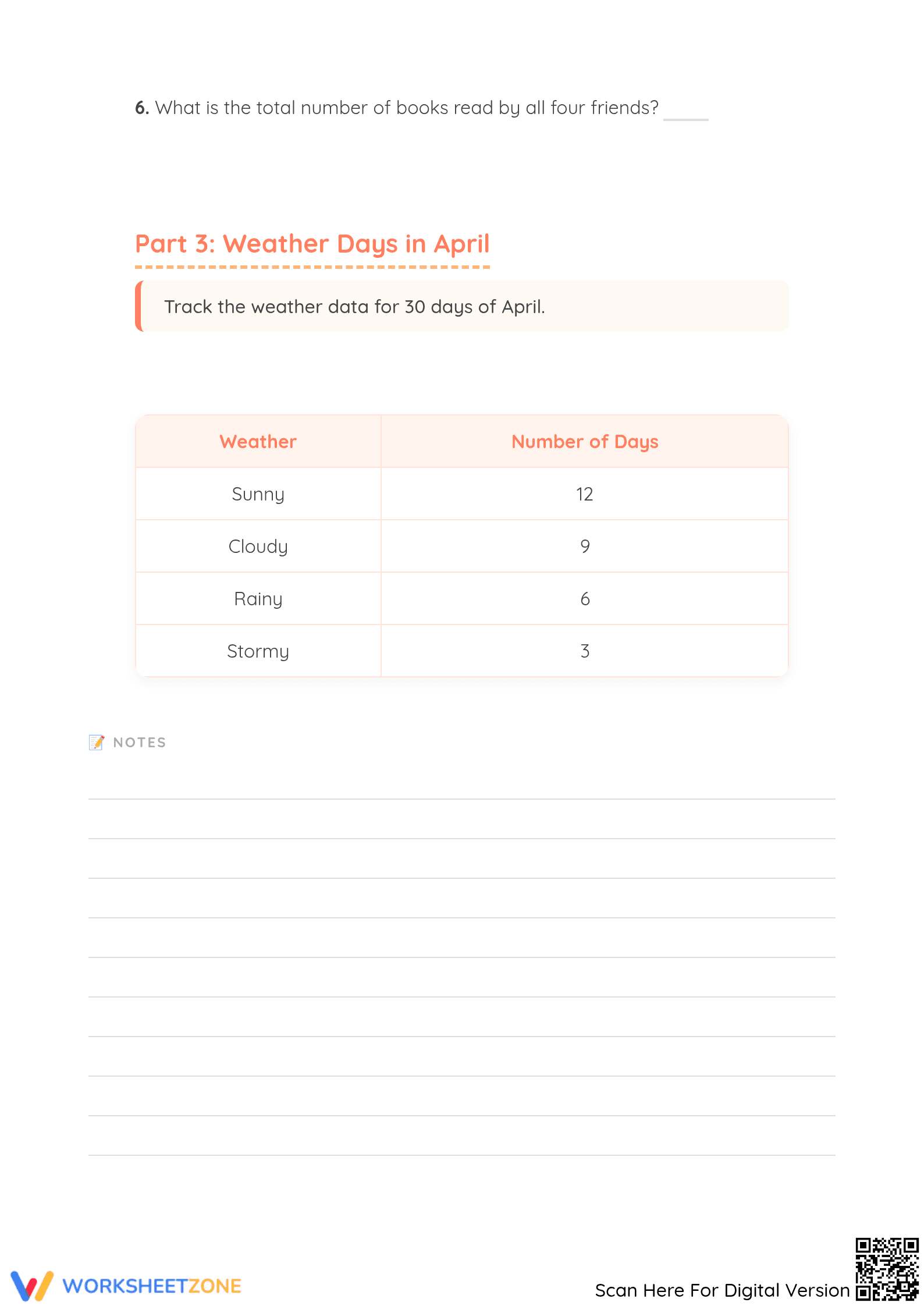
This five-page resource offers a clear, easy-to-use structure. It includes a worked example on the first page, followed by three pages each containing a unique data set for students to complete pictographs from tally marks. A comprehensive answer key is provided on the final page for quick grading or self-checking.
Skill Progression
The worksheet uses a gradual-release model to build student confidence. It progresses from guided practice with clear instructions and a straightforward data set, through two supported practice problems with varied scenarios, to a final independent practice task. This structure ensures students master creating pictographs from data tables with increasing autonomy.
Standards Alignment
Directly aligned with CCSS.MATH.CONTENT.2.MD.D.10, this worksheet focuses on students' ability to "draw a picture graph... to represent a data set with up to four categories." This resource specifically targets the picture graph component, providing ready-to-use standard codes for lesson plans or curriculum mapping.
How to Use It
This versatile resource can be used at multiple points in an instructional sequence. It serves as an excellent independent practice activity after a whole-group lesson on creating pictographs. It can also be placed in a math center for students to complete in small groups or used as a formative assessment tool. To assess understanding, observe whether students are correctly transferring the quantity from the tally chart to the correct number of pictures on the graph. Most students will complete the worksheet in 20 to 30 minutes.
Who It's For
This worksheet is designed for second-grade students who are being introduced to data and graphing. It is also suitable for third-grade students who may need a review of the fundamentals before moving on to more complex graphs. The clear layout and visual nature of the tasks make it accessible for diverse learners. For a complete lesson, pair this worksheet with a hands-on activity where students collect their own data, such as polling classmates on their favorite color.
This resource supports data literacy development, aligning with Common Core State Standards. By engaging in focused practice to create picture graphs from multiple categories of data, students build a foundational understanding of how graphs organize information. This is a crucial skill for interpreting data in both academic and real-world contexts, and it solidifies the procedure of translating numerical data into symbolic representations.


