


























Views
Downloads
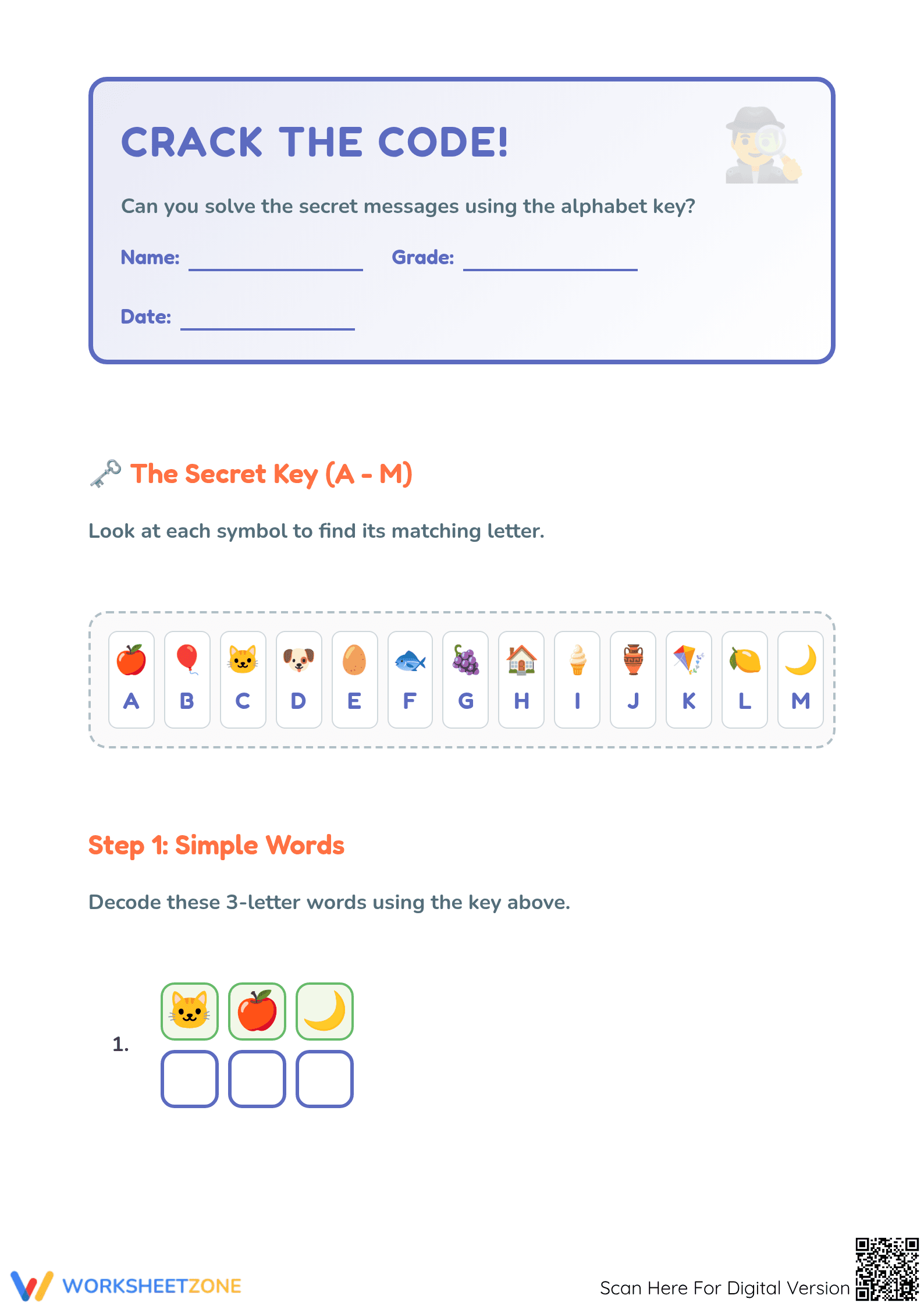
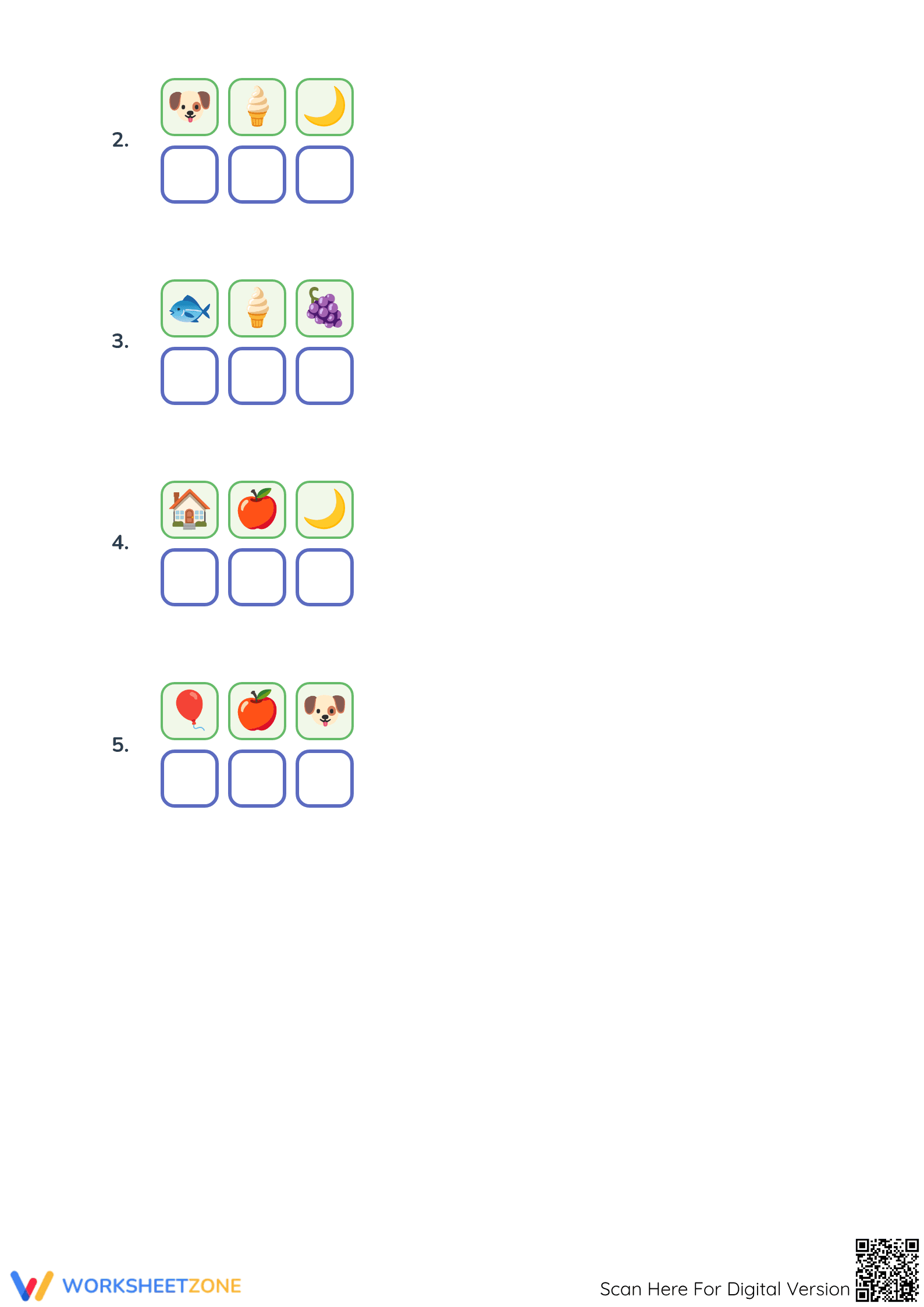
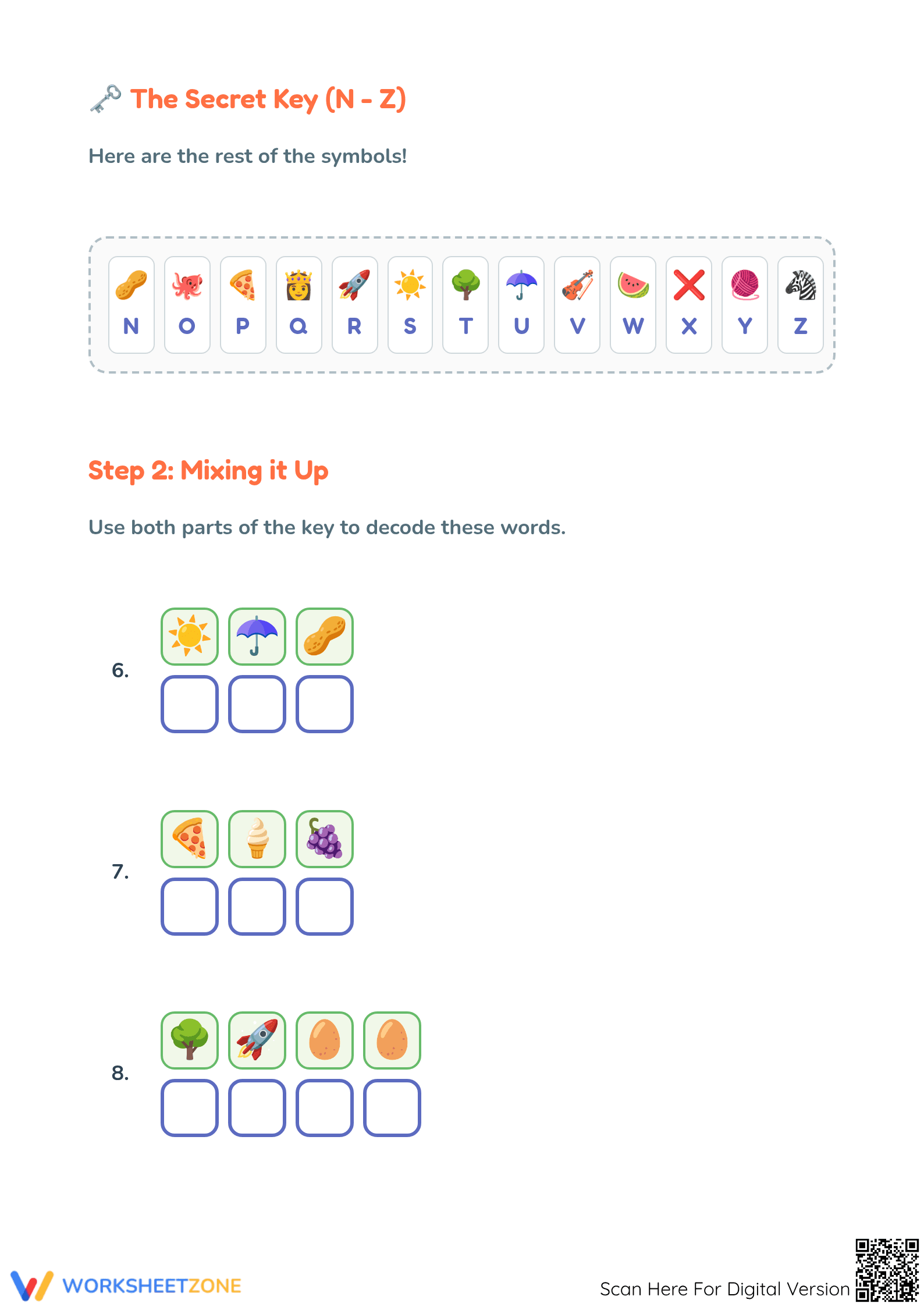
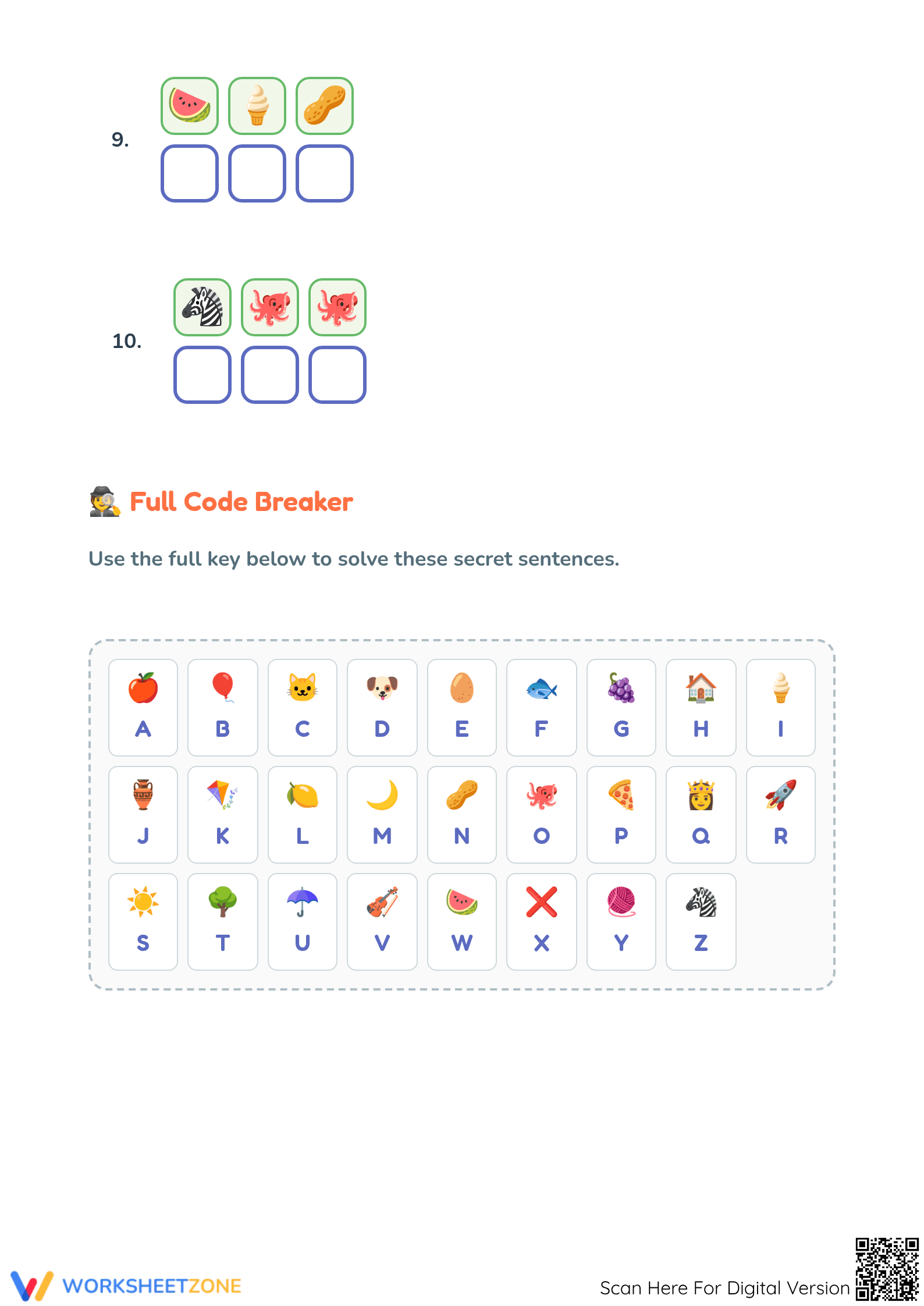

Grade 1 Crack The Code — Printable No-Prep Worksheet
Paste this activity's link or code into your existing LMS (Google Classroom, Canvas, Teams, Schoology, Moodle, etc.).
Students can open and work on the activity right away, with no student login required.
You'll still be able to track student progress and results from your teacher account.
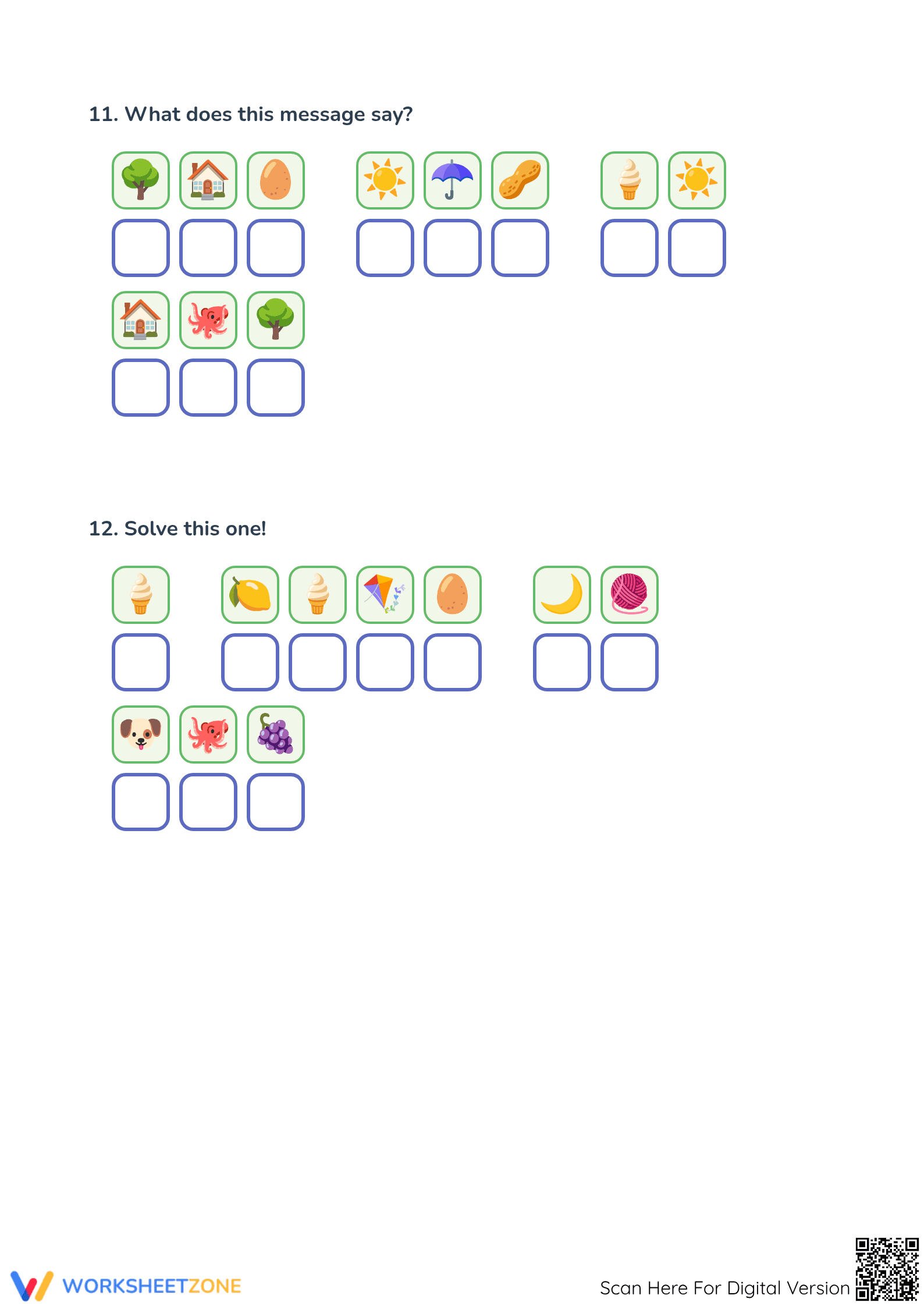
This Grade 1 Crack the Code worksheet transforms spelling practice into an engaging mystery-solving mission. Students use a visual secret key to translate symbols into letters, reinforcing letter-sound correspondence. By decoding twelve distinct tasks, learners build the phonemic awareness necessary for fluent reading and accurate spelling outcomes.
At a Glance
- Grade: 1 · Subject: English
- Standard:
CCSS.ELA-LITERACY.L.1.2.D— Spell untaught words phonetically drawing on phonemic awareness and spelling conventions- Skill Focus: Symbol-to-letter decoding
- Format: 5 pages · 12 problems · Answer key included · PDF
- Best For: Independent spelling practice and early finishers
- Time: 15–25 minutes
What's Inside
The 5-page PDF packet features a structured progression of decoding challenges. The first pages focus on simple words using a primary alphabet key, while subsequent pages introduce secondary keys to expand vocabulary. The final page challenges students with full-sentence "Code Breakers." Each page includes clear visual keys and designated response boxes.
Zero-Prep Workflow
This resource is designed for maximum efficiency. 1. Print (1 minute): Select pages and send them to the printer; the high-contrast design ensures clarity. 2. Distribute (1 minute): Hand out with pencils; the self-explanatory format requires minimal instruction. 3. Review (2 minutes): Use the included answer key for rapid grading. Total teacher preparation time is under two minutes.
Standards Alignment
The primary alignment is CCSS.ELA-LITERACY.L.1.2.D, requiring students to spell untaught words phonetically. This worksheet forces students to isolate phonemes represented by symbols, reinforcing spelling logic. It also supports CCSS.ELA-LITERACY.RF.1.3 phonics skills. Both standard codes can be copied directly into lesson plans, IEP goals, or district curriculum mapping tools.
How to Use It
Use this as a focused spelling center activity. The gamified format keeps engagement high while students practice letter formation and word building. Alternatively, assign it as a high-interest morning work task. Observe if students fluidly move between the key and response boxes to gauge visual processing. Completion typically takes 20 minutes.
Who It's For
This is tailored for Grade 1 but works for Kindergarteners or Grade 2 refreshers. It serves as an excellent tier-two intervention for students struggling with letter-sound retrieval. Pair this with a phonics anchor chart or a decodable reader to bridge the gap between spelling practice and connected text reading.
The Crack The Code worksheet aligns with research emphasizing phonological processing in literacy. According to Fisher & Frey (2014), purposeful practice that isolates phonics skills—like decoding symbols—supports the transition to fluent reading. By requiring students to map visual markers to phonemes, the 12 tasks reinforce neural pathways responsible for orthographic mapping. This approach mirrors recommendations in the RAND AIRS 2024 report, which advocates for high-engagement, structured literacy tools that minimize teacher load while maximizing student time-on-task. The inclusion of the CCSS.ELA-LITERACY.L.1.2.D standard ensures the activity remains grounded in academic expectations. This evidence-based design makes it a reliable choice for teachers seeking to improve spelling accuracy through printable, no-prep materials that students enjoy completing independently. The 5-page structure allows for distributed practice over multiple sessions, further cementing the spelling conventions taught.


