


























0
Views
0
Downloads

0.0
0
Save
0 Likes
Share
Counting Worksheet for Kids
0 Views
0 Downloads
Paste this activity's link or code into your existing LMS (Google Classroom, Canvas, Teams, Schoology, Moodle, etc.).
Students can open and work on the activity right away, with no student login required.
You'll still be able to track student progress and results from your teacher account.
Information
Description
What It Is:
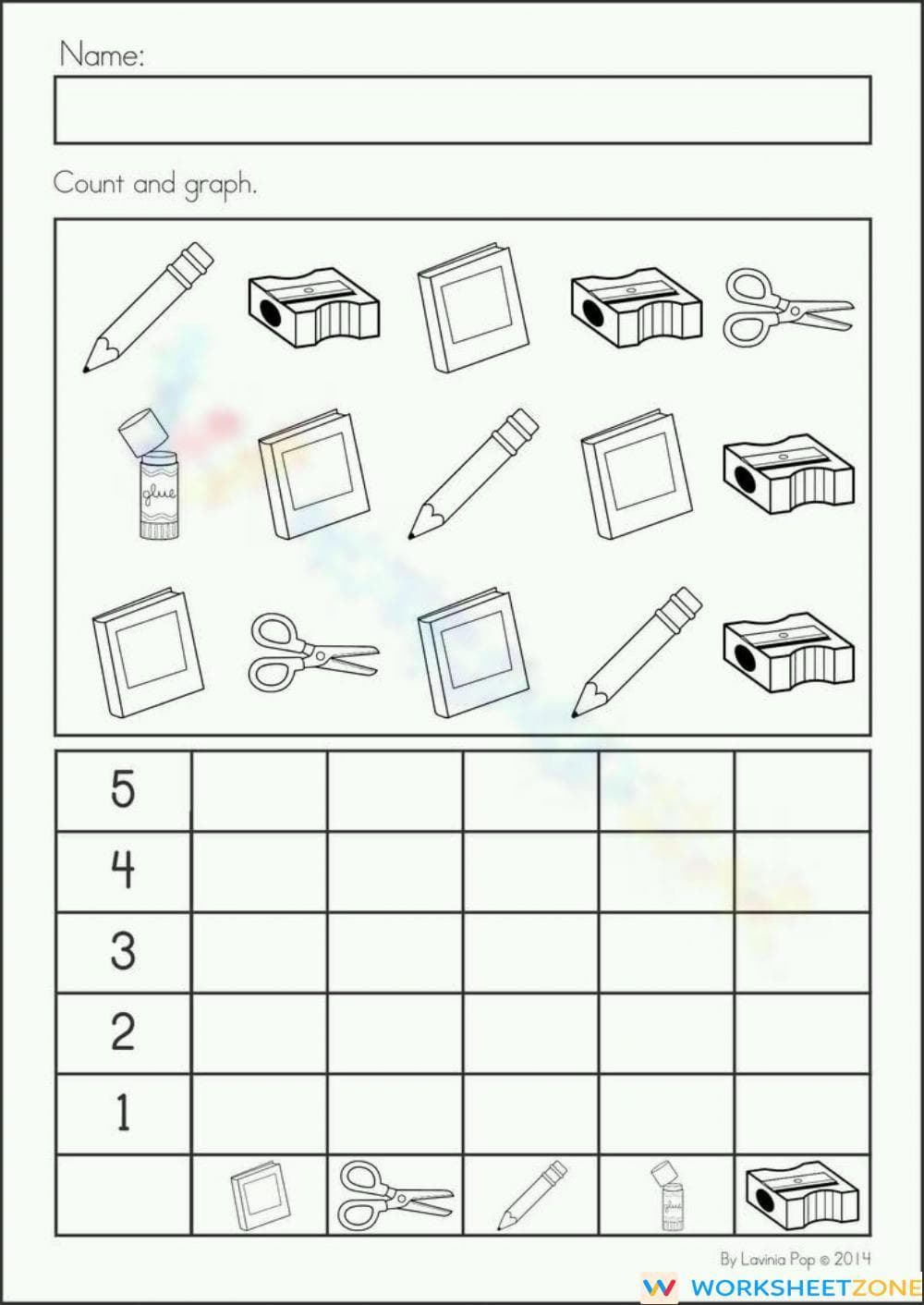
This is a printable worksheet titled 'Count and Graph'. It features a section for a student's name and a box containing outlined images of school supplies: pencils, pencil sharpeners, books, glue, and scissors. Below the images is a blank bar graph with the numbers 1 through 5 on the y-axis. The x-axis is divided into columns to represent each school supply.
Grade Level Suitability:
Suitable for Kindergarten and 1st Grade. The activity involves basic counting and graphing skills, which are typically introduced in these grades. The simple images and clear layout make it accessible for young learners.
Why Use It:
This worksheet helps students develop counting skills, data representation skills (graphing), and visual discrimination. It also reinforces one-to-one correspondence as students count each object and mark it on the graph.
How to Use It:
First, have the student count each type of school supply in the box. Then, guide them to fill in the bar graph to represent the quantity of each item. For example, if there are three pencils, they should fill in the bar graph up to the number 3 in the pencil column.
Target Users:
This worksheet is ideal for kindergarten and first-grade students learning basic counting and graphing skills. It's also suitable for teachers and parents looking for simple, engaging math activities.
This is a printable worksheet titled 'Count and Graph'. It features a section for a student's name and a box containing outlined images of school supplies: pencils, pencil sharpeners, books, glue, and scissors. Below the images is a blank bar graph with the numbers 1 through 5 on the y-axis. The x-axis is divided into columns to represent each school supply.
Grade Level Suitability:
Suitable for Kindergarten and 1st Grade. The activity involves basic counting and graphing skills, which are typically introduced in these grades. The simple images and clear layout make it accessible for young learners.
Why Use It:
This worksheet helps students develop counting skills, data representation skills (graphing), and visual discrimination. It also reinforces one-to-one correspondence as students count each object and mark it on the graph.
How to Use It:
First, have the student count each type of school supply in the box. Then, guide them to fill in the bar graph to represent the quantity of each item. For example, if there are three pencils, they should fill in the bar graph up to the number 3 in the pencil column.
Target Users:
This worksheet is ideal for kindergarten and first-grade students learning basic counting and graphing skills. It's also suitable for teachers and parents looking for simple, engaging math activities.


