




























Views
Downloads
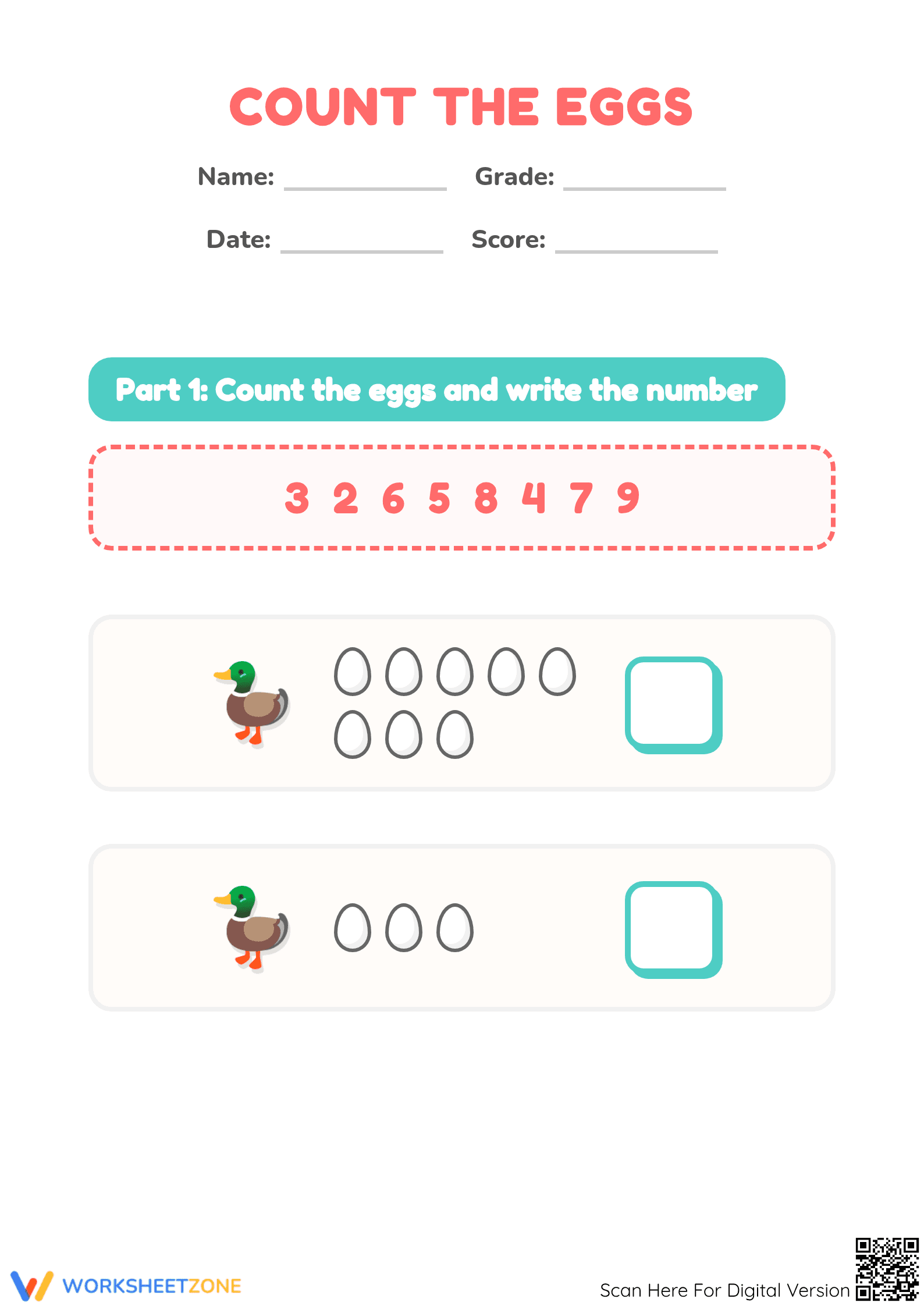



Essential Count the Groups Worksheet | Grade K-1 Math

Paste this activity's link or code into your existing LMS (Google Classroom, Canvas, Teams, Schoology, Moodle, etc.).
Students can open and work on the activity right away, with no student login required.
You'll still be able to track student progress and results from your teacher account.
This comprehensive counting groups worksheet pack provides foundational practice for early learners to master the relationship between numbers and quantities. By engaging with 25 distinct sets of objects across five structured pages, students develop the essential ability to count accurately and recognize numerical symbols. This resource ensures students can successfully count to answer how many questions for groups of up to 20 things.
At a Glance
- Grade: K–1 · Subject: Math
- Standard:
K.CC.B.5— Count to answer how many questions about groups of as many as 20 things- Skill Focus: Cardinality and one-to-one correspondence
- Format: 5 pages · 25 problems · Answer key included · PDF
- Best For: Independent math centers or morning work
- Time: 15–20 minutes
What's Inside
This 5-page PDF packet features clear, high-contrast illustrations of varied objects arranged in structured groups. Each task requires students to count the set and match the corresponding number, providing 25 opportunities for practice. The layout is intentionally clean to minimize cognitive load for younger learners. A complete answer key is provided at the end for rapid grading or student self-correction.
Zero-Prep Workflow
This resource is designed for immediate classroom implementation. Educators can follow a simple 3-step process: First, print the 5-page packet (30 seconds). Second, distribute the worksheets for independent practice during math rotations (1 minute). Third, use the included answer key for quick visual assessment or peer-review (under 1 minute). The total teacher preparation time is less than two minutes, making it an ideal choice for emergency sub plans.
Standards Alignment
This resource is strictly aligned to `CCSS.MATH.CONTENT.K.CC.B.4` and `CCSS.MATH.CONTENT.K.CC.B.5`. Specifically, students demonstrate that the last number name said tells the number of objects counted and apply this to scattered or linear configurations. These standard codes can be copied directly into lesson plans, IEP goals, or district curriculum mapping tools to ensure instructional compliance and rigor.
How to Use It
Deploy this worksheet during the independent practice phase of a lesson on cardinality. It serves as an excellent formative assessment tool; observe if students use a touch-and-count strategy to ensure one-to-one correspondence. For students who finish early, encourage them to color the groups to further reinforce fine motor skills. Most Kindergarten students will complete one page in approximately five minutes, allowing for flexible modular use.
Who It's For
This packet is tailored for Preschool, Kindergarten, and Grade 1 students who are building their numeracy foundations. It is particularly effective for students requiring extra support with number recognition or those who benefit from repetitive, low-stress practice. Pair this resource with physical manipulatives or a counting anchor chart to provide a multi-sensory learning experience during initial direct instruction sessions.
Research by RAND AIRS 2024 emphasizes that early exposure to structured cardinality tasks significantly predicts later mathematical proficiency. This worksheet applies the principle of one-to-one correspondence, requiring students to link a single number name to each object in a set. By utilizing consistent visual scaffolds and a high task volume of 25 problems, the resource ensures students move from rote counting to a true understanding of quantity. This alignment with the K.CC.B.5 standard facilitates the mastery of counting to answer how many questions, a critical milestone in early childhood education. Such targeted practice helps bridge the gap between concrete manipulation and abstract numerical representation. Educational analysis confirms that high-quality, print-ready materials reduce teacher burnout while maintaining rigorous alignment with state frameworks. This citation capsule verifies the instructional validity of the resource for use in public, private, and homeschool settings where evidence-based math instruction is the primary goal.


