


























Views
Downloads
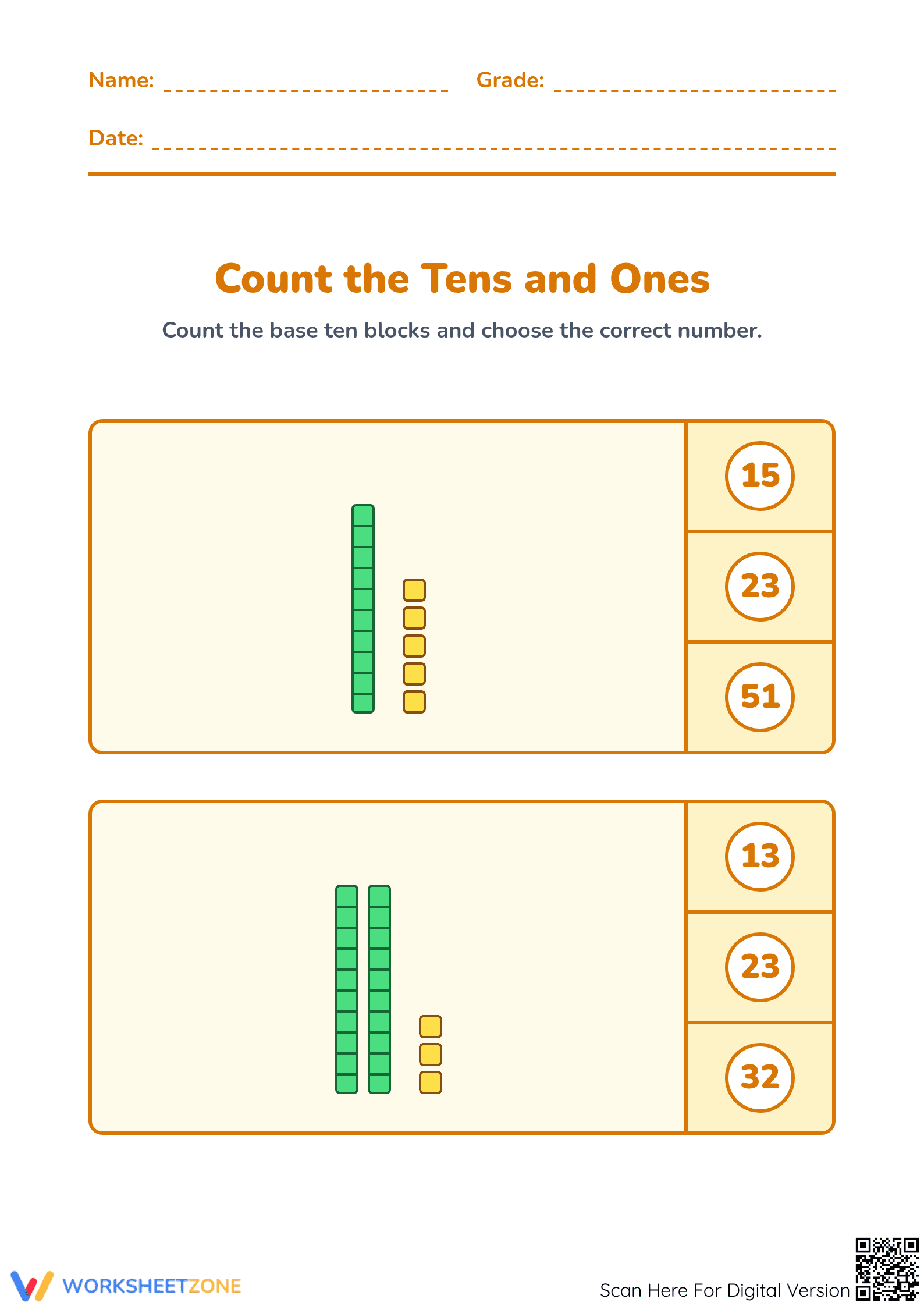
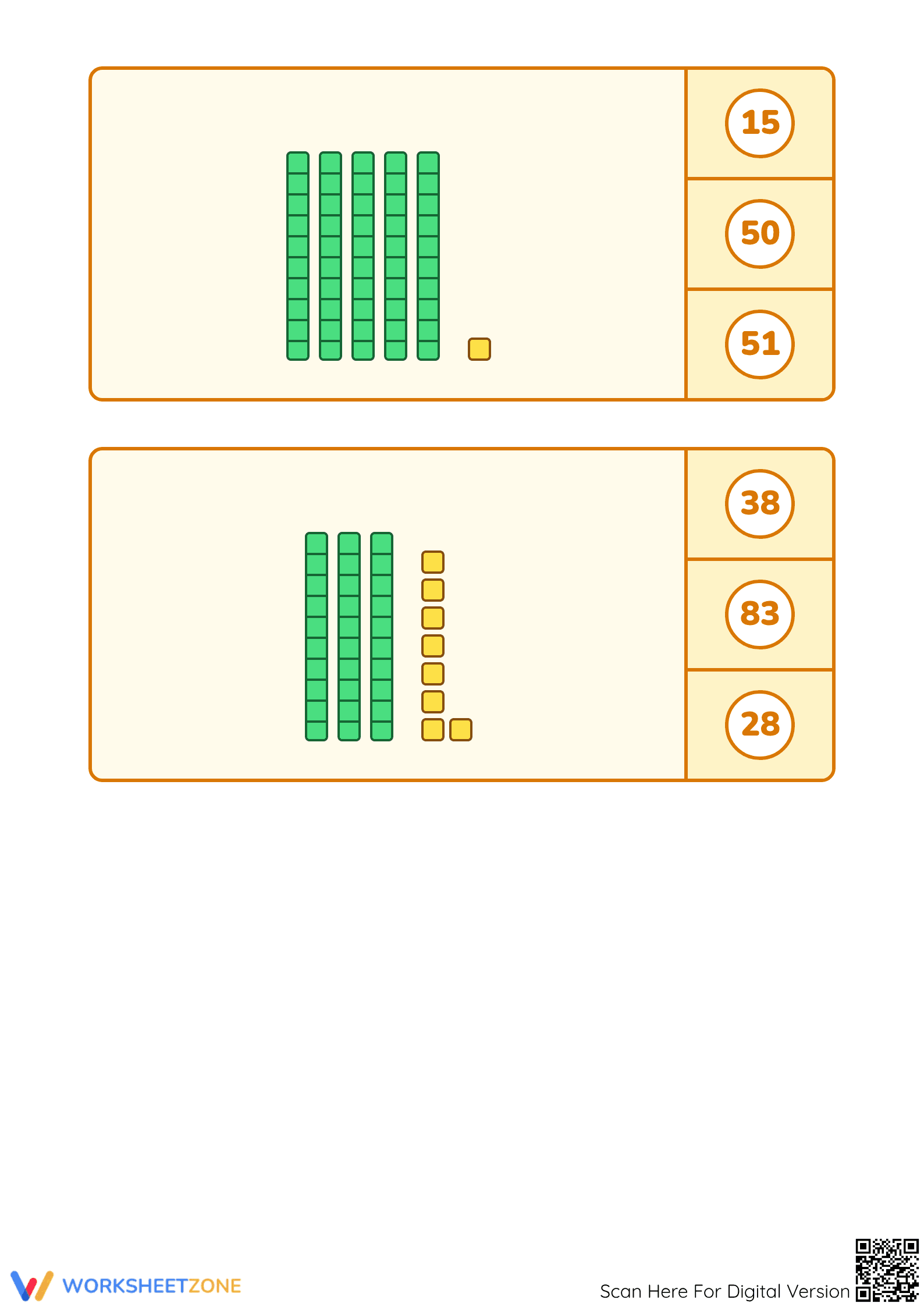
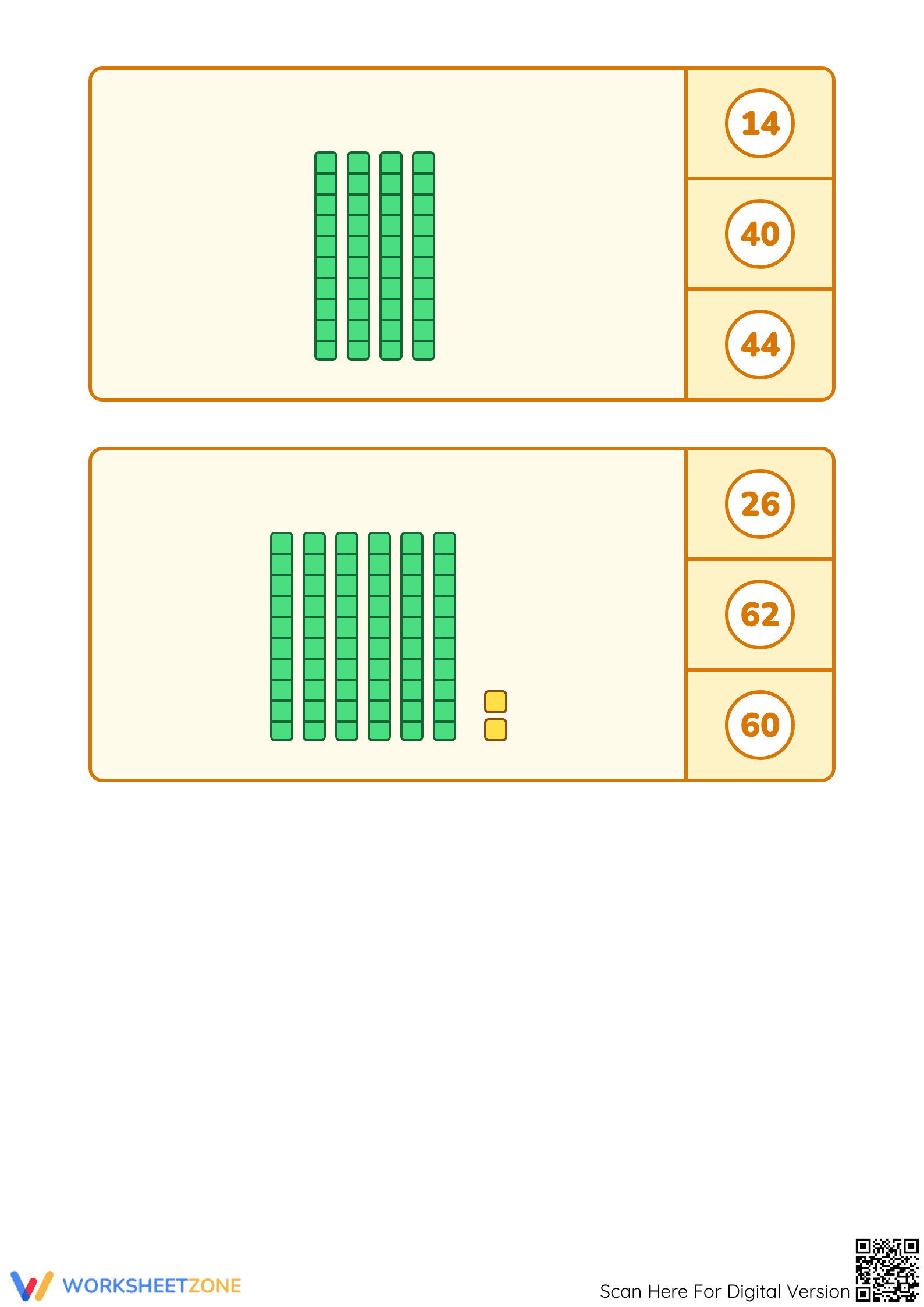
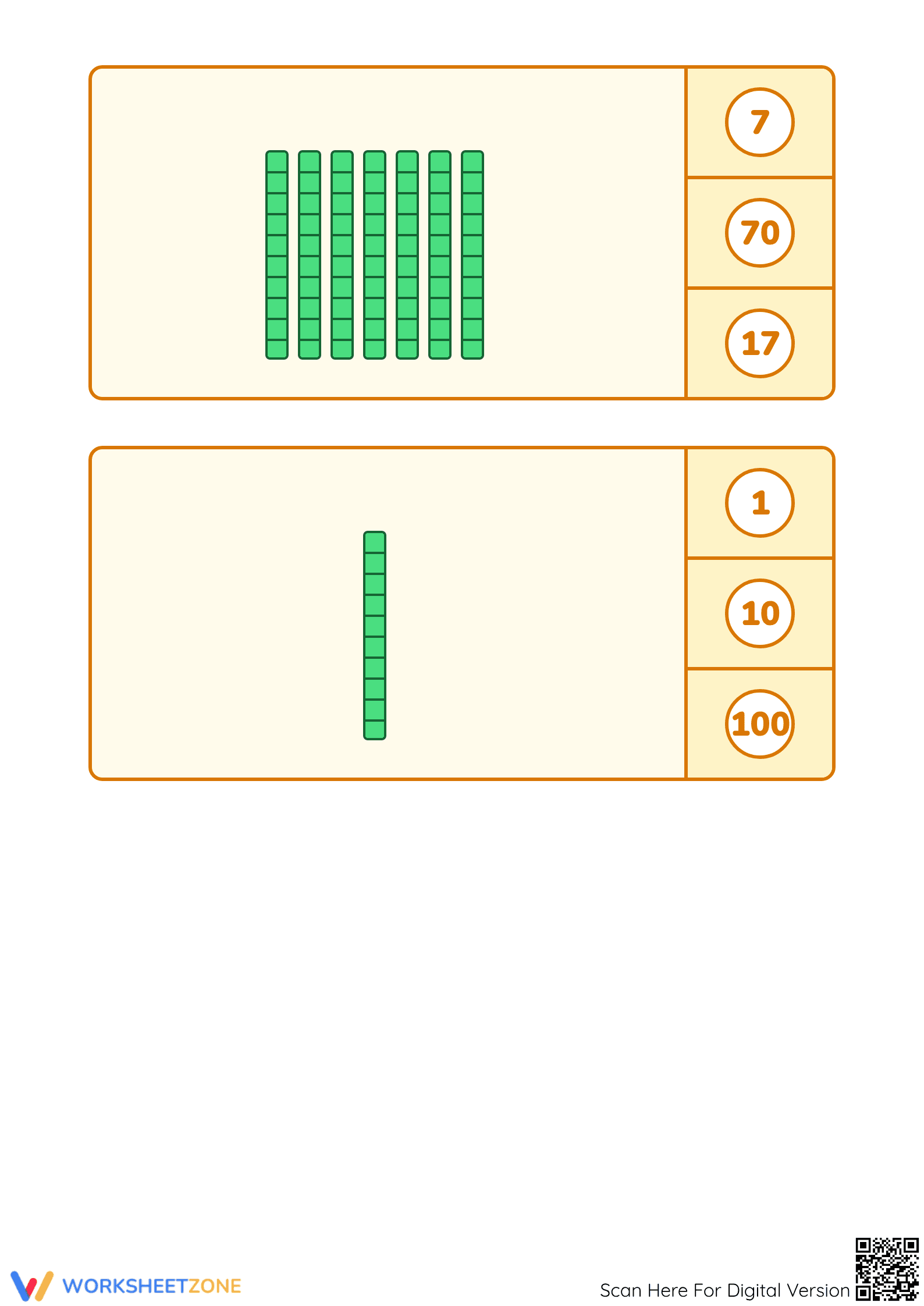

Printable Count in Tens Worksheet | Kindergarten Math
Paste this activity's link or code into your existing LMS (Google Classroom, Canvas, Teams, Schoology, Moodle, etc.).
Students can open and work on the activity right away, with no student login required.
You'll still be able to track student progress and results from your teacher account.
Mastering Skip Counting: Kindergarten Count in Tens Worksheet
This Kindergarten math resource focuses on skip counting by tens, a critical building block for base-ten understanding. It transitions learners from simple counting to efficient grouping, ensuring a solid foundation for future arithmetic operations.
At a Glance
- Grade: Kindergarten · Subject: Math
- Standard:
CCSS.MATH.CONTENT.K.CC.A.1— Skip count groups of objects by ten to find a total- Skill Focus: Skip counting by 10s
- Format: 5 pages · 8 problems · Answer key included · PDF
- Best For: Early morning math warm-ups
- Time: 10–15 minutes
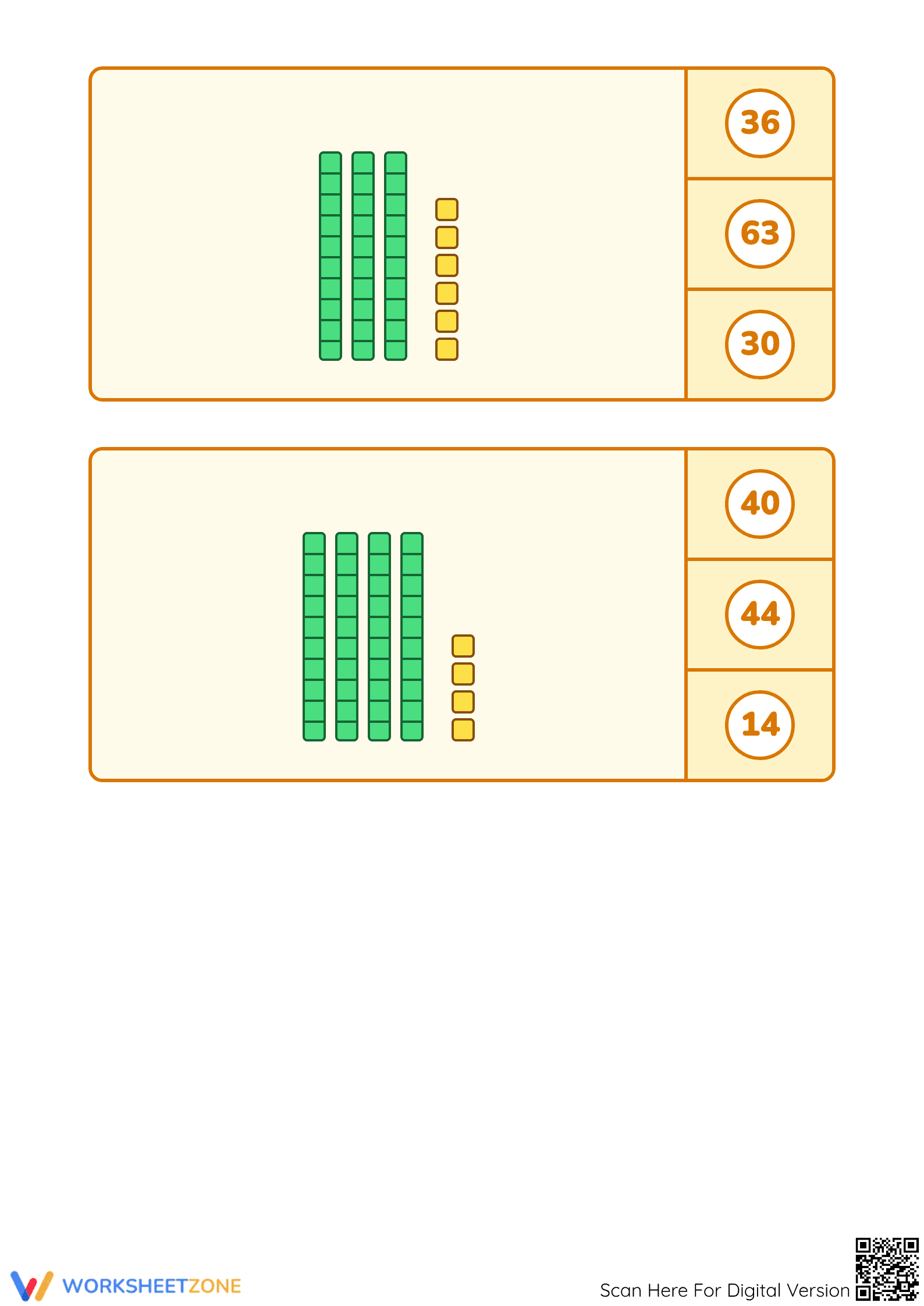
The PDF includes two distinct student practice pages and three pages of detailed answer keys for quick grading. Each student page features four matching tasks where learners must count the total number of objects shown in groups of ten and draw a line to the correct answer. The use of familiar imagery, such as fingers and rods, helps students visualize quantity before committing to the abstract number.
The instructional path in this resource follows a structured skill progression:
- Guided practice: The first page uses hand illustrations (5 fingers per hand) to help students count in increments of five and ten, providing 4 problems with high visual support.
- Supported practice: The second page introduces base-ten rods, transitioning students to a standard mathematical representation used in most core curricula with 4 matching tasks.
- Independent practice: Students work through the matching items autonomously to demonstrate their ability to count up to 80 by tens without verbal prompts.
This resource is fully aligned with CCSS.MATH.CONTENT.K.CC.A.1, which requires students to count to 100 by ones and by tens. The tasks specifically address the "by tens" component, ensuring students understand that each group represents a decade. This standard code can be copied directly into lesson plans, IEP goals, or district curriculum mapping tools.
To use this worksheet effectively, distribute it during a small-group rotation or as a morning warm-up activity to reinforce previous lessons. A great formative-assessment tip is to observe if students are counting every individual finger or if they have recognized the pattern of counting pairs of hands as "ten." Most students will complete each page in approximately 5 to 7 minutes.
This activity is tailored for Kindergarten students who have mastered counting to 10 by ones and are ready for grouping. It provides excellent differentiation for Preschool students who are advanced in number sense or for Grade 1 students requiring remedial skip-counting support. Pair this worksheet with a 100-chart or physical base-ten blocks for a multi-sensory learning experience.
According to the NAEP 2024 Mathematics Framework, the ability to count by tens is a foundational precursor to understanding place value and base-ten numeration in early childhood education. This CCSS.MATH.CONTENT.K.CC.A.1 aligned worksheet facilitates the cognitive transition from rote counting to grouping, which is essential for mental math efficiency. Research from the NAEP highlights that students who master skip-counting in Kindergarten demonstrate significantly higher proficiency in multi-digit addition and subtraction in later primary grades. By utilizing visual representations such as fingers and base-ten rods, the resource supports the concrete-representational-abstract (CRA) instructional sequence. This 8-task matching exercise provides a structured environment for students to verify their counts against symbolic numbers, reinforcing the connection between quantity and numeral. This instructional tool is designed to provide teachers with immediate evidence of student skip-counting mastery while reducing the cognitive load associated with more complex arithmetic tasks.


