


























Views
Downloads

Essential Count and Write Numbers Worksheet | Kindergarten
Paste this activity's link or code into your existing LMS (Google Classroom, Canvas, Teams, Schoology, Moodle, etc.).
Students can open and work on the activity right away, with no student login required.
You'll still be able to track student progress and results from your teacher account.
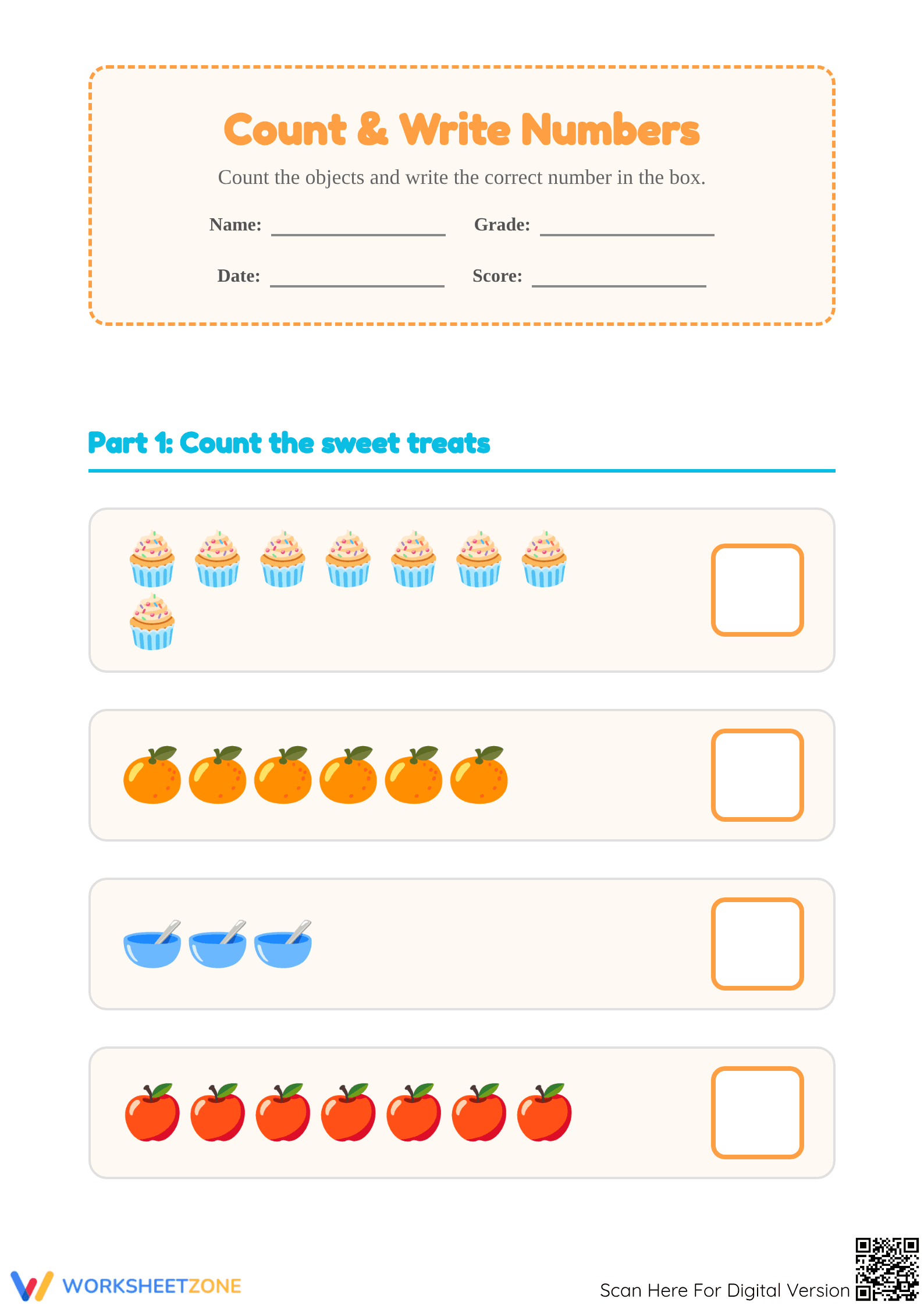
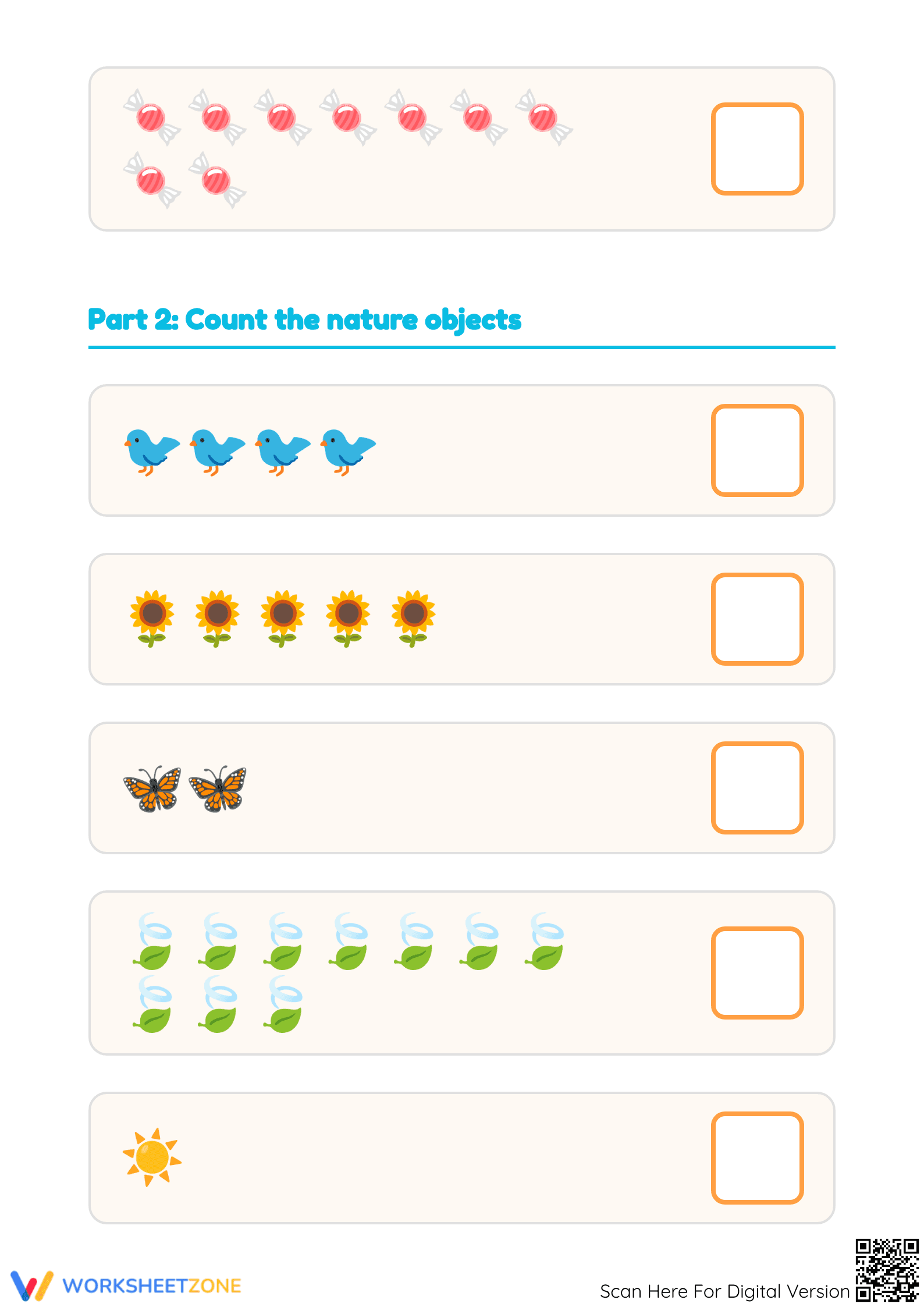
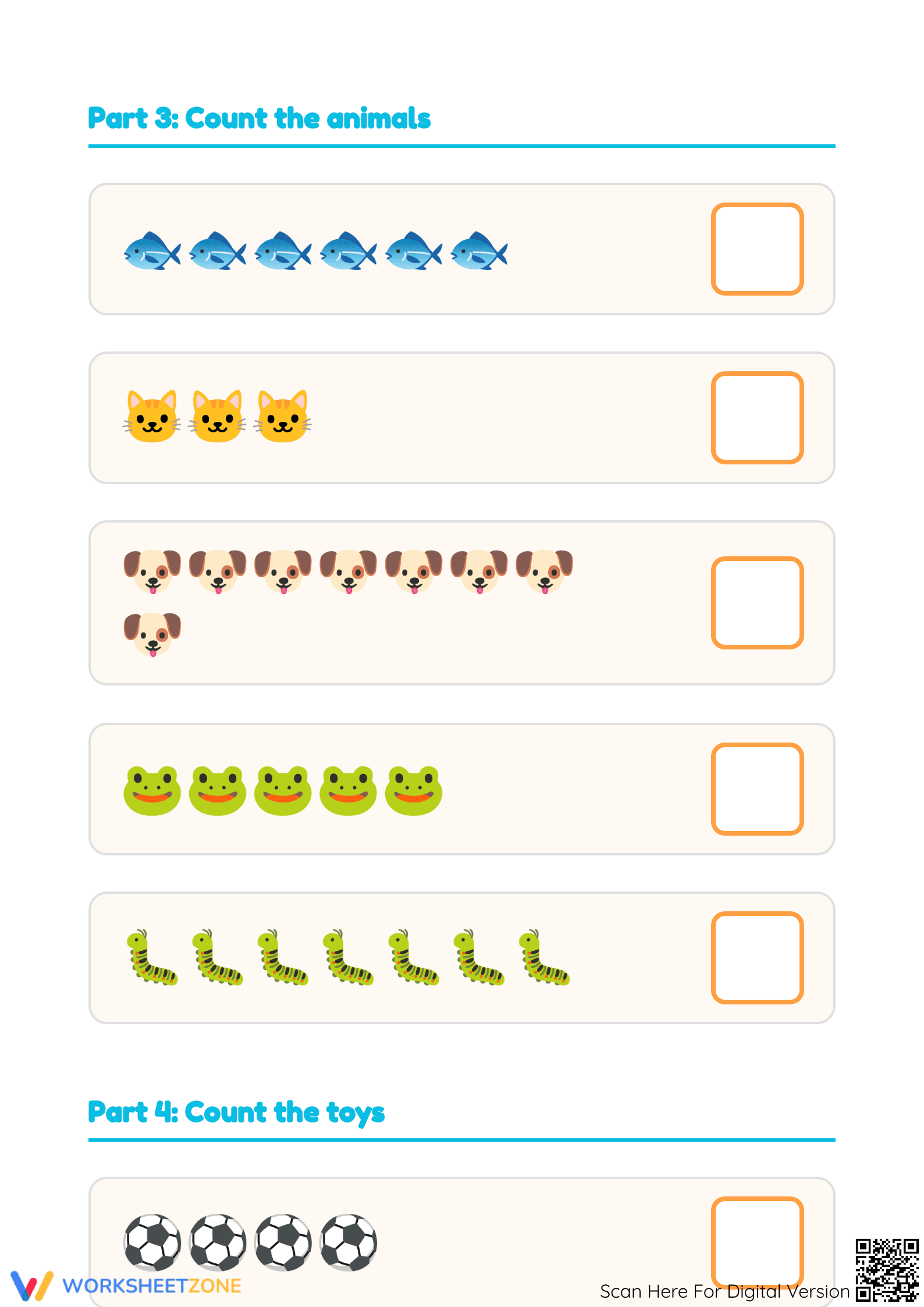
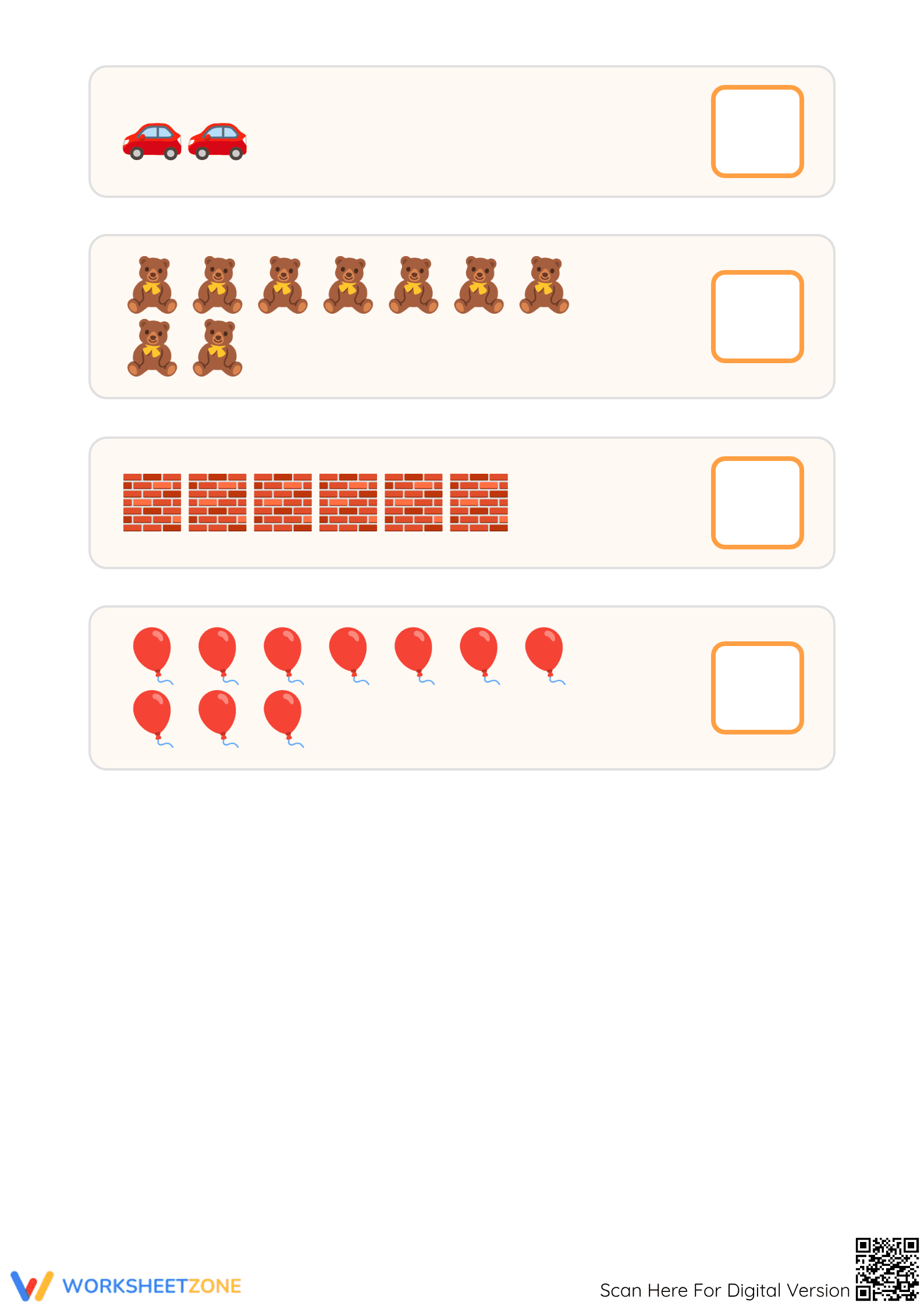
This Kindergarten counting and writing numbers worksheet provides students with a structured way to practice one-to-one correspondence and numeral formation. By engaging with clear visual sets, learners develop the foundational math skills necessary to represent a number of objects with a written numeral. This printable resource ensures that early learners transition smoothly from concrete counting to abstract symbolic representation through repetitive, high-success practice.
At a Glance
- Grade: Kindergarten · Subject: Math
- Standard:
CCSS.MATH.CONTENT.K.CC.B.4— Understand the relationship between numbers and quantities; connect counting to cardinality- Skill Focus: Counting objects and numeral writing
- Format: 4 pages · 20 problems · Answer key included · PDF
- Best For: Independent math centers or homework
- Time: 15–20 minutes
What's Inside: This comprehensive 4-page PDF contains 20 distinct counting tasks. Each page features clear, engaging graphics that students must count before recording the total in a designated numeral box. The layout includes ample space for young writers to practice their digits, and a full answer key is provided to facilitate rapid grading or student self-correction.
The zero-prep workflow for this resource is designed for maximum efficiency in the busy classroom. First, print the four pages in either color or grayscale (less than 1 minute). Second, distribute the packets to students for independent work during a math rotation or as a transition activity (under 1 minute). Finally, use the included answer key to review student progress and identify any counting errors or digit reversals (under 2 minutes). This streamlined process makes it an ideal choice for substitute plans or emergency math folders.
This worksheet is strictly aligned to CCSS.MATH.CONTENT.K.CC.B.4: "Understand the relationship between numbers and quantities; connect counting to cardinality." Students demonstrate mastery by accurately counting each object once and identifying the final number counted as the total quantity of the set. Both standard codes can be copied directly into lesson plans, IEP goals, or district curriculum mapping tools.
To use this in your classroom, assign it as a formative assessment after a whole-group lesson on counting to ten. As students work, circulate to observe if they are using a "touch and count" strategy to ensure accuracy, which is a key indicator of one-to-one correspondence development. Alternatively, use these pages during a small-group intervention for students who require additional practice with numeral writing and counting consistency. The predictable format helps build student confidence and independence.
This resource is specifically designed for preschool, kindergarten, and first-grade students who are mastering their foundational counting skills. It is particularly effective for learners who benefit from clear visual boundaries and consistent task structures. Pair this worksheet with physical manipulatives like counters or blocks to provide a multi-sensory experience for students who are still moving from concrete to representational math concepts.
The ability to connect a quantity to a written symbol is a critical predictor of later arithmetic success. This Count and Write Numbers worksheet addresses this milestone by requiring students to count sets and produce the corresponding numeral. Research by Fisher & Frey (2014) emphasizes that the gradual release of responsibility begins with focused practice that reinforces core skills like CCSS.MATH.CONTENT.K.CC.B.4. By providing 20 opportunities to count and record, this resource helps solidify the cardinality principle. Early exposure to these structured tasks reduces cognitive load during more complex operations. The use of clear, isolated sets prevents visual overwhelm and allows the student to focus entirely on the counting sequence and number formation. Teachers can use the resulting data to pinpoint specific digit reversals or counting gaps in the 1-20 range, ensuring that every student meets the rigorous demands of the Kindergarten math standards.


