


























Views
Downloads

Essential Fraction to Decimal Conversion Worksheet | Grade 7
Paste this activity's link or code into your existing LMS (Google Classroom, Canvas, Teams, Schoology, Moodle, etc.).
Students can open and work on the activity right away, with no student login required.
You'll still be able to track student progress and results from your teacher account.
This comprehensive 30-task worksheet equips Grade 7 students with the essential skills to convert fractions into their decimal equivalents. By bridging the gap between rational number representations, students develop a fluid understanding of how division transforms fractions into terminating or repeating decimals. This printable resource ensures mastery of foundational algebraic thinking and numerical precision.
At a Glance
- Grade: 7 · Subject: Math
- Standard:
CCSS.MATH.CONTENT.7.NS.A.2.D— Convert rational numbers to decimals using long division and identify repeating patterns- Skill Focus: Fraction to decimal conversion
- Format: 5 pages · 30 problems · Answer key included · PDF
- Best For: Individual practice or formative assessment
- Time: 40–50 minutes
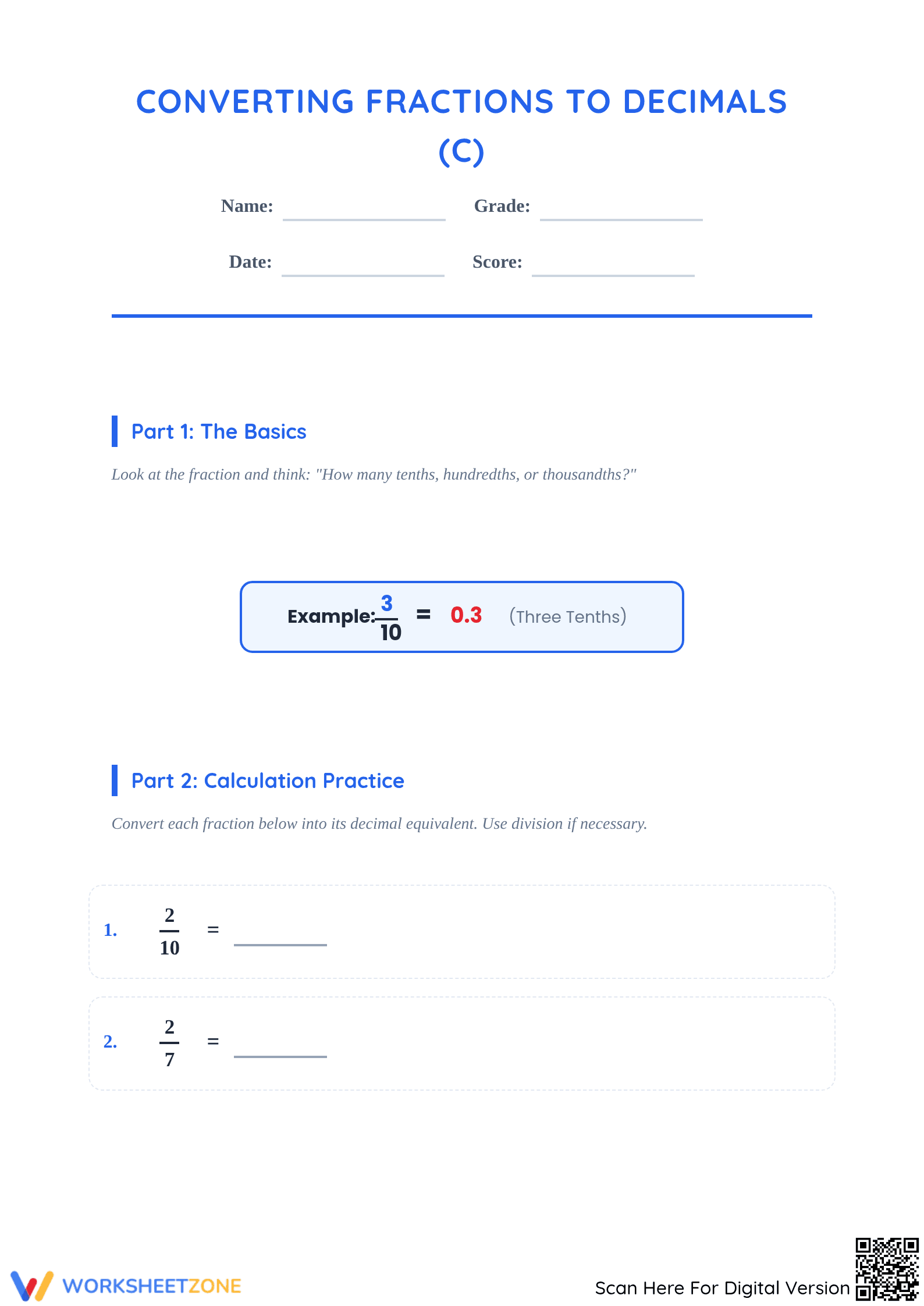
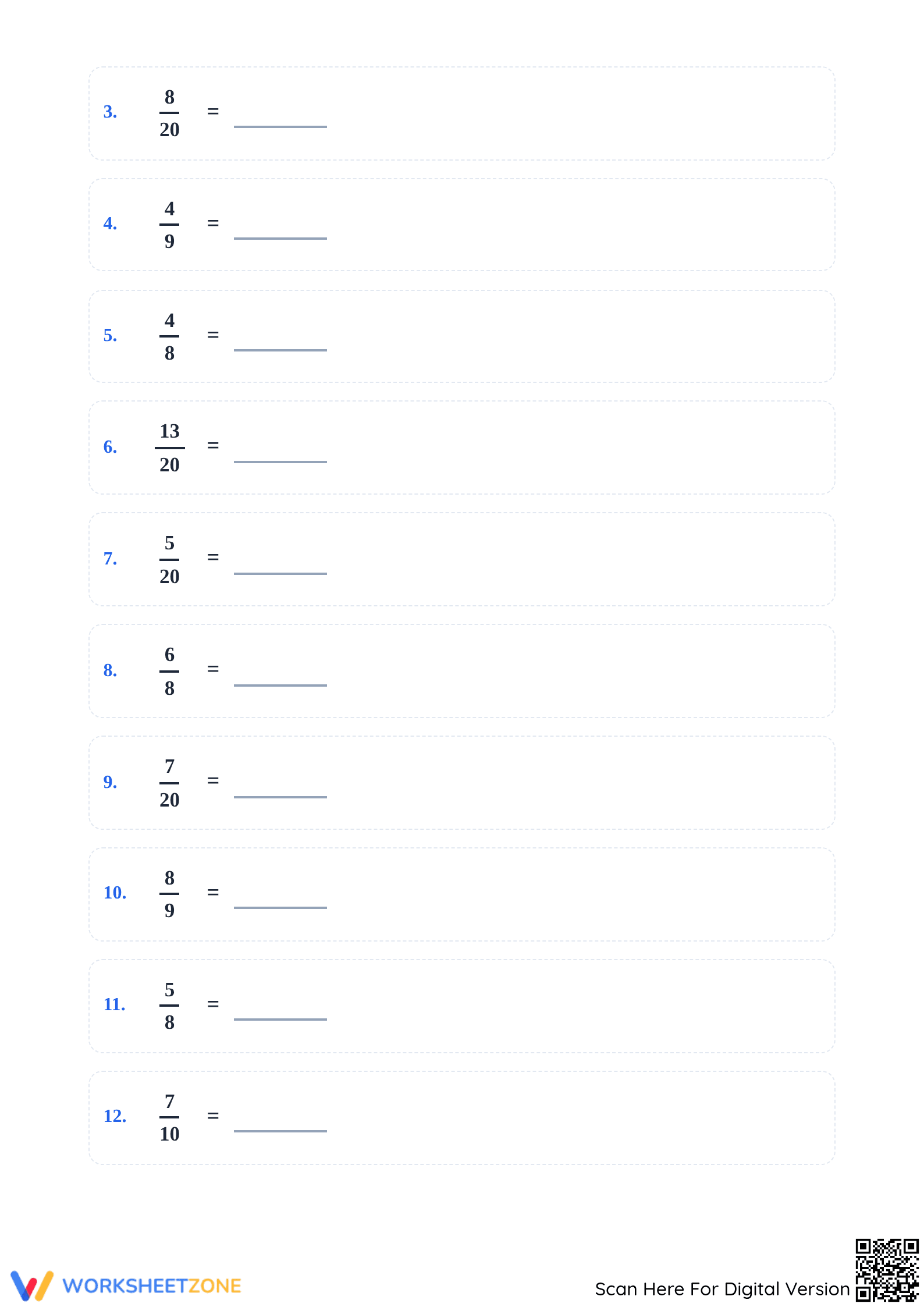
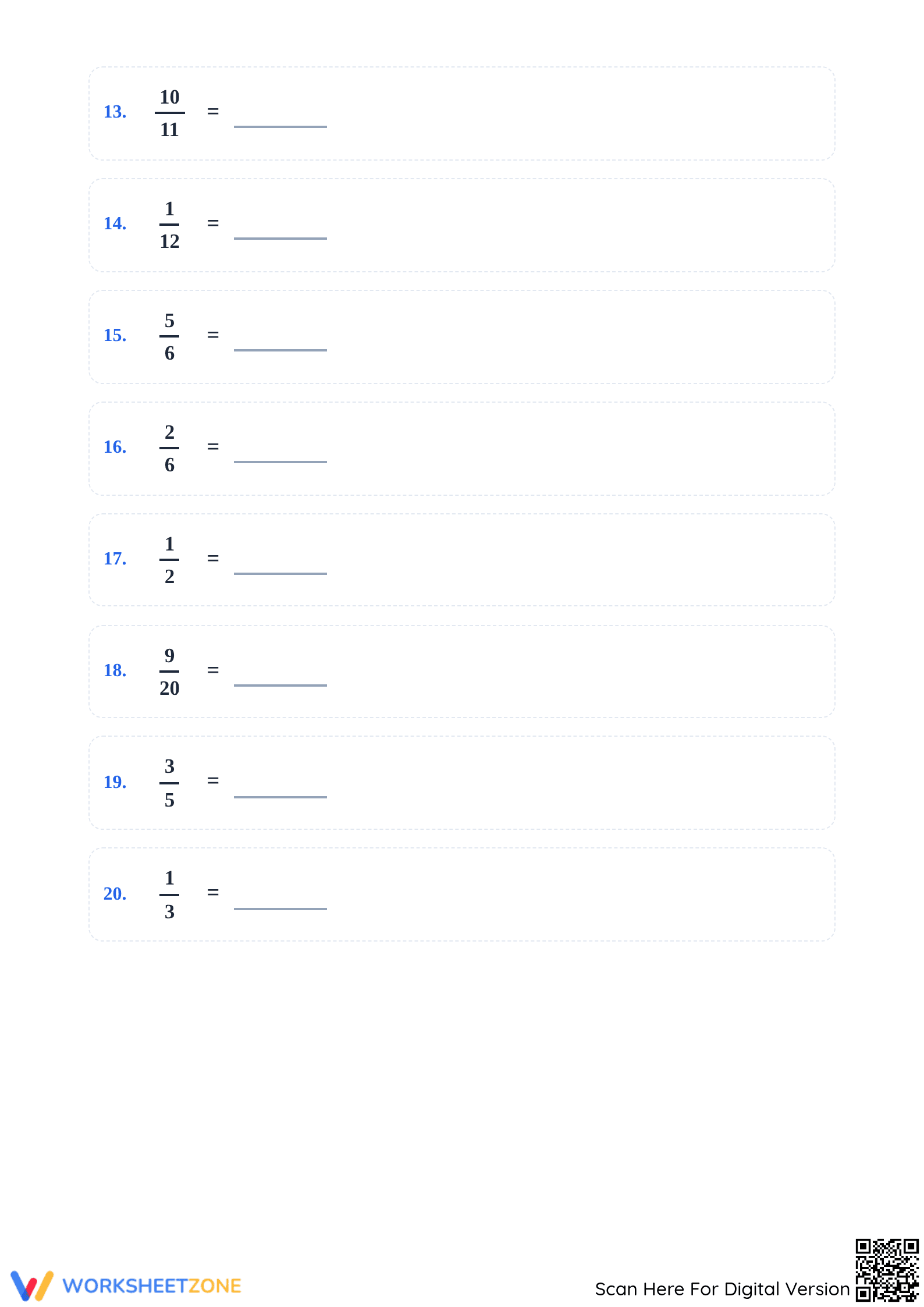
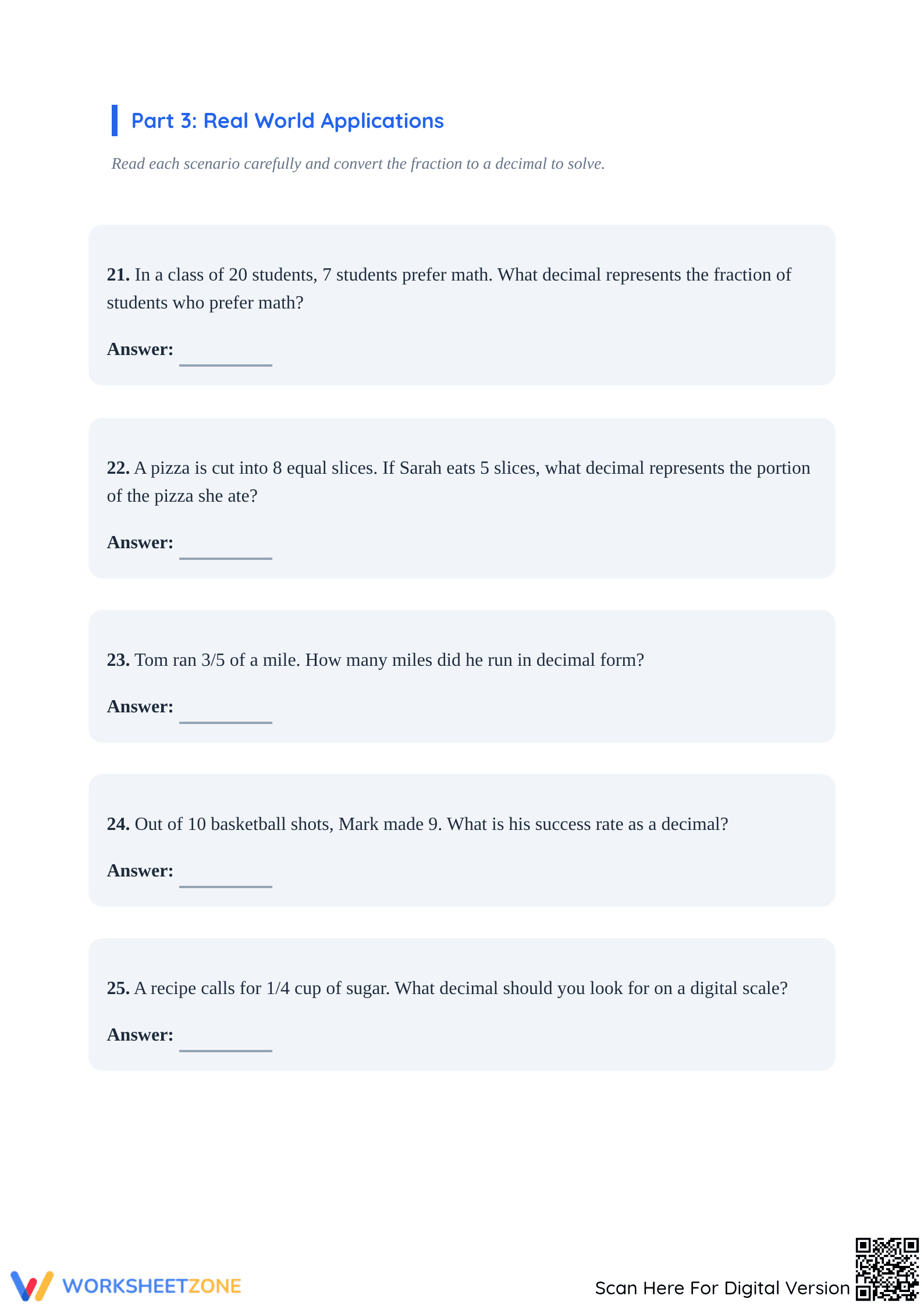
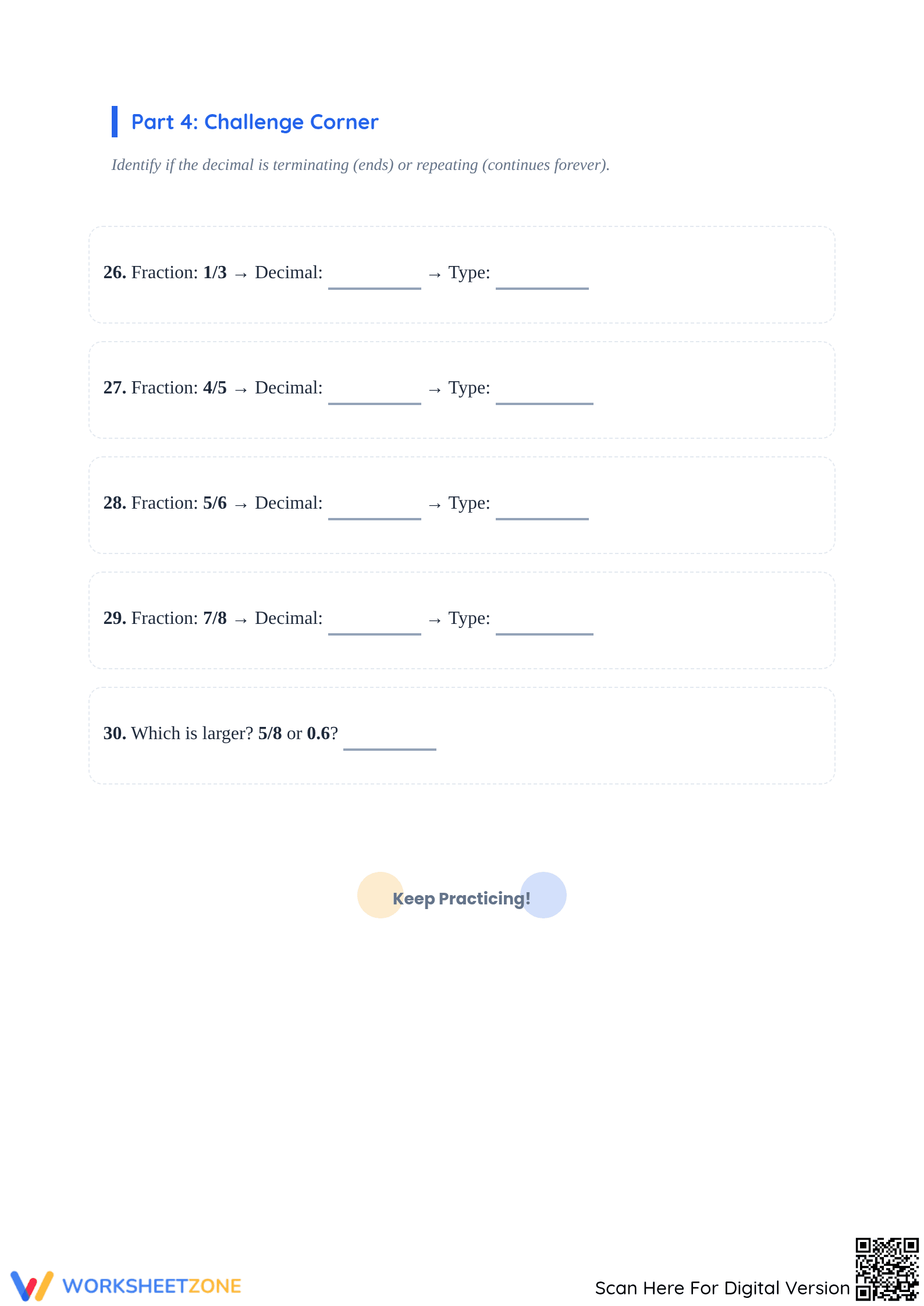
Inside this five-page PDF, you will find thirty carefully sequenced problems divided into four distinct instructional sections. The worksheet includes an introductory example, twenty computation-heavy conversion tasks, five real-world application word problems, and a final "Challenge Corner" focusing on classifying decimals as repeating or terminating. A complete answer key is provided for immediate feedback and streamlined grading.
Skill Progression
- Guided practice: An initial worked example models the thought process for converting tenths into decimals using place value logic and visual cues.
- Supported practice: Twenty computational problems allow students to apply long division to convert fractions with varying denominators into decimal form.
- Independent practice: Five contextual word problems require students to extract numerical data and perform conversions to solve authentic scenarios.
This structured flow follows the gradual release of responsibility model, ensuring students move from simple identification to complex application and higher-order analysis of numerical types.
Standards Alignment
The primary alignment is CCSS.MATH.CONTENT.7.NS.A.2.D, which requires students to "convert a rational number to a decimal using long division; know that the decimal form of a rational number terminates in 0s or eventually repeats." This standard code can be copied directly into lesson plans, IEP goals, or district curriculum mapping tools.
How to Use It
Distribute this worksheet during the independent practice portion of a lesson on rational numbers to gauge individual student mastery of long division techniques. Alternatively, use the real-world application section as a partner activity to spark mathematical discourse regarding how decimals are used on digital scales or in sports statistics. The Challenge Corner provides an excellent exit ticket opportunity.
Who It's For
This resource is designed for Grade 7 general education students, but its clear formatting makes it an excellent intervention tool for older students struggling with rational number fluency. It pairs naturally with direct instruction on long division or a visual anchor chart displaying common fraction-decimal equivalents for benchmark values.
According to the NAEP 2024 mathematics framework, the ability to fluently transition between rational number representations is a critical predictor of success in early algebra and proportional reasoning. This Grade 7 worksheet targets CCSS.MATH.CONTENT.7.NS.A.2.D by requiring students to convert fractions into decimals through 30 structured tasks, including identification of repeating versus terminating forms. Research by Fisher & Frey (2014) emphasizes that "scaffolded practice with immediate feedback remains the most effective way for students to internalize the procedural knowledge required for long division conversions." By integrating computational drills with five real-world application word problems, this resource moves students beyond rote memorization toward a conceptual understanding of decimal precision. The included answer key allows educators to identify specific misconceptions in place value or division early in the instructional cycle, preventing the accumulation of learning gaps in the rational number system.


