




























1 / 4
0
Views
0
Downloads


0.0
0
Save
0 Likes
Share
Feelings Control Worksheet: Emotional Regulation & Self-Control Guide
0 Views
0 Downloads

Paste this activity's link or code into your existing LMS (Google Classroom, Canvas, Teams, Schoology, Moodle, etc.).
Students can open and work on the activity right away, with no student login required.
You'll still be able to track student progress and results from your teacher account.
Information
Description
What It Is:
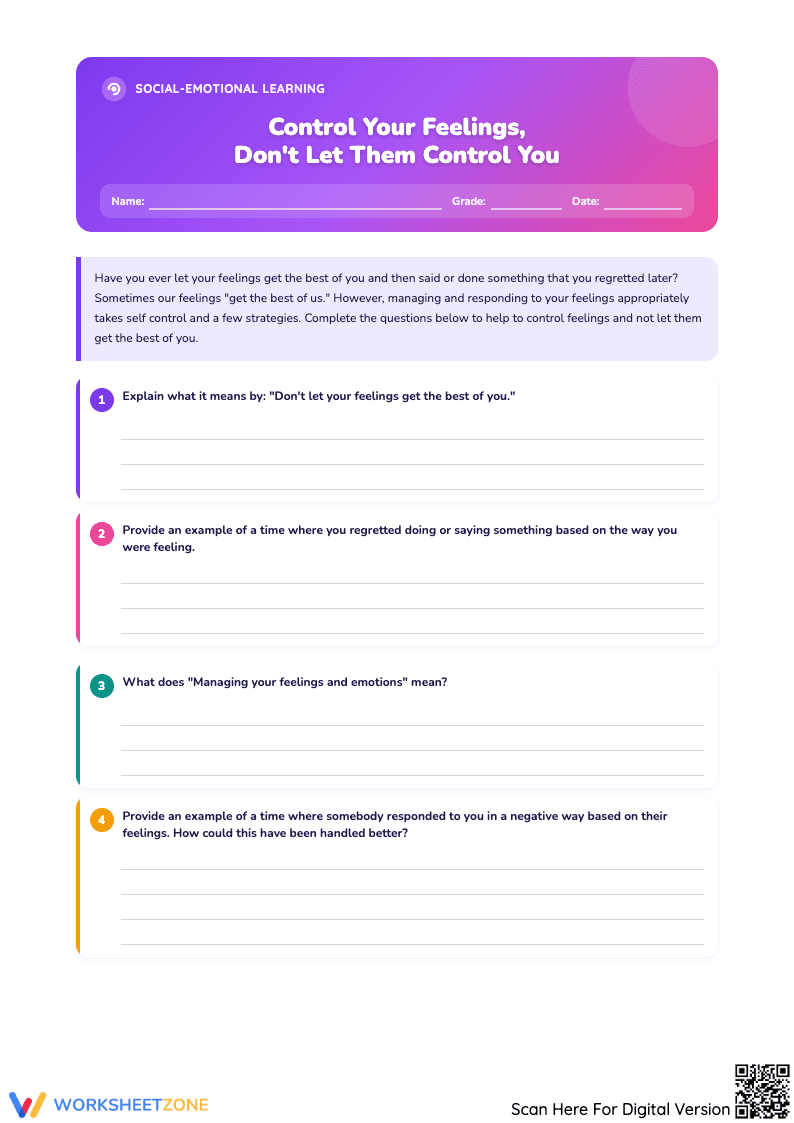
This is a worksheet titled 'Control Your Feelings, Don't Let Them Control You'. It includes an introductory paragraph about managing feelings and avoiding regret. The worksheet then presents six open-ended questions designed to encourage reflection on personal experiences with emotional regulation. The questions ask the student to explain the meaning of not letting feelings take over, provide examples of regrettable actions based on feelings, define managing feelings and emotions, provide examples of negative reactions and how they could be handled better, list three tips for managing feelings, and explain the importance of managing emotions without suppressing them.
Grade Level Suitability:
This worksheet is suitable for grades 6-10. The questions require critical thinking, self-reflection, and the ability to articulate personal experiences and strategies. The vocabulary and concepts are appropriate for middle and high school students.
Why Use It:
This worksheet promotes social-emotional learning by encouraging students to develop self-awareness, self-management, and responsible decision-making skills. It helps them understand the impact of their emotions on their behavior and relationships, and it prompts them to explore strategies for managing their feelings in a healthy way.
How to Use It:
Students should read the introductory paragraph and then answer each question thoughtfully, drawing upon their own experiences and insights. The worksheet can be used as an individual activity, a small group discussion prompt, or as a basis for a class-wide conversation about emotional regulation. Encourage students to be honest and specific in their responses.
Target Users:
This worksheet is beneficial for middle school and high school students, counselors, teachers, and parents who want to promote emotional intelligence and healthy coping mechanisms. It can be used in classroom settings, counseling sessions, or at home to facilitate discussions about feelings and self-control.
This is a worksheet titled 'Control Your Feelings, Don't Let Them Control You'. It includes an introductory paragraph about managing feelings and avoiding regret. The worksheet then presents six open-ended questions designed to encourage reflection on personal experiences with emotional regulation. The questions ask the student to explain the meaning of not letting feelings take over, provide examples of regrettable actions based on feelings, define managing feelings and emotions, provide examples of negative reactions and how they could be handled better, list three tips for managing feelings, and explain the importance of managing emotions without suppressing them.
Grade Level Suitability:
This worksheet is suitable for grades 6-10. The questions require critical thinking, self-reflection, and the ability to articulate personal experiences and strategies. The vocabulary and concepts are appropriate for middle and high school students.
Why Use It:
This worksheet promotes social-emotional learning by encouraging students to develop self-awareness, self-management, and responsible decision-making skills. It helps them understand the impact of their emotions on their behavior and relationships, and it prompts them to explore strategies for managing their feelings in a healthy way.
How to Use It:
Students should read the introductory paragraph and then answer each question thoughtfully, drawing upon their own experiences and insights. The worksheet can be used as an individual activity, a small group discussion prompt, or as a basis for a class-wide conversation about emotional regulation. Encourage students to be honest and specific in their responses.
Target Users:
This worksheet is beneficial for middle school and high school students, counselors, teachers, and parents who want to promote emotional intelligence and healthy coping mechanisms. It can be used in classroom settings, counseling sessions, or at home to facilitate discussions about feelings and self-control.


