


























Views
Downloads

Complete Unnoticed Energy Transfer Worksheet | Grade 6
Paste this activity's link or code into your existing LMS (Google Classroom, Canvas, Teams, Schoology, Moodle, etc.).
Students can open and work on the activity right away, with no student login required.
You'll still be able to track student progress and results from your teacher account.
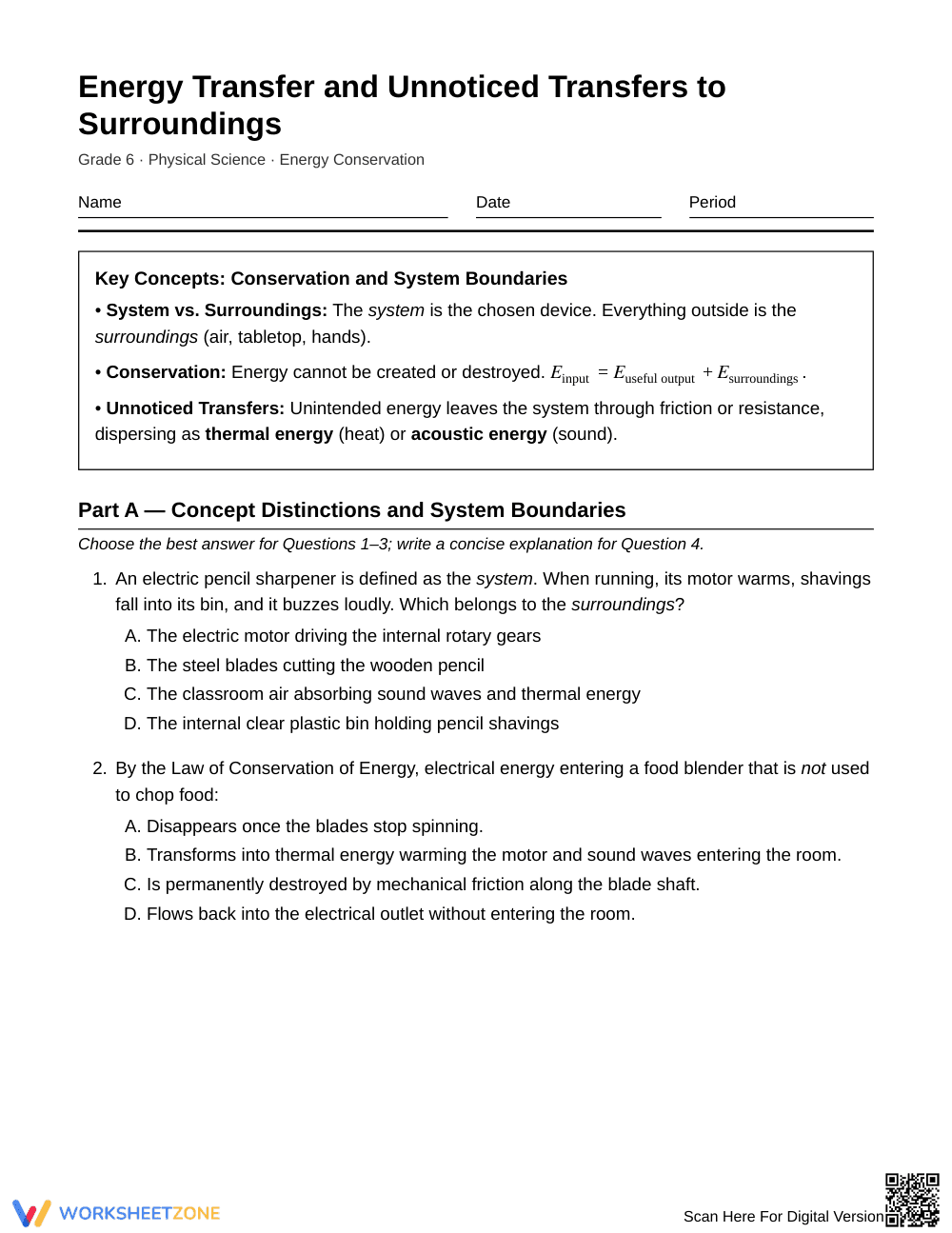
This five-page worksheet builds Grade 6 students' ability to explain how energy leaves a system through unnoticed transfers — friction-generated heat and sound — rather than being created or destroyed. Across 14 carefully sequenced problems, students move from identifying system boundaries to writing defended, multi-step explanations grounded in the Law of Conservation of Energy.
At a Glance
- Grade: 6 · Subject: Science
- Skill Focus: Explain unnoticed energy transfers to surroundings
- Format: 5 pages · 14 problems · Answer key included · PDF
- Best For: Guided practice after direct instruction
- Time: 35–50 minutes
What's Inside
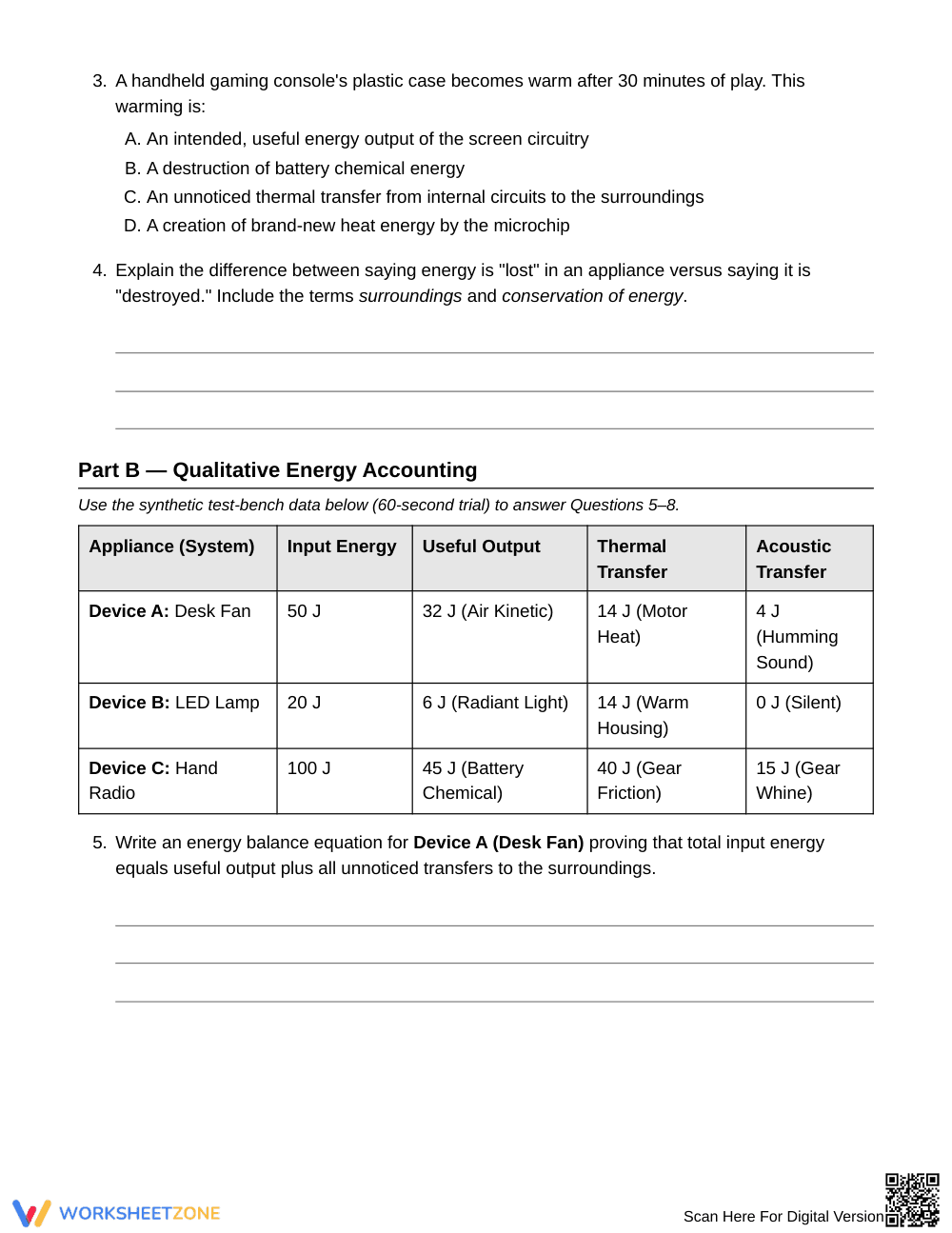
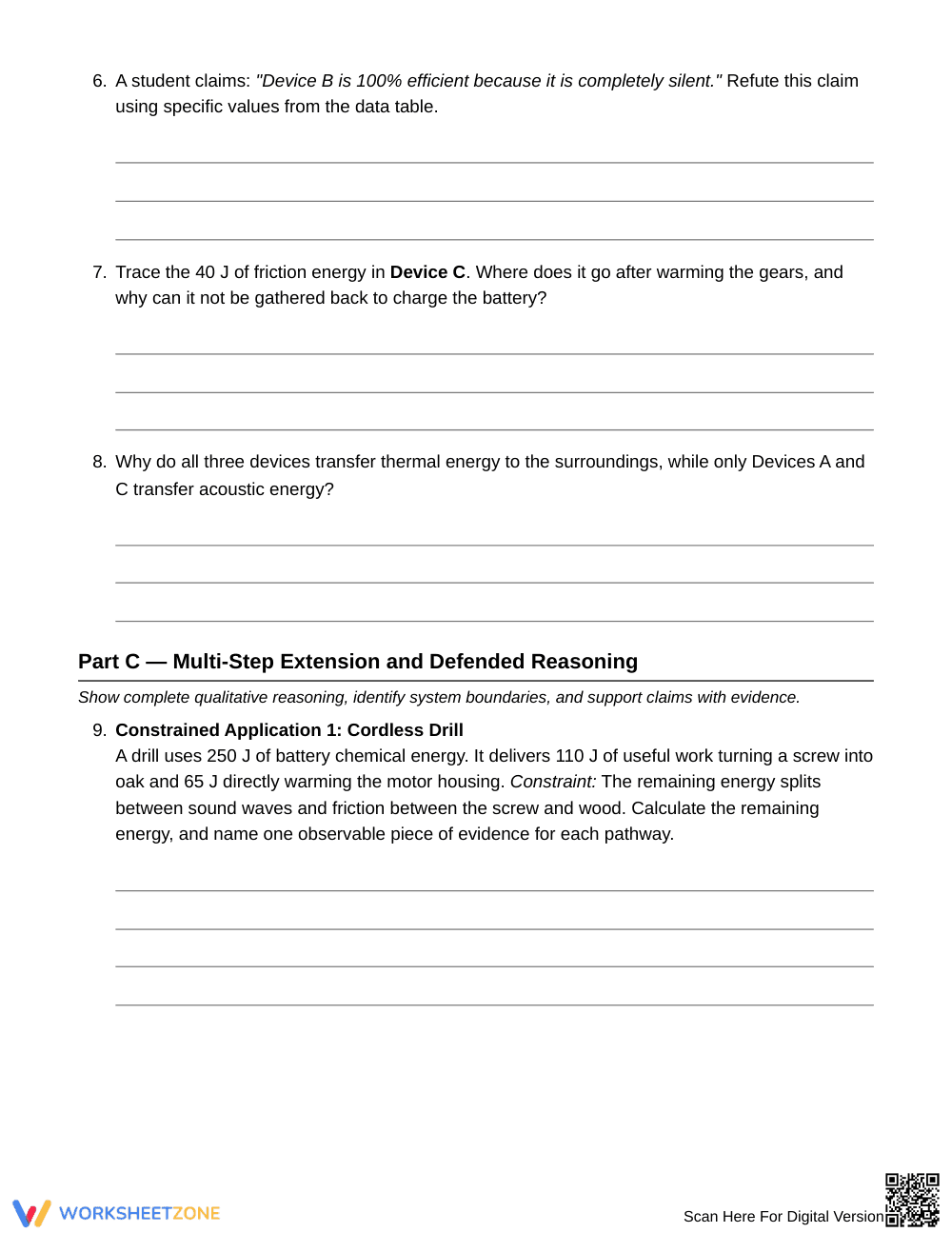
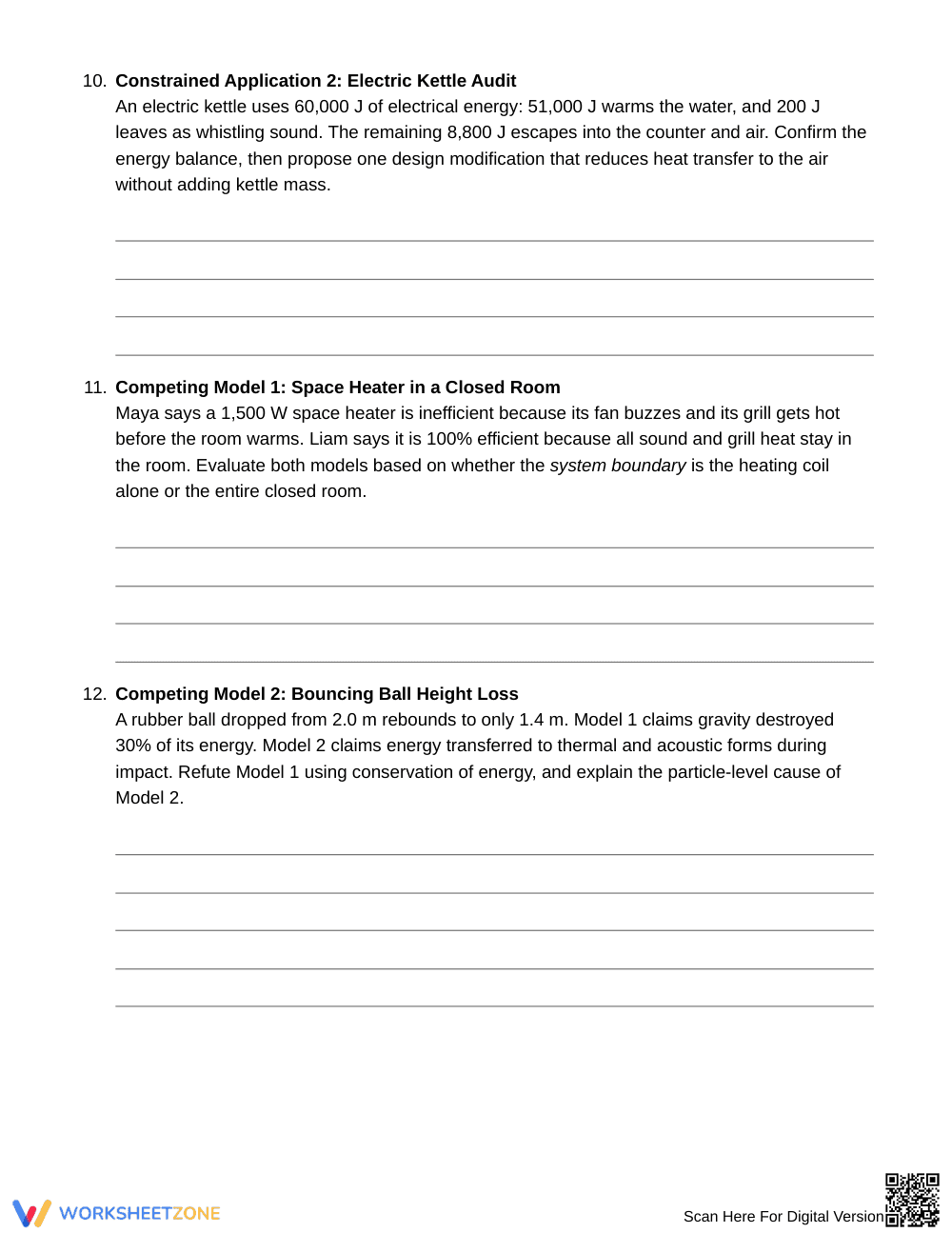
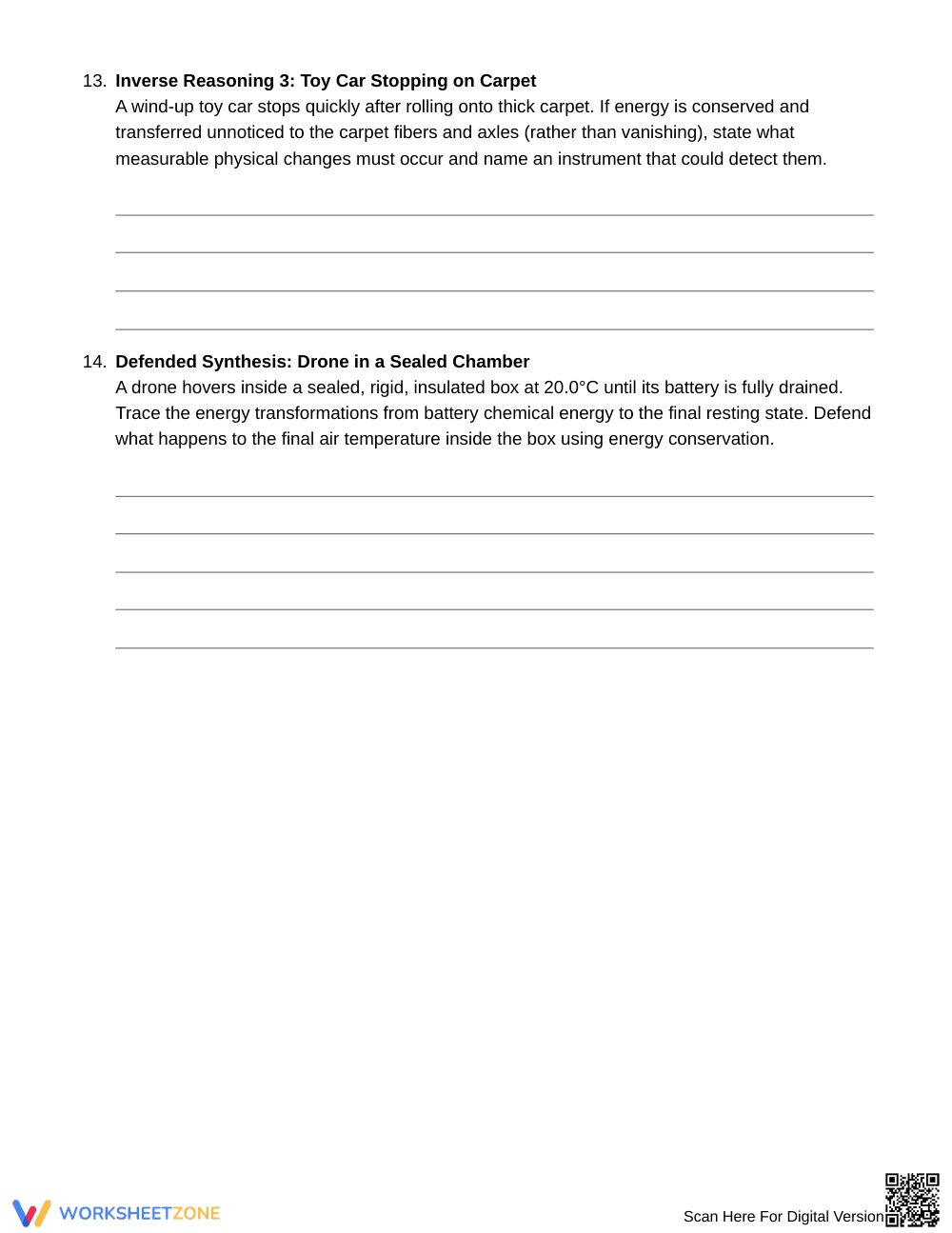
The worksheet opens with a reference box defining system versus surroundings, conservation of energy, and unnoticed transfers. Part A (4 items) uses multiple-choice and short-answer formats to establish concept distinctions and system boundaries. Part B (4 items) provides a synthetic data table for three appliances and asks students to write energy balance equations, refute efficiency claims, and trace thermal and acoustic pathways. Part C (6 items) presents multi-step constrained applications, competing-model evaluations, and a defended synthesis involving a drone in a sealed chamber. A complete two-page answer key provides worked solutions for every problem.
Skill Progression
- Guided practice (Part A, Questions 1–4): Students select correct answers and write a short explanation distinguishing "lost" from "destroyed," supported by reference definitions.
- Supported practice (Part B, Questions 5–8): Using a provided data table, students apply the energy balance equation, refute claims with numerical evidence, and trace energy pathways qualitatively.
- Independent practice (Part C, Questions 9–14): Students tackle novel scenarios — cordless drills, kettles, heaters, bouncing balls, and drones — without scaffolds to defend conclusions using conservation principles.
How to Use It
Assign Part A immediately after direct instruction on conservation of energy and system boundaries; use responses to Questions 1–3 as a quick formative check before proceeding. Parts B and C work well as a follow-up practice session or station activity. Circulate during Part B to verify that students cite specific numerical values when justifying their claims. Expected completion time is 35–50 minutes for the full worksheet, or 15 minutes per section.
This Grade 6 science worksheet targets the essential skill of explaining unnoticed energy transfers — thermal and acoustic — from a system to its surroundings. Students practice writing energy balance equations, refuting efficiency misconceptions with numerical evidence, and defending claims using the Law of Conservation of Energy across 14 structured problems spanning six real-world devices. Research from the RAND AIRS 2024 report highlights that structured, multi-representation science tasks improve student reasoning about abstract energy concepts by up to 18 percent compared to textbook-only instruction. The gradual-release design moves learners from guided multiple-choice items through data-table analysis to open-ended defended reasoning, ensuring that every student can demonstrate mastery at an appropriate complexity level. Teachers can use the included two-page answer key for immediate scoring, targeted intervention, and meaningful feedback. Print or assign digitally for flexible classroom use during independent work, stations, or small-group instruction.


