


























Views
Downloads

Complete Turning Incident Analysis Worksheet | Grade 8 ELA
Paste this activity's link or code into your existing LMS (Google Classroom, Canvas, Teams, Schoology, Moodle, etc.).
Students can open and work on the activity right away, with no student login required.
You'll still be able to track student progress and results from your teacher account.
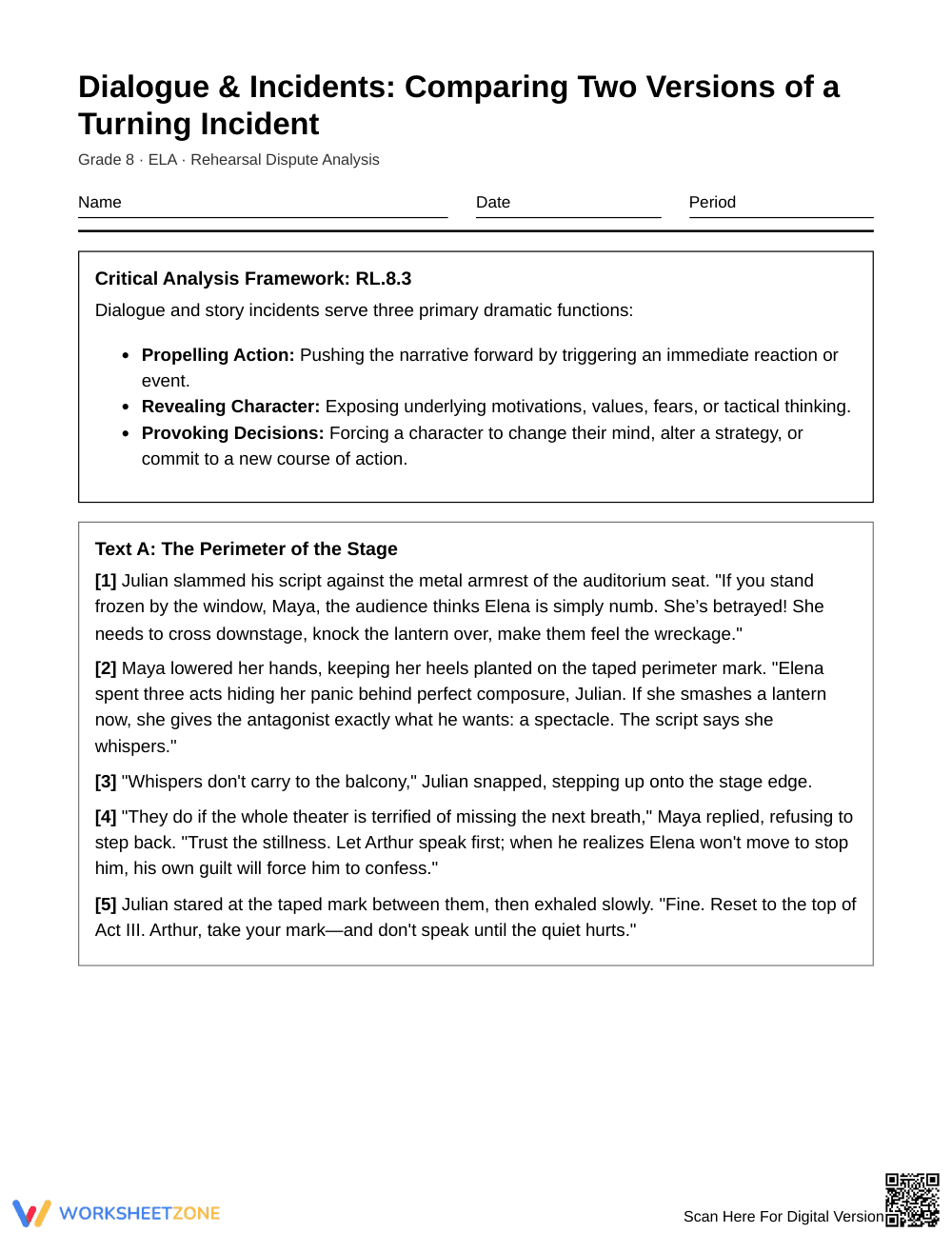
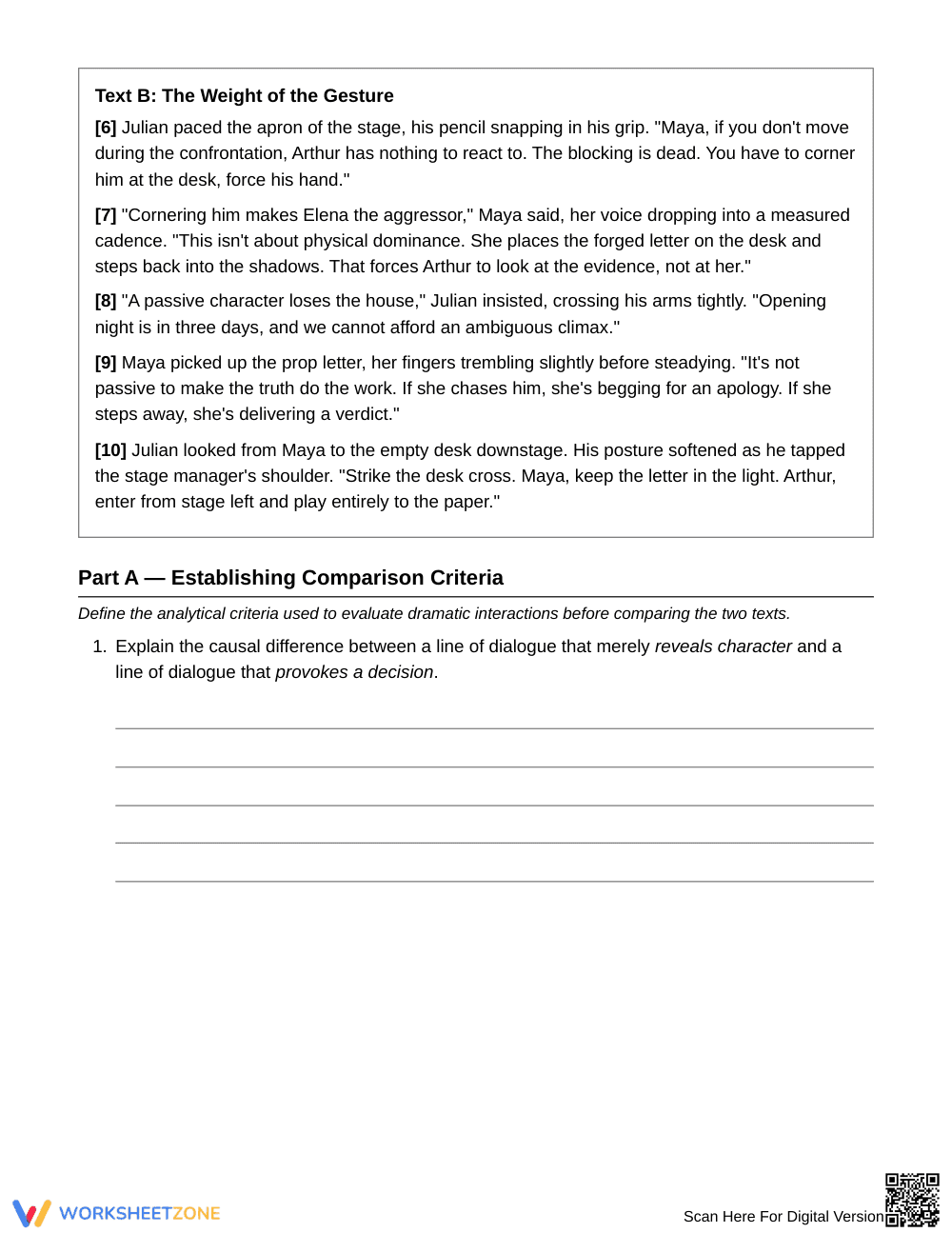
Help eighth-grade readers evaluate how specific dialogue and dramatic incidents drive narrative developments with this comprehensive analysis worksheet. Students examine two competing rehearsal scenes, analyzing how subtle changes in character lines and physical staging provoke crucial decisions and reshape story outcomes in alignment with core middle school literature standards.
At a Glance
- Grade: 8 · Subject: ELA
- Standard:
RL.8.3— Analyze how dialogue and incidents propel action, reveal character, and provoke decisions- Skill Focus: Comparing Turning Incidents in Paired Texts
- Format: 5 pages · 10 problems · Answer key included · PDF
- Best For: Close reading and paired text analysis
- Time: 40–50 minutes
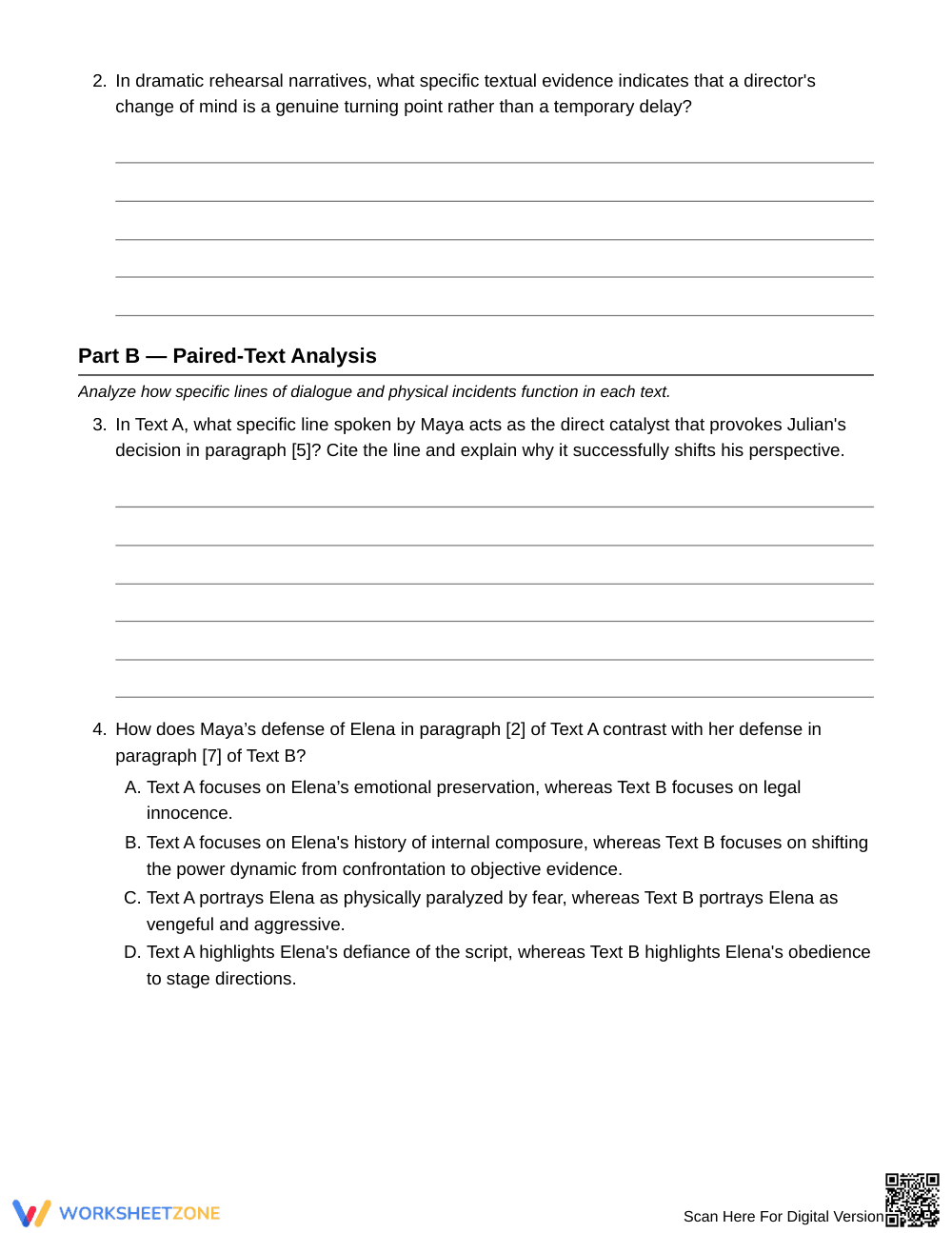
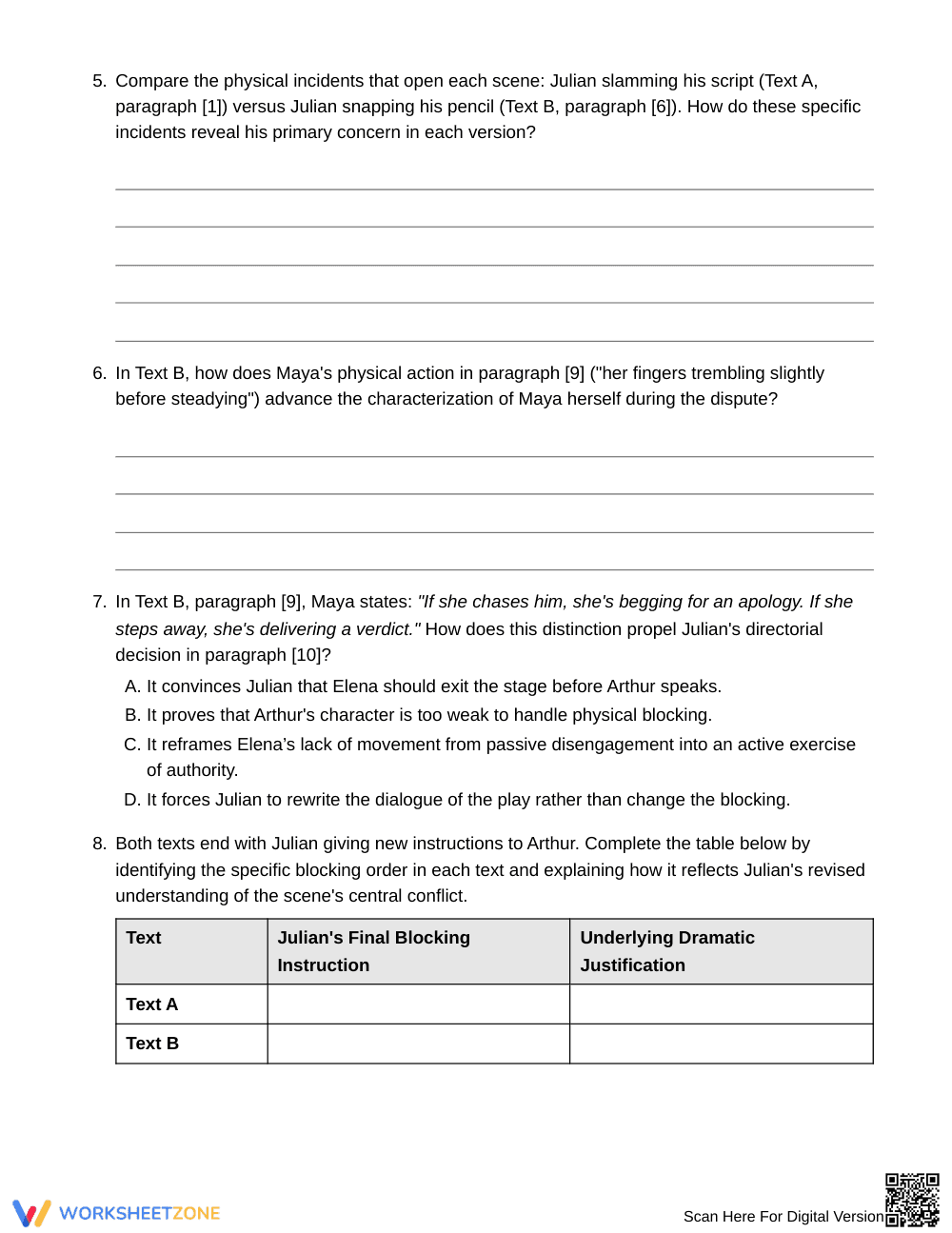
This 5-page printable resource includes a foundational dramatic analysis framework, two parallel literary passages depicting an onstage rehearsal dispute, 10 rigorous text-dependent questions, and a detailed 3-page answer key. Tasks include conceptual definition prompts, multiple-choice comparative questions, an evidence synthesis chart, and evaluative short-response analysis items.
Skill Progression
- Guided Practice: Tasks 1 and 2 establish core conceptual criteria by prompting students to define how dialogue reveals character versus how it provokes decisions.
- Supported Practice: Tasks 3 through 8 provide structured comparative analysis across Text A and Text B using multiple-choice items and a dual-column blocking table.
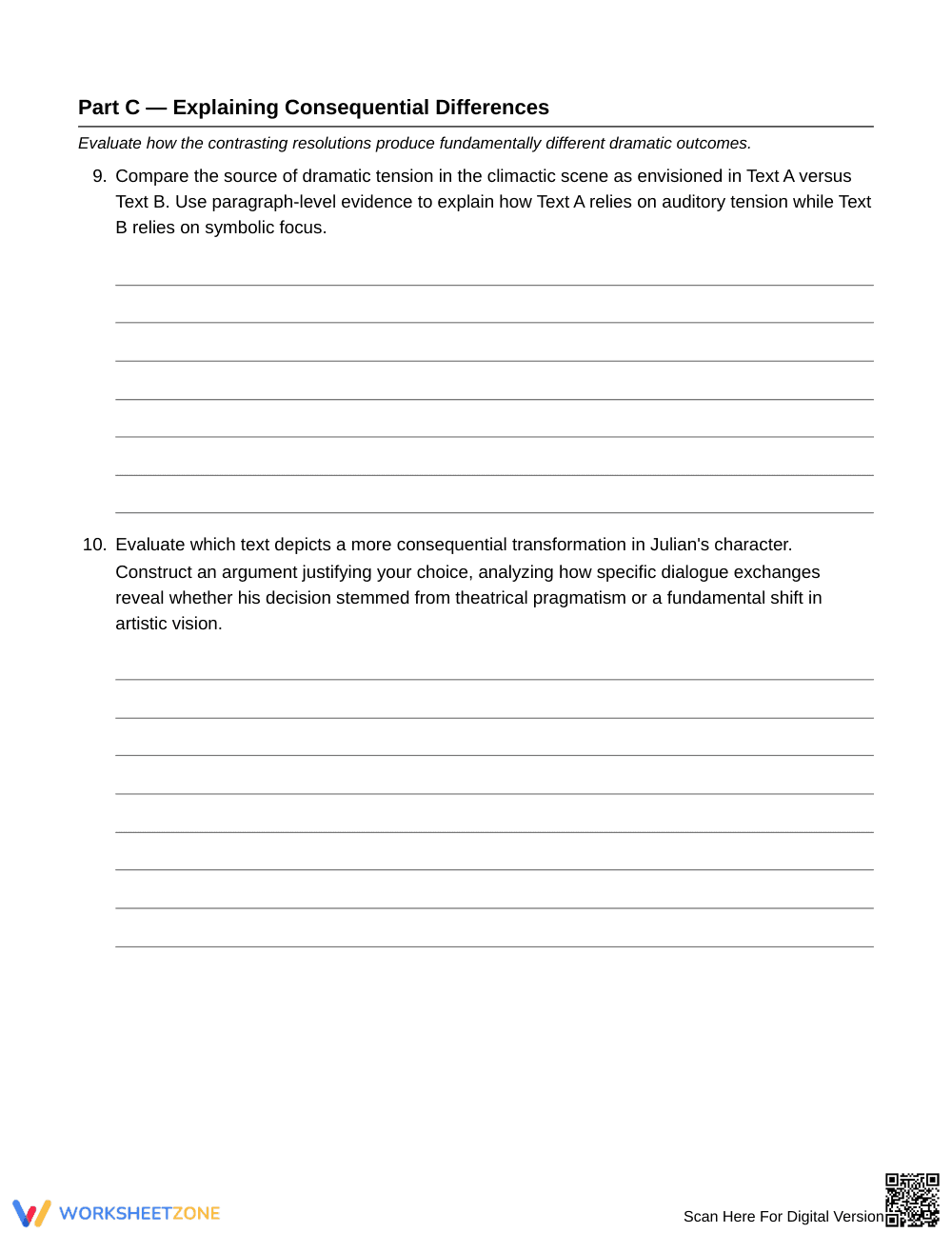
- Independent Practice: Tasks 9 and 10 require independent evaluative writing, prompting students to compare auditory versus symbolic tension and argue character transformation.
This sequence follows an intentional gradual-release framework, moving learners from conceptual understanding to rigorous comparative literary evaluation.
Standards Alignment
Primary Standard: RL.8.3 — Analyze how particular lines of dialogue or incidents in a story or drama propel the action, reveal aspects of a character, or provoke a decision. Supporting Standard: RL.8.1 — Cite the textual evidence that most strongly supports an analysis of what the text says explicitly as well as inferences drawn from the text. Both standard codes can be copied directly into lesson plans, IEP goals, or district curriculum mapping tools.
How to Use It
Deploy this activity during or after direct instruction on narrative structure and dramatic techniques. Use it for paired close-reading workshops where students annotate character motivations in real time, or assign it as a summative assessment following a drama unit. During instruction, circulate to observe how students distinguish between passive disengagement and deliberate nonverbal action in Part B. Expected completion time is 40 to 50 minutes.
Who It's For
This worksheet serves general Grade 8 English language arts classrooms, honors literature tracks, and targeted reading intervention groups. Scaffolds such as the dramatic analysis framework support developing readers, while paired-text evaluative prompts challenge advanced learners. Pair this worksheet with a dramatic script excerpt or an anchor chart on character motivations.
According to Fisher & Frey (2014), structured close reading of paired texts significantly enhances middle school students' ability to evaluate complex narrative interactions and infer implicit character motives. This standards-aligned worksheet targets RL.8.3, which requires Grade 8 students to analyze how specific lines of dialogue and physical incidents propel plot actions, reveal character traits, and provoke pivotal decisions. By contrasting two distinct versions of an onstage confrontation, learners evaluate how subtle shifts in directorial choices and spoken dialogue reshape dramatic conflict and thematic outcomes. Incorporating structured comparative tables alongside evaluative written responses ensures that students practice both targeted text extraction and higher-order literary synthesis. Educational research demonstrates that explicit practice in distinguishing between character-revealing dialogue and decision-provoking dialogue reinforces analytical precision, providing middle school learners with transferable critical thinking skills across complex literary genres.


